When buying a house with old wiring, look for an old fuse box, rubber or fabric covered cables, round pin sockets, burn marks and no RCD protection. A home survey only notes visible signs, so ask a registered electrician for an Electrical Installation Condition Report before you exchange. Old wiring is not always unsafe, but it needs checking.
Electrics are one of the most common unknowns when buying an older home in Liverpool and the North West. A tidy kitchen and fresh paint can hide wiring that has not been touched for decades. Rewiring is disruptive and can be a significant cost, so it is worth knowing what you are taking on before you commit. This guide works as a warning sign spotter, explaining what each sign may mean, what a survey can and cannot tell you and what to do next when buying a house with old wiring.
In this guide
- Why does old wiring matter when you buy?
- What are the warning signs of old wiring?
- How has house wiring changed over the years?
- Is old wiring always unsafe?
- Does a home survey check the electrics?
- What is an Electrical Installation Condition Report?
- What do the EICR codes mean?
- What does a rewire involve?
- What paperwork should you ask for?
- Who should carry out the electrical check?
- What else should you check alongside the wiring?
- What should you ask the seller?
- What if you are buying to let?
- Should old wiring affect your offer?
- What mistakes do buyers make?
- Old wiring in Liverpool homes
- FAQs
Why Does Old Wiring Matter When You Buy?
Faulty or worn electrical installations can cause electric shocks and fires. Older systems were also designed for far fewer appliances than a modern home uses, so circuits can be overloaded.
For buyers, there are practical concerns too. A full rewire usually means lifting floorboards, chasing walls and redecorating, so it is much easier to do before you move in. Knowing the condition of the wiring helps you plan, budget and decide whether the asking price reflects the work needed.
What Are the Warning Signs of Old Wiring?
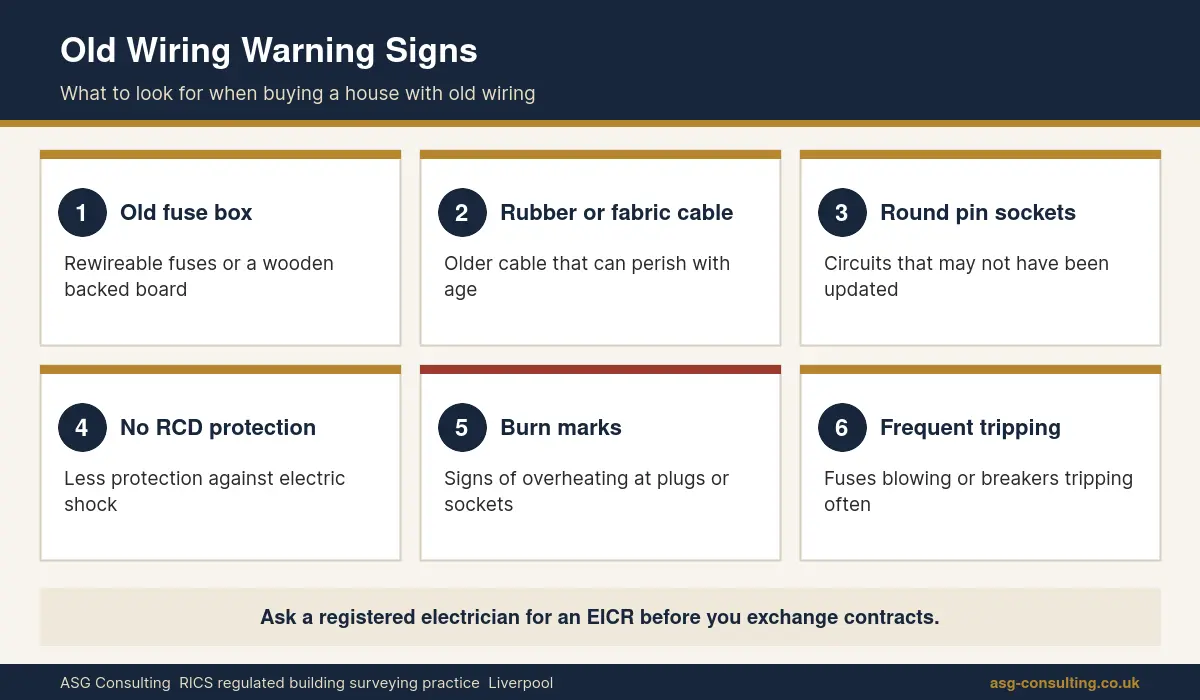
Use this warning sign spotter on a viewing. None of these signs proves the wiring is unsafe, but each one is a reason to get the installation checked.
| Warning sign | What it may mean | What to do |
|---|---|---|
| Old fuse box with rewireable fuses | An older installation, often without modern protection | Ask for an EICR |
| Wooden backed fuse board or cast iron switches | A very old installation that may need replacing | Get a registered electrician to inspect |
| No RCD protection | Less protection against electric shock | Ask about upgrading the consumer unit |
| Black rubber or fabric covered cables | Wiring that may be several decades old and brittle | Expect advice on rewiring |
| Round pin sockets | Old circuits that may not have been updated | Check the rest of the installation |
| Sockets on skirting boards | Can indicate older wiring, though not always | Look at the fuse box and cables |
| Burn marks on plugs or sockets | Overheating or loose connections | Treat as urgent and get it checked |
| Fuses blowing or breakers tripping often | A fault in an appliance or the wiring | Ask the seller and get it investigated |
| Few sockets and many extension leads | Circuits not designed for modern use | Plan for extra sockets or rewiring |
| Lights flickering or switches feeling warm | Possible loose connections or overloading | Get a registered electrician to inspect |
Electrical Safety First lists burn marks on plugs and sockets, and fuses blowing or circuit breakers tripping, among the signs that need investigating.
How Has House Wiring Changed Over the Years?
Wiring materials have changed over time, which helps explain what you might find in an older home. This is a general guide only, as many homes have been partly updated.
| Type of wiring | Typically found in | Points to note |
|---|---|---|
| Lead sheathed cable | Homes wired in the early twentieth century | Very old and usually due for replacement |
| Rubber insulated cable, sometimes fabric covered | Installations from before the 1960s and 1970s | Rubber can perish and crumble with age |
| PVC insulated cable | Most installations from the 1960s and 1970s onwards | Long lasting, but connections and protection may still be dated |
| Modern consumer unit with RCD protection | Newer or upgraded installations | Gives much better protection against shock and fire |
A home with PVC cables can still have an outdated fuse box, poor earthing or unsafe DIY alterations, so the age of the cable is only part of the picture.
Is Old Wiring Always Unsafe?
No. Electrical Safety First points out that old wiring does not automatically mean the installation is unsafe, and that there are no set rules about when a property should be rewired. Wear depends on the materials used, how the property has been used and whether it has been maintained.
What matters is the condition of the installation, which can only be properly assessed by testing. That is why the right next step is an inspection by a registered electrician rather than guessing from appearance alone.
Does a Home Survey Check the Electrics?
A RICS home survey includes a visual inspection of the visible parts of the electrical installation, such as the consumer unit, meter position, a sample of sockets and switches and any visible cables. The surveyor will note obvious signs of age or concern and may recommend a test by a registered electrician.
A surveyor does not test circuits, remove covers or confirm the installation is safe. That needs a separate inspection. For many conventional homes, a RICS Level 2 HomeBuyer Survey is suitable, and our RICS HomeBuyer Survey in Liverpool page explains what it covers. For older or altered homes, a Level 3 Building Survey gives more detail, as explained on our residential building surveying page. Our guide to survey condition ratings explains how electrics are rated in a report.
What Is an Electrical Installation Condition Report?
An Electrical Installation Condition Report, or EICR, is a report produced by an electrically competent person after inspecting and testing an installation. Electrical Safety First explains in its guide to condition reports that the report records any damage, deterioration, defects and dangerous conditions.
It also recommends an inspection before buying a previously occupied property, and at least every 10 years for an owner occupied home. When buying, the seller does not have to provide an EICR, so you may need to arrange one yourself with agreement from the seller.
What Do the EICR Codes Mean?
An EICR uses codes to show how serious each issue is. Electrical Safety First explains them in its electrical FAQs.
| Code | Meaning | What it means for a buyer |
|---|---|---|
| C1 | Danger present, risk of injury, immediate action required | Needs fixing straight away |
| C2 | Potentially dangerous, urgent remedial action required | Plan urgent repairs before or soon after you move in |
| C3 | Improvement recommended | Not urgent, but worth budgeting for |
| FI | Further investigation required | More checks are needed to understand the issue |
A report with several C1 or C2 codes, or a recommendation to rewire, is useful evidence when you discuss the purchase with the seller.
What Does a Rewire Involve?
A full rewire replaces the cables, sockets, switches and usually the consumer unit. It normally means
- lifting floorboards and carpets
- cutting channels into walls for new cables
- replastering and redecorating afterwards
- a period without power in parts of the house
- certification and notification under building regulations
In older homes, a rewire can also uncover other problems, such as rotten floor joists or damp, so it is a good time to deal with related repairs. Our guides to dry rot vs wet rot and penetrating damp explain issues that sometimes come to light during this kind of work.
Because rewiring is so disruptive, many buyers prefer to do it before moving in, while rooms are empty.
Not every older installation needs a full rewire. Sometimes the electrician will recommend a new consumer unit with RCD protection, some new circuits or targeted repairs instead. The EICR and a written quote will show which approach suits the house.
What Paperwork Should You Ask For?
Ask the seller for
- any recent EICR
- electrical installation certificates for any rewiring or new circuits
- certificates for a new consumer unit
- building regulations compliance certificates for notifiable electrical work
- details of any work done for an extension, loft conversion or new kitchen
Electrical Safety First notes that notifiable electrical work must be certified by a registered electrician or reported to building control, and that without this a property can be harder to sell. Our guide to buying a house with an extension covers paperwork for building work more generally.
Who Should Carry Out the Electrical Check?
Electrical Safety First says inspections should only be carried out by electrically competent people, such as registered electricians. A registered electrician is one who belongs to a government approved scheme and is assessed on the quality of their work.
When you book an EICR for a house you are buying, explain that it is a pre purchase inspection, agree access with the seller and ask what the inspection will include. Some parts of the installation may not be accessible in an occupied home, and the report should say what could not be inspected.
If the report recommends work, ask for a written quote that separates urgent safety repairs from improvements. That makes it much easier to decide what needs doing before you move in and what can wait.
What Else Should You Check Alongside the Wiring?
While you are looking at the electrics, check a few related items that affect safety and cost.
- Smoke and heat alarms. Look for working alarms on each floor and in the kitchen.
- Earthing and bonding. An electrician will check that metal pipes and the installation are properly earthed.
- Electric showers and cookers. These need suitable dedicated circuits.
- Outside sockets, lights and garden buildings. These are often added later and should have suitable protection.
- Storage heaters and old electric heating. These may be dated and expensive to run.
- Electric vehicle chargers. Ask for installation certificates if one is fitted.
Missing or faulty items in this list are often simple to fix, but they add to the overall cost of bringing the electrics up to date.
What Should You Ask the Seller?
Ask these questions early and share the answers with your solicitor and surveyor.
- When was the house last rewired, and by whom?
- Has the consumer unit been replaced?
- Is there a recent EICR or any electrical certificates?
- Have there been any problems with fuses blowing, breakers tripping or flickering lights?
- Has any electrical work been done for an extension, loft or new kitchen?
- Are there any outside or outbuilding power supplies?
Our house viewing checklist covers other questions to ask on a viewing.
What If You Are Buying to Let?
If you plan to rent the property out, the rules are stricter. Electrical Safety First recommends inspection at least every 5 years for tenanted properties or on a change of occupancy, and private landlords in England must have the electrical installation inspected and tested by a qualified person at least every 5 years.
That means old wiring is likely to need dealing with before you let the property, so build the cost and time into your plans. Our guide to an ex council house survey covers other checks for property that may be let.
Should Old Wiring Affect Your Offer?
It can. If an EICR shows urgent defects or recommends a rewire, you have clear evidence to discuss with the seller. Options include asking for a price reduction, asking the seller to carry out specific repairs before completion or accepting the work and budgeting for it.
Get quotes from registered electricians so any discussion is based on real figures rather than guesses. The right approach depends on the market and how far the asking price already reflects the condition of the house.
What Mistakes Do Buyers Make With Old Wiring?
Common mistakes include
- Judging by appearance. New sockets and switches can be fitted to old cables.
- Relying on the survey alone. A survey is a visual inspection and does not test the electrics.
- Assuming a new kitchen means new wiring. Only part of the installation may have been updated.
- Ignoring DIY alterations. Extra sockets, outbuilding supplies and garden lighting are often added without certificates.
- Leaving it until after moving in. Rewiring an occupied, decorated home is far more disruptive.
Old Wiring in Liverpool Homes
Liverpool has a large number of older homes, from Victorian and Edwardian terraces in areas such as Anfield, Kensington and Wavertree to 1930s semis in Allerton, Walton and Crosby, and post war houses across the city and the Wirral. Many have been rewired over the years, but some still have dated installations or a mix of old and new work.
Issues to look out for in older Liverpool homes include
- old fuse boxes in cellars, hallways and under stairs
- part rewiring, where new circuits sit alongside old cables
- wiring in damp cellars and lofts
- DIY electrics in converted flats and houses in multiple occupation, covered further in our HMO survey guide
- outbuilding and garden supplies without certificates
Our guides to a Victorian house survey and a 1930s house survey cover other common issues in these house types.
In houses that have been split into flats or let to several tenants, check that each part of the building has a clear and safe supply, and that any shared lighting and alarms in common areas are covered by the paperwork.
Buying a House With Old Wiring FAQs
How can I tell if a house has old wiring?
Look for an old fuse box, rubber or fabric covered cables, round pin sockets and no RCD protection. A registered electrician can confirm the condition.
Does a homebuyer survey check the electrics?
A survey includes a visual check of visible electrics and may recommend testing. It does not test circuits or confirm the installation is safe.
Should I get an electrical check before buying a house?
Electrical Safety First recommends an inspection before buying a previously occupied property. An EICR from a registered electrician is the usual check.
Is old wiring dangerous?
Not always. Old wiring is not automatically unsafe, but worn or damaged installations can cause shocks and fires, so testing is important.
Can I buy a house that needs rewiring?
Yes. Many buyers do, but plan the cost and disruption and, ideally, complete the work before moving in.
Does the seller have to provide an EICR?
No. A seller does not need to provide an EICR to sell a property, so buyers often arrange one with agreement from the seller.
Book a Survey With ASG Consulting
ASG Consulting is an RICS regulated building surveying practice in Liverpool. We carry out RICS Level 2 HomeBuyer Surveys and Level 3 Building Surveys on older homes across Liverpool, Merseyside, the Wirral and the wider North West, with reports usually delivered within 3 to 5 working days of the inspection. We give a fixed fee on request, usually confirmed within one working day. To request a quote, call 0151 315 0626 or visit our contact page.
About the Author
Dave MacMillan is the lead surveyor at ASG Consulting, an RICS regulated building surveying practice at 54 St James Street, Liverpool. He has 8 years of experience in building surveying and inspects homes for buyers across Liverpool, Merseyside and the North West.
Last updated 19 November 2026
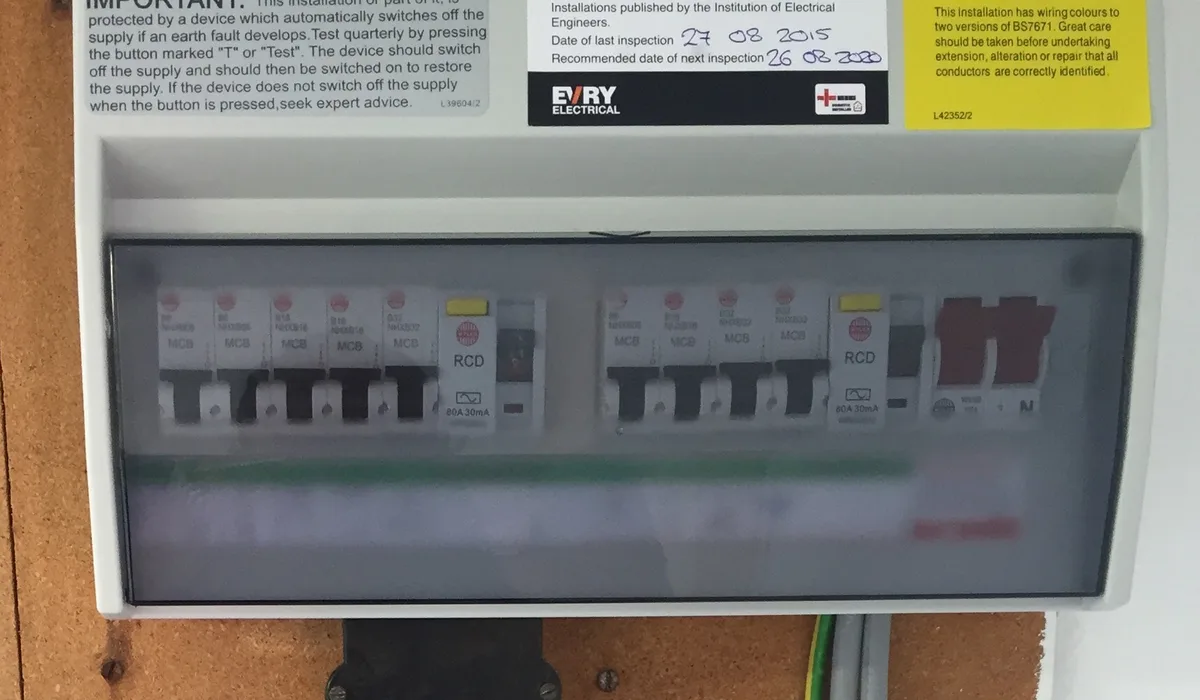
Featured photo of a consumer unit with RCD protection by Evry Electrical via Wikimedia Commons, licence CC BY 4.0, cropped.