When buying a house with lead pipes, check the incoming water pipe at the internal stop tap, usually under the kitchen sink. Lead looks dull grey, is soft and shows shiny silver metal when gently scratched. Homes built before 1970 may still have lead. Replacing it is the most reliable fix, and United Utilities helps with part of the work.
Lead water pipes are one of the hidden issues in older homes across Liverpool and the North West. They are easy to miss on a viewing, rarely mentioned in listings and not always picked up by a mortgage valuation. The good news is that they are usually simple to identify and can be replaced. This guide walks you through how to check for lead step by step, who is responsible for which pipe, what replacement involves and what to ask before you commit to buying a house with lead pipes.
In this guide
- Why do lead pipes matter when you buy a house?
- Which homes are likely to have lead pipes?
- How do you check for lead pipes, step by step?
- Who is responsible for which water pipe?
- What about lead in the internal plumbing?
- Will a survey find lead pipes?
- What are the health concerns?
- What can you do in the short term?
- How are lead pipes replaced?
- What help is available from United Utilities?
- What if the supply pipe is shared?
- Should lead pipes affect your offer?
- What should you ask the seller?
- What mistakes do buyers make?
- Lead pipes in Liverpool homes
- FAQs
Why Do Lead Pipes Matter When You Buy a House?
Lead was widely used for water pipes in older homes because it is soft, easy to bend and lasts a long time. The problem is that small amounts of lead can dissolve into drinking water, especially when water has been standing in the pipes for several hours.
For buyers, lead pipes matter for three reasons. First, there is the health concern for anyone drinking the water, particularly young children and pregnant women. Second, old lead pipes can leak, which can cause damp and higher water bills. Third, replacing them is work that you will want to budget and plan for, ideally before you move in.
Which Homes Are Likely to Have Lead Pipes?
The Drinking Water Inspectorate explains in its guidance on lead in drinking water that properties built before 1970 may have lead pipes, while homes built after 1970 are unlikely to have them.
In practice, that means a house with lead pipes could be
- a Victorian or Edwardian terrace
- a 1920s or 1930s semi detached house
- a post war council built house
- a flat in an older house or block, where pipes may be shared
Many older homes have already had their lead pipes replaced, sometimes during a kitchen refit or when a new boiler was fitted. Others have had the internal plumbing changed but kept the lead supply pipe running under the front garden. That is why it pays to check rather than assume.
How Do You Check for Lead Pipes, Step by Step?
You can carry out a simple check during a viewing, with permission from the seller. Follow these steps.
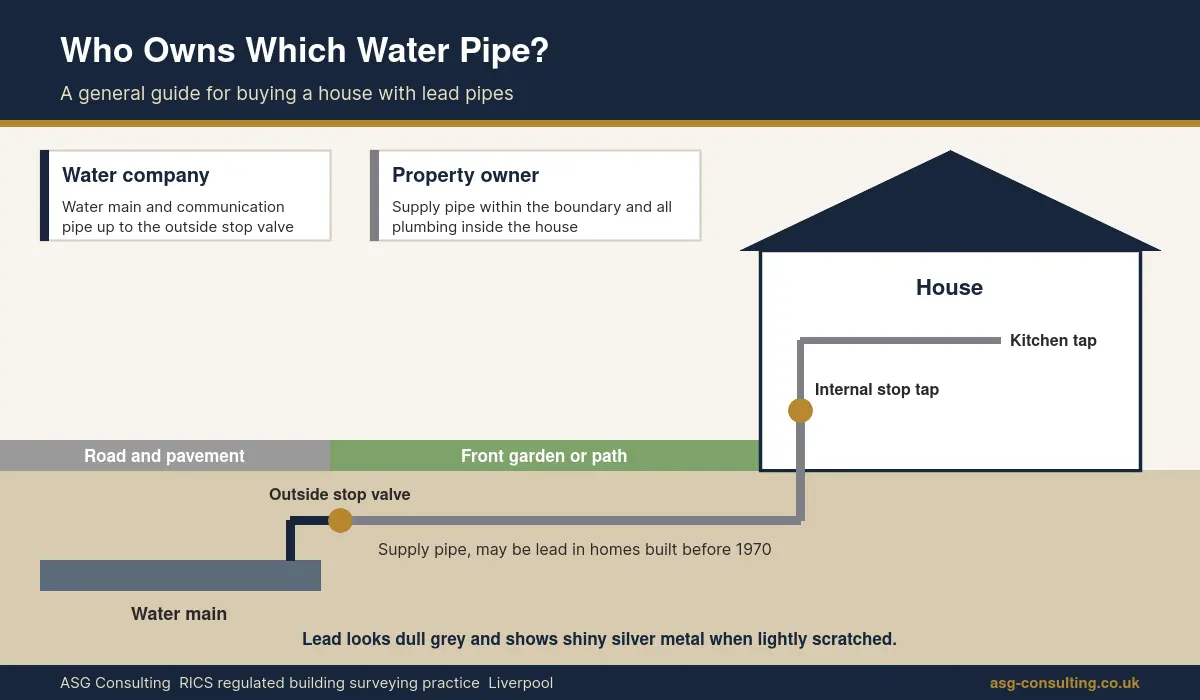
- Find the internal stop tap. This is where the water supply enters the house. It is usually under the kitchen sink, but can be in a cellar, a hallway cupboard or under the stairs.
- Look at the pipe just below the stop tap. This is the end of the supply pipe coming in from outside.
- Check the colour. Unpainted lead pipe looks dull grey. Copper is orange or brown, and plastic is usually blue, black or white.
- Look for a swollen joint. The Drinking Water Inspectorate notes that lead pipes often have a swollen, rounded joint next to the tap.
- Do a gentle scratch test. If the seller agrees, scrape the pipe lightly with a coin. Lead shows shiny silver metal underneath. Wear disposable gloves and do not breathe in any dust.
- Tap the pipe. Lead sounds dull, while copper and iron give more of a ring.
- Check other visible pipes. Look at pipes under sinks, in the loft and near the boiler for any other dull grey sections.
- Ask the seller. They may know whether the supply pipe has been replaced and may have paperwork.
If the pipe is painted or boxed in, it can be hard to tell. In that case, ask the seller or arrange for a plumber to check before exchange of contracts.
Who Is Responsible for Which Water Pipe?
Responsibility is split between the water company and the property owner. The details vary slightly, but the general position is set out below.
| Section of pipe | Where it runs | Usually responsible |
|---|---|---|
| Water main | Under the road or pavement | Water company |
| Communication pipe | From the main to the stop valve outside the property | Water company |
| Supply pipe | From the outside stop valve or boundary into the house | Property owner |
| Internal plumbing | Inside the house, up to the taps | Property owner |
| Shared supply pipe | A single pipe serving several homes | Shared between the homeowners it serves |
This means that if you buy a house with a lead supply pipe, replacing the section within the property boundary is normally your responsibility as the owner.
What About Lead in the Internal Plumbing?
The supply pipe under the garden is only part of the picture. In some older homes, lead was also used for pipes inside the house, especially the pipe running to the kitchen tap and pipes feeding old cold water tanks in the loft.
When buying a house with lead pipes, ask your plumber to check the internal pipework as well as the supply pipe. The Drinking Water Inspectorate explains that the property owner is responsible for all plumbing inside the home up to the kitchen tap. Replacing the supply pipe but leaving lead inside the house will not remove the problem.
Old lead pipework inside the house is often found under floors, behind kitchen units and in lofts. If you are planning a new kitchen, bathroom or heating system, it makes sense to replace any lead at the same time, while floors and units are already out.
Will a Survey Find Lead Pipes?
A RICS survey can comment on lead pipes where they are visible. During the inspection, a surveyor will usually look at the incoming water supply where it can be seen and note if it appears to be lead.
However, a survey has limits. Surveyors do not lift floors, open boxed in pipework or test the water. If the stop tap is hidden behind fitted units or the pipe has been painted, it may not be possible to confirm the material.
A RICS Level 2 HomeBuyer Survey is usually enough for a conventional house in reasonable condition, and our RICS HomeBuyer Survey in Liverpool page explains what it covers. For older or altered homes, a Level 3 Building Survey gives more detailed advice, as explained on our residential building surveying page.
What Are the Health Concerns?
The Drinking Water Inspectorate says that infants, including unborn babies, and children are most at risk from lead, because it can affect mental development. In adults, lead may affect kidney, heart and circulatory health.
The amount of lead in tap water depends on several things, including how long the water has been standing in the pipes, the length of lead pipe and the water chemistry. If you are concerned, the Drinking Water Inspectorate suggests asking your water company to test the water at the kitchen tap. For health advice, speak to your GP.
What Can You Do in the Short Term?
If you move into a home with lead pipes before they are replaced, there are simple steps that reduce exposure. United Utilities and the Drinking Water Inspectorate both suggest
- running the cold kitchen tap before using water for drinking or cooking, especially first thing in the morning or after you have been away
- using only the cold kitchen tap for drinking, cooking and making up baby feeds
- remembering that boiling water does not remove lead
- avoiding knocking or disturbing lead pipes
- flushing the tap well after any work on a lead pipe
These steps help, but they are not a permanent fix. United Utilities says the most reliable solution is to replace the lead pipe.
How Are Lead Pipes Replaced?
Replacing a lead supply pipe usually involves laying a new plastic pipe from the property boundary into the house, then connecting it to the internal plumbing. The water company then connects the new pipe to its side of the supply.
The typical process looks like this.
- Confirm with the water company that you have a lead supply pipe and whether it is single or shared.
- Apply for any help available before work starts.
- Use an approved plumber to dig a trench and lay the new pipe within your boundary.
- Replace any lead pipework inside the house, at least up to the kitchen tap.
- Have the work inspected.
- The water company connects the new pipe to the main.
The work can involve digging up a front garden, path or driveway, so it is worth planning before you landscape or lay new flooring. The WaterSafe scheme lists approved plumbers who can carry out this work.
What Help Is Available From United Utilities?
United Utilities supplies water across Liverpool, Merseyside and much of the North West. Its lead pipe replacement scheme offers a free connection of a replacement supply pipe from your boundary to the water main. It also says owners may be eligible for a grant of 550 pounds towards a private plumber for the work within the boundary.
There are conditions. According to United Utilities, you must own the property, have a lead supply pipe, have an active billing account and apply and be accepted before any work starts. The new pipe also has to meet set requirements, such as being laid at a minimum depth and fitted with a stop tap where it enters the building. Check the latest terms with United Utilities before you start, as schemes can change.
What If the Supply Pipe Is Shared?
Some older terraces and converted flats share a single supply pipe, sometimes called a common supply pipe. United Utilities explains that a shared supply pipe is jointly the responsibility of all the homeowners it serves.
If your new home is on a shared lead supply, your plumber can usually disconnect your property from the shared section and give you your own new supply. This can be simpler than agreeing joint works with neighbours, but it depends on the layout. Shared pipes can also make it harder to find leaks, so ask your solicitor to check any information about shared services.
Should Lead Pipes Affect Your Offer?
Lead pipes are a common issue in older homes and are not usually a reason to walk away. They are, however, a cost to plan for. Some buyers ask for a quote for replacement and use it when discussing the price, while others accept the issue and budget for the work.
Whether you can negotiate depends on the market, the property and what the asking price already reflects. A survey report that confirms visible lead pipes, alongside a quote from a plumber, gives you clear evidence if you do decide to discuss the price.
What Should You Ask the Seller?
Ask these questions early, and share the answers with your solicitor and surveyor.
- Do you know whether the water supply pipe is lead?
- Has the supply pipe or internal plumbing been replaced, and when?
- Is there any paperwork from a plumber or United Utilities?
- Is the water supply shared with neighbouring homes?
- Have there been any leaks, low water pressure or high water bills?
- Where is the internal stop tap, and does it work?
Our house viewing checklist covers other things to look at on a viewing.
What Mistakes Do Buyers Make With Lead Pipes?
Most problems come from assumptions rather than the pipes themselves. Common mistakes include
- Assuming the pipes were changed. A new kitchen or boiler does not always mean the supply pipe was replaced.
- Relying on the mortgage valuation. A valuation is for the lender and is not designed to check plumbing. Our guide to mortgage valuation vs survey explains the difference.
- Not checking before landscaping. Replacing the supply pipe may mean digging up a newly laid drive or garden.
- Starting work before applying. Help from the water company may depend on being accepted before work begins.
- Ignoring shared supplies. A shared pipe needs a different approach and may affect neighbours.
Lead Pipes in Liverpool Homes
Liverpool has a large stock of homes built before 1970, from Victorian and Edwardian terraces in areas such as Anfield, Kensington, Wavertree and Toxteth to 1930s semis in Allerton, Walton and Crosby. Many of these homes have had their plumbing updated over the years, but some still have lead supply pipes running under front gardens and paths.
Issues to look out for in older Liverpool homes include
- lead supply pipes surviving under front gardens after internal plumbing was replaced
- shared supply pipes serving rows of terraced houses
- stop taps hidden behind fitted kitchen units or in damp cellars
- old lead pipes in converted flats, where responsibility can be unclear
- leaks from old joints contributing to damp in cellars and ground floors
Our guides to a Victorian house survey and a 1930s house survey cover other common issues in these house types, and our damp cellar guide explains how leaks can affect basements.
Buying a House With Lead Pipes FAQs
Is it safe to buy a house with lead pipes?
Yes, many people do. Lead pipes are common in older homes and can be replaced. Plan and budget for replacement, and follow short term advice until the work is done.
How can I tell if a house has lead pipes?
Check the pipe below the internal stop tap. Lead is dull grey, soft and shows shiny silver metal when lightly scratched. It often has a swollen joint near the tap.
Who pays to replace lead pipes?
The owner is usually responsible for the supply pipe within the boundary and the internal plumbing. United Utilities offers help with its part and a possible grant.
Does a homebuyer survey check for lead pipes?
A surveyor will note visible lead pipework, but does not lift floors, open boxing or test the water. Hidden pipes may not be seen.
Should I ask the seller to replace lead pipes?
You can ask, or use a replacement quote when discussing the price. The right approach depends on the property and the market.
Do newer homes have lead pipes?
Homes built after 1970 are unlikely to have lead pipes, according to the Drinking Water Inspectorate.
Book a Survey With ASG Consulting
ASG Consulting is an RICS regulated building surveying practice in Liverpool. We carry out RICS Level 2 HomeBuyer Surveys and Level 3 Building Surveys on older homes across Liverpool, Merseyside, the Wirral and the wider North West, with reports usually delivered within 3 to 5 working days of the inspection. We give a fixed fee on request, usually confirmed within one working day. To request a quote, call 0151 315 0626 or visit our contact page.
About the Author
Dave MacMillan is the lead surveyor at ASG Consulting, an RICS regulated building surveying practice at 54 St James Street, Liverpool. He has 8 years of experience in building surveying and inspects homes for buyers across Liverpool, Merseyside and the North West.
Last updated 19 November 2026
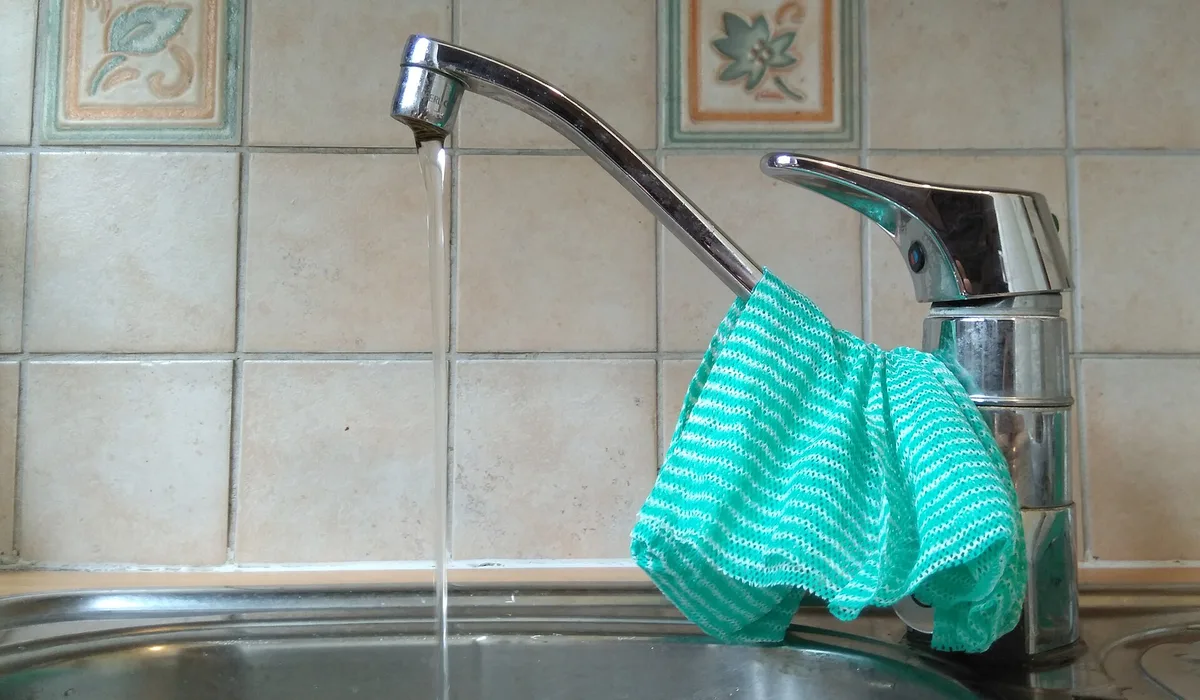
Featured photo of water running from a kitchen tap by Fourteenzerozero via Wikimedia Commons, public domain CC0, cropped.