You do not have to get a shared ownership survey, but it is strongly advisable. Under shared ownership you usually pay for all repairs and maintenance, whatever share you own. For a brand new home, a snagging survey checks the build quality. For a resale shared ownership home, a RICS Level 2 HomeBuyer Survey or Level 3 Building Survey is the right choice.
Shared ownership helps many first time buyers in Liverpool and the North West onto the property ladder, often in new developments of flats and houses. Because buyers start with a smaller share, it is tempting to save money by skipping the survey. That can be a costly mistake, because the repair bills usually land on you, not the housing association. This guide explains who pays for what in shared ownership, which survey to choose, and how to use the results before you commit.
In this guide
- What is shared ownership?
- Do you need a survey for shared ownership?
- Who pays for repairs in shared ownership?
- Which survey should you choose?
- What about new build shared ownership homes?
- What about resale shared ownership homes?
- Is the RICS valuation the same as a survey?
- What extra checks apply to flats?
- What should you check in the lease?
- How does a survey help with staircasing?
- What are the steps from offer to completion?
- Can you make changes to a shared ownership home?
- What should you ask the housing association?
- What mistakes do shared ownership buyers make?
- What affects the cost of the survey?
- Shared ownership in Liverpool
- FAQs
What Is Shared Ownership?
Shared ownership lets you buy a share of a home and pay rent on the rest, usually to a housing association. GOV.UK explains in its guide to the shared ownership scheme that you can buy a share of between 10 and 75 percent of the full market value of the home, with shares usually between 25 and 75 percent, and that you can buy more shares later, which is known as staircasing.
All shared ownership homes are leasehold, including houses. You usually pay rent on the share you do not own, along with ground rent and service charges where they apply.
Do You Need a Survey for Shared Ownership?
A survey is not a legal requirement, but it is one of the most important checks you can make. The main reason is repairs. Even if you own only a quarter of the home, you are usually responsible for all of the repairs and maintenance.
A shared ownership survey helps you
- find defects before you commit
- understand what repairs you may face and roughly when
- check new build quality and list snags for the developer
- negotiate on resale homes where defects are found
- plan your budget alongside rent, service charges and mortgage payments
Who Pays for Repairs in Shared Ownership?
GOV.UK explains on its page about shared ownership repairs and home improvements that you need to pay for repairs and maintenance no matter what share you own. This table summarises who usually pays.
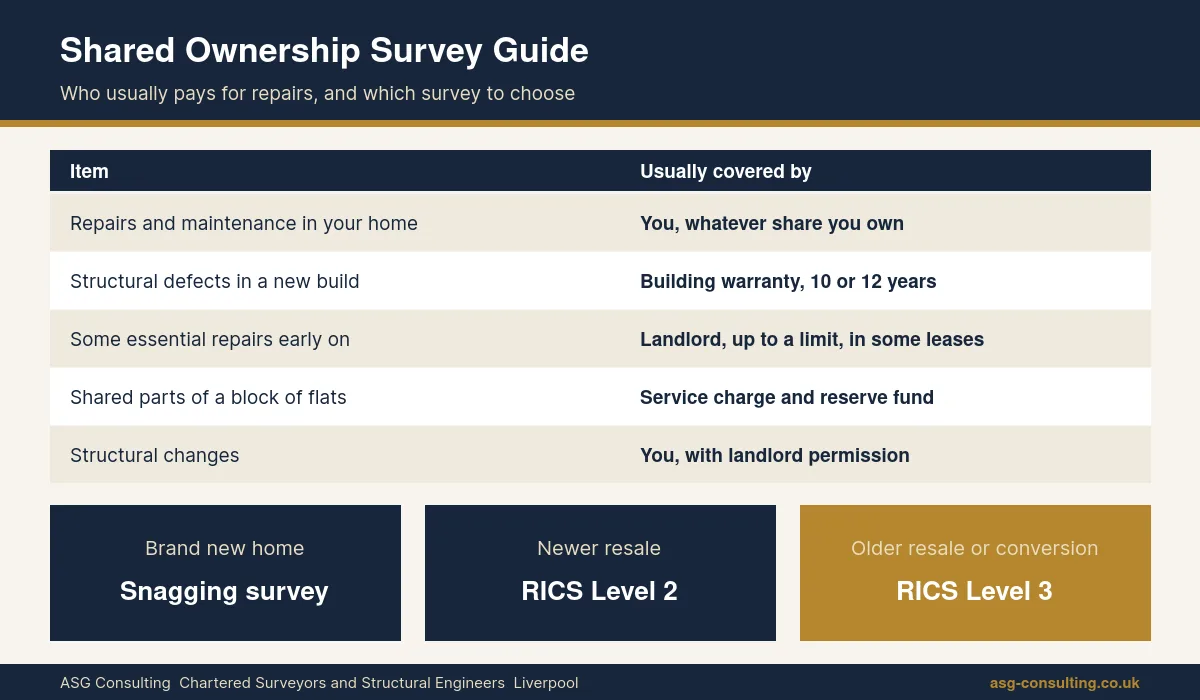
| Item | Usually covered by |
|---|---|
| Day to day repairs and maintenance inside your home | You |
| Structural defects in a new build home | The building warranty, usually for the first 10 or 12 years |
| Certain essential repairs during an initial repair period | The landlord, up to a limit, for leases that include this period |
| External and structural repairs in a block of flats | Usually arranged by the building owner and shared through the service charge |
| Decoration and improvements | You, with permission needed for structural changes |
GOV.UK says that where a lease includes an initial repair period, it usually lasts for 10 years if you own less than a full share, and you can claim up to 500 pounds a year from the landlord for repairs to certain water, gas, electricity and heating fixtures. You pay any costs above that amount yourself.
Which Survey Should You Choose?
The right shared ownership survey depends mainly on whether the home is brand new or a resale.
| Home | Suggested survey |
|---|---|
| Brand new home from a developer | Snagging survey |
| Newer resale home in good condition | RICS Level 2 HomeBuyer Survey, or Level 1 if very straightforward |
| Older resale home, or a conversion | RICS Level 3 Building Survey |
| Flat in a large block | Level 2 or Level 3, plus careful leasehold checks |
Our RICS HomeBuyer Survey in Liverpool page explains the Level 2 survey, our guide to the RICS Level 1 survey explains the most basic option, and our residential building surveying page covers the Level 3 Building Survey.
What About New Build Shared Ownership Homes?
Many shared ownership homes are new builds. New homes come with a building warranty, but that does not mean they are free from defects. Common snags include
- poor finishes to walls, ceilings, doors and skirting
- gaps and poor sealing around windows and doors
- missing insulation in lofts
- poorly fitted kitchens and bathrooms
- drainage, guttering and external paving issues
- missing or poorly fitted fire stopping in flats
A snagging survey records these issues so the developer can put them right, usually before you move in or within the first part of the warranty period. Our guide to a snagging survey explains the process, and our guide to new build vs old house compares the two types of home.
What About Resale Shared Ownership Homes?
A resale shared ownership home is one being sold by an existing shared owner. It may be a few years old or much older. Because the seller has already lived there, there may be wear and tear, alterations and defects that a buyer would not see on a short viewing.
A survey on a resale shared ownership home checks
- the roof, walls, windows and structure
- damp, condensation and ventilation
- signs of past leaks and repairs
- alterations and whether permission was likely needed
- the condition of shared parts you can see, for flats
Housing associations usually market resale homes for a set period before they can be sold more widely, so timings can be tight. Book your survey quickly once your offer is accepted. If the survey finds defects, raise them with the seller and the housing association straight away, because there may be limited time to renegotiate or ask for repairs before the sale moves on.
Is the RICS Valuation the Same as a Survey?
No. Shared ownership sales usually involve a RICS valuation to set the full market value of the home, which decides the price of your share. Your lender will also carry out its own valuation. Neither of these is a survey of the condition of the home.
A valuation answers the question of what the home is worth. A survey answers the question of what condition it is in and what needs doing. Our guide to mortgage valuation vs survey explains the difference in more detail.
What Extra Checks Apply to Flats?
Many shared ownership homes are flats. As well as the survey, check
- the service charge, what it covers and how it has changed
- whether there is a reserve fund for major works
- any planned major works and section 20 consultations
- building safety information, including fire safety and external walls
- who manages the building and how responsive they are
A survey of a flat can comment on the visible condition of shared parts, but most of this information comes through your solicitor. Our guides to a survey for buying a flat and a section 20 notice explain these checks.
What Should You Check in the Lease?
The lease sets out your rights and responsibilities. Your solicitor should explain
- the length of the lease
- your repairing obligations and any initial repair period
- how rent is reviewed and how it can rise
- service charges and ground rent
- rules on staircasing and selling
- whether you need permission for alterations or subletting
Knowing your repairing obligations makes the survey findings much more meaningful, because you will know which issues you will pay for. Ask your solicitor to go through the repair clauses with the survey report in front of you, so you can match each finding to the person responsible for fixing it.
How Does a Survey Help With Staircasing?
When you staircase, you buy more shares in the home, usually based on a new valuation. A survey does not set the price, but it helps you understand the condition of the home you are investing more money in.
If you plan to staircase within a few years, knowing about upcoming repairs, such as a roof nearing the end of its life or a boiler that will need replacing, helps you plan your finances. Keep your survey report as a record of the condition of the home when you bought it.
What Are the Steps From Offer to Completion?
A typical shared ownership purchase follows these steps.
- Check eligibility. Confirm you meet the scheme rules and get a mortgage agreement in principle.
- Reserve the home. Pay any reservation fee to the housing association or developer.
- Instruct a solicitor. Choose one experienced in shared ownership.
- Book the survey. A snagging survey for new builds or a RICS survey for resales.
- Review the results. Raise issues with the developer or seller, and get quotes where needed.
- Mortgage valuation. Your lender values the home.
- Exchange contracts. You become legally committed.
- Complete and move in. Keep your survey report and any snag lists safe.
ASG Consulting reports are usually delivered within 3 to 5 working days of the inspection, which helps you keep to tight shared ownership timetables. Our guide to how long a house survey takes explains the timings.
Can You Make Changes to a Shared Ownership Home?
You can usually decorate and refurbish without involving the landlord. GOV.UK says you might need written permission from your landlord to make structural changes, such as removing walls or building an extension.
This matters when you read a shared ownership survey on a resale home. If the seller has made structural changes, ask whether permission was given and whether building regulations approval was obtained. Unapproved alterations can cause problems with the landlord and with future buyers. Our guide to a regularisation certificate explains what can be done where approval is missing.
What Should You Ask the Housing Association?
Before you commit, ask the housing association or developer
- whether the lease includes an initial repair period, and what it covers
- how much the rent is and how it is reviewed each year
- what the service charge covers and how it has changed
- whether any major works or building safety works are planned
- how long the building warranty has left to run on a newer home
- how staircasing works and what fees apply
- what happens if you want to sell, including any nomination period
Write down the answers and share them with your solicitor straight away. They help you make sense of the survey findings and the true monthly cost of the home.
What Mistakes Do Shared Ownership Buyers Make?
Common mistakes include
- skipping the survey because they only own part of the home
- assuming the housing association will pay for repairs
- confusing the valuation with a survey
- not checking service charges and planned works on flats
- missing the deadline to report new build snags to the developer
- not budgeting for repairs alongside rent and mortgage payments
A shared ownership survey, a clear understanding of the lease and a realistic budget help you avoid all of these.
What Affects the Cost of the Survey?
The cost of a shared ownership survey is usually based on the full home, not your share, because the surveyor inspects the whole property. Fees depend on
- the type of survey
- the size and type of the home
- its age and condition
- location and access
ASG Consulting gives a fixed fee on request, usually confirmed within one working day. Our guide to home buyers survey costs explains the factors that affect survey fees.
Shared Ownership in Liverpool
Shared ownership homes in Liverpool and Merseyside include new build houses on suburban estates, apartments in and around the city centre, and resale homes on developments built over the past two decades. You will find shared ownership in many parts of the region, from Liverpool suburbs to towns such as Kirkby, Huyton, St Helens, Birkenhead and Bootle.
Common findings on surveys of shared ownership homes in the area include
- new build snags such as poor sealing, missing insulation and finishing defects
- condensation and mould in flats with poor ventilation
- worn flat roofs and balconies on older developments
- drainage and paving issues on newer estates
- service charge increases linked to building safety works in blocks of flats
A shared ownership survey helps you budget for these, so the monthly cost of shared ownership does not come with unexpected extras. It also gives you a clear record of the condition of the home when you bought it, which can be useful if you later staircase, sell or need to discuss repairs with the landlord or managing agent. For new build homes, keep your snagging report alongside your warranty documents, so you can show which defects were reported and when.
Shared Ownership Survey FAQs
Do I need a survey for shared ownership?
It is not compulsory, but it is strongly advisable because you usually pay for all repairs and maintenance, whatever share you own.
Which survey is best for shared ownership?
A snagging survey suits a brand new home. For resale homes, a RICS Level 2 HomeBuyer Survey or Level 3 Building Survey is usually the right choice.
Who pays for repairs in shared ownership?
You usually pay for repairs and maintenance, though the building warranty, an initial repair period in some leases and the service charge may cover certain costs.
Is the shared ownership valuation a survey?
No. The valuation sets the market value and the price of your share. It does not check the condition of the home in detail.
Does the survey cost less because I only own a share?
No. The surveyor inspects the whole home, so the fee is based on the full property, not your share.
Should I get a survey on a new build shared ownership home?
Yes. A snagging survey helps you get defects fixed by the developer before or soon after you move in.
Book a Survey With ASG Consulting
ASG Consulting is an RICS regulated building surveying practice in Liverpool. We carry out RICS Level 2 HomeBuyer Surveys and Level 3 Building Surveys for shared ownership buyers across Liverpool, Merseyside, the Wirral and the wider North West, with reports usually delivered within 3 to 5 working days of the inspection. We give a fixed fee on request, usually confirmed within one working day. To request a quote, call 0151 315 0626 or visit our contact page.
About the Author
Dave MacMillan is the lead surveyor at ASG Consulting, an RICS regulated building surveying practice at 54 St James Street, Liverpool. He has 8 years of experience in building surveying and inspects homes for buyers across Liverpool, Merseyside and the North West.
Last updated 17 November 2026
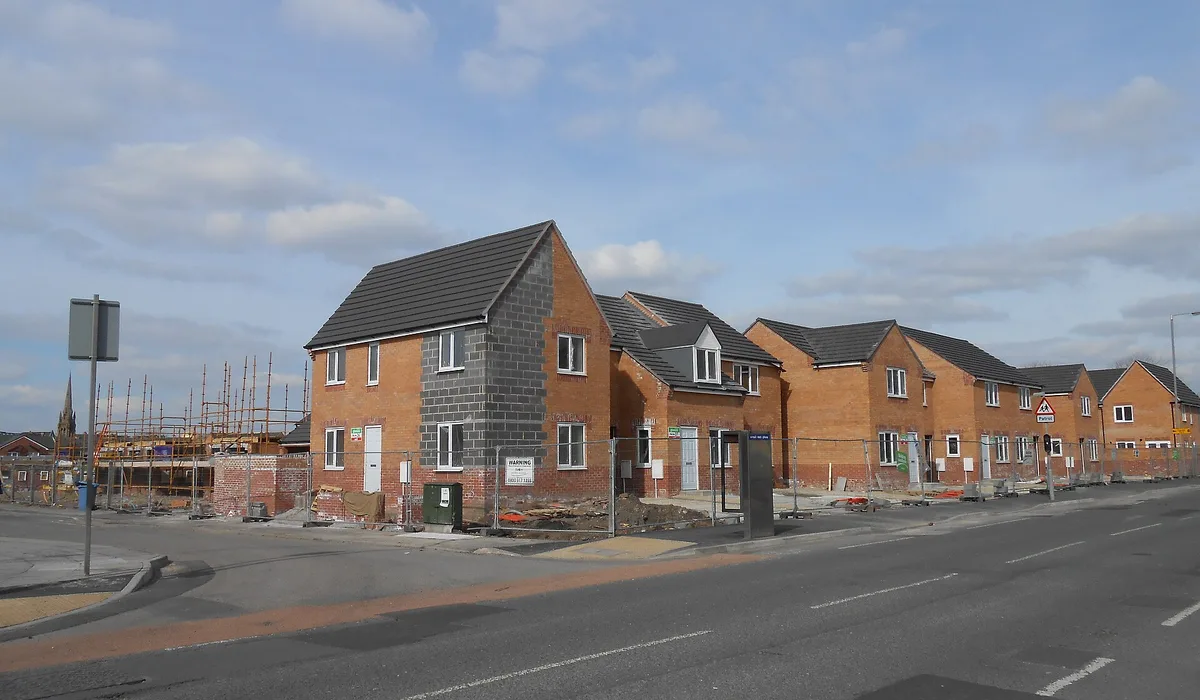
Featured photo of new houses on Kingsley Road, Toxteth by Rept0n1x via Wikimedia Commons, licence CC BY SA 3.0, cropped.