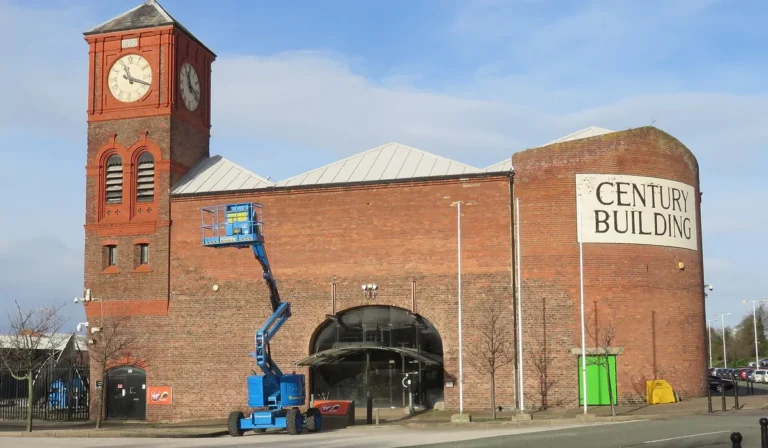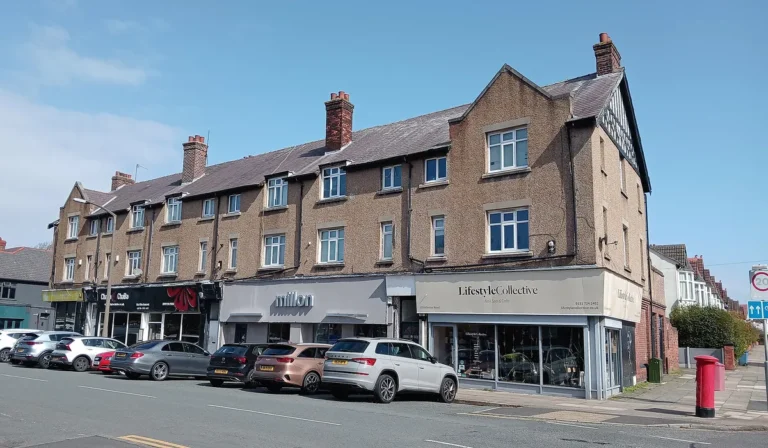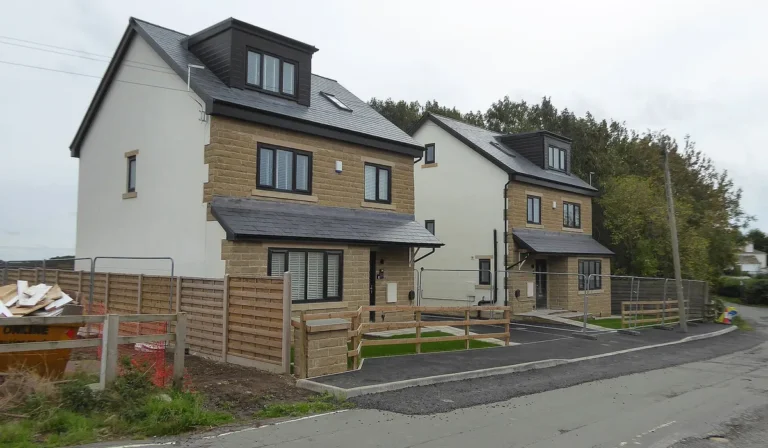
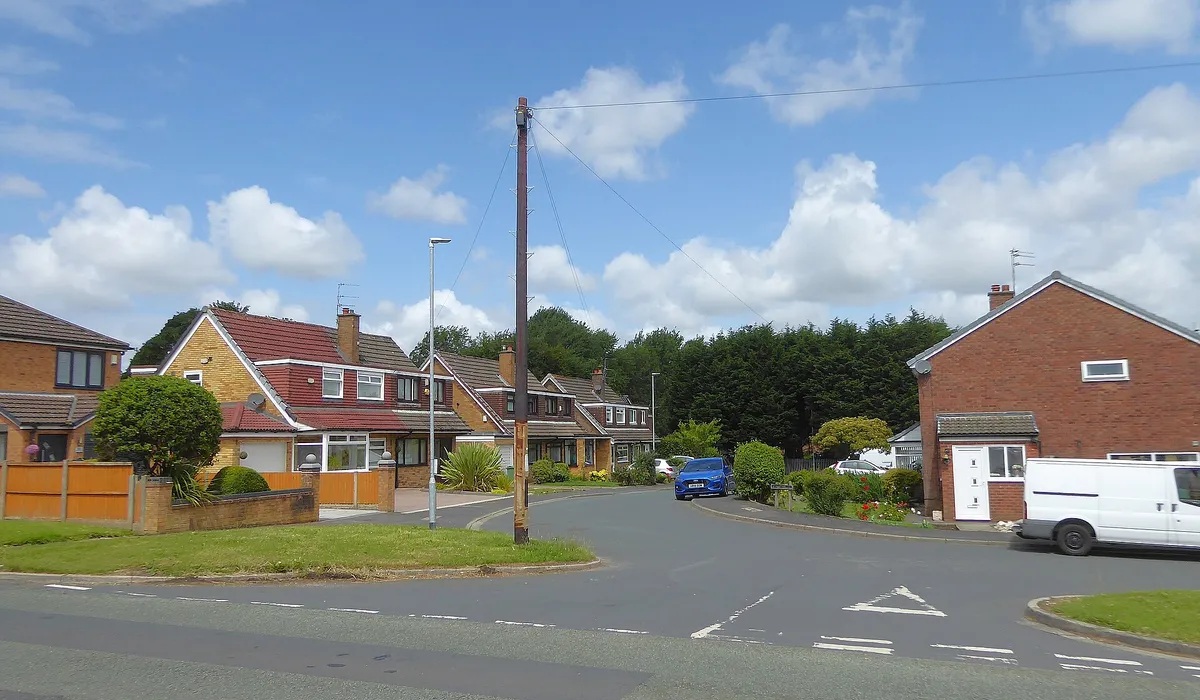
A bungalow survey should focus on the large roof, loft and roof timbers, any dormer or loft conversion, extensions, damp and condensation, and the construction type, because some older bungalows are non standard. For a conventional bungalow in reasonable condition, a RICS Level 2 HomeBuyer Survey usually suits. Converted, extended or older bungalows often need a Level 3.
Bungalows are in high demand and short supply. The HomeOwners Alliance reports that 38 percent of homeowners aged 55 and over would prefer a bungalow for their next move, while NHBC figures show bungalows made up 11 percent of new homes in 1990 but only 1 percent in 2024. With good bungalows selling quickly, buyers can feel pressure to skip checks. This guide is organised by bungalow type, from interwar and post war bungalows to dormer and chalet bungalows and prefabricated designs, so you can see what a bungalow survey should look for in the type you are buying.
In this guide
- Why do bungalows need a careful survey?
- What types of bungalow are there?
- What should you check on the roof and loft?
- What about dormer and chalet bungalows?
- What should you check on extensions?
- Are bungalows more prone to damp?
- What structural issues affect bungalows?
- What should you check for accessibility?
- Are bungalows expensive to heat?
- What should you look for when viewing?
- Can you extend or convert a bungalow?
- What questions should you ask the seller?
- What affects the cost of a bungalow survey?
- Which survey level do you need?
- Bungalows in Liverpool and Merseyside
- FAQs
Why Do Bungalows Need a Careful Survey?
A bungalow puts all its living space on one floor, which means a larger roof and larger ground floor area than a house of the same size. That shifts the balance of risk. The roof, loft, foundations and ground floor matter even more, and many bungalows have been altered over the years with dormers, loft rooms, extensions and conservatories.
The HomeOwners Alliance notes in its guide to buying a bungalow that roof replacement can be expensive because a bungalow roof covers a larger area, and that some older bungalows were built with non standard materials. A bungalow survey is the best way to find out which of these issues apply before you commit.
What Types of Bungalow Are There?
The age and design of the bungalow shapes what a survey is likely to find.
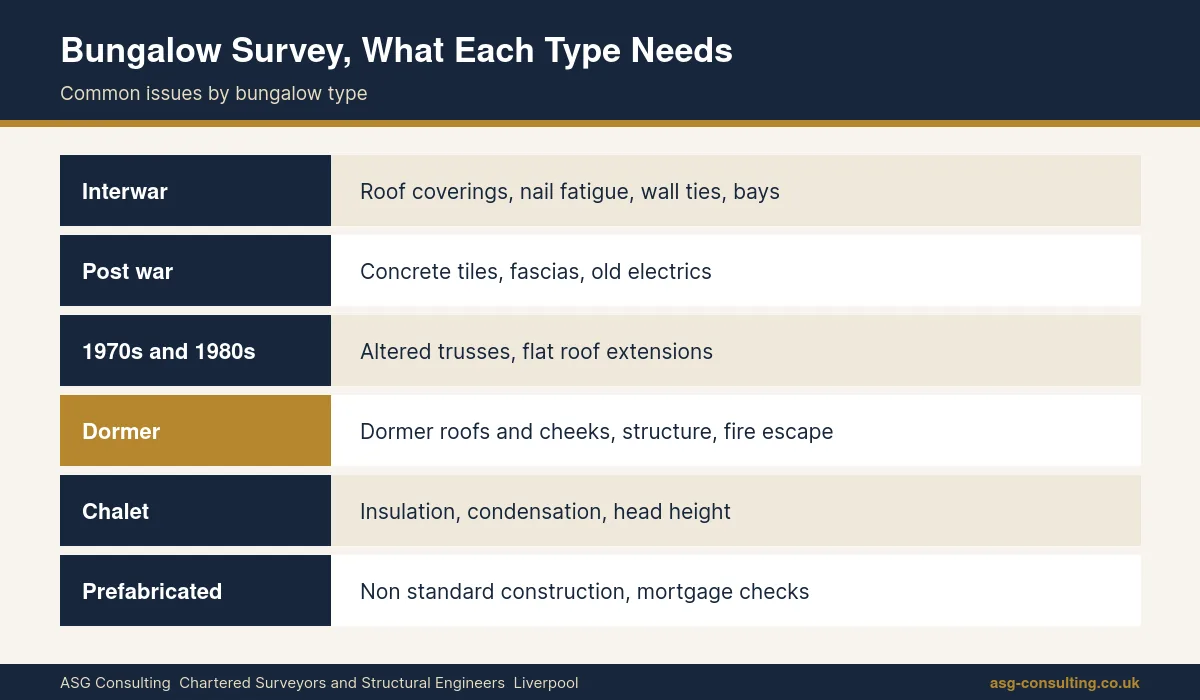
| Bungalow type | Typical features | What a survey often finds |
|---|---|---|
| Interwar, 1920s and 1930s | Brick, often early cavity walls, clay tile or slate roofs, bay windows | Worn roof coverings, nail fatigue, wall tie corrosion, bay cracking |
| Post war, 1950s and 1960s | Brick or block, concrete tiles, larger windows, picture windows | Concrete tiles near end of life, old electrics, single glazing replaced |
| 1970s and 1980s | Brick and block cavity walls, trussed rafter roofs, often estates | Altered roof trusses, flat roof extensions, cavity insulation issues |
| Dormer bungalow | Dormer windows in the roof adding rooms upstairs | Leaking dormer cheeks and flat roofs, structure, fire escape |
| Chalet bungalow | Upstairs rooms within a steep roof, sloping ceilings | Condensation, poor insulation, limited head height, ventilation |
| Prefabricated or system built | Concrete panels, timber or steel frame, often post war | Non standard construction affecting mortgages and insurance |
If the bungalow is prefabricated or system built, our guide to non standard construction explains the main types and how lenders treat them.
What Should You Check on the Roof and Loft?
The roof is usually the biggest single item on a bungalow survey report. Because it is large and often low pitched, defects can be expensive to put right. Look for
- slipped, missing, cracked or mismatched tiles and slates
- a sagging or uneven roof line
- worn fascias, soffits and gutters, often timber on older bungalows
- chimney stacks with cracked flaunching or failed flashings
- in the loft, daylight, damp staining, rot, cut or altered roof timbers and poor ventilation
- heavy concrete tiles replacing original lighter coverings
- sprayed foam applied to the underside of the roof
Trussed rafter roofs from the 1960s onwards are designed as a system, and cutting truss members to create loft storage or rooms can weaken the whole roof. A bungalow survey will flag altered trusses. Our guide to slate roof problems covers older slate coverings, and our high level drone surveying service can inspect large or low pitched roofs that are hard to see from the ground.
What About Dormer and Chalet Bungalows?
Dormer and chalet bungalows add space by using the roof, but they bring their own issues.
- Dormer roofs and cheeks. Flat dormer roofs and the side walls of dormers, called cheeks, are common sources of leaks.
- Structure. Loft rooms need floors and roof structures designed to carry them. Conversions without proper structural design may sag or crack.
- Insulation and condensation. Sloping ceilings and knee walls are often poorly insulated and ventilated, leading to cold rooms and condensation.
- Fire safety. Rooms in the roof need a safe escape route, usually a protected stair or escape windows.
- Paperwork. Ask for planning and building regulations approval for any conversion.
If the loft has been converted, our guide to a loft conversion structural engineer explains what a properly designed conversion should include, and our guide to a regularisation certificate explains what can be done if approval is missing.
What Should You Check on Extensions?
Bungalows often sit on generous plots, so many have been extended. The HomeOwners Alliance advises buyers to look for inconsistent floor levels, thin partition walls, DIY electrics, cracks, damp patches and poor insulation in extensions, and to ask for planning permission, building regulations approval and completion certificates.
A bungalow survey will also look at
- flat roofs over extensions, garages and porches, which have a limited life
- the junction between the extension and the original walls, where cracks and leaks often appear
- conservatories and sunrooms, including roofs, seals and foundations
- garage conversions and whether they meet current standards
Our guide to flat roof problems explains what to look for on extension roofs.
Are Bungalows More Prone to Damp?
They can be. All the living space is close to the ground, and large roofs and flat roofed extensions give more opportunity for leaks. Common causes of damp in bungalows include
- raised paths, patios and flower beds bridging the damp proof course
- blocked air bricks under suspended timber floors
- leaking flat roofs, dormers and gutters
- condensation from poor ventilation, especially in bathrooms, kitchens and rooms in the roof
- failed cavity wall insulation in exposed locations
Look for mould, musty smells, peeling paint, condensation around windows and staining near chimneys, dormers and extensions. Our guides to condensation in a house and penetrating damp explain the usual causes.
What Structural Issues Affect Bungalows?
Bungalows are generally lightweight structures with shallow foundations, which can make them sensitive to ground movement. A bungalow survey looks for
- cracking around doors, windows and bays, which can point to movement
- sloping floors, especially at the corners or where extensions meet the original building
- trees close to the bungalow on clay soils
- roof spread, where the roof pushes the tops of the walls outwards
- corroded wall ties in older cavity walls
Our guide to trees near house foundations explains how trees can affect shallow foundations, and our structural engineering team can investigate where movement is suspected.
What Should You Check for Accessibility?
Many buyers choose a bungalow to stay independent as they get older. If accessibility matters to you, check
- level or ramped access to the front and back doors
- parking close to the entrance
- door and corridor widths for wheelchairs or walking frames
- space for a level access shower or accessible bathroom
- steps, thresholds and changes in floor level between rooms and extensions
- garden paths, steps and slopes
A surveyor will not carry out an accessibility assessment, but can comment on the practicality and likely cost of adaptations alongside the condition of the building.
Are Bungalows Expensive to Heat?
They can be. The HomeOwners Alliance points out that wide roof spans and exposed walls can make bungalows more expensive to heat unless they are well insulated. Check the Energy Performance Certificate, the loft insulation, the age of the boiler and the windows, and whether any wall insulation has been added. Improvements are often straightforward in a bungalow, but they need to suit the construction to avoid damp.
What Should You Look For When Viewing a Bungalow?
Before paying for a bungalow survey, you can spot many warning signs yourself on a viewing.
- Stand back and look along the roof line for sagging, slipped tiles and patched repairs
- Check fascias, soffits and gutters for rot, leaks and staining on the walls below
- Look for cracks around windows, doors and where extensions meet the original walls
- Check whether paths and patios are higher than the damp proof course or cover air bricks
- Inside, look for damp patches on ceilings, especially under dormers, chimneys and flat roofs
- Check floors for slopes and bounce, especially at the edges of rooms
- Look into the loft if safe, checking for daylight, damp timbers and cut roof trusses
- Check the boiler, consumer unit and windows for age
Our house viewing checklist gives a fuller list to take with you.
Can You Extend or Convert a Bungalow?
Often yes, which is one of the attractions. Bungalows on generous plots can usually be extended to the side or rear, and many have roof space that can be converted into bedrooms with dormers or roof lights. Some owners add a full second storey.
Before you buy with plans in mind, check
- whether the roof structure is suitable for conversion, as trussed rafter roofs usually need significant structural work
- whether the foundations could carry extra loads, especially for a second storey
- planning restrictions, including conditions on the original permission or conservation areas
- the impact on neighbours, light and privacy
A Level 3 Building Survey can comment on the practicality of your plans, and a structural engineer can advise on the design.
What Questions Should You Ask the Seller?
These questions help you choose the right bungalow survey and spot potential problems early.
- When was the roof last replaced or repaired?
- Has the loft been converted or boarded, and were any roof timbers altered?
- What extensions or conservatories have been added, and is there paperwork?
- Has there been any damp, subsidence or insurance claim?
- When were the boiler and electrics last replaced or tested?
- Do you know how the bungalow was built, and has anyone described it as non standard?
What Affects the Cost of a Bungalow Survey?
The cost of a bungalow survey depends on the level of survey, the size and age of the bungalow, how much it has been extended or converted, and its condition. A large dormer bungalow with several extensions will take longer to inspect and report on than a compact, unaltered post war bungalow.
ASG Consulting gives a fixed fee on request, usually confirmed within one working day, so you know the cost before you book. Compared with the price of a bungalow and the cost of a new roof or structural repairs, the survey is usually a small part of the total cost of buying.
Which Survey Level Do You Need?
The right level of bungalow survey depends on its age, condition and how much it has been altered.
| Bungalow | Suggested survey |
|---|---|
| Modern or well maintained conventional bungalow, little altered | RICS Level 2 HomeBuyer Survey |
| Older bungalow, such as interwar or early post war | RICS Level 3 Building Survey in many cases |
| Dormer, chalet or converted bungalow | RICS Level 3 Building Survey |
| Extended bungalow or one needing work | RICS Level 3 Building Survey |
| Prefabricated or non standard bungalow | RICS Level 3 Building Survey with specialist advice |
For many straightforward bungalows, a Level 2 survey is the right fit and better value. Our RICS HomeBuyer Survey in Liverpool page explains the Level 2 survey, and our residential building surveying page covers the Level 3 Building Survey.
Bungalows in Liverpool and Merseyside
Bungalows are found across the suburbs of Liverpool and the wider region, including Maghull, Formby, Crosby, Halewood, Woolton and Gateacre, and on the Wirral in areas such as Moreton, Heswall, Greasby and Irby. Many date from the interwar and post war decades, with others built on 1970s and 1980s estates.
Common findings on a bungalow survey in Merseyside include
- worn concrete tile roofs and timber fascias on post war bungalows
- dormer conversions with leaking flat roofs and cheeks
- flat roofed extensions and garages near the end of their life
- damp from raised patios and blocked air bricks
- exposed coastal locations in Formby, Crosby and the Wirral where wind driven rain tests roofs and walls
- occasional non traditional bungalows on older estates
Most of these issues are fixable with sensible maintenance and budgeting. A bungalow survey tells you which apply to the property you are buying, how urgent they are and whether further investigation is needed, so you can plan the work or negotiate on price before you commit.
Bungalow Survey FAQs
Do I need a survey on a bungalow?
Yes. A bungalow survey checks the large roof, loft, extensions, damp and construction type, which can all be costly. A Level 2 survey suits many conventional bungalows, and a Level 3 suits older or altered ones.
What are common problems with bungalows?
Common problems include worn roof coverings, altered roof timbers, leaking dormers and flat roof extensions, damp from bridged damp proof courses or condensation, and cracking from movement on shallow foundations.
Are bungalows more expensive to maintain?
They can be, mainly because of the larger roof area. Roof repairs and replacements cost more than on a house with the same floor area spread over two storeys.
Which survey is best for a dormer bungalow?
A RICS Level 3 Building Survey is usually best, because dormer and loft conversions add structural, roofing, insulation and fire safety questions.
Are bungalows prone to damp?
They can be, because all rooms are close to the ground and large roofs and flat roofs give more chances for leaks. Good ventilation and clear air bricks help.
Why are bungalows so expensive?
Demand is high, especially from older buyers, and very few are now being built. NHBC figures cited by the HomeOwners Alliance show bungalows fell from 11 percent of new homes in 1990 to 1 percent in 2024.
Book a Bungalow Survey With ASG Consulting
ASG Consulting is an RICS regulated building surveying practice in Liverpool. We carry out RICS Level 2 HomeBuyer Surveys and Level 3 Building Surveys on bungalows across Liverpool, Merseyside, the Wirral and the wider North West, with reports usually delivered within 3 to 5 working days of the inspection. We give a fixed fee on request, usually confirmed within one working day. To request a quote, call 0151 315 0626 or visit our contact page.
About the Author
Dave MacMillan is the lead surveyor at ASG Consulting, an RICS regulated building surveying practice at 54 St James Street, Liverpool. He has 8 years of experience in building surveying and inspects homes for buyers across Liverpool, Merseyside and the North West.
Last updated 12 November 2026
Featured photo of chalet bungalows on Seddon Drive by Kevin Waterhouse via Wikimedia Commons, licence CC BY SA 2.0, cropped.