Flat roof problems are among the most common defects we find on homes and commercial buildings. Flat roofs cover extensions, garages, dormers, bay windows, blocks of flats and many commercial units, and because water drains away slowly, small faults can quickly turn into leaks, damp ceilings and rotten timber decks. The good news is that most problems give clear warning signs, and a well chosen covering that is installed and maintained properly can last for decades.
This guide is built as a lifespan and warning signs guide. It compares how long common flat roof coverings tend to last, explains the problems to look out for and their causes, shows what a flat roof survey involves, helps you decide between repair and replacement, and sets out a simple seasonal maintenance routine. It is written for homeowners, landlords and building managers in Liverpool, Merseyside and the North West.
In this guide
- Common flat roof coverings
- How long flat roofs last
- The main flat roof problems
- Problems by covering type
- Why flat roofs fail
- Signs inside the building
- What a flat roof survey involves
- Repair or replace
- Questions to ask a roofer
- Building regulations and insulation
- Buying a home with a flat roof
- Seasonal maintenance checklist
- Flat roofs on flats and commercial buildings
- Flat roofs in Liverpool
- FAQs
Common Flat Roof Coverings
A flat roof is never completely flat. It should have a gentle fall so that water runs to gutters or outlets. The covering is laid over a deck, usually timber boards or sheet material on joists, sometimes with insulation above or below. The main types of covering are as follows.
- Felt. Layers of bitumen felt, often finished with mineral chippings or a mineral surfaced cap sheet. Traditional, widely used and relatively cheap, but older systems are prone to cracking and blistering.
- GRP fibreglass. A glass reinforced plastic layer laid in place, giving a seamless, hard wearing surface when installed in dry conditions.
- EPDM rubber. A synthetic rubber membrane, often laid in a single sheet on smaller roofs, flexible and resistant to sunlight.
- Single ply membranes. Plastic membranes such as PVC or TPO, common on larger commercial roofs, with welded seams.
- Lead and other metals. Used on smaller roofs, bays and dormers, especially on older and period properties.
- Liquid coatings. Applied as a coating over an existing roof or new deck, often used for refurbishment.
How Long Flat Roofs Last
The chart below compares typical lifespans for four common coverings, along with the warning signs that a roof is reaching the end of its life.
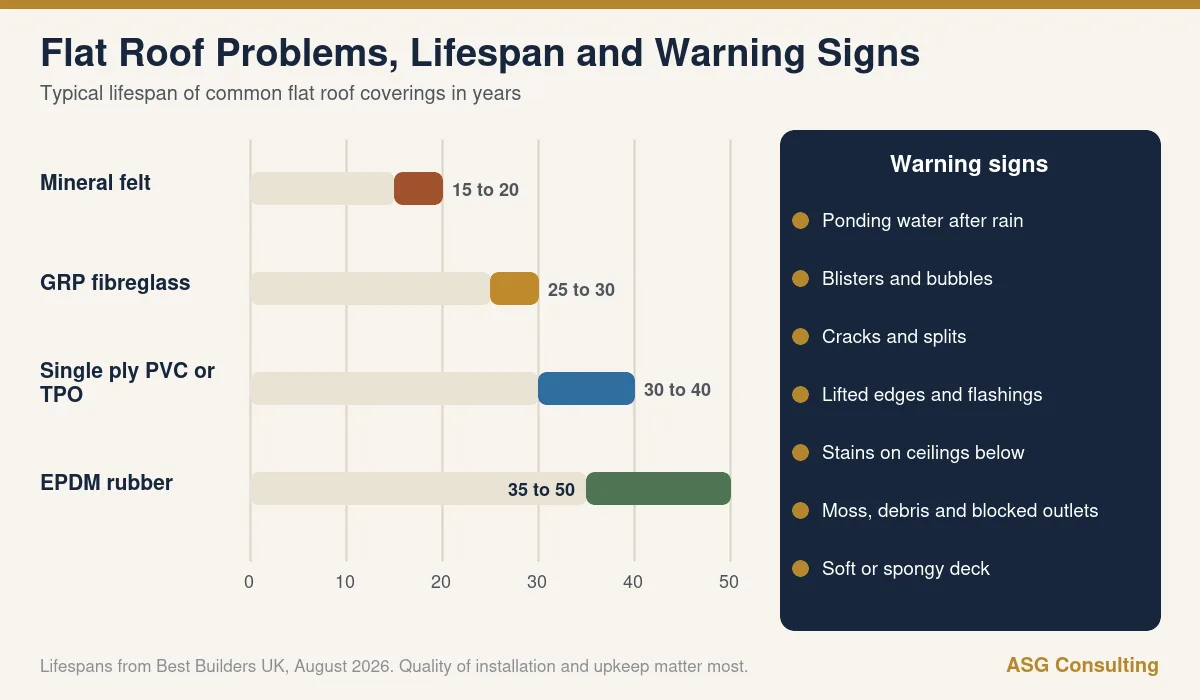
These figures, from the Best Builders roof lifespan comparison updated in August 2026, are typical ranges rather than guarantees. In practice, the quality of installation, the falls, exposure to sun and wind, foot traffic and maintenance often matter more than the material. A poorly laid rubber roof can fail long before a well laid felt one.
The Main Flat Roof Problems
These are the flat roof problems we find most often.
| Problem | What it looks like | Why it matters |
|---|---|---|
| Ponding | Pools of water that remain more than a day or two after rain | Adds weight, speeds up wear and finds any weak point |
| Blistering | Raised bubbles in felt or coatings | Trapped moisture or air can split the covering |
| Cracking and splitting | Fine crazing or open splits, often at joints and edges | Direct route for water into the deck |
| Failed upstands and flashings | Gaps where the roof meets walls, chimneys or rooflights | One of the most common leak points |
| Lifted or loose edges | Trims and edges coming away | Wind can get under the covering and lift it |
| Blocked outlets and gutters | Leaves, moss and debris around outlets | Causes ponding and overflow into walls |
| Soft or spongy deck | The roof gives underfoot | Suggests long term leaks and decayed timber |
One flat roof problem often leads to another. Ponding, for example, can speed up cracking and blistering, and a small leak at an upstand can rot the deck below over several years before anyone notices.
Flat Roof Problems by Covering Type
Each covering tends to fail in its own way, which helps a surveyor read the signs.
Felt roofs
Older felt roofs become brittle with age and sunlight. Typical flat roof problems on felt include crazing, cracking at laps and edges, blistering where moisture is trapped and loss of the protective chippings or mineral surface. Patches applied over many years are a sign the roof is nearing the end of its life.
GRP fibreglass roofs
GRP is hard wearing when laid well, but it is sensitive to installation conditions. Cracking at joints between the roof and trims, at board junctions or where the deck moves is common when the deck was not stable or the resin was applied in cold or damp weather.
EPDM rubber roofs
EPDM is flexible and long lasting, but problems can occur at seams, around outlets and at upstands if the adhesive or detailing was poor. Edges can pull back over time if the membrane was stretched during installation.
Lead and metal roofs
Lead expands and contracts with temperature. If pieces are too large or fixed too tightly, the metal can crack or split. On older homes, lead bays and dormers often show splits, lifted rolls and worn flashings.
Liquid coatings
Coatings rely on careful preparation of the surface below. If they are applied over a wet, dirty or failing roof, they can peel, blister or crack and simply hide the underlying problem for a short time.
Why Flat Roofs Fail
Understanding the cause helps you choose the right fix. The main reasons for flat roof problems are as follows.
- Poor falls. Roofs laid too flat, or that have sagged over time, hold water.
- Poor detailing. Upstands, edges, outlets and junctions are where most leaks start.
- Age and weathering. Sunlight, frost and temperature changes make some coverings brittle over time.
- Condensation. Warm, moist air from inside can condense under the deck if the roof is not built with the right insulation and vapour control. This can look like a leak.
- Foot traffic and damage. Walking on the roof, fixing aerials or satellite dishes, and storing items can damage the covering.
- Lack of maintenance. Blocked outlets and overgrown moss are simple to deal with but cause many leaks.
Condensation deserves a special mention. Some apparent flat roof problems are not leaks at all, but moisture from inside the building condensing within a cold roof. The cure is different, so diagnosis matters.
Signs Inside the Building
Many flat roof problems are first noticed from inside. Look for the following below any flat roof.
- Brown stains or tide marks on ceilings.
- Damp patches at the junction of ceiling and wall.
- Mould on ceilings, especially in corners.
- Peeling paint or bubbling plaster.
- Drips after heavy rain, or in cold weather when condensation is more likely.
- A musty smell, which can point to damp timber in the roof.
Long term damp in a flat roof can lead to rot in the deck and joists. Our guide to dry rot vs wet rot explains how to tell the types of timber decay apart.
What a Flat Roof Survey Involves
A flat roof survey aims to establish the condition of the covering, the cause of any problems and the best way forward. A typical flat roof survey includes the following.
- External inspection. Checking the covering, falls, upstands, flashings, edges, outlets and gutters, from safe access points.
- Internal inspection. Looking for stains, damp and mould below the roof, and taking moisture readings.
- Deck assessment. Checking for soft areas that may indicate decayed timber.
- Drone or elevated views. Useful for larger or higher roofs where safe access is difficult.
- Condensation risk. Considering how the roof is built and ventilated.
- Report. Explaining the findings, the remaining life of the covering and the options for repair or replacement.
For roofs that are hard to reach, our guides to drone roof inspection and whether drone surveys can detect roof leaks explain how aerial views can help without scaffolding.
Repair or Replace
Not every flat roof problem needs a new roof. This table gives a simple guide.
| Situation | Likely approach |
|---|---|
| Single leak at an upstand or flashing | Targeted repair |
| Blocked outlet causing ponding | Clear the outlet and check the falls |
| A few small blisters on a sound roof | Monitor or repair locally |
| Widespread cracking and multiple patches | Replacement is usually better value |
| Soft or rotten deck | Replace the affected deck and the covering |
| Covering near the end of its expected life | Plan replacement before major leaks |
| Condensation within the roof | Review the insulation and ventilation design |
Repeated patching of an old roof can cost more over time than a planned replacement. A flat roof survey report that estimates the remaining life of the covering helps you budget and choose the right moment.
Questions to Ask a Roofing Contractor
Once a flat roof survey has identified the problem, these questions help you compare quotes and avoid surprises.
- What will you do about the cause of the flat roof problems, not just the symptoms?
- Will the deck be inspected and any rotten boards replaced?
- How will the falls be improved if water is ponding?
- How will upstands, edges and outlets be detailed?
- Does the work need building regulations approval or insulation upgrades?
- What guarantee is offered, and is it insurance backed?
- Can you provide photographs of the deck and the finished work?
Clear answers to these questions are a good sign. A contractor who proposes a coating over a soft, wet deck without investigating is a warning sign.
Building Regulations and Insulation
Replacing a large part of a flat roof covering can count as building work under the Building Regulations, which may require the insulation to be brought up to a better standard at the same time. This can change the build up and height of the roof edges. Check the position with building control or your roofing contractor before the work is priced, so there are no surprises. Keep the completion paperwork, as buyers and their solicitors may ask for it later.
Buying a Home With a Flat Roof
Flat roofs on extensions, garages and dormers are very common, and they should not put you off a purchase. Your home survey will report on the visible condition of the roof and any signs of leaks below. Ask the seller how old the covering is, who installed it and whether there is a guarantee.
If the survey flags flat roof problems, consider a specialist flat roof survey or a roofing contractor quote before you commit, and use the findings to negotiate if needed. Our guide to the home buyers survey explains what a standard survey covers. If the flat roof is on an older extension with no approvals, our regularisation certificate guide explains the options.
Seasonal Maintenance Checklist
A few simple checks each year will prevent most flat roof problems. Where you cannot safely reach the roof, arrange for a contractor or surveyor to inspect it.
| Season | Checks |
|---|---|
| Spring | Look for winter damage, lifted edges, cracks and moss |
| Summer | Check for blistering and brittleness after hot spells, and carry out planned repairs in dry weather |
| Autumn | Clear leaves from outlets and gutters, and check upstands before winter |
| Winter | Check ceilings below for stains after storms, and watch for ponding |
Our guide to planned preventative maintenance shows how to build checks like these into a wider plan for your property.
Flat Roofs on Flats and Commercial Buildings
On blocks of flats and commercial buildings, flat roofs are often large and serve many occupiers. Flat roof problems on these buildings can affect several units at once, and the cost of repair is usually shared through service charges or recovered under a lease. A planned approach, with regular inspections, a record of repairs and a forecast of when the covering will need replacing, makes budgeting far easier.
If you are buying a flat on the top floor of a block with a flat roof, ask about the age of the roof, any planned works and the reserve fund. Our checklist for a survey for buying a flat covers these questions. For commercial premises, our commercial building surveying page explains our wider services.
Flat Roofs in Liverpool
Liverpool and Merseyside have large numbers of flat roofed extensions, garages and dormers, along with flat roofed blocks of flats, schools and commercial buildings from the post war decades. Wind driven rain along the coast and frequent wet weather put flat roofs under constant pressure, and leaves from mature street trees in suburbs such as Allerton, Woolton and Childwall can block outlets quickly in autumn.
When we carry out a flat roof survey in the region, the most common findings are ageing felt coverings, failed upstands at walls, ponding on extension roofs with poor falls and condensation in older cold deck roofs. Most of these flat roof problems can be dealt with economically if they are caught early.
Flat Roof Problems FAQs
How long should a flat roof last?
It depends on the covering and how well it was installed. Typical ranges are around 15 to 20 years for mineral felt, 25 to 30 years for GRP, 30 to 40 years for single ply membranes and 35 to 50 years for EPDM.
Is ponding on a flat roof a problem?
Small puddles that dry within a day or two are common, but water that stays longer adds weight, speeds up wear and can find any weak point. It usually means the falls or outlets need attention.
Can a flat roof leak be caused by condensation?
Yes. Moist air from inside can condense under a cold roof deck and drip back into the room, which can look like a leak. A flat roof survey can help tell the difference.
Should I repair or replace my flat roof?
Single leaks and small defects can often be repaired. Widespread cracking, a soft deck or a covering near the end of its life usually make replacement better value.
Can I walk on my flat roof?
Only if it is designed for foot traffic. Many domestic flat roofs are not, and walking on them can damage the covering.
Which flat roof covering is best?
There is no single best option. EPDM, GRP and single ply membranes are popular for their long lifespans, but installation quality, falls and detailing matter more than the material.
Do I need building regulations approval to replace a flat roof?
Replacing a large part of the covering may count as building work and require insulation upgrades. Check with building control or your contractor before work starts.
What does a flat roof survey cost?
It depends on the size, height and access of the roof and whether drone or elevated views are needed. Ask for a written quote for the specific building.
Book a Flat Roof Survey in Liverpool
ASG Consulting is regulated by RICS. Our surveyors investigate flat roof problems on homes, flats and commercial buildings across Liverpool, Merseyside and the North West, with clear advice on the cause, the remaining life and the best way forward. To get a quote, visit our residential building surveying page.
About the Author
Harry is a property content writer with 3 years of experience writing about building surveying, commercial property and property compliance in the UK. He writes the guides at ASG Consulting for buyers, tenants and landlords, turning survey practice into clear, practical advice.
Reviewed by Dave MacMillan MRICS, chartered surveyor at ASG Consulting. Dave checks the technical content of our guides against current RICS practice before they are published.
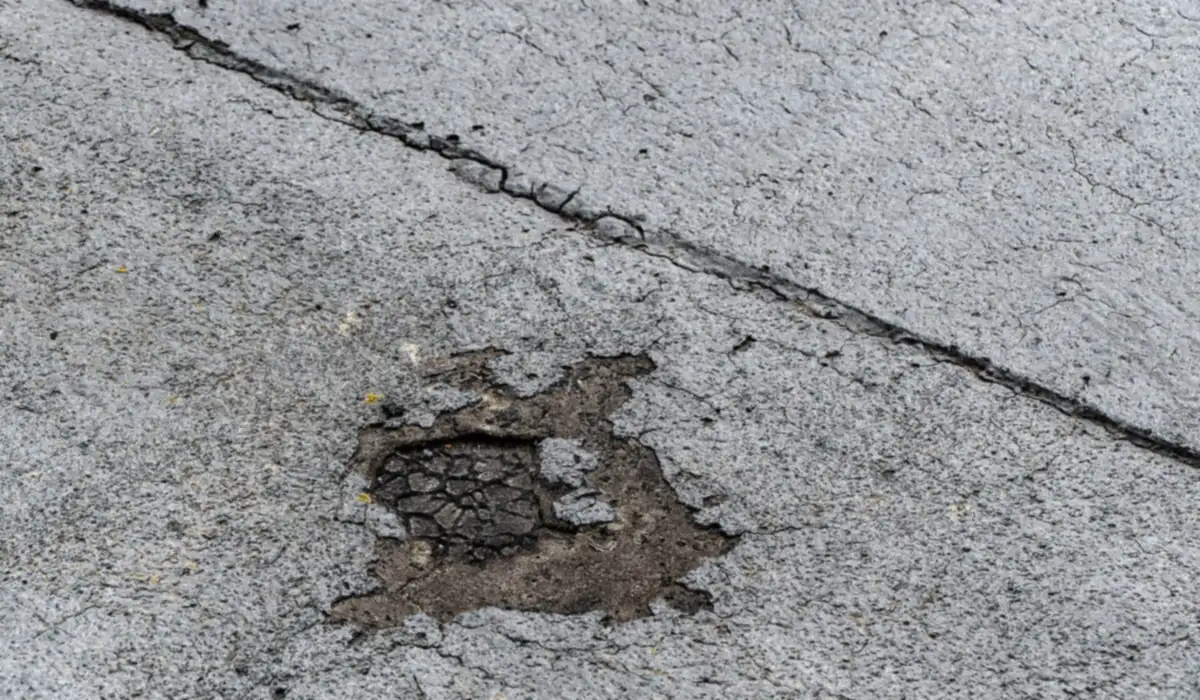
Featured photo of a damaged bituminous flat roof by W.carter via Wikimedia Commons, released under CC0, cropped.