A pre lease survey is an inspection of a commercial property carried out for a tenant before signing a lease. It identifies defects, estimates repair liabilities and supports negotiation of the repairing obligations, usually backed by a photographic schedule of condition attached to the lease. It can save a business from costly dilapidations claims later.
Many businesses sign a commercial lease after a quick viewing, focused on location, rent and layout. The repairing clause gets far less attention, even though it can make the tenant responsible for putting right defects that existed before they moved in. This guide walks through a pre lease survey step by step, from before heads of terms are agreed to the day the lease ends, so tenants in Liverpool and the North West understand what to check, what to negotiate and how to protect themselves.
In this guide
- What is a pre lease survey?
- Why do tenants need one?
- What does a full repairing lease mean?
- What are the steps from viewing to lease end?
- What does a pre lease survey cover?
- What information should you give the surveyor?
- How long does a pre lease survey take?
- How does a schedule of condition protect you?
- What can you negotiate using the survey?
- Which properties need extra care?
- What mistakes do tenants make?
- What happens if you lease without a survey?
- Is a pre lease survey useful for landlords?
- Commercial leases in Liverpool
- FAQs
What Is a Pre Lease Survey?
A pre lease survey, sometimes called a pre acquisition survey for leasehold premises, is a building survey commissioned by a prospective tenant before they commit to a commercial lease. The surveyor inspects the property, reports on its condition and explains what the proposed repairing obligations would mean in practice.
The survey usually covers the structure, roof, external walls, windows, internal finishes, building services where visible and any shared parts the tenant contributes to through the service charge. It is often paired with a schedule of condition, a detailed photographic record that can be attached to the lease to limit what the tenant must repair or return at the end.
Why Do Tenants Need One?
The main reason is cost. Many commercial leases make the tenant responsible for repairs to the whole property or a large part of it, regardless of its condition when the lease starts. Birketts explains in its guide on why a schedule of condition matters that the cost of this often only becomes clear at the end of the lease, when it forms the basis of a dilapidations claim, and that saying the premises were already in poor condition is not a defence.
A pre lease survey helps you
- understand the real cost of taking on the property, not just the rent
- spot defects that could disrupt your business, such as roof leaks or failing heating
- negotiate the repairing clause, rent free periods or landlord works
- agree a schedule of condition so you are not liable for existing defects
- plan a realistic budget for maintenance during the lease
What Does a Full Repairing Lease Mean?
Commercial leases commonly fall into three broad types when it comes to repairs.
| Lease type | Tenant responsibility | Typical use |
|---|---|---|
| Full repairing and insuring | Repair of the whole property, inside and out, plus insurance costs | Whole buildings, shops, industrial units |
| Internal repairing | Repair of the inside only, with the landlord responsible for the structure and exterior | Offices and units in multi let buildings |
| Service charge lease | Internal repairs plus a share of the landlord costs of repairing common parts | Shopping centres, office blocks, business parks |
Even an internal repairing lease can carry significant costs through the service charge, so a pre lease survey is useful for almost any commercial lease. Birketts notes that limiting the repairing obligation during negotiation can reduce the tenant liability, particularly where the premises are not new or newly refurbished.
What Are the Steps From Viewing to Lease End?
A pre lease survey fits into the leasing process like this.
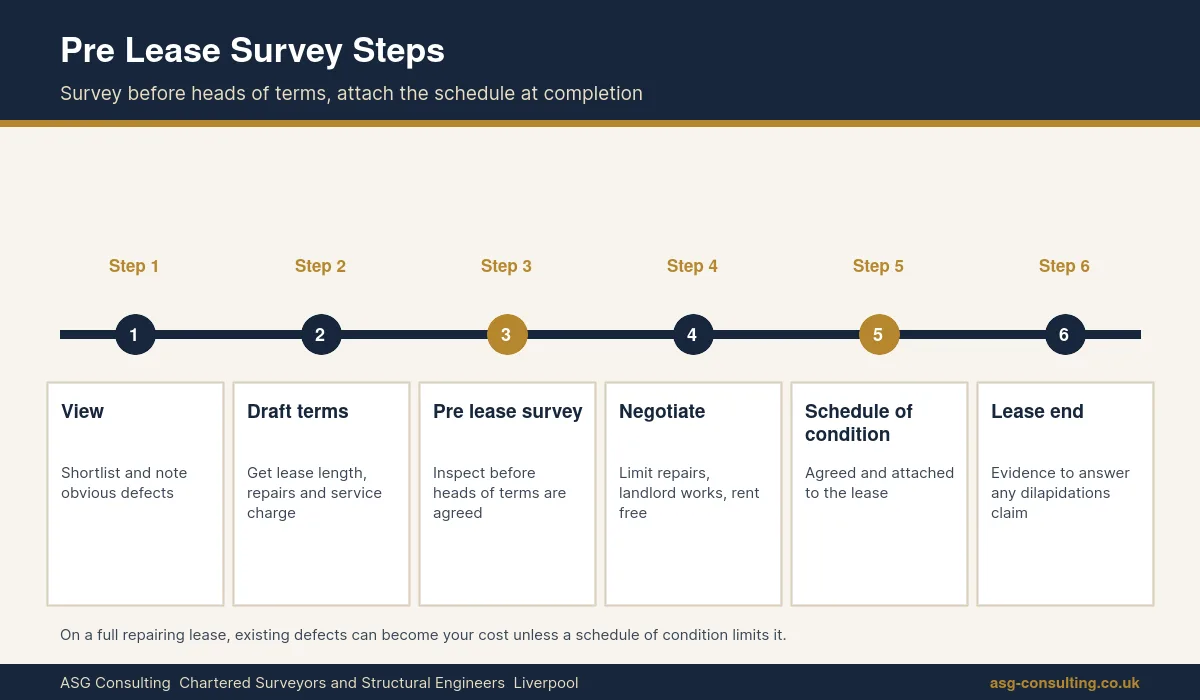
- View and shortlist. Note obvious defects, the age of the building and how the space would work for your business.
- Get draft heads of terms. Ask for the proposed lease length, rent, break clauses, repairing obligations and service charge details.
- Commission the pre lease survey. Do this before heads of terms are agreed, while you still have negotiating power.
- Review the report with your advisers. Your surveyor and solicitor should consider the defects alongside the draft lease.
- Negotiate. Use the findings to limit the repairing clause, agree landlord works, secure a rent free period or cap the service charge.
- Agree the schedule of condition. Have it prepared, agreed by both sides and attached to the lease at completion.
- Sign the lease and move in. Keep the survey and schedule safe for the life of the lease.
- Maintain during the lease. Carry out the repairs you are responsible for and keep records.
- Plan for lease end. Use the schedule of condition to respond to any dilapidations claim.
What Does a Pre Lease Survey Cover?
The scope can be tailored to the property and the lease, but a typical pre lease survey looks at
- Roof coverings and drainage. Often the most expensive item on a commercial building, especially flat roofs and profiled metal sheeting.
- External walls and cladding. Cracking, damp, corrosion, failed sealants and loose fixings.
- Windows, doors and shop fronts. Condition, security and weather tightness.
- Structure. Signs of movement, overloading or alterations.
- Internal finishes. Floors, ceilings, partitions and decorations.
- Building services. Visible condition of heating, air conditioning, lighting and drainage, with recommendations for specialist tests.
- Common parts. Shared roofs, structure, car parks and plant that may be recharged through the service charge.
- Statutory matters. Points such as fire safety, accessibility and asbestos records to raise with the landlord.
- Repair costs. An outline of likely repair costs over the lease term, so you can compare properties.
Our commercial building surveying service provides surveys for tenants, landlords and investors across the North West.
What Information Should You Give the Surveyor?
A pre lease survey is most useful when the surveyor can read it against the proposed lease. Before the inspection, send
- the draft heads of terms or draft lease, especially the repairing, decoration and reinstatement clauses
- the demise, which is the exact area you will lease, ideally on a plan
- service charge budgets, past accounts and any planned major works
- details of any landlord works promised before you move in
- your plans for fit out, alterations and use
- any existing reports, such as asbestos registers, fire risk assessments or previous schedules of condition
This lets the surveyor focus on the parts of the building you will be responsible for and flag the clauses that carry the most risk.
How Long Does a Pre Lease Survey Take?
The inspection for a small shop or office suite may take a few hours, while a large industrial unit or whole building can take a day or more. A schedule of condition can take longer, because every area must be photographed and described in detail.
ASG Consulting reports are usually delivered within 3 to 5 working days of the inspection. Build that time into your leasing timetable so the report is ready before you agree heads of terms, and the schedule of condition is ready before the lease completes.
How Does a Schedule of Condition Protect You?
A schedule of condition is a detailed written and photographic record of the property at the start of the lease. When the lease says the tenant does not have to put or keep the property in better condition than shown in the schedule, it limits the tenant repairing liability to the condition at the start.
Birketts highlights several points that make a schedule of condition effective.
- It should record every area that is not in good repair, and cover all of the premises.
- Where photographs cannot show an issue, written notes should be added.
- Items such as hidden pipes, cables and drains may not be photographable, and any area not shown may be presumed to be in good repair.
- It should be available when the lease completes and formally attached to or referred to in the lease. If it is left until later, it may never be agreed.
Our schedules of condition service prepares detailed, lease ready schedules for commercial tenants and landlords.
What Can You Negotiate Using the Survey?
A pre lease survey gives you evidence to support your position. Depending on the findings, you might ask for
| Finding | Possible negotiation |
|---|---|
| Roof near the end of its life | Landlord replaces it before the lease starts, or it is excluded from your repairing obligation |
| Widespread existing defects | Repair obligation limited to the condition shown in the schedule |
| Poor internal condition | A rent free period to cover refurbishment |
| Ageing heating or air conditioning | Landlord replaces the plant or takes responsibility for it |
| Major works planned to common parts | A service charge cap or exclusion of those costs |
| Uncertain long term costs | A shorter lease or a break clause |
The RICS professional standard on leasing business premises in England and Wales encourages landlords and tenants to negotiate leases openly, with clear information on repair responsibilities and service charges. Use that as a reason to ask for the information you need.
Which Properties Need Extra Care?
A pre lease survey is particularly valuable for
- older buildings, including Victorian and Edwardian offices and shops
- industrial and warehouse units with large roofs, cladding and yards
- buildings with flat roofs, plant or complex services
- listed buildings, where repairs must use suitable materials
- restaurants and leisure premises with extraction, drainage and fit out issues
- properties on longer leases, where liabilities build up over time
Shared buildings deserve particular attention, because you may be paying towards roofs, lifts, car parks and plant you never see, through the service charge. Ask the surveyor to look at those common parts as well as your own unit. If the building has signs of structural movement, our building pathology and defect analysis service can investigate the cause before you commit.
What Mistakes Do Tenants Make?
These are the most common and most expensive mistakes.
- Signing without a survey. Relying on a viewing and the agent particulars.
- Surveying too late. Once heads of terms are agreed, the landlord has less reason to concede.
- No schedule of condition. Or one that is vague, incomplete or not attached to the lease.
- Ignoring the service charge. Not asking for budgets, past accounts and planned major works.
- Overlooking the fit out. Not realising that alterations may need to be removed and the premises reinstated at the end.
- Not planning for the end. Forgetting about dilapidations until the landlord serves a claim.
Our guide to commercial dilapidations explains what happens at the end of a lease and how claims are assessed.
What Happens if You Lease Without a Survey?
Many tenants only discover the true cost of their lease at the end. Without a pre lease survey and schedule of condition, a tenant on a full repairing lease can face a claim for repairs to defects that existed before they moved in, plus the cost of removing their fit out and redecorating. Claims are assessed against the lease terms, not against what the tenant thought they had agreed.
The process for end of lease claims in England and Wales is set out in the pre action protocol for dilapidations claims. A clear survey and schedule from the start of the lease give you the evidence to respond to any claim fairly. Our dilapidations service supports tenants and landlords at the end of a lease.
Is a Pre Lease Survey Useful for Landlords?
Yes. Landlords also benefit from a clear record of condition at the start of a lease. It helps them
- agree a fair schedule of condition and avoid later disputes
- plan repairs and improvements before marketing the space
- set realistic service charge budgets
- support a future dilapidations claim with clear evidence
For landlords with several properties, our asset management service helps plan repairs and maintenance across a portfolio.
Commercial Leases in Liverpool
Liverpool has a wide mix of commercial property, from Georgian and Victorian offices in the Commercial District and around Castle Street, to retail units on Bold Street and Lord Street, creative spaces in the Baltic Triangle and industrial units in Speke, Bootle and Knowsley.
Common findings on pre lease surveys in the area include
- worn slate and flat roofs on older offices and shops
- leaking roof lights and gutters on industrial units
- corroded profiled metal cladding and fixings
- damp in basements and cellars of city centre buildings
- ageing heating and air conditioning plant
- shop fronts and signage fixed to historic facades
Wet weather from the Irish Sea is hard on roofs, gutters and external walls, so these deserve close attention in any lease.
Pre Lease Survey FAQs
What is a pre lease survey?
A pre lease survey is an inspection of a commercial property carried out for a prospective tenant before signing a lease. It reports on condition, highlights repair liabilities and supports negotiation of the lease terms.
When should I get a pre lease survey?
Before heads of terms are agreed, while you still have the most negotiating power. It also gives time to prepare a schedule of condition before the lease completes.
Do I need a schedule of condition for a commercial lease?
It is strongly advisable, especially for older buildings or full repairing leases. A schedule of condition attached to the lease can limit your repairing liability to the condition at the start.
What is a full repairing lease?
A full repairing and insuring lease makes the tenant responsible for repairing the whole property and paying the insurance costs, often regardless of its condition when the lease starts.
Can a pre lease survey reduce dilapidations?
Yes. By identifying existing defects and supporting a clear schedule of condition, a pre lease survey can significantly reduce the risk and size of a dilapidations claim at the end of the lease.
Who pays for a pre lease survey?
The prospective tenant usually pays, because the survey is for their benefit. Landlords sometimes commission their own surveys or schedules as well.
Book a Pre Lease Survey With ASG Consulting
ASG Consulting is an RICS regulated building surveying practice in Liverpool. We carry out commercial building surveys for tenants before they sign a lease, as well as schedules of condition for tenants and landlords, across Liverpool, Merseyside, Manchester and the wider North West, with reports usually delivered within 3 to 5 working days of the inspection. We give a fixed fee on request, usually confirmed within one working day. To request a quote, call 0151 315 0626 or visit our contact page.
About the Author
Dave MacMillan is the lead surveyor at ASG Consulting, an RICS regulated building surveying practice at 54 St James Street, Liverpool. He has 8 years of experience in building surveying and advises buyers, tenants and landlords across Liverpool, Merseyside and the North West.
Last updated 12 November 2026
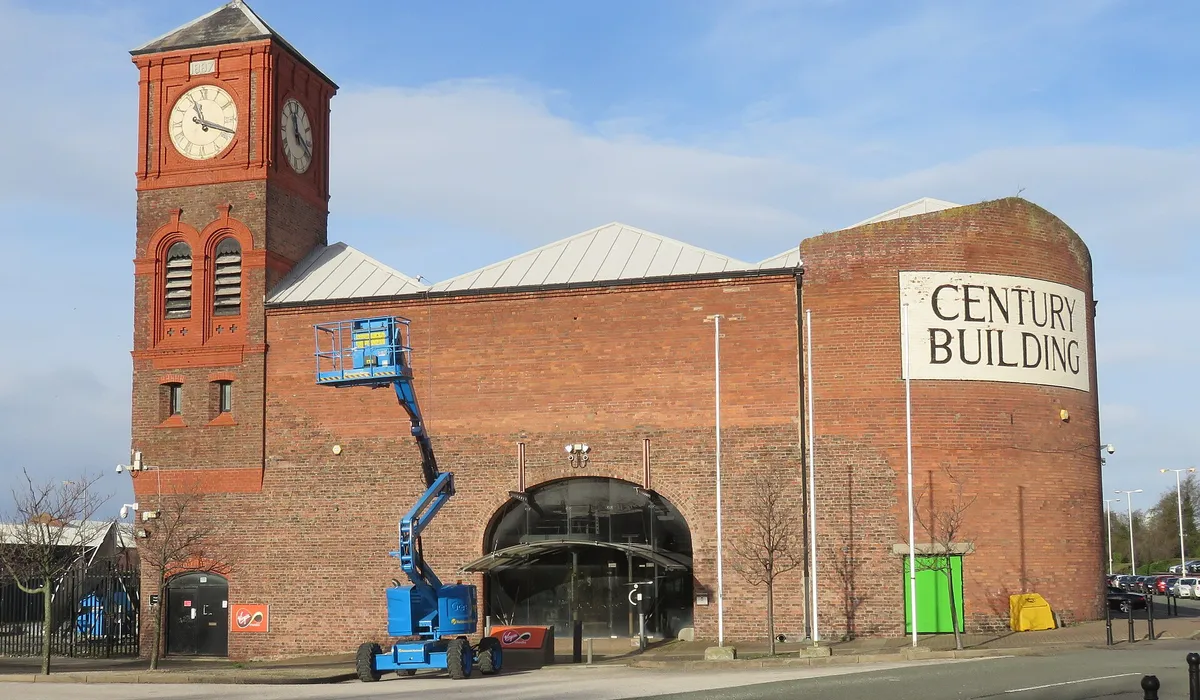
Featured photo of the Century Building in Brunswick Business Park, Liverpool by John S Turner via Wikimedia Commons, licence CC BY SA 2.0, cropped.