
If you’ve ever been handed a terminal schedule two months before your lease ends, you already know why people search for this topic in a mild panic. Commercial dilapidations sound like a niche legal term until they land a five-figure bill on your desk and then, suddenly, you care a lot.
This guide covers the legal basics quickly (you can find those anywhere), then goes into the stuff most articles skip entirely: how the accounting actually works, what it means for your tax bill, and whether the Renters’ Rights Act 2026 has anything to do with your lease at all. Spoiler: mostly not, but there’s a wrinkle worth knowing.
What Are Commercial Dilapidations?
Commercial dilapidations refer to a tenant’s obligations to repair, redecorate, and reinstate a leased property according to the lease terms. That’s the textbook definition. In practice, it’s the gap between what your lease says you owe and what your landlord says you owe and that gap is usually where the argument starts.
Interim vs Terminal Schedules
An interim schedule is served while the lease is still running, usually to flag ongoing breaches the landlord wants fixed now, not at the end. Some landlords use a Jervis v Harris clause here, letting them enter, do the work themselves, and recover the cost from you as a debt.
A terminal schedule shows up near or after lease expiry. It lists every repair, redecoration, and reinstatement item, and it’s almost always paired with a Quantified Demand, the actual money figure attached to the claim.
The Commercial Dilapidations Protocol and 56-Day Response Rule
The Ministry of Justice’s Dilapidations Protocol sets the expected conduct for both sides: share information early, use independent surveyors, try alternative dispute resolution before anyone mentions court. Tenants typically get 56 days to respond to a terminal schedule. Miss that window and you’ve weakened your negotiating position before you’ve even started.
The Section 18(1) Cap Explained
This is the bit every dilapidation surveyor claim eventually circles back to, so it’s worth getting right.
How Diminution in Value Limits a Landlord’s Claim
Under Section 18(1) of the Landlord and Tenant Act 1927, a landlord’s damages can’t exceed how much the disrepair has actually reduced the property’s market value. It sounds simple. It isn’t because “market value” is an opinion, and two surveyors can land on very different numbers using the same facts.
When Redevelopment Plans Wipe Out a Claim
Here’s the part landlords don’t love talking about: if they’re planning to demolish or substantially redevelop the building, the dilapidations claim can be reduced to almost nothing because the disrepair hasn’t actually cost them any value if the building’s coming down anyway. This single point has ended more disputes than any legal argument.
How Diminution Valuations Actually Work
Most guides mention Section 18 and stop there. This is where things actually get interesting, and where a lot of money gets decided.
The Two Valuation Methodologies Surveyors Use
Surveyors typically approach diminution one of two ways: comparing the property’s value in disrepair against its value if the repairs had been done, or working from investment yield calculations that reflect how disrepair affects a buyer’s willingness to pay. Neither method is “correct” in isolation which is exactly why disputes drag on.
Cost of Repair vs Diminution in Value Worked Example
Say the cost of repairs on a mid-size office comes to £80,000. But the landlord’s already got a signed agreement to redevelop the site next year. The diminution in value might realistically be closer to £5,000 because the repairs would be demolished along with everything else. This is exactly the scenario the Section 18 cap was built for, and it’s why “cost of repair” and “actual claim value” are often two completely different numbers.
What to Brief Your Surveyor to Include
Don’t just ask for “a dilapidations survey.” Ask your surveyor to address: the intended use of the building post-lease, comparable sales evidence, and whether redevelopment or relet is more likely. That framing changes the whole valuation.
Accounting for Dilapidations Under FRS 102
Right this is the section almost nobody writes about properly, and it’s arguably more useful to a finance director than anything above it.
When a Dilapidations Provision Must Be Recognised
Under FRS 102, a provision should be recognised once there’s a present obligation from a past event (signing the lease counts), the liability can be reliably estimated, and it’s probable the landlord will actually claim. In most commercial tenancies, all three boxes get ticked fairly early which surprises a lot of finance teams who assume it’s a lease-end problem, not a from-day-one problem.
FRS 12 vs FRS 102 What Changed
Under the old FRS 12, accountants genuinely disagreed on when the obligation arose at lease signing or lease end. FRS 102 (specifically Section 21, Provisions and Contingencies) cleared that up, and the practical effect is that the cost of dilapidations should be recognised progressively, not dumped as a shock expense in year ten.
How to Calculate an Annual Provision (Worked Example)
Picture a 10-year lease with an estimated £100,000 reinstatement liability at expiry. Rather than ignoring it until year nine, the provision gets built up annually roughly £10,000 a year, adjusted as the estimate is refined by periodic surveys. It’s not exact, and it shouldn’t be treated as exact but it keeps the balance sheet honest and avoids a nasty surprise later.
Tax Treatment and Corporation Tax Relief
This is where dilapidations planning stops being a compliance chore and starts being genuinely useful.
When a Provision Is Tax-Deductible
A dilapidation provision is generally tax-deductible provided profit wouldn’t be fairly stated without it, the provision is properly recorded in the accounts, and there’s a reliable figure behind it. Get a proper survey done and a vague guess won’t hold up if HMRC asks questions.
Adjusting the Provision Once Actual Costs Are Known
When the lease finally ends and the real bill comes in, there’s usually a reconciliation. If you provisioned more than you actually spent, the difference gets added back to taxable income in that year. If you provisioned less, well that’s a conversation with your accountant you’d rather have early than late.
Capital vs Revenue Works Why It Affects Your Tax Bill
Not all commercial dilapidations are treated equally. Revenue-type works (redecoration, repairs) tend to be deductible as the provision is taken. Capital works demolition, structural alteration generally aren’t, though they may later qualify for capital allowances once the expenditure actually happens. Mixing these up is one of the more common (and expensive) mistakes we see.
Does the Renters’ Rights Act 2026 Apply to Commercial Property?
Short answer: no, not directly. The Renters’ Rights Act is aimed squarely at residential tenancies assured tenancies, Section 21 abolition, that whole world. It doesn’t rewrite commercial lease law or touch the dilapidations protocol.
That said, it’s worth watching if your portfolio includes mixed-use buildings, because residential elements within a commercial structure could be affected even if the commercial dilapidations obligations themselves stay untouched. Worth a five-minute check with your solicitor, not a full re-strategy.
Dilapidations and Break Clauses
What “Reasonable Compliance” Looks Like Before a Break
Most break clauses require the tenant to have “materially complied” with lease covenants, not achieved perfection. Courts have taken a fairly practical view here minor, trivial breaches usually won’t scupper a break right. But “usually” is doing a lot of work in that sentence, so don’t rely on it without a pre-break survey confirming where you actually stand.
Sector-Specific Dilapidations Issues
Generic advice only gets you so far. The practical issues differ a lot depending on what kind of space you’re in.
Offices Cat A/Cat B Reinstatement
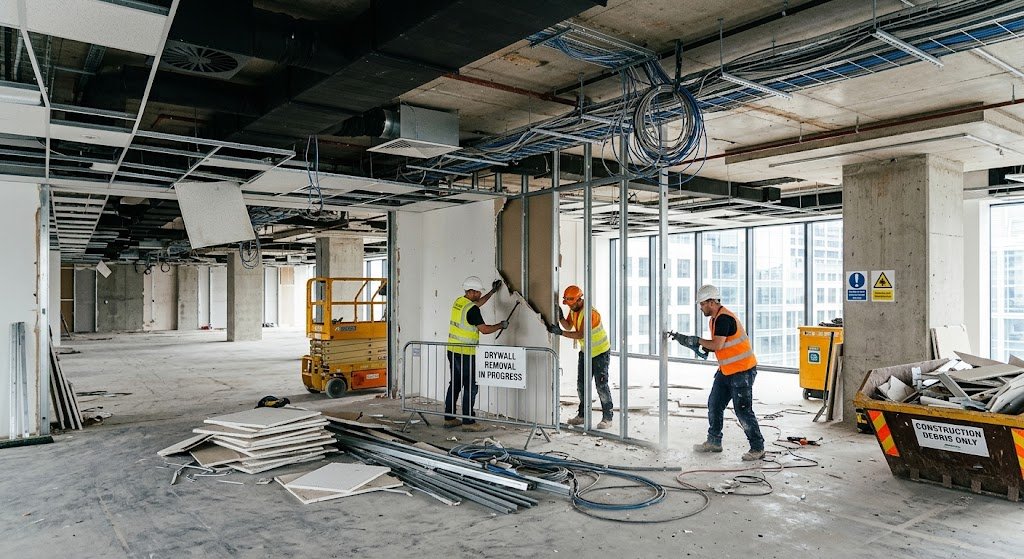
Office tenants often fit out well beyond the base Cat A shell partitions, cabling, bespoke lighting. Whether you’re required to strip all of that back to bare Cat A condition (or leave it as Cat B) depends entirely on your lease wording, and it’s one of the most contested areas in office dilapidations claims.
Retail Shopfront and Fit-Out Reinstatement
Retail units bring their own headaches: signage removal, shopfront reinstatement, sometimes structural changes made for a specific brand’s layout. These reinstatement costs can be disproportionately high relative to the unit’s size.
Industrial/Warehouse Plant and Machinery Liability
In industrial units, liability often extends to plant, racking systems, and machinery installed during the tenancy. Landlords sometimes argue these count as tenant fixtures requiring removal; tenants argue they’ve become part of the building. This one genuinely varies case by case.
Landlord Strategy: When to Pursue a Claim (and When Not To)
Using a Jervis v Harris Clause
If a lease includes a Jervis v Harris clause, landlords can enter mid-term, carry out the repairs themselves, and recover the cost as a straightforward debt claim sidestepping some of the Section 18 valuation arguments that dog terminal claims. It’s a genuinely underused tool.
Redevelopment vs Claim Value Is It Worth Pursuing?
Honestly, some landlords chase a full dilapidation claim purely on principle, even when redevelopment plans mean the Section 18 cap will gut the final figure anyway. Before instructing solicitors, it’s worth running the numbers: legal costs and surveyor fees can quietly outpace whatever’s actually recoverable.
Scott Schedules and the Dispute Process
When a claim is disputed, both sides’ surveyors typically use a Scott Schedule, a table lining up the landlord’s claimed items, the tenant’s response, and which items are agreed or still contested. It’s tedious, line-by-line work, but it’s usually what settles a case before it ever reaches a courtroom.
Timeline and Limitation Period
Landlords generally have up to six years from lease expiry to bring a dilapidation claim (or twelve, if the lease is by deed worth checking which applies to you). Tenants, meanwhile, should start planning their exit strategy 12 to 18 months before expiry, not two months before, which is when most panicked phone calls to surveyors seem to happen.
FAQs
Does the Renters' Rights Act 2026 apply to commercial property?
No, it’s focused on residential tenancies. Commercial dilapidations and lease obligations aren’t directly affected.
Can I walk away from a commercial lease?
Only if your lease has a break clause, or you negotiate a surrender with your landlord. Simply leaving doesn’t end your dilapidation liability; you’re still on the hook for rent and repair obligations until the lease legally ends.
How long does a landlord have to claim commercial dilapidations?
Generally six years from lease expiry, or twelve if the lease was executed as a deed.
What are the legal obligations of a commercial landlord?
It depends on the lease, but landlords typically must keep structural elements and shared areas in repair, while day-to-day internal repair obligations usually sit with the tenant.
Do commercial tenants have any rights?
Yes, including the right to a Schedule of Condition at lease start (protecting against liability for pre-existing damage), the right to the 56-day response period under the Protocol, and the right to challenge a claim through ADR before litigation.
What are the new rules for landlords in 2026?
Most 2026 changes (including the Renters’ Rights Act) target the residential sector. Commercial landlords should keep an eye on RICS’s updated dilapidations guidance note rather than expecting new statutory rules specific to commercial dilapidations.
The Bottom Line
Commercial dilapidations surveyors aren’t just a legal headache tacked onto the end of a lease they’re an accounting and tax issue from day one, whether your finance team realises it or not. Get a Schedule of Condition at the start, get a proper diminution valuation (not just a repair cost estimate) near the end, and talk to your accountant about FRS 102 provisions well before the lease clock runs out. The tenants and landlords who handle commercial dilapidations well aren’t the ones with the best lawyers, they’re the ones who started thinking about it early.