A listed building survey is a detailed inspection of a historic building that has legal protection, carried out by a surveyor who understands traditional materials and the rules that come with listing. Buying or owning a listed home is a privilege, but it is also a responsibility. The wrong repair, even one done with good intentions, can damage the building and can be a criminal offence if it needed consent and did not have it.
This guide is written as a practical checklist for buyers and owners. It explains what listing means, what a listed building survey should cover, what to do and what to avoid when caring for an old building, and a simple table showing which works usually need listed building consent. It focuses on Liverpool, Merseyside and the North West, where historic buildings are part of everyday streets.
In this guide
- What listing means
- Listing grades explained
- Why a listed building survey matters
- What the survey covers
- When to book
- Common defects found
- Choosing a listed building surveyor
- Buyer checklist
- What to do and avoid
- Which works need consent
- Using the report after you buy
- Unauthorised works
- Listed buildings in Liverpool
- FAQs
What Listing Means
A listed building is one that has been added to the National Heritage List for England because of its special architectural or historic interest. Listing protects the whole building, inside and out, not just the front elevation. It can also cover fixtures attached to the building and structures within its grounds that were built before July 1948, such as boundary walls, outbuildings and garden features.
Listing does not freeze a building in time. It means that changes affecting its character need listed building consent from the local planning authority, in addition to any planning permission or Building Regulations approval. The aim is to manage change carefully, not to prevent it.
Listing is also different from being in a conservation area. A conservation area controls changes to the character of an area as a whole, mainly from the street. A listed building is protected individually, including its interior. Many listed buildings in Liverpool sit within conservation areas, so both sets of rules can apply at once.
Listing Grades Explained
There are three grades of listed building in England.
- Grade I. Buildings of exceptional interest. Only a small share of listed buildings, around 2.5 per cent, are Grade I.
- Grade II star. Particularly important buildings of more than special interest, around 5.8 per cent of the total.
- Grade II. Buildings of special interest that warrant every effort to preserve them. This is the most common grade and includes most listed homes, around 91.7 per cent of the total.
The grade does not change whether consent is needed. Works to a Grade II terrace need consent just as works to a Grade I cathedral do, although the level of scrutiny tends to be higher for the higher grades.
Why a Listed Building Survey Matters
Historic buildings were built with different materials and methods from modern homes. Solid walls, lime mortar, timber lintels, lath and plaster ceilings and slate roofs all behave in their own way. A surveyor who is used to modern houses may recommend repairs that suit a new build but harm an old one, such as a chemical damp proof course, cement render or replacement uPVC windows.
A listed building survey looks at the building on its own terms. It explains what is original, what has been altered, what condition each element is in and what repairs will be needed, using methods that respect the building. It also flags past alterations that may not have had consent, which can become your problem once you own the property.
For buyers, a listed building survey is a chance to understand the true cost of ownership before committing. For owners, it is a plan for maintenance that keeps the building healthy and protects its value.
What a Listed Building Survey Covers
A good listed building survey is usually based on a RICS Level 3 building survey, extended to deal with the historic fabric. It typically covers the following.
- Construction and history. How the building was built, its likely age, and how it has changed over time.
- Roofs and rainwater goods. Slate, lead, chimneys, gutters and downpipes, which are the first line of defence against decay.
- Walls and pointing. Brick or stone condition, lime or cement pointing, render and signs of movement.
- Damp and breathability. Whether moisture is being trapped by modern materials, and what the real source of any damp is.
- Timber. Floors, roof timbers, lintels and joinery, including signs of rot and beetle.
- Windows and doors. Original sash windows, shutters and doors, and their repairability.
- Interiors. Plasterwork, cornices, fireplaces, staircases and other features that form part of the listing.
- Services. Electrics, heating and drainage, and how they have been fitted through historic fabric.
- Alterations and consent. Works that look recent and may need checking against the council records.
- Repair priorities. What is urgent, what can wait, and the approach that respects the building.
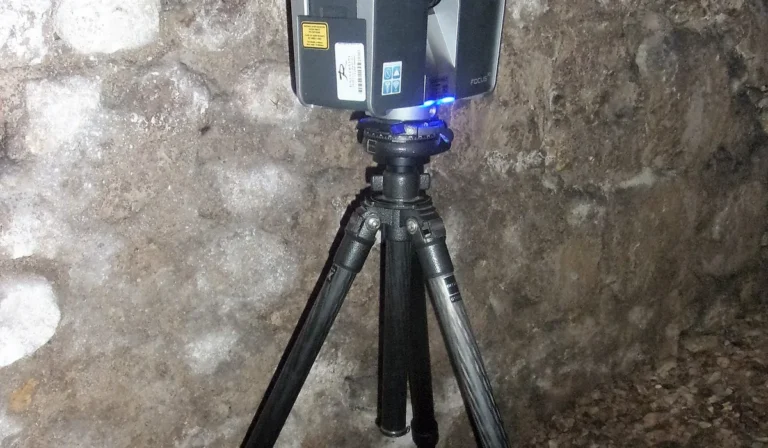
Where the building needs drawings for a consent application, a measured building surveyor can produce accurate plans and elevations of the existing building.
When to Book a Listed Building Survey
For buyers, the best time to book a listed building survey is as soon as your offer is accepted and before you instruct a solicitor to exchange. That leaves time to get quotes for repairs, check consents and renegotiate if needed. If the building is large or complex, book early, because the inspection and report take longer than for a modern house.
Owners also benefit from a survey at key moments. A listed building survey before you plan alterations shows which parts of the building are most sensitive and helps shape a design the conservation officer is more likely to support. A survey every five years or so, often called a condition survey, keeps maintenance on track and catches small problems before they become expensive. It is also wise to commission a survey after storm damage, flooding or any sign of movement.
Common Defects Found in Listed Homes
Every building is different, but the same issues appear again and again in a listed building survey of an older home.
- Slipped and broken slates, failed nails and worn lead flashings that let water into the roof.
- Chimney problems, such as leaning stacks, eroded pointing and unused flues without ventilation.
- Blocked or leaking gutters that soak the walls below and feed rot in timber lintels and joists.
- Hard cement pointing and render applied in past repairs, which traps moisture and makes soft brick crumble.
- Decayed sash windows, often repairable by a joiner without full replacement.
- Basement and ground floor damp, usually linked to raised ground levels, leaking drains or poor ventilation.
- Timber decay and beetle in floors and roof timbers where moisture has been present for a long time.
- Historic structural movement, which is common in old buildings and often stable, but needs judging carefully.
- Poor past alterations, such as removed chimney breasts, cut joists and inappropriate extensions.
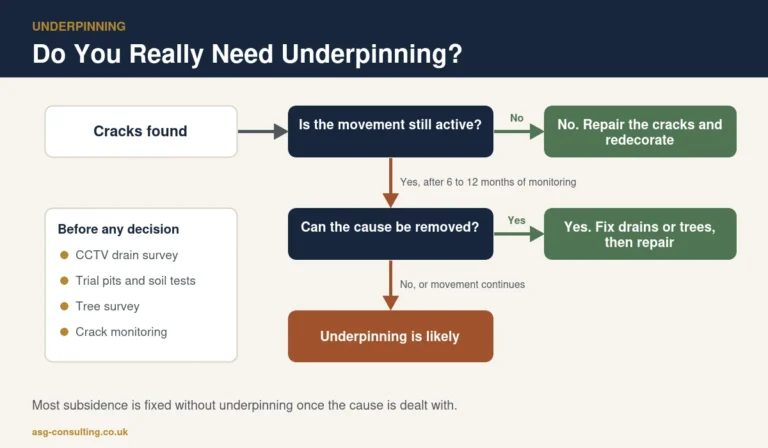
If the survey finds cracking, our guide to cracks in walls explains how surveyors judge whether movement is old and stable or still active. A listed building surveyor will usually recommend a structural engineer with heritage experience if the movement looks significant.
Choosing a Listed Building Surveyor
Not every surveyor is the right fit for a historic building. When you choose a listed building surveyor, look for these points.
- RICS regulation, so the survey follows professional standards and is backed by insurance.
- Experience with old buildings, ideally with examples of similar age and type.
- Knowledge of traditional materials, such as lime, slate, lead and timber sash windows.
- Conservation awareness. Some surveyors hold the RICS Building Conservation Accreditation, which shows extra training in this area.
- Local knowledge of the council conservation team and the building styles in your area.
- A clear written quote that sets out what the survey includes and how the report will be presented.
Our guide to choosing a Level 3 surveyor in Liverpool explains more about comparing surveyors and reports.
Buyer Checklist for a Listed Home
Use this checklist before you exchange contracts on a listed property.
- Check the listing entry on the National Heritage List to confirm the grade and description.
- Ask the seller for any listed building consents, planning permissions and Building Regulations records.
- Ask your solicitor to check the council records for past consents and any enforcement history.
- Book a listed building survey with a surveyor who knows historic buildings.
- Compare recent alterations with the consent records, and ask questions about anything that does not match.
- Get insurance quotes from insurers who cover listed buildings, as rebuilding costs can be high.
- Budget for maintenance using traditional materials, which can cost more than modern alternatives.
- Talk to the conservation officer early if you plan to make changes after you buy.
- Use the listed building survey findings to negotiate if repairs are needed or alterations need regularising.
What to Do and Avoid as a Listed Building Owner
The infographic below sums up the main rules of thumb for caring for a listed building.
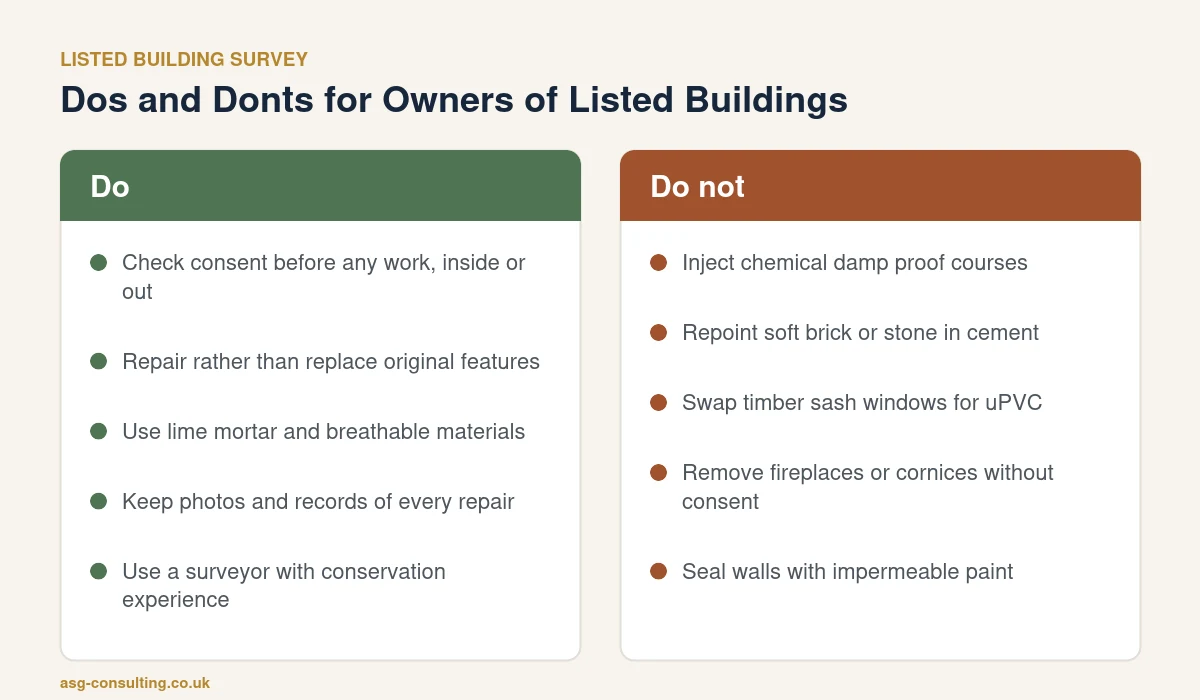
Do
- Repair rather than replace, keeping as much original fabric as possible.
- Use like for like materials, such as lime mortar, natural slate and timber sash windows.
- Keep gutters and downpipes clear, because water is the main cause of decay in old buildings.
- Let walls breathe, using breathable paints and plasters.
- Keep records of repairs, consents and specialist reports.
- Speak to the conservation officer before you start any significant work.
Avoid
- Repoint soft brick or stone with hard cement mortar, which traps moisture and damages the masonry.
- Inject a chemical damp proof course without understanding the real cause of damp.
- Fit uPVC windows or doors, which almost always need consent and are rarely approved.
- Remove fireplaces, cornices, panelling or internal walls without consent.
- Paint or render brickwork that was meant to be exposed.
- Assume a previous owner had consent for past alterations.
Which Works Need Listed Building Consent
The table below is a general guide. Every case is different, so always check with your local planning authority before you start work. Historic England guidance on listed building consent explains the process in more detail.
| Type of work | Consent usually needed |
|---|---|
| Like for like repairs in matching materials | Often not, but check first |
| Replacing timber windows with uPVC | Yes, and rarely approved |
| Removing internal walls or fireplaces | Yes |
| Repointing in a different mortar | Usually yes |
| Painting or rendering exposed brickwork | Usually yes |
| New kitchen or bathroom affecting historic fabric | Often yes |
| Solar panels or satellite dishes | Usually yes |
| Internal redecoration with breathable paint | Usually not |
| Extensions and structural alterations | Yes, plus planning permission |
There is no fee for a listed building consent application in England, but it does take time, and you may need drawings, a heritage statement and specialist reports. Starting early avoids delays to your plans.
Using Your Listed Building Survey After You Buy
A listed building survey is not just a tool for the purchase. Once you own the property, the report becomes the starting point for a maintenance plan. Sort the recommendations into urgent repairs, work to plan in the next few years and routine checks, and keep the report with your consents and invoices.
When you are ready to make changes, share the relevant parts of the survey with your architect and the conservation officer. Showing that you understand the condition and significance of the building makes the consent process smoother. Many owners ask the same listed building surveyor to revisit after major repairs, so that the record of the building stays up to date for insurers and future buyers.
Unauthorised Works and What Happens Next
Carrying out works to a listed building that need consent without getting it is a criminal offence. Penalties can include an unlimited fine and, in serious cases, imprisonment. The local authority can also issue a listed building enforcement notice requiring the works to be reversed.
Importantly, liability for unauthorised works runs with the property. If you buy a listed building with unauthorised alterations, the council can require you to put them right, even though you did not carry them out. Listed building consent cannot be granted after the event, but unauthorised works can sometimes be regularised through a fresh application if they are acceptable.
This is one of the main reasons a listed building survey and careful legal checks matter so much before purchase. A listed building surveyor can spot alterations that look out of place, and your solicitor can check whether they were approved.
Listed Buildings in Liverpool
Liverpool has one of the richest collections of historic buildings in the country. The city has over 2,500 listed buildings, including 27 at Grade I and 85 at Grade II star, with the rest at Grade II. English Heritage once described it as the finest Victorian city in England, and it is often said to have more Georgian houses than Bath. Although the city lost its World Heritage status in July 2021, the buildings themselves are still protected by listing and conservation area controls.
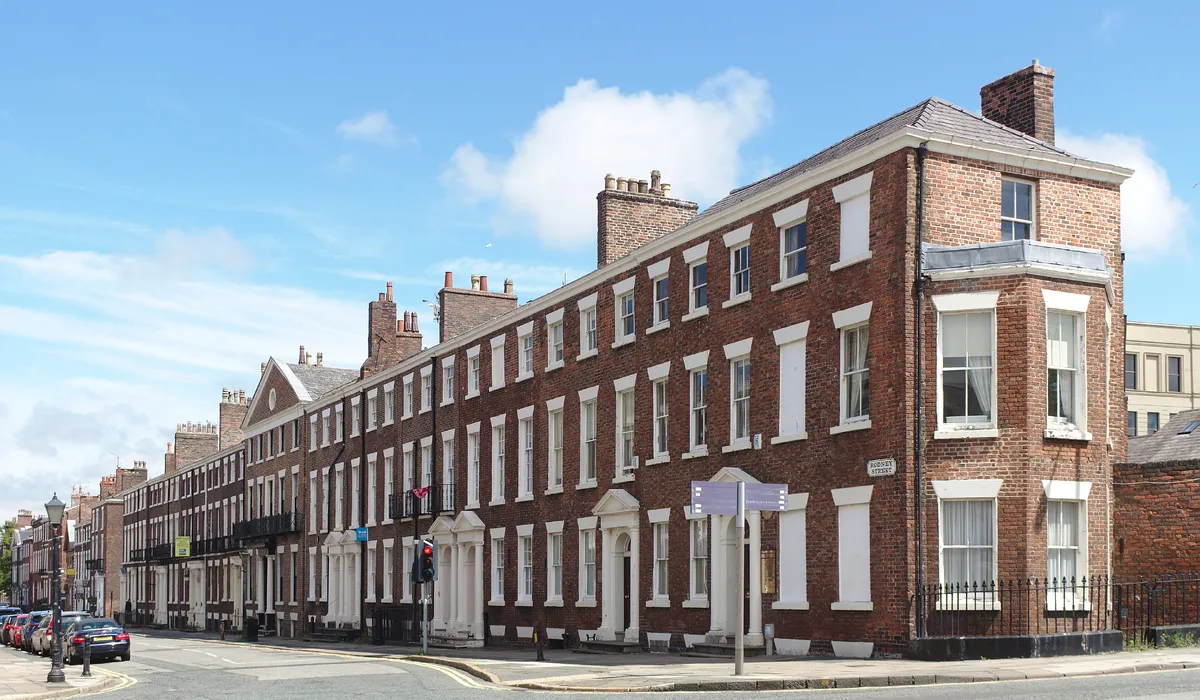
Many listed homes sit in the Georgian Quarter around Rodney Street, Canning Street and Falkner Square, in the Victorian suburbs of Toxteth, Aigburth and Sefton Park, and in villages across the Wirral and Cheshire. These buildings share common issues, such as slate roofs, sash windows, decorative ironwork, basement damp and a history of subdivision into flats. You can read more about the heritage of the city in our guide to Liverpool architectural heritage.
Listed Building Survey FAQs
Do I need a special survey for a listed building?
Yes, a specialist survey is strongly recommended. A RICS Level 2 survey is not designed for historic buildings, so a listed building survey based on a Level 3 building survey is usually the right choice.
How much does a listed building survey cost?
The cost of a listed building survey depends on the size, age and complexity of the building. Larger and more complex buildings take longer to inspect and report on. Ask for a clear written quote before you book.
Can I replace windows in a listed building?
Replacement usually needs listed building consent, and like for like timber windows are far more likely to be approved than uPVC. Repairing original windows is often the preferred option.
Am I responsible for work done by a previous owner?
Yes. Liability for unauthorised works runs with the property, so a new owner can be required to put them right.
Is buildings insurance more expensive for listed homes?
Often yes, because rebuilding with traditional materials and skills costs more. Use an insurer that understands listed buildings and make sure the rebuild cost is accurate.
Can a listed building be damp proofed?
Damp in old buildings is usually caused by trapped moisture, leaks or poor ventilation rather than a missing damp proof course. A listed building survey will identify the real cause and recommend breathable solutions.
Book a Listed Building Survey in Liverpool
ASG Consulting is regulated by RICS. Our surveyors inspect listed and historic buildings across Liverpool, Merseyside and the North West, explaining condition, repair priorities and consent issues in a clear report. To arrange a listed building survey, visit our full home buyers survey page.
About the Author
Harry is a property content writer with 3 years of experience writing about building surveying, commercial property and property compliance in the UK. He writes the guides at ASG Consulting for buyers, tenants and landlords, turning survey practice into clear, practical advice.
Reviewed by Dave MacMillan MRICS, chartered surveyor at ASG Consulting. Dave checks the technical content of our guides against current RICS practice before they are published.
Featured photo of the Grade II listed terrace at 51a to 75 Rodney Street, Liverpool by Rodhullandemu via Wikimedia Commons, licence CC BY SA 4.0, cropped.