You’ve had an offer accepted on a Victorian terrace in Anfield or a big Edwardian semi in Allerton, and your conveyancer wants to know which survey you’re booking. If the house is old, altered or showing its age, the person you need is a Level 3 surveyor: an RICS-qualified building surveyor who carries out the most detailed home survey available in England.
This guide explains what a Level 3 surveyor actually does on site, how to check their credentials before you pay, what a Level 3 survey in Liverpool typically costs as of October 2026, and what to do with the report once it lands in your inbox.
Quick answer
A Level 3 surveyor is an RICS-qualified building surveyor who carries out the RICS Home Survey Level 3, formerly called a building survey or full structural survey. They inspect the property in depth, explain the likely cause of each defect and advise on repairs. In Liverpool, expect to pay roughly £595 to £1,500.
What does a Level 3 surveyor do?
A Level 3 surveyor inspects a home in detail and writes a report that tells you what is wrong, why it has probably happened and what will follow if you leave it alone. They work to the RICS Home Survey Standard, which has applied to RICS members carrying out residential surveys since 1 March 2021.
Estate agents, lenders and older guides still use the previous names, so you’ll hear a Level 3 survey called a full building survey, a building survey or a “full structural survey”. They all describe the same top tier of inspection.
The real difference from a Level 2 is depth. A Level 2 surveyor tells you a defect exists and gives it a condition rating. A Level 3 surveyor goes further: likely cause, consequences of not repairing, how urgent the work is and roughly when it needs doing. Cost estimates aren’t a standard part of the service, but some surveyors will add them if you agree it in writing beforehand.
Most Level 3 surveyors are chartered building surveyors (MRICS or FRICS). The letters matter, but experience matters more. You want a residential building surveyor who inspects houses like the one you’re buying every week, not once a year.
Level 2 or Level 3: when you need a Level 3 surveyor
You need a Level 3 surveyor when the property is older, has been significantly altered, is in poor condition, is built in an unusual way, or you plan major work after you move in. There’s no hard cut-off by year of construction. A tired 1980s house with a two-storey extension can need Level 3 more than a well-kept 1900s terrace.
Use this as a starting point, then ask the surveyor before you book:
| Property | Usual choice | Why |
|---|---|---|
| Modern house, unaltered, good condition | Level 2 | Conventional construction with fewer unknowns |
| 1930s semi, original layout | Level 2, or Level 3 if extended | Bay windows, wall ties and roof coverings are often worth a closer look |
| Victorian or Edwardian terrace | Level 3 | Cellars, removed chimney breasts, rear extensions and ageing roofs |
| Visible cracking, damp or a sagging roof | Level 3 | The cause matters more than the symptom |
| Listed building or conservation area | Level 3 | Traditional materials and consent history |
| Non-standard construction | Level 3 | Affects repairs, insurance and future mortgageability |
| Doer-upper you plan to renovate | Level 3 | Helps you scope the work and set a realistic budget |
If the house is conventional and in decent order, a Level 2 HomeBuyer survey in Liverpool may be all you need. A good surveyor will tell you that rather than sell you the bigger report. For a fuller breakdown of the survey itself, read our guide to what a Level 3 survey is.
What a Level 3 surveyor inspects on the day
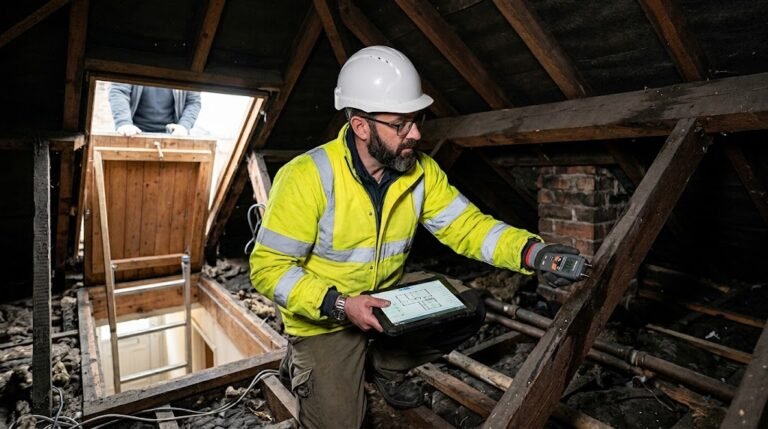
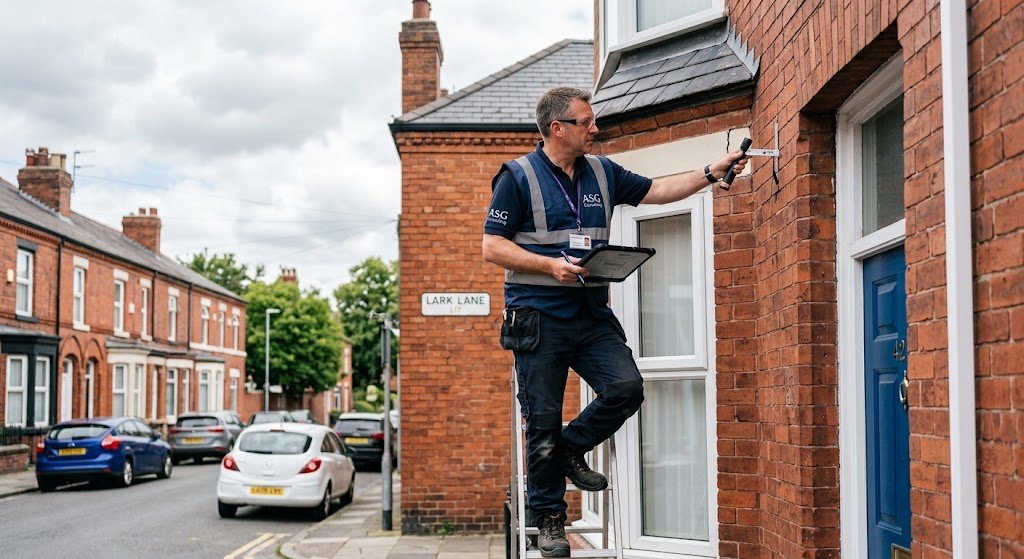
On site, a Level 3 surveyor examines the main building, permanent outbuildings, services and grounds, and goes into roof spaces, cellars and other concealed areas the occupier normally uses, where it’s safe to do so. Depending on size and condition, the visit usually takes somewhere between three and eight hours.
Here’s what that looks like in practice:
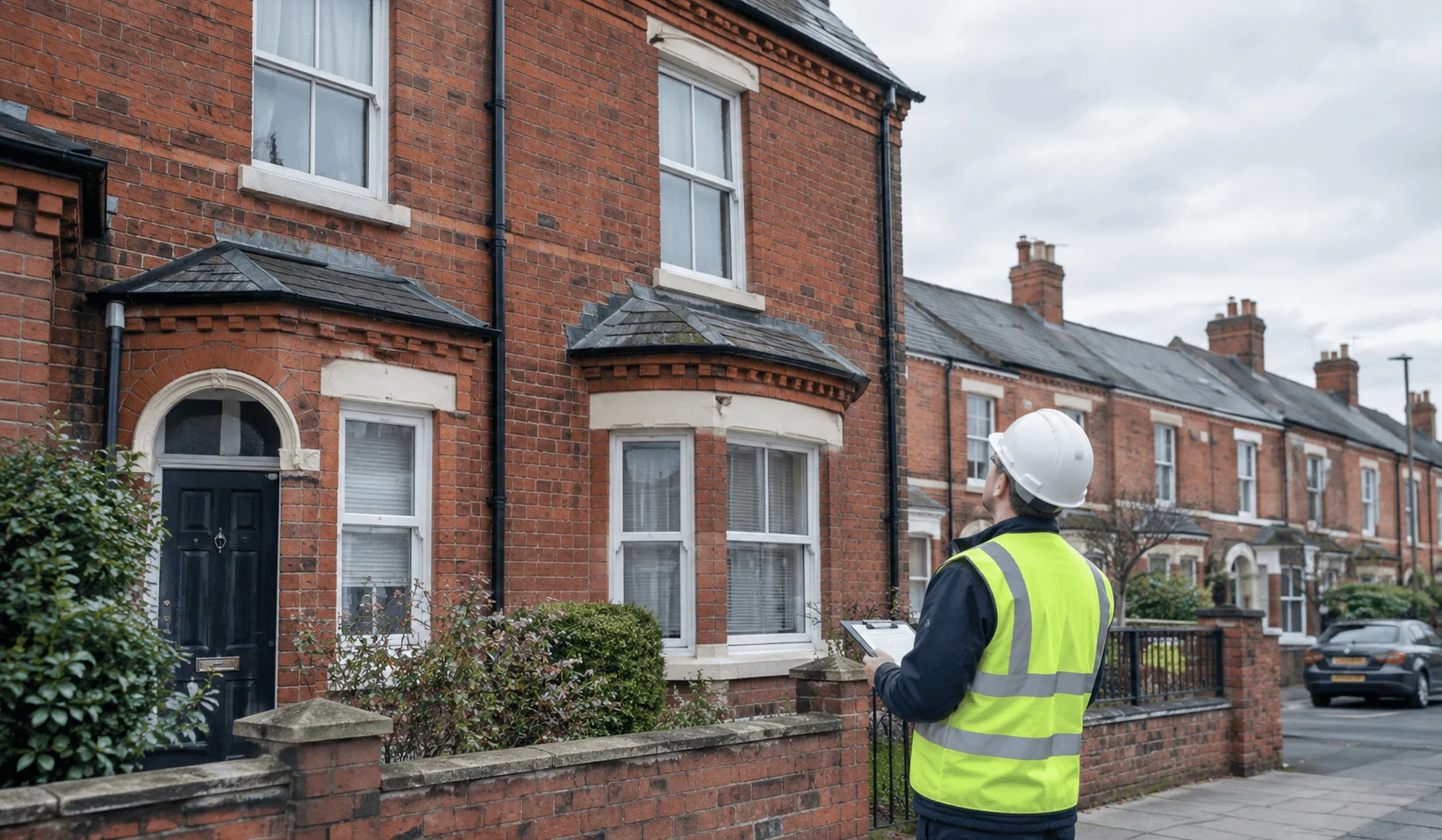
- Roofs and chimneys: inspected from the ground and neighbouring public land, often with binoculars or a camera pole, plus ladder access to flat roofs and hatches up to 3 metres high.
- Roof space: timbers, underlay, ventilation, insulation and signs of old leaks or chimney breasts removed below without support above.
- Walls: the pattern and width of any cracking, bulging, pointing, render, damp-proof course height and external ground levels.
- Windows and doors: the surveyor tries to open all windows where possible, which is how failed sash cords and painted-shut casements get found.
- Floors and cellars: springiness, slopes, accessible floor voids and the condition of cellar timbers.
- Drains: accessible inspection chamber covers are lifted and drainage is watched in normal use.
- Services: heating, electrics and plumbing are observed working, but not tested.
- Grounds: boundary and retaining walls, trees close to the house, outbuildings and anything that affects the main building.
It isn’t a destructive inspection. The surveyor won’t lift fitted carpets or floorboards, move heavy furniture or open up walls. That’s why you’ll sometimes see recommendations for an electrical installation condition report (EICR) from an electrician or a gas check from a Gas Safe registered engineer. RICS expects Level 3 referrals for further investigation to be the exception rather than the rule, so a report that refers everything elsewhere is a warning sign.
What you get in the report
- How each part of the house is built and what it’s built from
- Condition ratings for each element
- The most probable cause of each defect
- What is likely to happen if a defect isn’t repaired
- Priority and rough timescale for the work
- Risks of hidden defects in areas that couldn’t be seen
- Legal points for your conveyancer, such as sign-off for extensions or removed walls
- Repair cost indications, but only if you agreed them in advance
How to check a Level 3 surveyor’s credentials
Check that the individual is an RICS member, that the firm is RICS-regulated, and that they regularly carry out Level 3 surveys on your type of property. Ten minutes of checking can save you from a weak report you can’t rely on.
- Search the firm on RICS Find a Surveyor. The directory now lists only RICS-regulated firms, which must follow the RICS rules of conduct and have a complaints process.
- Check the person. RICS also runs Find a Member for individuals. MRICS means a chartered member, FRICS a fellow (senior chartered member) and AssocRICS an associate. Any of them can be competent, but ask who exactly will inspect your property.
- Confirm professional indemnity insurance. RICS-regulated firms must hold it. It protects you if the survey misses something it reasonably should have found.
- Read the terms of engagement before the inspection. The Home Survey Standard requires written terms setting out what will and won’t be inspected. Check the fee, the level of service and any add-ons.
- Watch for fake firms. RICS has warned about fraudulent, AI-generated websites claiming an RICS link. Match the firm’s name, address and phone number to its RICS listing.
- Ask for a sample report. If it’s mostly stock phrases and photos without explanation, expect the same for your house.
Questions to ask before you book
- Will you personally inspect the property and write the report?
- How often do you survey houses like this one, for example Victorian terraces with cellars?
- Is the report on the RICS Level 3 template or your own format?
- Will you include repair cost estimates, and is that extra?
- Can I phone you to talk the report through once I’ve read it?
- Will you need the seller’s permission for the loft, cellar and drains?
- Does the fee include VAT, and is a valuation included or separate?
How much does a Level 3 surveyor cost in Liverpool?
As of October 2026, published averages put a Level 3 survey in Liverpool at around £595, a little below national averages. HomeOwners Alliance figures put typical Level 3 fees across the UK at about £630 to £1,500 or more, with the higher end reserved for larger, older or more valuable homes.
These are market averages, not quotes. What you pay depends on the property:
| Factor | Effect on the fee |
|---|---|
| Size and number of rooms | More rooms and floors mean more time on site and a longer report |
| Age and complexity | Cellars, multiple extensions and complicated roofs add time |
| Property value | Many firms price in bands, partly reflecting their insurance risk |
| Condition | A neglected house takes longer to inspect and explain |
| Add-ons | Valuation, cost estimates or a drone roof inspection are usually extra |
Keep the fee in proportion. The gap between a Level 2 and a Level 3 is usually a few hundred pounds. A chimney breast removed without proper support, or a rotten cellar floor, can cost far more than that to put right.
What Level 3 surveyors find in Liverpool and Merseyside homes
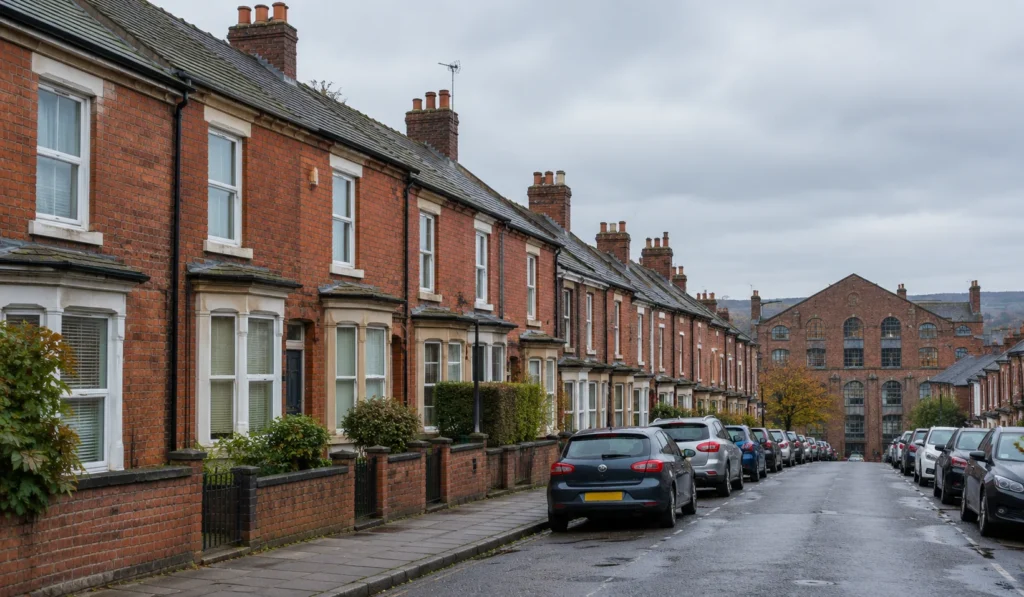
In Liverpool, most defects a Level 3 surveyor finds come from age and past alterations rather than poor original building. A large share of the city’s housing is pre-war brick terracing, and a century of DIY, extensions and patch repairs leaves its mark.
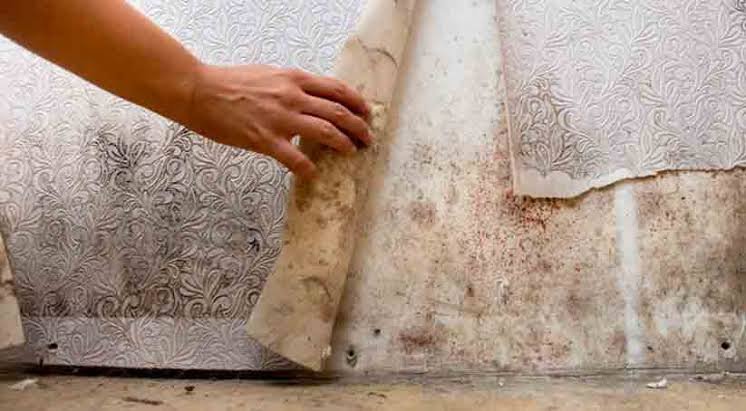
- Cellar damp and decay: blocked air bricks and poor ventilation lead to rot in ground floor joists and cellar timbers.
- Removed chimney breasts and knocked-through walls: often done without support or building control sign-off. Your conveyancer needs to ask for the paperwork.
- Rear extensions and outriggers: cracking where new meets old, and flat roofs near the end of their life.
- Roofs: slipped or delaminating slates, worn valley gutters on butterfly roofs and leaning chimney stacks.
- Bay windows: movement and cracking where the bay joins the main wall.
- Walls: hard cement pointing or render trapping moisture in solid brick, and wall tie corrosion in some cavity-walled homes.
- Trees and soil: mature trees close to a house on shrinkable ground can cause seasonal movement.
- Mining legacy: parts of St Helens and areas towards Wigan have a history of coal mining, so your conveyancer’s searches should cover it.
Where cracking needs calculations, monitoring or a repair design, your surveyor may recommend a structural engineer. A structural engineer house survey answers one specific structural question in depth. It isn’t a replacement for a full Level 3, which covers the whole building.
From accepted offer to report: how the process works
Book your Level 3 surveyor as soon as your offer is accepted, so the report arrives well before exchange of contracts. Once you exchange, you’re legally committed.
- Get a quote and agree terms. Tell the surveyor the address, property type, any concerns and your plans, such as a loft conversion.
- Access is arranged. The surveyor usually books the visit through the estate agent or seller.
- Inspection. Expect anywhere from three hours to most of a day on site.
- Report delivered. Ask about turnaround when you book, as it varies between firms and with demand.
- Talk it through. A phone call with the surveyor often answers more than the report alone.
- Pass on the legal points. Send anything about consents, boundaries or guarantees to your conveyancer.
- Negotiate, then exchange. Use the findings before you commit, not after.
What to do if your Level 3 surveyor finds serious problems
Don’t panic, and don’t exchange yet. Use the report to get prices, renegotiate or ask the seller to put things right, and walk away if the risk is more than you can carry.
- Get quotes for the big items. A contractor’s figure for a new roof or cellar repairs carries more weight in negotiation than a general warning.
- Commission follow-up checks if advised. That might be a structural engineer, a drainage CCTV survey or an EICR. Be wary of damp “surveys” offered free by companies that also sell the treatment.
- Renegotiate with evidence. Share the relevant pages and quotes through the estate agent and ask for a reduction that reflects the cost.
- Weigh up seller repairs. You have little control over the quality of work done by a seller who’s leaving, so a price reduction is often the safer route.
- Walk away if you need to. Before exchange you can withdraw. You’ll lose the survey fee and some legal costs, which is far cheaper than buying a problem.
Red flags when choosing a building surveyor in Liverpool
- A fee far below every other quote, or a promised 24-hour report on a large old house
- No straight answer about who will carry out the inspection
- No RICS regulation you can verify
- Pressure to use a particular damp or repair contractor
- A sample report full of generic caveats with little real opinion
- A surveyor recommended by the selling side who can’t confirm they act only for you
Working with a Level 3 surveyor at ASG Consulting
ASG Consulting is a firm of RICS-regulated chartered building surveyors based on St James Street in Liverpool, covering Merseyside and the wider North West. Our RICS Level 3 building surveys are carried out on Victorian and Edwardian terraces, period semis, converted flats and heavily altered homes across Liverpool, the Wirral, Sefton, Knowsley and St Helens.
Because we also have structural engineering and drone roof inspection in-house, we can usually answer follow-up questions without sending you to a separate firm. And if a Level 2 would do the job for your property, we’ll say so.
Frequently asked questions
What is a Level 3 surveyor?
A Level 3 surveyor is an RICS-qualified building surveyor who carries out the RICS Home Survey Level 3, the most detailed home survey in the RICS range. They inspect the structure, services and grounds in depth, explain the likely cause of each defect, set out what happens if it isn’t repaired and advise on the priority of the work.
How long does a Level 3 survey take?
The site inspection usually takes between three and eight hours, depending on the size, age and condition of the property. A small terrace might take a morning, while a large Victorian semi with a cellar and extensions can take most of the day. Writing the report takes longer, so ask about turnaround when you book.
Is a Level 3 survey the same as a structural survey?
Yes, in everyday use. “Full structural survey” and “building survey” are older names for what RICS now calls the Home Survey Level 3. It is different from a structural engineer’s report, which looks at one specific structural issue, such as a crack or a removed wall, in more technical depth.
Does a Level 3 surveyor test the electrics and gas?
No. A Level 3 surveyor observes the services working in normal use but doesn’t carry out formal tests. If the wiring looks old or altered, they’ll usually recommend an electrical installation condition report (EICR) by a qualified electrician. For gas appliances, they’ll recommend a check by a Gas Safe registered engineer.
Do I need a Level 3 survey on a 1930s house?
Not always. A 1930s semi with its original layout and in reasonable condition is often fine with a Level 2. Choose Level 3 if it has been extended, shows cracking or damp, has had walls removed or you’re planning major work. If you’re unsure, describe the house to a surveyor and ask which level they recommend.
How much does a Level 3 survey cost in Liverpool?
As of October 2026, published averages put a Level 3 survey in Liverpool at around £595. Larger, older or higher-value homes cost more, and national ranges run from about £630 to £1,500 or more. Valuation, cost estimates and drone roof inspections are usually extra, so get a written quote first.
Choosing your Level 3 surveyor: the next step
The right Level 3 surveyor is RICS-regulated, inspects houses like yours regularly, explains causes rather than listing symptoms and is easy to talk to after the report arrives. Book early, read the terms, and use the findings to negotiate before you exchange.
If you’re buying in Liverpool or Merseyside and want a straight answer on which survey your property needs, contact ASG Consulting for a quote.
This article is general information about home surveys in England as of October 2026. It isn’t legal, financial or structural advice for a specific property. Survey fees, RICS standards and regulations change, so check current details with your surveyor, conveyancer or lender before you make a decision.