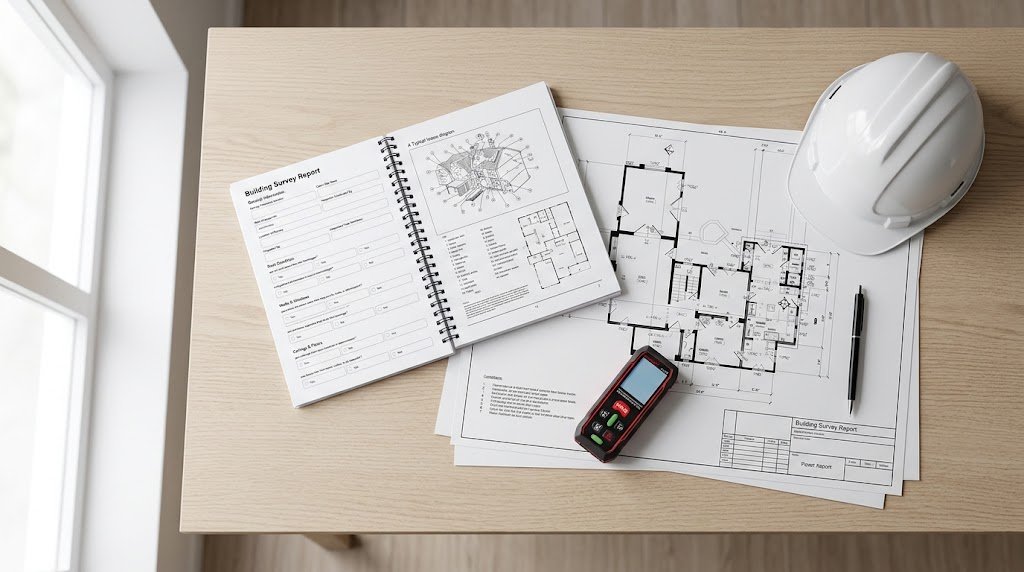
A commercial building survey in Liverpool is an independent inspection of an office, shop, warehouse, industrial unit or mixed-use building, carried out by an RICS-regulated surveyor before you buy, lease, refinance or refurbish it. The surveyor checks the structure, roof, fabric, building services and statutory compliance, then reports what is wrong, how serious it is and what it is likely to cost to put right.
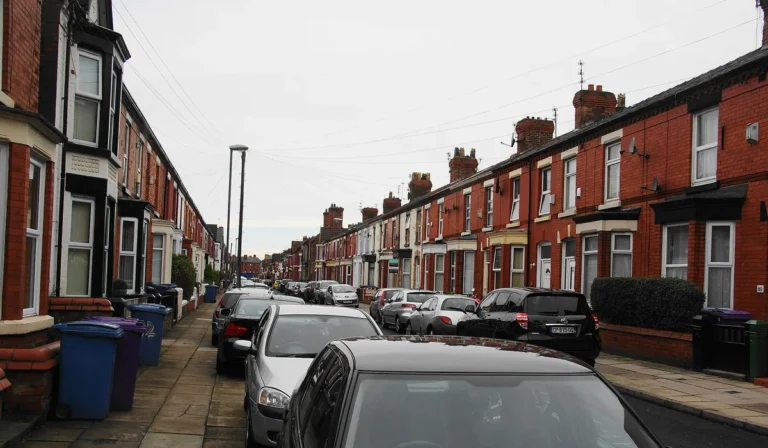
Liverpool’s commercial stock ranges from Georgian and Victorian warehouses in the Baltic Triangle and Ropewalks to post-war industrial estates and modern city-centre offices. Each brings its own risks. This commercial building survey Liverpool guide explains which survey you need, what it covers, what it typically costs in 2026 and how the latest energy efficiency rules affect your decision.
Key takeaways
- A commercial building survey reports on condition, defects, repair costs and legal compliance, not just value.
- The right survey depends on your role: buyer, incoming tenant, outgoing tenant, landlord or investor.
- National price guides put small commercial units at roughly £800 to £1,800 and larger industrial buildings at £2,500 to £8,000.
- Rented commercial buildings under 1,000 m² must still meet EPC E. Larger ones are expected to need EPC B from 2031.
- Book the survey before you exchange contracts or sign a lease, while you can still negotiate.
What is a commercial building survey?
A commercial building survey is the commercial equivalent of a full structural survey on a house, but broader. Because a commercial building is an operating asset, the surveyor also looks at mechanical and electrical plant, fire safety, asbestos management, accessibility and energy performance.
RICS members follow the RICS professional standard on technical due diligence of commercial property. It requires surveyors to assess each key building element methodically and to flag clearly any defect that needs immediate action or could pose a danger to occupants. In practice, many people use “commercial building survey”, “technical due diligence” and “pre-acquisition survey” to mean the same service.
Commercial building survey vs residential survey
| Residential survey (RICS Level 2 or 3) | Commercial building survey | |
|---|---|---|
| Standard followed | RICS Home Survey Standard | RICS technical due diligence standard |
| Building services | Visual check only | Heating, cooling, ventilation, electrics, lifts and fire systems reviewed, with specialists if needed |
| Legal compliance | Limited | Asbestos, fire safety, accessibility and EPC/MEES position |
| Lease context | Not relevant | Reviewed against repairing obligations in the lease |
| Repair costs | Sometimes indicative | Usually costed, often with a planned maintenance budget |
| Scope | Fixed by survey level | Agreed with you for each instruction |
When do you need a commercial building survey in Liverpool?
Most clients come to us at one of six points in a property’s life:
- Buying a building. A pre-acquisition survey tells you what you are really buying and gives you evidence to renegotiate the price.
- Taking a lease. On a full repairing and insuring (FRI) lease you may have to hand the premises back in better condition than you found them. A schedule of condition records the starting point and can limit that liability.
- Ending a lease. Landlords and tenants both need a dilapidations survey to agree what repair and reinstatement work is owed.
- Refinancing. Lenders often want independent evidence of condition before releasing funds.
- Managing a portfolio. Regular condition surveys feed a planned maintenance programme through asset management.
- Before refurbishment or change of use. A measured building survey gives designers accurate plans, and a condition survey shows what must be fixed first.
Types of commercial building survey
| Survey | Best for | What you receive |
|---|---|---|
| Full commercial building survey / technical due diligence | Buyers and investors | Condition of every element, defects, repair costs, compliance risks and a recommendation |
| Schedule of condition | Incoming tenants and landlords | Detailed written and photographic record of condition at lease start |
| Dilapidations survey | Outgoing tenants and landlords | Schedule of breaches of lease covenants, with costs |
| Building condition survey and planned maintenance | Owners and facilities managers | Prioritised repairs and a multi-year maintenance budget |
| Measured building survey | Refurbishment, lettings and rating | Accurate floor plans, elevations and floor areas |
| Drone roof survey | Large or high roofs | High-resolution images of roofs, gutters and parapets without scaffolding |
Not sure which one fits? Our commercial building surveying team can recommend the right scope after a short call.
What a commercial building survey in Liverpool covers
Structure and building fabric
The surveyor inspects the frame, walls, floors, roof structure, windows, cladding and external areas. They look for cracking, movement, damp, timber decay, corroded steelwork and failing concrete. Where the cause of a defect is unclear, they may recommend building pathology investigation or input from a structural engineer.
Roofs
Roofs are often the most expensive item in a commercial building survey report. Flat roofs, valley gutters, roof lights and profiled metal sheeting all have limited lifespans. On larger or taller buildings we use drone surveying to see the whole roof safely, without the cost of scaffolding or access platforms.
Building services
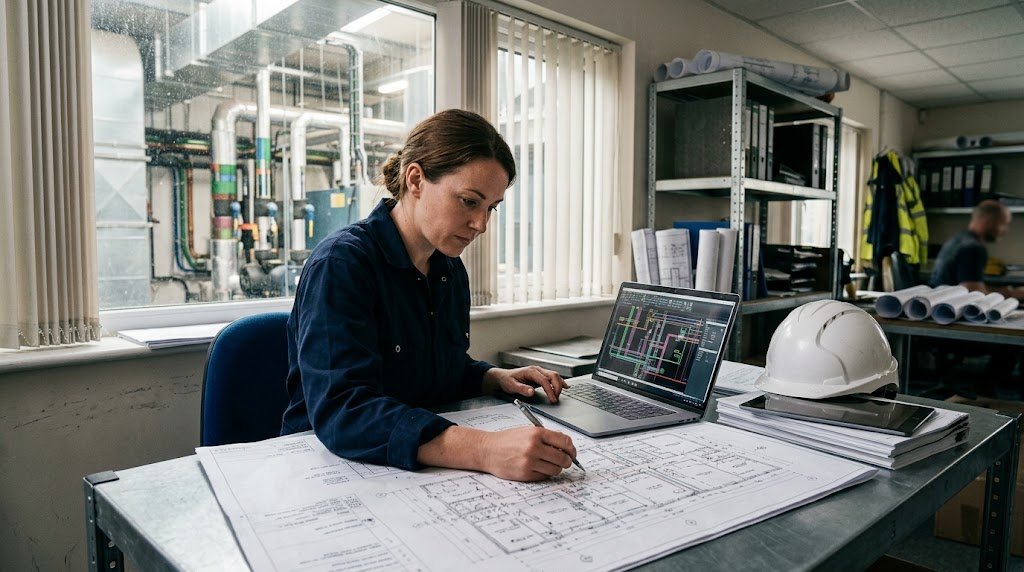
Heating, ventilation, air conditioning, lifts, electrical installations and fire alarms can account for a large share of future spending. The surveyor reviews their age, condition and maintenance records, and recommends a specialist mechanical and electrical engineer where the plant is complex.
Statutory compliance
- Asbestos. Anyone responsible for maintaining non-domestic premises has a legal duty to manage asbestos. The surveyor checks whether an asbestos register and management plan exist.
- Fire safety. Under the Regulatory Reform (Fire Safety) Order 2005, a responsible person must carry out a fire risk assessment. The survey checks escape routes, fire doors and compartmentation at a visual level.
- Accessibility. The report notes obvious barriers that could matter under the Equality Act 2010.
- Energy performance. The surveyor reviews the EPC rating and what it means for letting (see the MEES section below).
Deleterious materials
Some materials used in older commercial buildings are now known to fail or to be hazardous. These include reinforced autoclaved aerated concrete (RAAC) planks, high alumina cement, asbestos cement roof sheets and some types of composite cladding panels. A good surveyor will know where to look for them.
Common defects in Liverpool commercial buildings
Liverpool’s commercial property reflects its history as a port city, and the defects we find follow the age of the building.
- Georgian and Victorian warehouses and offices. Many have been converted to offices, bars and studios. Typical problems are blocked parapet and valley gutters, decayed timber floor joists and roof timbers, eroded brickwork and sandstone, and rusting cast iron. Listed buildings add consent requirements for any repair.
- Post-war industrial units. Estates across Merseyside contain units with asbestos cement roofs, cut-edge corrosion on profiled steel sheeting, failing roof lights and worn concrete yards.
- 1960s to 1980s concrete buildings. Watch for carbonation and corroding reinforcement, spalling concrete, and RAAC in roofs or floors.
- Modern offices. Defects are more often in curtain walling seals, flat roof membranes and building services that are reaching the end of their design life.
For more on how defects develop, read our guide to hidden defects a commercial surveyor can uncover.
MEES and EPCs: what the 2026 changes mean
The Minimum Energy Efficiency Standards (MEES) make it unlawful to grant or continue a lease of most commercial property in England and Wales with an EPC below E, unless a valid exemption is registered.
In June 2026 the government published an interim response on non-domestic MEES. The proposed EPC C requirement for 2027 has been dropped. From 2031, privately rented commercial buildings over 1,000 m² are expected to need EPC B where it is cost-effective, while buildings under 1,000 m² stay at the current EPC E minimum. The change still needs secondary legislation.
For a buyer or investor, this matters. A building over 1,000 m² with a poor EPC could need significant upgrade work within the next five years. A commercial building survey should flag the likely cost of improvements alongside the repair items, so you can factor both into your offer.
Commercial building survey Liverpool costs in 2026
Fees depend on floor area, building complexity, the scope you need and how quickly you need the report. As a guide, national price comparison data for 2026 shows these typical ranges:
| Building type | Typical UK fee range (2026) |
|---|---|
| Small retail or office unit | £800 to £1,800 |
| Mid-size commercial premises | £1,500 to £4,000 |
| Industrial, warehouse or multi-let building | £2,500 to £8,000 |
Factors that increase the fee include listed status, restricted access, specialist inputs such as M&E or drainage surveys, and tight deadlines. A survey is usually a small fraction of the repair liabilities it uncovers, which is why it pays for itself in most transactions. ASG Consulting provides a fixed-fee commercial building survey Liverpool quote once we understand the property and your goals.
How the survey process works
- Initial call. We discuss the property, your role and your deadline, then agree the scope in writing.
- Document review. We review plans, the lease, asbestos register, fire risk assessment, EPC and maintenance records where available.
- Site inspection. Depending on size, this takes from half a day to several days, with drone or specialist inspections as needed.
- Report. You receive a clear report with photographs, prioritised defects and costs, usually within one to two weeks of the inspection.
- Follow-up. We talk you through the findings and can support price negotiations, lease negotiations or the next stage of works.
How to choose a commercial building surveyor in Liverpool
- Check the firm is RICS-regulated and that the surveyor is a chartered member.
- Ask about professional indemnity insurance that matches the value of the building.
- Look for local experience with Liverpool’s mix of listed, industrial and modern buildings.
- Confirm they can coordinate specialists such as structural, M&E and drainage engineers.
- Ask for a sample report so you know what you will receive.
ASG Consulting is an RICS-regulated building surveying and construction consultancy covering Liverpool and the wider North West.
Frequently asked questions
Is a commercial building survey a legal requirement?
No, but lenders often require one, and without it you take on the building’s defects and compliance risks blind.
How long does a commercial building survey take?
The inspection usually takes half a day to several days depending on size. The report typically follows within one to two weeks.
What is the difference between a commercial building survey and a valuation?
A valuation tells you what the property is worth. A commercial building survey tells you what condition it is in, what is wrong and what it will cost to fix.
Do tenants need a commercial building survey?
Yes, especially on an FRI lease. A survey before signing, followed by a schedule of condition, can save thousands in dilapidations at the end of the lease.
Does a commercial building survey include an asbestos survey?
Not usually. The surveyor checks whether an asbestos register exists and flags suspect materials, but a separate asbestos management survey is needed for full testing.
Can a survey help me negotiate the price?
Yes. Costed repairs and compliance upgrades give you firm evidence to renegotiate the price or the lease terms before you commit.
Book your commercial building survey Liverpool quote
Whether you are buying a city-centre office, taking a lease on an industrial unit or managing a portfolio, a commercial building survey Liverpool clients can rely on gives you the facts before you commit. Contact ASG Consulting for a fixed-fee quote from our RICS-regulated surveyors.