The most common rendered house problems are cracking, hollow or blown render, damp trapped behind the render, render bridging the damp proof course, staining and algae growth. Small hairline cracks are often cosmetic, but wide cracks, loose patches and damp inside the house need investigating. A survey can identify the cause and how serious it is.
Render covers many homes in Liverpool and the North West, from Victorian terraces with cement render added later to 1930s semis with pebbledash, post war houses with roughcast and modern homes with thin coat silicone or acrylic systems. When render works, it protects the walls and looks smart. When it fails, it can hide defects and let water in. This guide is a symptom by symptom diagnosis of rendered house problems, explaining what each sign usually means, how serious it is and what to do about it when buying or owning a rendered home.
In this guide
- What is render and what types are there?
- What do common render symptoms mean?
- Are cracks in render serious?
- What is blown or hollow render?
- Can render cause damp?
- What is render bridging the damp proof course?
- Why is my render stained or green?
- Why is cement render a problem on older houses?
- Can render hide other problems?
- What about external wall insulation?
- Should render be repaired or replaced?
- Do you need permission to render a house?
- What should you check when buying a rendered house?
- Rendered houses in Liverpool
- FAQs
What Is Render and What Types Are There?
Render is a coating applied to the outside walls of a building to protect them from the weather and give a uniform finish. Different types behave very differently, so knowing which one you have is the first step in understanding rendered house problems.
| Render type | Typical use | Common issues |
|---|---|---|
| Lime render | Traditional finish on older buildings | Needs regular maintenance, can erode, often replaced with cement in the past |
| Sand and cement render | Very common from the twentieth century onwards, often added to older houses | Cracking, hollow areas, trapping moisture in solid walls |
| Pebbledash and roughcast | 1920s and 1930s semis, post war houses | Loose patches, cracking, hard to repair to match |
| Thin coat silicone or acrylic render | Modern homes, renovations and insulation systems | Algae staining, impact damage, cracking at joints |
| Render on external wall insulation | Retrofit insulation on older homes | Poor detailing at windows, roofs and ground level, damp behind the system |
What Do Common Render Symptoms Mean?
Use this table as a quick guide to rendered house problems. It shows the usual causes, but a surveyor will need to inspect to confirm what is happening on a particular house.
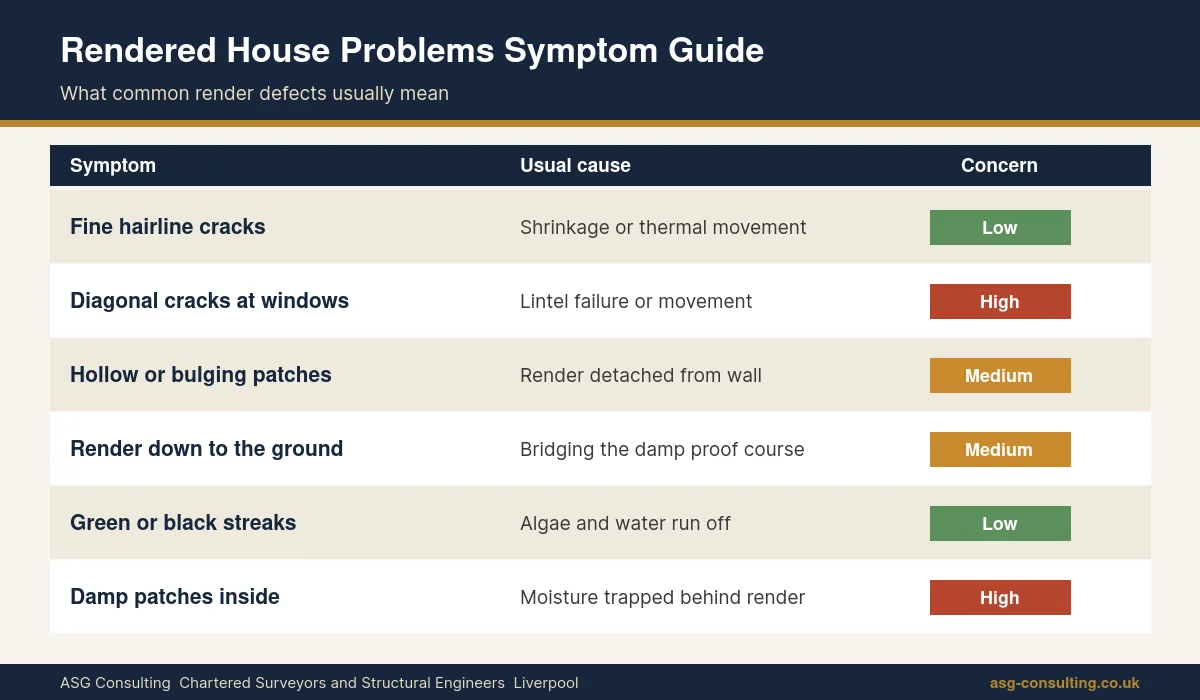
| Symptom | Likely cause | How serious | What to do |
|---|---|---|---|
| Fine hairline cracks across the surface | Shrinkage as the render dried, or minor thermal movement | Usually cosmetic | Monitor, seal with a suitable breathable paint if needed |
| Cracks following brick or block joints | Movement in the wall behind, or mortar joints showing through | Moderate | Investigate the wall, repair and seal |
| Diagonal cracks from window or door corners | Lintel problems or structural movement | Potentially serious | Survey, and structural engineer if movement suspected |
| Wide or stepped cracks, wider at one end | Structural movement, such as subsidence or wall tie failure | Serious | Structural investigation before buying or repairing |
| Hollow sound when tapped, bulging patches | Render detached from the wall | Moderate to serious | Remove and replace affected areas |
| Damp patches inside behind rendered walls | Water entering through cracks and trapped behind render | Moderate to serious | Find and repair entry points, check render type |
| Render running down to the ground | Render bridging the damp proof course | Moderate | Cut back above the damp proof course, add a bell cast bead |
| Green, black or brown streaks | Algae, dirt or water running off sills and gutters | Usually cosmetic, but shows where water flows | Clean, fix leaks, improve sills and drips |
| Horizontal cracks at regular heights | Possible wall tie corrosion in cavity walls | Serious | Wall tie inspection |
Are Cracks in Render Serious?
Not always. Fine surface cracks, often called crazing, are common and usually cosmetic. They appear as the render shrinks while drying, or as it expands and contracts with temperature changes.
Cracks are more worrying when they
- are wider than a few millimetres
- run diagonally from the corners of windows and doors
- are stepped, tapered or wider at one end
- appear in the same place on the inside walls
- keep reopening after being filled
- run horizontally at regular heights across the wall
These patterns can point to movement in the wall behind the render, such as subsidence, failing lintels or corroded wall ties. Even small cracks matter because they let water in behind the render, where it can freeze, expand and push the render off the wall. Our guides to cracks in walls and wall tie failure explain these patterns in more detail.
What Is Blown or Hollow Render?
Blown render is render that has lost its bond with the wall behind. It often sounds hollow when tapped and may bulge, crack around the edges or fall away in pieces.
Common causes include
- water getting behind the render through cracks, then freezing
- poor preparation of the wall before rendering
- render that is too strong or rigid for the wall behind it
- movement in the wall
- age, especially on render several decades old
Blown render can be a safety risk if it falls from height. Small areas can usually be cut out and patched, but widespread hollow areas often mean the render is near the end of its life.
Can Render Cause Damp?
Yes, in some cases. Render is meant to keep water out, but once it is cracked or detached, rain gets behind it and has nowhere to go. The wall stays wet, and damp can appear inside as stained plaster, peeling paint, mould and a musty smell.
Damp is especially likely when
- hard cement render has been applied to an older solid wall
- render is cracked around windows, sills and pipes
- render runs down over the damp proof course
- gutters, downpipes or sills are leaking onto the render
- impermeable paints have been applied over the render
Our guide to penetrating damp explains how rain finds its way into walls, and how to tell it apart from condensation and rising damp.
What Is Render Bridging the Damp Proof Course?
The damp proof course is a barrier near the base of the wall that stops moisture rising from the ground. If render is taken right down to the ground, or below the damp proof course, moisture can travel up through the render and into the wall above, bypassing the barrier.
Well detailed render should stop above the damp proof course, usually with a bell cast bead, a shaped strip that throws water away from the wall. A surveyor will also check whether paths, patios or flower beds have been built up against the render. Our guide to the damp proof course explains how it works and what can go wrong.
Why Is My Render Stained or Green?
Green, black and brown staining is usually caused by algae, moss or dirt growing on damp areas of render. It is especially common on north facing walls, walls shaded by trees and around leaking gutters, sills and overflows.
Staining is usually cosmetic, but it shows where water is running or collecting. Before cleaning or repainting, check
- gutters and downpipes for leaks and blockages
- window sills for drips that throw water clear of the wall
- overflow pipes and boiler condensate pipes
- whether the wall stays damp for long periods
Use cleaning methods and products suited to the render type, as aggressive pressure washing can damage the surface.
Why Is Cement Render a Problem on Older Houses?
Many older houses were built with solid walls and soft lime mortar, which allow moisture to move in and out of the wall. Mid Suffolk District Council advice on renders and plasters on historic buildings explains that most buildings before 1919 were built to let moisture pass through and evaporate, while cement is rigid and impermeable, so it can trap moisture and crack as the wall moves.
When hard cement render is applied to these walls
- moisture that gets in through cracks cannot easily dry out
- soft brick and stone behind the render can decay
- timber built into the wall, such as joist ends and lintels, can rot
- damp can appear inside even though the outside looks sealed
On some older buildings, the best long term solution is to remove failing cement render and replace it with lime render, but this needs specialist advice and may need consent on listed buildings. Our guide to a Victorian house survey covers other issues with solid walled houses.
Can Render Hide Other Problems?
Yes. Render covers the wall behind it, so it can hide
- cracks and structural movement in the brickwork
- failed or missing lintels
- bulging walls and corroded wall ties
- old openings that have been bricked up
- poor quality repairs
- non traditional construction, such as concrete panels or timber frame
Some sellers render a house to improve its appearance or to cover defects. That does not mean every rendered house has something to hide, but it does mean a surveyor will look closely for clues, such as cracks, bulges and damp inside. If you suspect the house is not built of traditional brick or block, our guide to non standard construction explains what to check.
What About External Wall Insulation?
External wall insulation is a layer of insulation boards fixed to the outside of the wall and finished with render. It is often used on solid walled houses and some non traditional homes. When designed and installed well, it improves comfort and energy efficiency. When it is poorly detailed, it can cause problems.
Common issues include
- gaps or poor detailing around windows, doors, roofs and pipes
- insulation taken below ground level or over the damp proof course
- cracking at board joints
- damp or mould inside from moisture trapped in the wall
- impact damage to the thin render finish
Ask for installation records, guarantees and any approvals. Our guide to condensation in a house explains how changes to insulation and ventilation can affect damp inside.
Should Render Be Repaired or Replaced?
It depends on how much of the render has failed and why.
| Situation | Usual approach |
|---|---|
| A few hairline cracks, render well bonded | Monitor, minor repairs and a suitable breathable finish |
| Small areas of blown render | Cut out and patch repair with a compatible mix |
| Widespread cracking or hollow areas | Remove and re render the elevation |
| Cement render trapping moisture in an older wall | Consider removal and replacement with lime render, with specialist advice |
| Cracks caused by structural movement | Fix the cause first, then repair the render |
Repairing render without fixing the underlying cause, such as a leaking gutter, failed lintel or ground movement, will only lead to the same problem again. Our building pathology and defect analysis service can diagnose the cause before you spend money on repairs.
Do You Need Permission to Render a House?
Rendering a house can often be done without planning permission, but there are exceptions. The Planning Portal guidance on external walls explains that cladding with render is not permitted development in conservation areas and some other protected areas, and that materials should generally be of a similar appearance to the existing house.
Listed buildings need listed building consent for most changes to external finishes. New render may also need to meet building regulations where it forms part of insulation work. Check with the local planning authority before starting.
What Should You Check When Buying a Rendered House?
When viewing a rendered house, look for
- cracks, especially diagonal or stepped cracks around windows and doors
- patches of different colour or texture, showing past repairs
- bulging or hollow sounding areas, where you can safely tap
- render running down to the ground or over the damp proof course
- staining below gutters, sills and overflows
- damp, mould or peeling paint inside on the rendered walls
- recently painted or newly rendered walls, which may hide defects
Ask the seller when the render was applied, what type it is, whether there are guarantees and whether any repairs have been made. Our house viewing checklist covers other things to look for.
For a modern rendered house in good condition, a RICS Level 2 HomeBuyer Survey is often enough. Our RICS HomeBuyer Survey in Liverpool page explains the Level 2 survey. For an older house with cement render, extensive cracking or signs of damp, a Level 3 Building Survey gives more detail, as explained on our residential building surveying page.
Rendered Houses in Liverpool
Render is common across Liverpool and Merseyside. You will find pebbledash and roughcast on 1930s semis in Allerton, Childwall, Walton and Wallasey, cement render on Victorian terraces in Anfield, Kensington and Toxteth, and modern smooth renders on new builds and renovated homes across the region.
Common findings on surveys of rendered houses in the area include
- cracked and blown pebbledash on bay fronts of interwar semis
- cement render on solid walled Victorian terraces trapping moisture
- render bridging the damp proof course at the front of terraced houses
- algae staining on exposed coastal homes in Crosby, Formby and the Wirral
- external wall insulation on older homes with poor detailing at windows and ground level
- cracks around bay windows and lintels hidden by render
Wind driven rain from the Irish Sea tests render on exposed walls, so cracks and failed details tend to show up quickly in coastal parts of Merseyside.
Rendered House Problems FAQs
Are cracks in render normal?
Fine hairline cracks are common and usually cosmetic. Wide, diagonal, stepped or reopening cracks can point to movement in the wall and should be investigated.
Can cracked render cause damp?
Yes. Cracks let rain in behind the render, where it can become trapped and cause damp inside, especially on older solid walls with cement render.
Should I buy a house with cracked render?
Often yes, if the cracks are minor and the cause is understood. Get a survey to check whether the cracks are cosmetic or linked to structural movement or damp.
How long does render last?
It varies with the type of render, the quality of the work and exposure. Well maintained render can last for decades, while poorly applied render can fail much sooner.
Is render bad for old houses?
Hard cement render can harm older solid walled houses by trapping moisture. Lime render is usually more suitable, and specialist advice is recommended.
Does render hide problems?
It can hide cracks, movement, failed lintels and damp in the wall behind. A surveyor will look for clues such as cracking, bulging and damp inside.
Book a Survey With ASG Consulting
ASG Consulting is an RICS regulated building surveying practice in Liverpool. We carry out RICS Level 2 HomeBuyer Surveys, Level 3 Building Surveys and defect investigations on rendered homes across Liverpool, Merseyside, the Wirral and the wider North West, with reports usually delivered within 3 to 5 working days of the inspection. We give a fixed fee on request, usually confirmed within one working day. To request a quote, call 0151 315 0626 or visit our contact page.
About the Author
Dave MacMillan is the lead surveyor at ASG Consulting, an RICS regulated building surveying practice at 54 St James Street, Liverpool. He has 8 years of experience in building surveying and inspects homes for buyers across Liverpool, Merseyside and the North West.
Last updated 13 November 2026
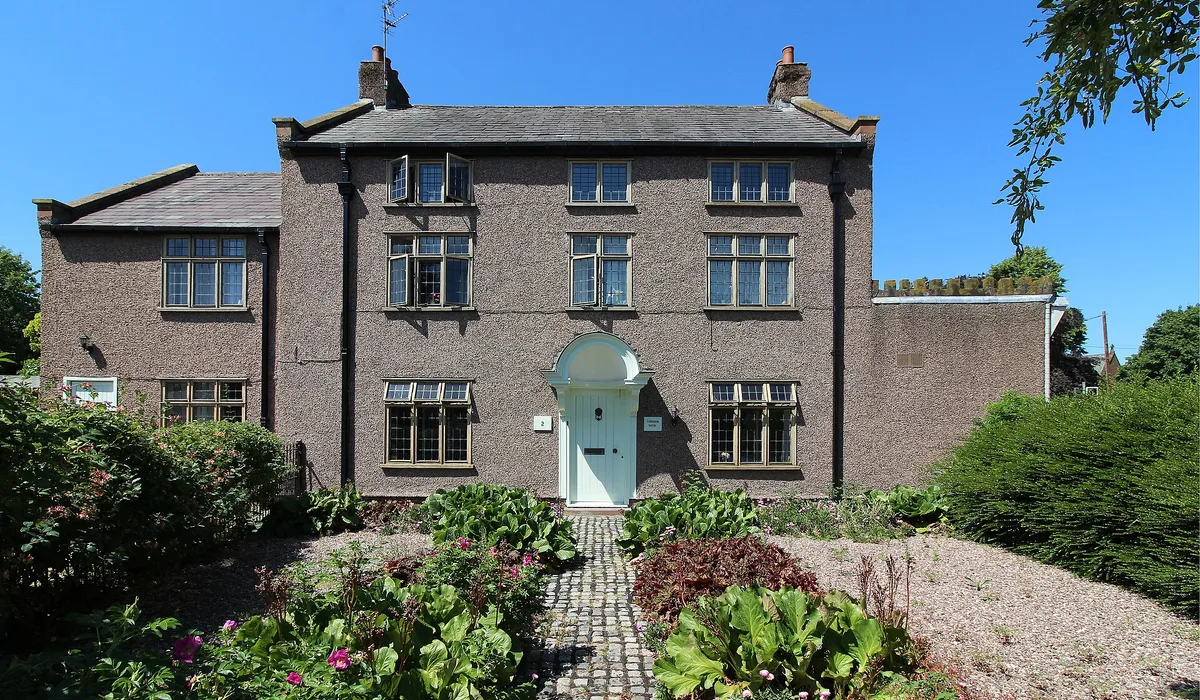
Featured photo of The Laburnums, Willaston by Rodhullandemu via Wikimedia Commons, licence CC BY SA 4.0, cropped.