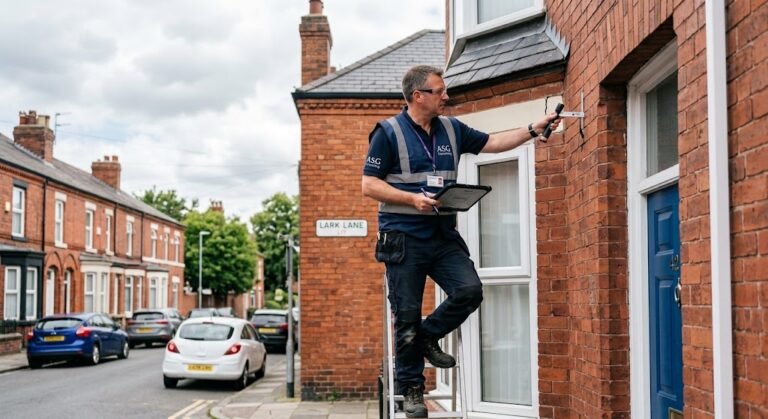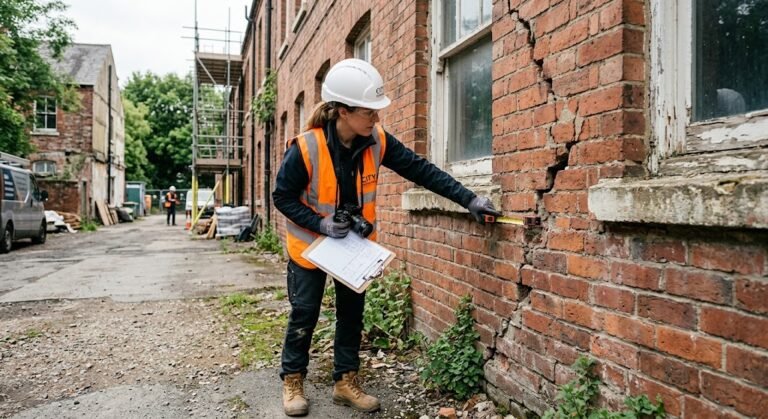

Honestly, most people walk past building services engineering every single day and never clock it. It’s the reason your radiator gets warm within minutes instead of an hour. It’s why the lights in a packed office don’t flicker when fifty laptops are charging at once. Building services engineering is the unglamorous, unseen discipline that makes buildings actually work, and in 2026, with energy bills still biting and net zero deadlines closing in, it matters more than it ever has.
This guide breaks down what building services engineering actually covers, what the people who practise it do all day, and answers the questions people keep typing into Google about salaries, qualifications, and how hard the field really is.
What Is Building Services Engineering?
Strip away the technical language and building services engineering is just this: the design and coordination of everything inside a building that makes it liveable. Heating. Power. Water. Air. Fire safety. If a building were a person, this is the circulatory and nervous system, not the skeleton.
Why It’s Often Confused With Structural Engineering
People mix these up constantly, and I get why. A structural engineer worries about whether the walls stay up and the floors don’t sag. A building services engineer worries about whether you can actually live comfortably inside those walls once they’re standing. Both are essential. Neither replaces the other.
Who Relies On It: Homeowners, Landlords & Developers
Homeowners feel it every time they run a hot tap. Landlords feel it in EPC ratings and void periods. Developers feel it in cost overruns when services weren’t planned early enough. Nobody escapes building services engineering, whether they know the term or not.
What Do Building Services Engineers Do?
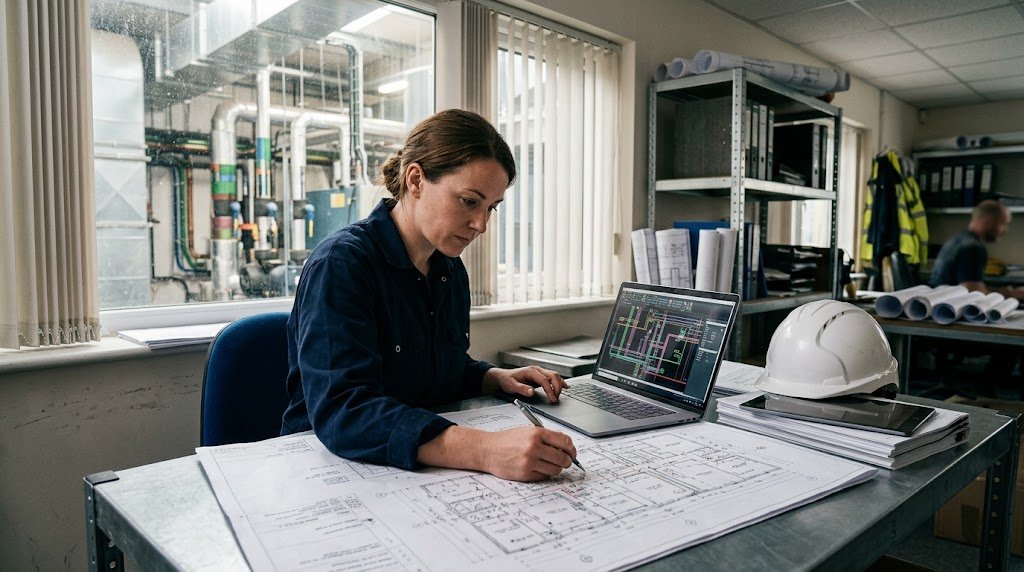
Designing HVAC, Electrical & Water Systems
Day to day, a building services engineer is calculating loads, sizing pipework, drawing circuit diagrams, and figuring out how a hundred small decisions add up to a building that doesn’t overheat in July or freeze in January. It’s a lot more maths than most people expect.
Working Alongside Architects & Structural Engineers
None of this happens in isolation. A services engineer sits in the same design meetings as the architect and structural team, because a beam in the wrong place can wreck a ventilation route, and a badly placed riser can eat into usable floor space.
Ensuring Compliance With UK Building Regulations
Part L, Part F, the Building Safety Act. This is where building services engineering gets serious. Get the ventilation calculations wrong and you’ve got a compliance failure, not just an uncomfortable room.
The Core Systems Explained
Heating, Ventilation & Air Conditioning (HVAC)
The system most people actually notice, usually only when it’s not working.
Electrical Power, Lighting & EV Charging
This has changed fast. Ten years ago nobody was designing for EV chargers on a domestic driveway. Now it’s practically standard on any new build.
Public Health Engineering (Water, Drainage, Plumbing)
Not a glamorous name, but get it wrong and you’ll find out fast, usually through a damp patch or a smell nobody can quite place.
Fire Detection & Life Safety Systems
Since Grenfell, this part of building services engineering has been under far heavier scrutiny, and rightly so.
Sustainability, Heat Pumps & Smart Building Tech
Heat pumps, MVHR, building management systems that quietly adjust themselves through the day. This is where most of the innovation in the field is happening right now.
How Much Does a Building Services Engineer Earn?
Average UK Salary by Experience Level
Graduate engineers typically start somewhere in the mid twenties, rising into the forties and fifties with a few years of experience under their belt.
Salary by Sector (Residential, Commercial, Public)
Commercial and public sector work tends to pay a bit more consistently than smaller residential projects, mostly because of project scale and complexity.
How Chartered Status (CIBSE) Affects Earning Potential
Chartered status through CIBSE is the single biggest lever on salary in this field. It signals to employers that you’re not just competent, you’re accountable to a professional standard.
Is Building Services Engineering One of the Hardest Engineering Disciplines?
How It Compares to Civil, Structural & Mechanical Engineering
It’s genuinely hard to rank engineering disciplines by difficulty, and honestly, anyone who tells you it’s a simple league table is oversimplifying. But building services engineering demands a particular kind of difficulty: juggling multiple interdependent systems at once rather than mastering one deep specialism.
What Makes It Genuinely Difficult (Multi-System Coordination)
Move a wall six inches and suddenly your ductwork, your drainage, and your electrical containment all need rethinking. That’s the puzzle, every single project.
Skills That Matter More Than Difficulty
Coordination and communication matter as much as calculation. A brilliant design that clashes with everyone else’s work on site isn’t actually a good design.
BEng vs BEng (Hons): What’s the Real Difference?
What Each Qualification Actually Covers
A BEng (Hons) includes an extra year of depth and a dissertation or major project. A standard BEng covers the core content but with less independent research.
Which One Employers & CIBSE Prefer
Most employers and CIBSE accreditation pathways favour the Honours route, though a standard BEng plus solid site experience can absolutely still lead to chartership.
Apprenticeship Routes as an Alternative
Degree apprenticeships have become a genuinely strong route into building services engineering, letting people earn while they train rather than taking on university debt.
Hidden Building Services Defects You Cannot See From the Street
Here’s something worth knowing if you’re buying or managing a commercial property: some of the most expensive faults in a building are the ones building services engineering was supposed to catch and didn’t. Outdated wiring behind a freshly plastered wall. Undersized drainage that only shows itself in heavy rain. This is exactly the kind of thing that gets flagged during proper commercial building surveying, where a surveyor is specifically looking for the gap between what was designed on paper and what’s actually installed.
Common Faults Found During Commercial Surveys
Undersized heating systems, poor ventilation in converted spaces, and drainage that was never updated when a building changed use.
Why Early Inspection Saves Money
Catching a building services issue before exchange of contracts is a negotiation point. Catching it after is just a bill.
When You Need a Building Services Engineer vs a Surveyor
Design and Installation: Services Engineer
If you’re designing or installing new systems, that’s an engineer’s job.
Assessment and Due Diligence: Surveyor
If you’re trying to understand what’s already there and whether it’s fit for purpose, that’s a surveyor’s job.
When You Need Both
On larger commercial projects, you’ll often need both working together, one designing forward, one checking backward.
Building Services Engineering in London and the North West
Building stock varies enormously across the UK, and that changes how building services engineering gets approached. A Victorian terrace and a 2020s new build need completely different heating and ventilation strategies, even if they’re sitting on the same street.
How Local Building Stock Affects Services Design
Older properties, especially in dense urban areas, often have solid walls and limited loft space, which makes retrofitting modern heating systems genuinely tricky.
Finding the Right Local Expert
If you’re assessing an existing property before any services work goes ahead, it’s worth starting with an accurate measured building survey in London, since any services redesign should be based on the real dimensions of a building, not the original architect’s drawings from decades ago.
For a wider look at how measured surveys support both residential and commercial projects, this piece on measured building surveyors for residential and commercial properties is worth a read too.
FAQs
What’s the difference between building services engineering and MEP?
MEP (mechanical, electrical, plumbing) is essentially the American term for the same core disciplines covered under UK building services engineering.
Do I need a building services engineer for a loft conversion?
Usually yes, particularly for heating, ventilation, and electrical circuit changes, since loft conversions often push existing systems past their original capacity.
What software do building services engineers use?
Revit, IES, AutoCAD MEP, and various dedicated HVAC and electrical calculation tools, depending on the size and complexity of the project.
How long does it take to qualify as a building services engineer?
Typically three to four years for a degree, followed by several years of monitored professional experience before chartership through CIBSE.
Is building services engineering the same as facilities management?
No. Facilities management is about running and maintaining a building day to day. Building services engineering is about designing the systems in the first place.
Final Thought
2026 feels like the year building services engineering stopped being a back office consideration and started being a front page one. Buyers ask about EPC ratings before they ask about kitchen finishes. Tenants ask about heating costs before they ask about square footage. That shift isn’t going away, and it means the systems inside a building matter just as much as the building itself, sometimes more. If you’re looking at a property and wondering what’s actually behind the walls, ASG Consulting can help you find out before you commit to anything.