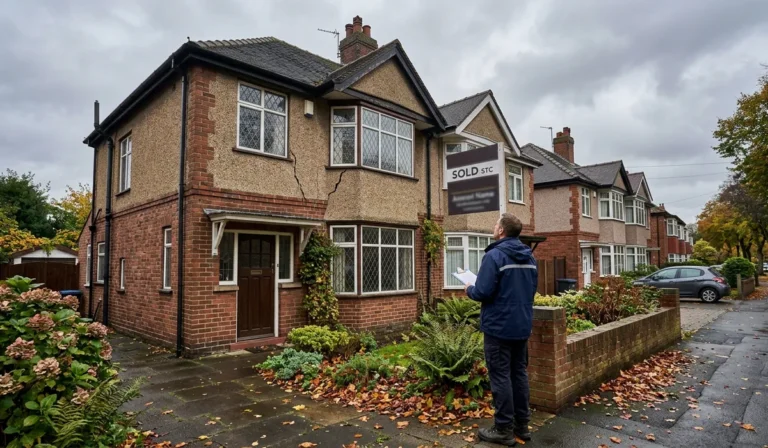
The keys went back in March. Everyone shook hands. The tenant moved into the new unit, hired two additional staff, and has not been aware of the old building.
The envelope arrived in June. Eighty-four thousand pounds.
I’ve watched this play out more times than I can count, and the reaction is almost always the same. Not anger, but bewilderment. We left it tidy. We repainted. Where has this number come from?
Here’s the uncomfortable answer. It came from a surveyor who walked the building on behalf of somebody else, priced everything they saw, and had no reason at all to argue the tenant’s side. That is not sharp practice. It’s simply how the process works when only one party has bothered to look properly.
Which brings us to the thing most people get wrong about a dilapidation survey. They think it protects them from repair costs. It doesn’t, really. It protects them from something far more expensive.
First, what a dilapidation survey actually is
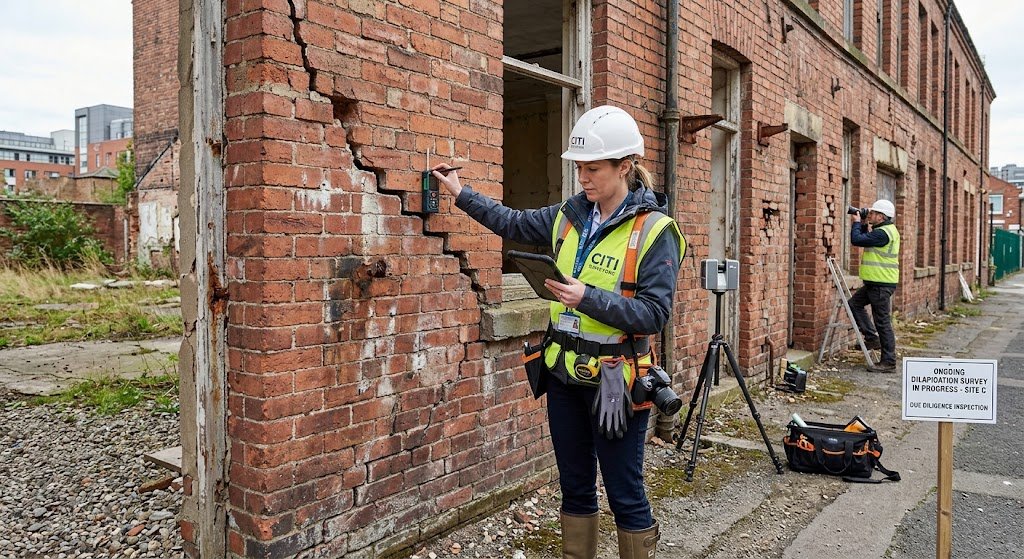
A dilapidation survey is a detailed inspection of a leased commercial property that records its condition and measures it against the repairing, decorating and reinstatement obligations written into the lease. The findings become a schedule of dilapidations: an itemised list of alleged breaches, what’s needed to put each one right, and what that work should cost.
It’s usually carried out near the end of a lease, but it can happen at any point during the term, and the smartest ones happen before anybody signs anything at all.
That’s the textbook version. Now the useful version.
What it really protects you from
Somebody else’s version of your building
Buildings are not objective. Two chartered surveyors can stand in the same warehouse and produce schedules £40,000 apart, and neither of them is lying.
The difference sits in the judgement calls. Is that hairline cracking movement, or is it the plaster doing what plaster does after fifteen years? Is the worn carpet disrepair, or fair wear and tear? Was that partition the tenant’s alteration, or was it there on day one?
Without your own dilapidations survey, you have no evidence-backed answer to any of those questions. You have a memory and an opinion, and neither carries weight in a negotiation. The landlord’s surveyor has photographs, measurements and a priced schedule. Whoever holds the documentation sets the starting number, and that number is what everything else gets negotiated down from.
A figure that nobody has stress-tested
This is the part that costs tenants the most money, and hardly anyone knows it exists.
Under Section 18(1) of the Landlord and Tenant Act 1927, a landlord’s damages cannot exceed the amount by which the disrepair has actually reduced the value of their interest in the property. Not the cost of the work. The loss in value.
Those two figures are often nowhere near each other. If the landlord is planning a full strip-out and refurbishment for the next occupier, most of the tenant’s repairs would be torn straight back out. Surveyors call this supersession. And if the building is coming down altogether, the second limb of the same section can wipe the claim out entirely.
A competent dilapidations surveyor tests the claim against all of this. They read the lease, look at what the landlord actually intends to do with the building, and separate genuine loss from a priced wish list. On larger commercial dilapidations, this single line of argument routinely takes more off a claim than every disputed repair item combined.
Paying for work that will never be done
Ask this question early and watch what happens. What is the landlord doing with the unit next?
If the answer is gutting it, a good portion of the schedule may be unrecoverable. Landlords are entitled to be compensated for genuine loss. They are not entitled to be paid twice, once by the tenant for a repair and again by their own refurbishment budget for replacing it.
You cannot make that argument on instinct. You make it with a dilapidations report that sets out the position and the evidence behind it.
The clock
The Dilapidations Protocol, properly titled the Pre-Action Protocol for Claims for Damages in Relation to the Physical State of Commercial Property at Termination of a Tenancy, sets out how this is meant to run. The landlord serves a schedule endorsed by their surveyor, along with a Quantified Demand. The tenant responds, generally within 56 days.
Fifty-six days sounds generous until you’ve spent three weeks locating the lease, another finding the licence to alter, and then discover the surveyor you want is booked out. Property dilapidations disputes are frequently lost not on the merits but on the calendar. A tenant who instructs early has options. A tenant with eleven days left has one: pay.
Landlords need the protection just as much
There’s a version of this article that treats landlords as the villain. It would be wrong.
An unevidenced claim is a bad claim, and bad claims cost landlords real money. They get discounted hard, they drag on, and if they end up in front of a court they can attract adverse costs. A schedule of dilapidations prepared by an experienced dilapidations surveyor, properly endorsed and defensible under Section 18(1), settles faster and settles higher than an inflated one. Every time.
The protection runs both ways. It’s the same document.
The cheapest protection is the one nobody buys

If you’re taking a lease rather than leaving one, stop here and do this instead.
Commission a schedule of condition before you sign, and get your solicitor to attach it to the lease with wording that limits your repairing obligation to the condition it records. It’s a photographic record of every crack, stain and worn surface on the day you walked in.
It costs a fraction of a terminal dilapidations claim. It is the single most effective piece of protection in the whole of commercial property, and the reason so few tenants have one is simply that nobody mentions it during the excitement of agreeing heads of terms.
Five years later, it’s worth more than any argument you’ll ever make.
When to actually get one
Before you sign. Get a schedule of conditions. Non-negotiable.
Two to three years before expiry. Commission a dilapidations liability assessment, so the number can be budgeted and provided for rather than absorbed as a shock.
Twelve to eighteen months out. You still have time to do the work yourself at this stage, usually far cheaper than paying the landlord’s contractor rates.
The day the schedule lands. Call somebody immediately. The clock has started.
And sometimes you don’t need one at all
Small unit, short lease, schedule of condition already attached, landlord’s claim under a few thousand pounds? Paying a surveyor to fight it may cost more than the claim. We’ll tell you that on the phone, for free, before you’ve spent anything.
Honest advice is cheaper than a survey, and it’s the reason clients come back.
Not sure where you stand?
Whether you’ve been served a schedule of dilapidations or you’re the one preparing it, get a clear view of the position before the numbers harden.
Request a Survey Quote or call 0151 315 0626.
ASG Consulting are RICS-regulated chartered building surveyors based in Liverpool, acting for landlords and tenants across Merseyside, the North West and nationwide.
FAQs
What is a dilapidation survey?
A dilapidation survey is an inspection of a leased commercial property that records its condition and compares it against the repairing, decorating and reinstatement obligations in the lease. The result is a schedule of dilapidations listing each alleged breach, the remedial work required, and its cost.
Who pays for a dilapidations survey?
Each party pays for their own. The landlord funds the schedule they serve. The tenant funds the dilapidations survey they use to respond. Under the Dilapidations Protocol, professional fees can form part of a claim, but they are frequently disputed and rarely recovered in full.
Can I challenge a dilapidation claim?
Yes, and most dilapidations claims are reduced. The usual grounds are that items fall outside the lease covenants, that the costs are unreasonable, that the works are superseded by the landlord’s own plans, or that the claim exceeds the diminution in value cap under Section 18(1) of the Landlord and Tenant Act 1927.
How long does a dilapidation survey take?
The inspection itself typically takes a few hours to a full day depending on size and complexity. The written report generally follows within one to two weeks. Lease review and negotiation take longer, which is why instructing a dilapidated surveyor early matters.
What is the difference between a schedule of condition and a schedule of dilapidations?
A schedule of condition records a property’s state at the start of a lease and is used to limit the tenant’s repairing obligation. A schedule of dilapidations lists alleged breaches at or near the end of a lease and forms the basis of a claim.
Can a landlord claim dilapidations during the lease?
Yes. This is an interim schedule, served during the term rather than at expiry. For leases originally granted for seven years or more with three or more years still to run, the Leasehold Property (Repairs) Act 1938 gives tenants the right to serve a counter-notice, which significantly restricts what the landlord can pursue.
About the author
John is a RICS-regulated chartered building surveyor with 12 years’ experience advising landlords and tenants on dilapidations across Liverpool, Merseyside and the North West.