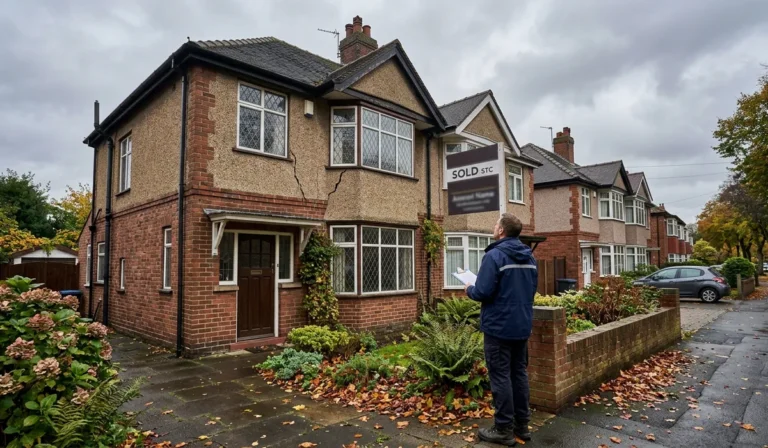
Brickwork repair is any work that restores damaged bricks, mortar joints, wall ties or lintels so a wall stays dry, stable and safe. The most expensive brickwork repair is often the one done in the wrong order, because a new face of mortar or a filled crack can hide the real cause for a year or two before the damage comes back worse.
This guide takes a surveyor led approach. Instead of starting with prices, it starts with the symptom you can see, explains the most likely cause behind it and then sets out the right repair, the 2026 cost range and who you should call. It is written for homeowners, landlords and buyers with brick houses across Liverpool, Merseyside and the wider North West.
In this guide
- What brickwork repair covers
- Brickwork repair starts with diagnosis
- Failed mortar and repointing
- Lime or cement mortar
- Spalled and frost damaged bricks
- Cracks in brickwork
- Wall tie failure
- Lintels, arches and bulging walls
- Brickwork repair costs in 2026
- Seven costly mistakes
- Who to call
- Brickwork repair in Liverpool homes
- FAQs
What Brickwork Repair Covers
Brickwork repair is a broad term. On a typical house it can mean any of the following jobs, and many walls need more than one of them at the same time.
- Repointing, which means raking out weak or failed mortar and replacing it with new mortar.
- Brick replacement, which means cutting out bricks that have cracked, crumbled or lost their face and setting in matching bricks.
- Crack repair, which ranges from simple filling to crack stitching with stainless steel helical bars bedded into the joints.
- Wall tie replacement, which means fitting new ties across a cavity wall when the original steel ties have corroded.
- Lintel and arch repair, which means replacing or supporting the brickwork over windows and doors.
- Partial rebuilding, which is needed when a section of wall has bulged, leaned or lost its bond.
The right mix of these jobs depends on why the wall failed in the first place. That is why brickwork repair should begin with an inspection rather than a quote for repointing the whole house.
Brickwork Repair Starts With Diagnosis
Bricks and mortar rarely fail on their own. They fail because water, movement, corrosion or the wrong materials put them under stress. The table below links the most common symptoms to their likely cause and the brickwork repair that actually fixes the problem.
| What you can see | Most likely cause | Repair that fixes the cause |
|---|---|---|
| Mortar recessed, sandy or falling out of joints | Normal weathering over many decades, worst on exposed walls | Repointing in a mortar that suits the brick |
| Brick faces flaking or crumbling | Trapped water and frost, often made worse by hard cement pointing | Remove hard pointing, repoint in lime, replace the worst bricks |
| Horizontal cracks in the mortar every few courses | Corroded steel wall ties expanding in a cavity wall | Wall tie replacement, then repointing |
| Stepped diagonal crack near a window or corner | Movement in the foundations or a failed lintel | Find the cause first, then crack stitching |
| Brickwork dropping over a window | Corroded steel lintel or failed brick arch | New lintel or arch support, then rebuild above |
| Wall bulging or leaning outwards | Loss of restraint at floors or roof, or failed ties | Structural assessment, restraint ties or partial rebuild |
| White powdery deposits on brick faces | Salts carried out by water moving through the wall | Stop the water source, then brush off and monitor |
If two or more of these symptoms appear together, treat the wall as a structural question rather than a maintenance job. A surveyor can tell you which symptom is driving the others, which keeps your brickwork repair budget focused on the cause.
Failed Mortar and Repointing
Mortar is meant to be the weakest part of a brick wall. It is softer than the brick so that movement and moisture pass through the joints, which are cheap to renew, rather than through the bricks, which are not. When joints wear back by more than a few millimetres, rain can sit in them and soak into the wall.
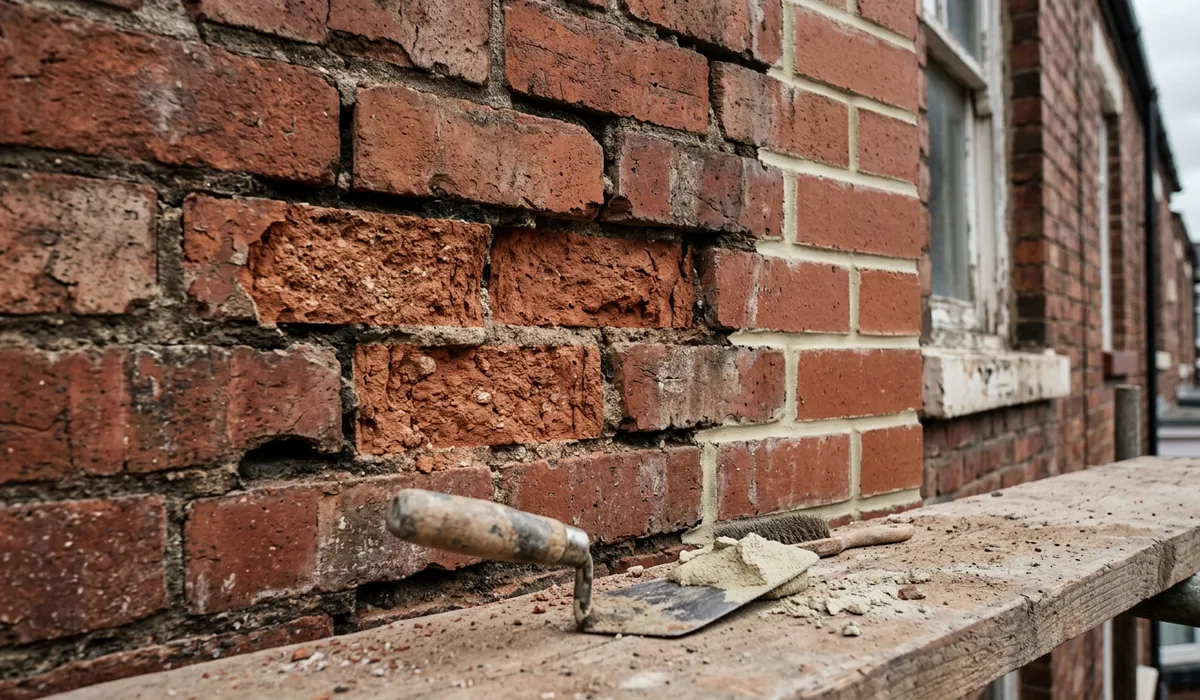
Signs that repointing is the right brickwork repair include joints that have eroded well behind the brick face, mortar that crumbles when scratched with a key, gaps you can see daylight through on garden walls, and damp patches inside that line up with an exposed outside wall.
Good repointing follows a simple process.
- Rake out by hand to a depth of roughly twice the height of the joint, without chipping the brick edges.
- Brush out and dampen the joints so the new mortar does not dry too quickly.
- Pack the mortar in layers rather than smearing a thin skin over the surface.
- Finish the joint to match the original profile, usually flush or slightly recessed on older houses.
- Protect the work from frost, strong sun and heavy rain while it cures.
Repointing only the worst areas is often enough. Sound mortar does not need to be removed just because the wall looks tired, and unnecessary raking out can damage the bricks.
Lime or Cement Mortar for Brickwork Repair
The choice of mortar is the single biggest technical decision in any brickwork repair on an older house. Most houses built before about 1919 were laid in lime mortar. Lime is soft, flexible and breathable, so the wall can dry out through its joints after rain.
Modern cement mortar is much harder and far less permeable. When it is used to repoint soft Victorian bricks, water can no longer escape through the joints. It escapes through the brick faces instead, and in a frost the trapped water freezes and pushes the faces off. Historic England explains in its guidance on repointing brick and stone walls that unsuitable repointing is one of the most common causes of damage to older buildings.
As a rule of thumb, solid walled houses built before 1919 should be repointed in lime, usually a natural hydraulic lime. Modern cavity walled houses with hard machine made bricks are normally fine with a cement and lime mix. If a previous owner has repointed an old house in cement, removing it carefully and repointing in lime is often the most valuable brickwork repair you can buy, even though it costs more up front.
Spalled and Frost Damaged Bricks
Spalling is when the face of a brick flakes, shells or crumbles away. Water is the main cause. A saturated brick that freezes expands slightly, and repeated winters gradually break the surface apart. Spalling is most common low down near the ground, under leaking gutters and downpipes, on chimneys and on walls with hard cement pointing.
A few spalled bricks are a cosmetic issue. A wall with widespread spalling is telling you that water is getting in and not getting out. The correct brickwork repair has three steps. First, stop the water by fixing gutters, downpipes, cappings or ground levels. Second, remove any hard cement pointing that traps moisture. Third, cut out the badly damaged bricks and replace them with reclaimed or new bricks that match in size, colour and strength.
Avoid painting or sealing spalled brickwork with a waterproof coating. Sealers often trap moisture behind them and speed up the damage they were meant to prevent.
Cracks in Brickwork
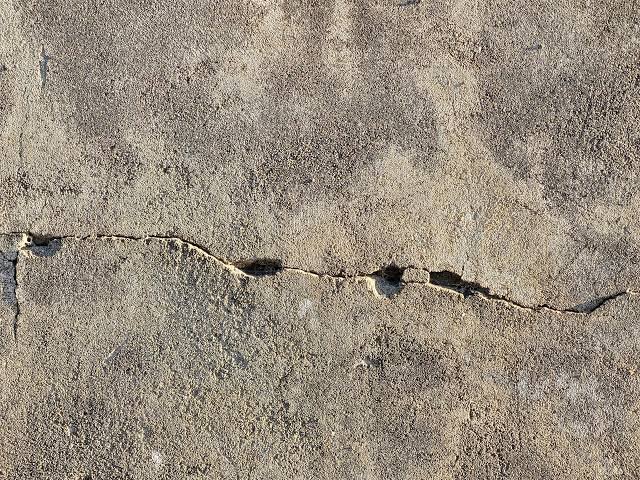
Cracks tell a story, and reading that story is the most important part of brickwork repair. A crack that follows the mortar joints in a staircase pattern usually means part of the building has moved relative to the rest. A crack that splits through the bricks themselves usually means a strong force, such as a corroding lintel or significant foundation movement.
Engineers grade crack damage by width. Hairline cracks under 1mm are usually cosmetic. Cracks up to around 5mm are slight and can often be filled and monitored. Cracks wider than that, cracks that keep growing and cracks that appear inside and outside in the same place need investigation before any repair is done. Our guide to subsidence surveys explains how engineers classify crack widths and when monitoring is needed.
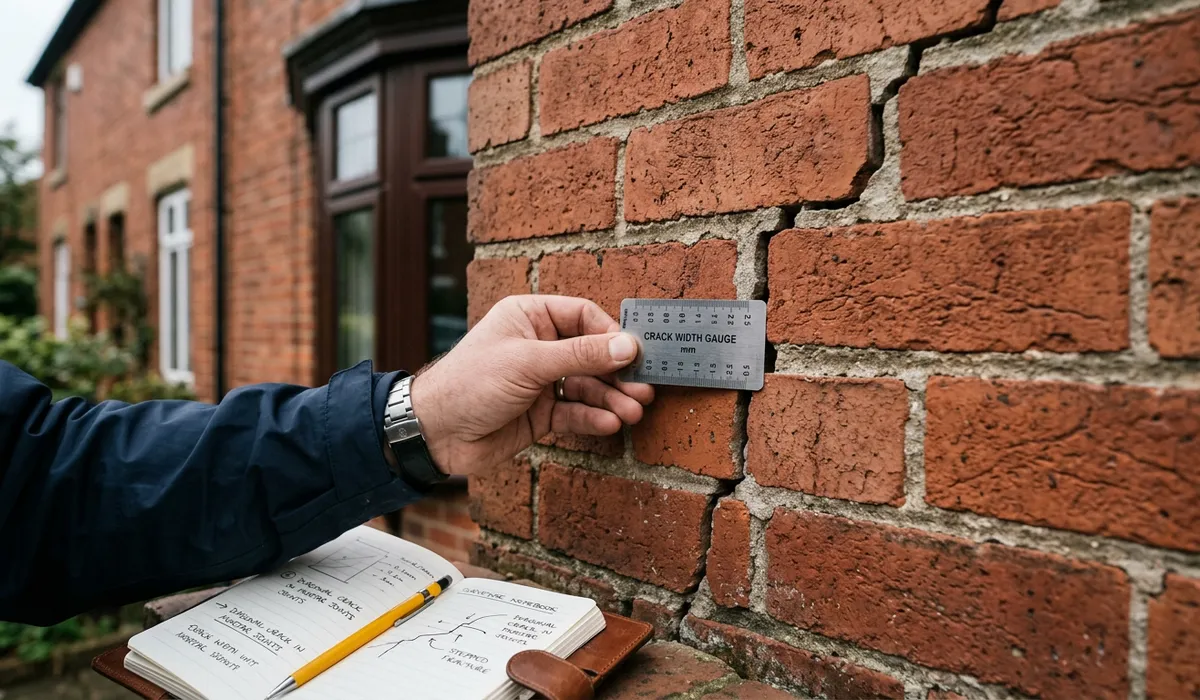
Once the cause has stopped, crack stitching is the usual brickwork repair. Slots are cut into the bed joints across the crack, stainless steel helical bars are bedded in grout, and the crack itself is filled with matching mortar. Done properly, the bars tie the two sides of the wall back together and the repair is almost invisible. Done before the movement has stopped, the crack simply reopens a little further along.
Wall Tie Failure
Most houses built from the 1920s onwards have cavity walls, with an outer leaf of brick and an inner leaf tied together by metal wall ties. Older ties were made of galvanised or plain steel, and on houses built before about 1981 the protective coating was often too thin to last. Over time the ties rust, and rust takes up more space than steel.
The expanding ties lift the mortar joints they sit in, which produces a distinctive pattern of horizontal cracks in the outer leaf, roughly every sixth course of bricks where the ties were laid. In severe cases the outer leaf bulges away from the inner leaf. Wall tie failure is often mistaken for simple weathering and repointed over, which hides the warning sign without dealing with the risk.
A surveyor confirms tie failure with a metal detector to locate the ties and a small borescope inspection or opening up to see their condition. The brickwork repair is to install new stainless steel ties through the outer leaf into the inner leaf and, where the old ties are badly corroded, to isolate or remove them so they cannot keep cracking the joints.
Lintels, Arches and Bulging Walls
The brickwork over windows and doors is carried by a lintel or a brick arch. Victorian houses often used flat brick arches with timber lintels behind them, while many later houses used steel lintels. When a steel lintel rusts, it expands and lifts the brickwork above, causing cracks that run up from the corners of the opening. When a timber lintel rots or an arch drops, the bricks above sag.
Bulging walls are a more serious brickwork repair problem. A wall can bow outwards when it has lost its connection to the floors and roof, when wall ties fail or when a solid wall has been overloaded. A bulge of more than a small amount on a two storey wall should be assessed by a structural engineer, who may specify restraint straps, helical tie systems or partial rebuilding.
Brickwork Repair Costs in 2026
These are published UK price ranges for common brickwork repair jobs. They give you a starting point for budgets, but scaffolding, access and the condition of the wall can move a quote a long way in either direction.
| Brickwork repair job | Typical 2026 cost | Source |
|---|---|---|
| Repointing brickwork, average | 50 to 60 pounds per square metre | MyBuilder |
| Repointing with lime mortar | 60 to 80 pounds per square metre, up to around 100 for difficult walls | Homebuilding and Renovating |
| Chimney repointing | Around 750 pounds | MyBuilder |
| Replacing a spalled brick | 12 to 26 pounds per brick | Checkatrade |
| Crack stitching, single typical crack | 350 to 900 pounds | Trade2Base, June 2026 |
| Wall tie replacement, typical job | 1,300 to 2,717 pounds, average about 1,876 pounds | Checkatrade |
| Bricklayer day rate | 150 to 250 pounds per day | MyBuilder |
Scaffolding is usually the largest extra on any brickwork repair above ground floor level, so it makes sense to group jobs. If the scaffold is already up for repointing, ask for the gutters, chimney, lintels and roof edge to be checked and repaired at the same time.
Seven Brickwork Repair Mistakes That Cost More Later
These are the errors surveyors see most often when they inspect walls that have already been repaired once.
- Repointing over a moving crack. The new mortar cracks again, and the cause carries on unseen.
- Using hard cement on soft bricks. The brick faces spall within a few winters.
- Smearing mortar over the brick faces. Wide ribbon pointing looks heavy and traps water on the ledge it creates.
- Ignoring the water source. A leaking gutter will keep damaging new brickwork as fast as it is repaired.
- Treating wall tie cracks as weathering. Repointing hides the horizontal cracks while the ties keep corroding.
- Sealing the wall. Waterproof coatings on old brickwork often trap moisture and make damp and spalling worse.
- Using mismatched bricks. Bricks of a different size or strength stand out and can crack where they meet the old work.
Each of these mistakes saves a little money on the day and adds a second, larger brickwork repair a few years later.
Bricklayer, Surveyor or Structural Engineer
Choosing the right professional for brickwork repair saves time and money.
- Call a bricklayer for routine repointing, a few replacement bricks or a garden wall, where the cause is simply age and weather.
- Call a chartered building surveyor when you are not sure why the brickwork is failing, when damp is showing inside, when you are buying the property or when several symptoms appear together.
- Call a structural engineer for cracks wider than about 5mm, cracks that are growing, bulging or leaning walls, failed lintels over large openings and suspected wall tie failure across a whole elevation.
A surveyor led inspection is usually the best first step because it covers the whole building. Our building pathology and defect analysis service is designed for exactly this kind of question. If the wall is also letting water into the house, our guide to damp and timber surveys explains how moisture problems are traced.
Brickwork Repair in Liverpool and Merseyside Homes
The housing stock across Liverpool and Merseyside creates some very local brickwork repair patterns.
- Victorian and Edwardian terraces in areas such as Anfield, Walton, Kensington and Wavertree mostly have solid brick walls laid in lime mortar. Many have since been repointed in cement, which leads to spalling on the front elevations.
- Interwar semi detached houses often have early cavity walls with steel ties, so horizontal cracking from wall tie failure is a recurring finding.
- Exposed elevations facing the prevailing west and south west weather off the Irish Sea take the most driving rain, so their mortar and bricks usually fail first.
- Chimney stacks on terraced streets are exposed on every side and often need repointing and new flaunching long before the main walls.
If you are buying one of these houses, a full home buyers survey will record the condition of the brickwork and flag where specialist brickwork repair advice is needed before you exchange contracts.
Brickwork Repair FAQs
How often does brickwork need repointing?
Good quality repointing in a suitable mortar normally lasts for several decades. Exposed walls, chimneys and garden walls wear faster, so they may need attention sooner than sheltered elevations.
Can I do brickwork repair myself?
Small repointing jobs on a low garden wall are within reach of a careful homeowner. Anything above ground floor level, any work on an old house that needs lime mortar and any cracking or bulging should be left to professionals.
Does home insurance cover brickwork repair?
Most buildings insurance policies exclude wear and tear, so routine repointing and spalling are not usually covered. Damage caused by an insured event such as subsidence or impact may be covered, so check your policy and speak to your insurer before work starts.
How long does repointing a house take?
A team typically repoints around 8 to 15 square metres a day depending on access and the condition of the joints. A full terraced house front and back is often a job of one to two weeks including scaffolding.
Is it worth getting a survey before brickwork repair?
Yes, when the cause is not obvious. A survey costs far less than repeating a failed brickwork repair, and it tells you whether you need a bricklayer, a specialist or a structural engineer.
Get Brickwork Inspected in Liverpool and Merseyside
ASG Consulting is regulated by RICS. Our chartered surveyors and structural engineers inspect cracked, damp and deteriorating brickwork in houses and commercial buildings across Liverpool, Merseyside and the North West. We explain the cause in plain English and set out a brickwork repair plan that deals with it, so you only pay for the work your building needs. To arrange an inspection, visit our building pathology page.
About the Author
Harry is a property content writer with 3 years of experience writing about building surveying, commercial property and property compliance in the UK. He writes the guides at ASG Consulting for buyers, tenants and landlords, turning survey practice into clear, practical advice.