To check flood risk when buying a house, look up the address on the GOV.UK long term flood risk service, ask the seller about past flooding, get your solicitor to order an environmental or flood search, check insurance before you exchange and ask your surveyor to look for signs of past water damage. Each check covers a different part of the risk.
Flooding is one of the most expensive and upsetting problems a homeowner can face, and it is not just a worry for homes beside rivers or the sea. The Environment Agency says 6.3 million properties in England are in areas at risk of flooding, and around 4.6 million of those are at risk from surface water. This step by step guide explains how to check flood risk when buying a house in Liverpool, Merseyside or anywhere in England, what each check tells you and what to do if the results are worrying.
In this guide
- Why does flood risk matter when buying a house?
- What types of flooding should you check?
- What are the steps to check flood risk?
- How do you use the GOV.UK flood risk check?
- What do flood zones mean?
- What should you ask the seller?
- What does a flood search from your solicitor show?
- How do you check insurance before you buy?
- What can a survey tell you about flooding?
- What are the signs of past flooding?
- Will flood risk affect your mortgage?
- What should you do if the risk is high?
- How can a home be made more flood resilient?
- Flood risk in Liverpool and Merseyside
- FAQs
Why Does Flood Risk Matter When Buying a House?
A flood can damage floors, walls, kitchens, electrics and belongings, and force you out of your home for months. It can also affect the cost and availability of insurance, your ability to get a mortgage and the value of the property when you come to sell.
The Environment Agency published a major update to its national flood and coastal erosion risk assessment in December 2024. It found that 6.3 million properties in England are in areas at risk of flooding from rivers, the sea or surface water, and that this could rise to around 8 million by the middle of the century as the climate changes. That is why checking flood risk is now a standard part of buying a home, not something to leave to chance.
What Types of Flooding Should You Check?
Flood risk comes from several sources, and a home can be at low risk from one and high risk from another.
| Source | What it means | Typical locations |
|---|---|---|
| Rivers | Rivers and streams overflowing their banks | Homes in river valleys and on flood plains |
| The sea | High tides, storm surges and waves | Low lying coastal areas |
| Surface water | Heavy rain that cannot drain away quickly enough | Urban streets, dips in the road, homes at the bottom of slopes |
| Groundwater | Water rising up through the ground after long wet periods | Homes with cellars and basements in some areas |
| Reservoirs | The rare risk of a reservoir failing | Homes downstream of reservoirs |
| Drains and sewers | Blocked or overloaded drains and sewers backing up | Low lying streets and older drainage systems |
Surface water flooding is the most widespread risk, and it can affect homes a long way from any river.
What Are the Steps to Check Flood Risk?
Follow these steps in order. The early ones are free and quick, so you can rule out high risk homes before spending money.
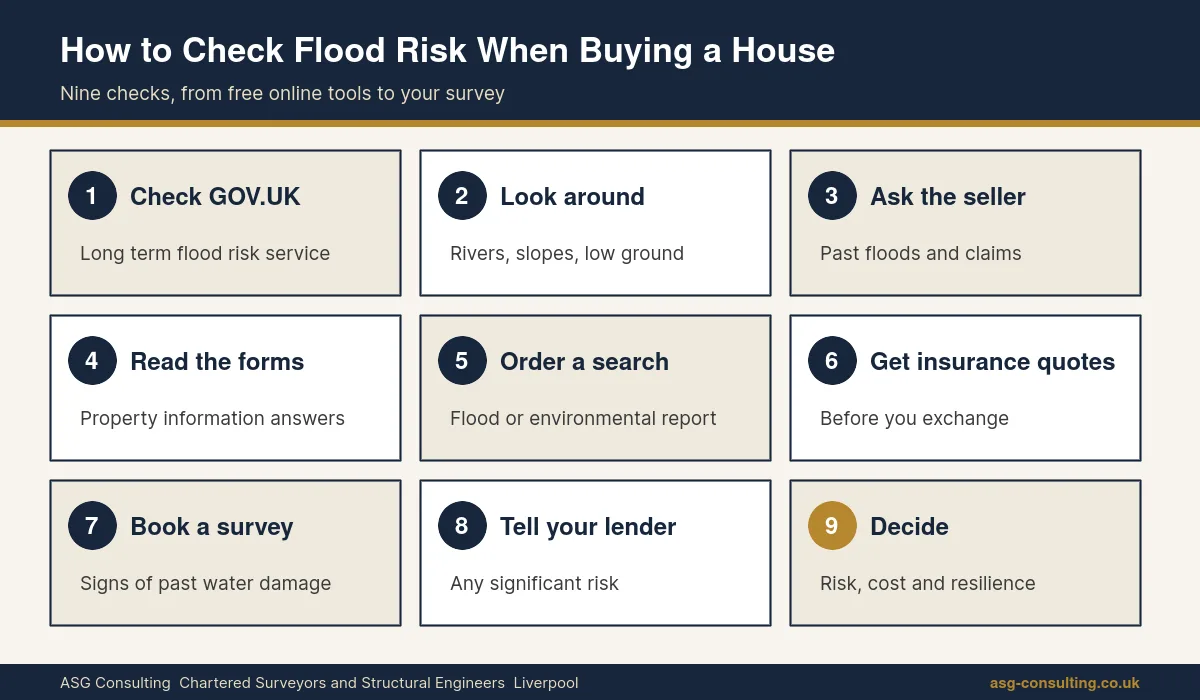
- Check the address on GOV.UK. Use the free long term flood risk service before you make an offer.
- Look at the location yourself. Note nearby rivers, streams, low ground, slopes and road drainage.
- Ask the seller. Ask about past flooding, insurance claims and any flood defences or resilience measures.
- Read the property information form. The seller should answer questions on flooding in the forms your solicitor receives.
- Order a flood or environmental search. Your solicitor can obtain a report that brings several data sources together.
- Get insurance quotes. Check that you can get buildings insurance at a reasonable cost before you exchange contracts.
- Commission a survey. Ask the surveyor to look for signs of past water damage and drainage problems.
- Talk to your lender. Make sure your mortgage lender is aware of any significant flood risk.
- Decide. Weigh the risk, costs and any resilience measures against the price and your plans.
How Do You Use the GOV.UK Flood Risk Check?
The GOV.UK check long term flood risk service is free and covers England. You enter a postcode and choose the property, and it shows the long term risk from
- rivers and the sea
- surface water
- reservoirs
- groundwater, where data is available
The service has limits. GOV.UK explains that it cannot tell you how likely an individual property is to flood, and it does not cover flooding from sources such as blocked drains and burst pipes. Treat it as a first screen, not a final answer.
Risk is usually shown as very low, low, medium or high. A medium or high result does not mean you should not buy, but it does mean the later steps become more important.
What Do Flood Zones Mean?
When checking flood risk when buying a house, you may also see flood zones mentioned in searches or planning documents. Flood zones come from the Environment Agency flood map for planning and describe the chance of flooding from rivers and the sea, ignoring the effect of any flood defences.
| Flood zone | General meaning |
|---|---|
| Zone 1 | Low probability of flooding from rivers and the sea |
| Zone 2 | Medium probability of flooding from rivers and the sea |
| Zone 3 | High probability of flooding from rivers and the sea |
Flood zones are mainly used for planning decisions, and they do not include surface water risk. A home in Zone 1 can still be at risk from surface water, so always use the long term flood risk check as well.
What Should You Ask the Seller?
The seller often knows more than any map. Ask these questions directly and in writing.
- Has the property, garden or garage ever flooded, and when?
- Was there an insurance claim for flooding, and what was repaired?
- Have water levels come close to the house in heavy rain?
- Does the street or nearby road flood during storms?
- Are there any flood defences, flood doors, non return valves or other resilience measures?
- Is the home insured through a standard policy, and is it in the Flood Re scheme?
- Has the cellar or basement ever had water in it?
Sellers must answer the property information questions honestly. If an answer seems vague, ask your solicitor to follow it up.
What Does a Flood Search From Your Solicitor Show?
Your solicitor can order an environmental search or a specific flood risk report. These reports typically draw on several sources of flood data and give a summary of the risk from each source, along with other environmental issues such as ground stability or contaminated land.
Ask your solicitor to explain the results and to raise any concerns with the seller. If the report suggests further investigation, follow it up before you exchange contracts, because exchange is the point where you become legally committed.
How Do You Check Insurance Before You Buy?
Buildings insurance is usually a condition of your mortgage, so you need to know you can get it before you commit. Get quotes on the specific address before exchange, and give honest answers about any past flooding.
For homes at higher risk, the Flood Re scheme can help make cover more affordable. The National Flood Forum explains in its guide to Flood Re that the scheme does not cover homes built after 1 January 2009, most residential landlords or buildings insurance for leased properties with more than three residential units, and that Flood Re will end in 2039. Ask your insurer or broker whether the policy you are offered uses the scheme.
If a home was built after 2009 in a flood risk area, check insurance especially carefully, as Flood Re will not apply.
What Can a Survey Tell You About Flooding?
A RICS survey is not a flood risk assessment, and surveyors do not predict flooding. The RICS consumer guide on flooding is a useful starting point if you want to understand the wider issues. What a good surveyor can do is look closely for physical signs of past water damage and problems that make flooding more likely or more damaging.
A survey may comment on
- tide marks, staining or salt deposits low on walls
- replaced plaster, skirting or flooring at low level
- damp in cellars, basements and ground floors
- the condition of gutters, downpipes and visible drainage
- ground levels sloping towards the house
- air bricks and doorways close to ground level
- any visible flood resilience measures
For most homes, a RICS Level 2 HomeBuyer Survey is suitable, and our RICS HomeBuyer Survey in Liverpool page explains what it covers. For older homes, homes with cellars or homes with signs of past water damage, a Level 3 Building Survey gives more detail, as explained on our residential building surveying page.
What Are the Signs of Past Flooding?
When you view a property, look for
- new plaster, skirting boards or flooring on the ground floor only
- a line of staining or tide marks at a similar height around the rooms
- musty smells, mould or peeling paint low on walls
- electrical sockets raised higher than usual on the walls
- flood doors, flood boards, non return valves or pumps
- sandbags stored in the garage or shed
- a recently replaced kitchen or flooring in an otherwise dated home
None of these signs proves the house has flooded, but they are good reasons to ask more questions. Our house viewing checklist covers other things to look for.
Will Flood Risk Affect Your Mortgage?
It can. Lenders want to know the property is insurable and will hold its value. Where flood risk is high, a lender may
- ask for evidence that buildings insurance is available
- ask for further reports
- reduce the amount they will lend
- decline to lend on the property
The lender valuation is not a flood assessment or a survey. Our guide to mortgage valuation vs survey explains the difference.
What Should You Do if the Risk Is High?
A high flood risk result does not automatically mean you should walk away. Consider
- how often and how badly the property has flooded in the past, if at all
- whether insurance is available at a cost you can afford
- whether resilience measures are in place or could be added
- whether the price reflects the risk
- how the risk might affect selling the home in future
- how you would cope if the home did flood
If the risk is high and the home has flooded before, it may be sensible to negotiate on price, ask the seller to fit resilience measures or look elsewhere. Our guide to renegotiating after a house purchase survey explains how to approach the seller.
How Can a Home Be Made More Flood Resilient?
Flood resilience measures can reduce the chance of water getting in and the damage it causes if it does. Common measures include
- flood doors or removable flood barriers
- self closing or covered air bricks
- non return valves on drains and sewers
- raised electrical sockets and boilers
- water resistant floors and plaster on the ground floor
- sump pumps in cellars and basements
- clear gutters, downpipes and drains
Measures should suit the type of flooding and the construction of the house. Fitting the wrong measures, such as sealing up an older solid wall house too tightly, can cause damp problems. Our guides to damp cellars and penetrating damp explain how water affects older homes.
Flood Risk in Liverpool and Merseyside
Liverpool and Merseyside face a mix of flood risks. Low lying coastal areas, such as parts of the Sefton coast and the north Wirral coast around Leasowe and Moreton, rely on sea defences. River flooding can affect homes near watercourses such as the River Alt and its tributaries in Sefton and Knowsley. Across the city, heavy rain can cause surface water flooding where drains are overwhelmed, particularly in low points of roads and older terraced streets.
Common findings on surveys in the area include
- damp and water in cellars of Victorian terraces, especially after heavy rain
- blocked gutters and gullies sending water towards walls
- raised paths and patios directing water against the house
- air bricks close to ground level on older homes
- replaced ground floor finishes in homes that may have been affected by water in the past
Always check the GOV.UK service and ask your solicitor about searches, even if the home seems far from water. Checking flood risk when buying a house takes little time compared with the cost of getting it wrong.
Flood Risk When Buying a House FAQs
How do I check if a house is at risk of flooding?
Start with the free GOV.UK long term flood risk check, then ask the seller about past flooding, order a flood or environmental search through your solicitor and check insurance before exchange.
Should I buy a house in a flood risk area?
It depends on the level of risk, past flooding, insurance costs and resilience measures. Many homes in flood risk areas are bought and insured successfully, but check carefully first.
Does a house survey check for flooding?
A survey does not predict flooding, but a surveyor can look for signs of past water damage and drainage problems that make flooding more likely or more damaging.
Can I get insurance on a house at risk of flooding?
Often yes. The Flood Re scheme can help eligible homes built before 2009, but it excludes newer homes and some other properties. Get quotes before you exchange.
Does the seller have to tell me about flooding?
Sellers should answer the property information questions about flooding honestly. If you are unsure about an answer, ask your solicitor to raise further enquiries.
Does surface water flooding count as flood risk?
Yes. Surface water flooding is the most widespread type in England, and it can affect homes far from rivers or the sea.
Book a Survey With ASG Consulting
ASG Consulting is an RICS regulated building surveying practice in Liverpool. We carry out RICS Level 2 HomeBuyer Surveys and Level 3 Building Surveys across Liverpool, Merseyside, the Wirral and the wider North West, and we look for signs of past water damage and drainage problems, with reports usually delivered within 3 to 5 working days of the inspection. We give a fixed fee on request, usually confirmed within one working day. To request a quote, call 0151 315 0626 or visit our contact page.
About the Author
Dave MacMillan is the lead surveyor at ASG Consulting, an RICS regulated building surveying practice at 54 St James Street, Liverpool. He has 8 years of experience in building surveying and inspects homes for buyers across Liverpool, Merseyside and the North West.
Last updated 14 November 2026
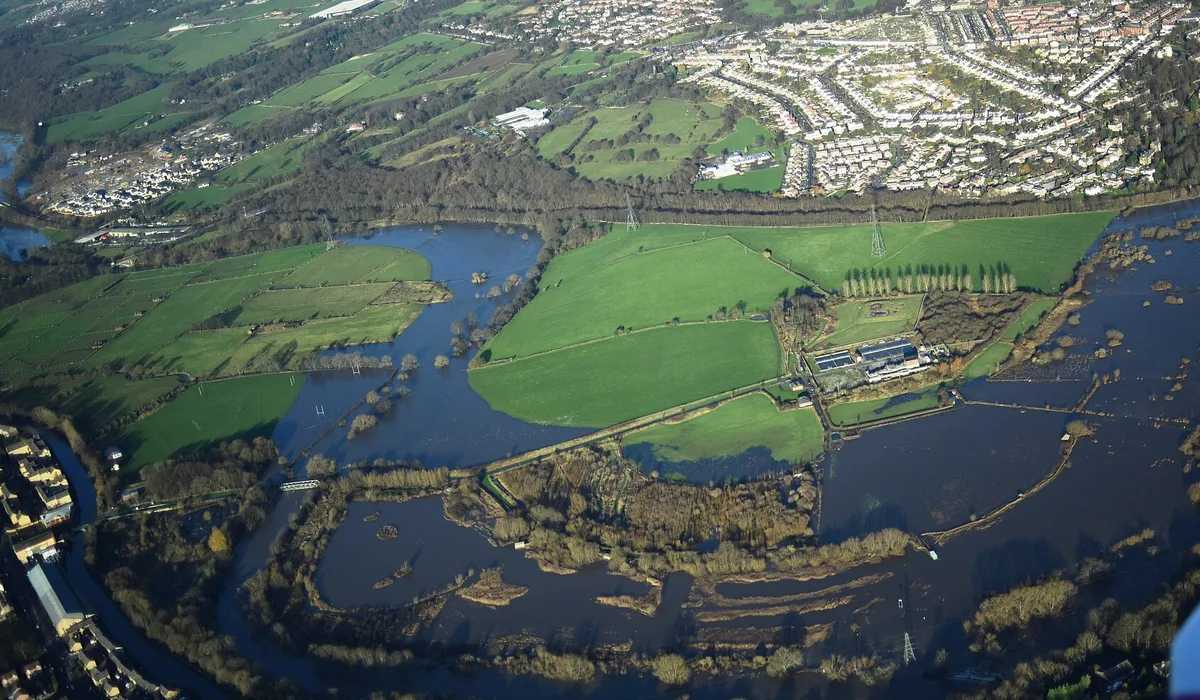
Featured photo of river flooding near Farsley, West Yorkshire by the Environment Agency via Wikimedia Commons, licence Open Government Licence v1.0, cropped.