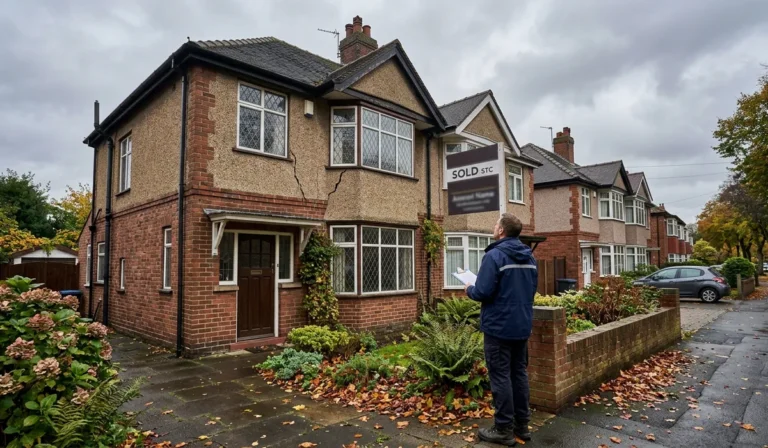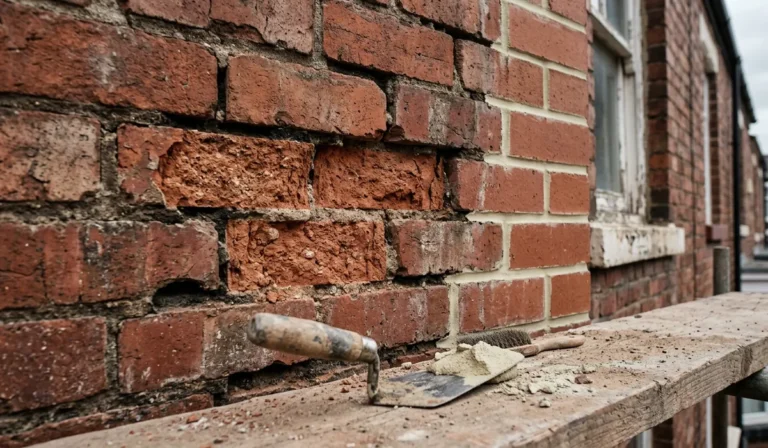

A client once told us she’d paid a structural engineer £400 for a wall removal report, only to have Liverpool City Council Building Control reject it outright, because the person who wrote it wasn’t actually qualified to. No stamp, no registration number, nothing. She had to pay twice.
That story isn’t rare. Anyone can print business cards that say structural engineer. Nothing stops them. So how do you check if someone is a structural engineer, and not just someone who says they are? It comes down to three things: a protected title, a real membership number, and a paper trail you can verify in under five minutes. Here’s exactly how.
Table of Contents
- Why This Even Needs Checking
- Step 1: Ask for Their Membership Number
- Step 2: Understand What the Letters Actually Mean
- Step 3: Look for RICS Regulation Too
- Step 4: Ask the Right Questions Before You Hire
- Step 5: Don’t Let Price Be the Only Filter
- A Quick Local Example: Liverpool
- What Good Documentation Looks Like
- FAQs
Why This Even Needs Checking
In the UK, structural engineer isn’t a locked title the way doctor or solicitor is. What is protected is Chartered Structural Engineer: the letters MIStructE or FIStructE after someone’s name. Anyone can call themselves one, with no qualifications at all; only someone who’s passed the Institution of Structural Engineers’ (IStructE) exams and professional review can legally use those chartered letters.
That gap is exactly where problems start. A building structural engineer without proper training might get the numbers wrong on a beam calculation, and nobody catches it until the wall’s already open and the ceiling’s sagging.
Step 1: Ask for Their Membership Number, Then Actually Check It
Every genuine structural engineer working in the UK should be a member of one of two bodies:
- IStructE (Institution of Structural Engineers): the specialist body for structural design
- ICE (Institution of Civil Engineers): broader, but many structural specialists sit here too
Ask for their membership number. Then go to IStructE’s find an Engineer directory and search it yourself. Don’t take their word for it: a two-minute lookup confirms whether they’re listed, what grade of membership they hold, and whether they’ve kept up their Continuing Professional Development (CPD). If a name doesn’t appear, that’s your answer.
This single step is what separates a genuine structural engineering company from someone who’s simply good at sounding confident on the phone.
Step 2: Understand What the Letters Actually Mean
Not every membership grade carries the same weight. Here’s the quick version:
- MIStructE / FIStructE: fully Chartered. This is the qualification that matters for anything load-bearing, from a single steel beam to a full extension.
- Associate or Technician grade: useful for some tasks, but not equivalent to full chartered status.
- CEng (Chartered Engineer): a separate, broader engineering chartership, useful context, but check it’s paired with structural-specific membership too.
If you’re planning anything involving a structural engineer for homes, an extension, a loft conversion, a load-bearing wall, you want MIStructE or FIStructE, full stop.
The fastest way to check if someone is a structural engineer is to ask for their IStructE or ICE membership number and verify it on istructe.org’s public directory. Genuine members are always listed, with their grade and CPD status visible.
Step 3: Look for RICS Regulation Too (If They Also Survey)
Some firms, ASG Consulting among them, combine structural engineering with chartered surveying. If a company offers both services, check whether they’re RICS-regulated as well. RICS regulation adds a second layer: professional indemnity insurance requirements, a formal complaints process, and accountability that goes beyond the engineering qualification alone. It’s not mandatory for structural engineering specifically, but it’s a strong trust signal when a firm holds it voluntarily.
This matters even more if you’re mid-purchase and relying on a homebuyer survey alongside structural advice. A RICS-regulated firm can usually explain clearly where a general homebuyer survey ends and where a specialist structural opinion needs to take over, which avoids the confusion of paying for two reports that don’t actually talk to each other.
Step 4: Ask the Right Questions Before You Hire
A genuine, experienced professional won’t flinch at any of these:
- What’s your IStructE or ICE membership number?
- Can I see proof of professional indemnity (PI) insurance?
- Have you worked on properties similar to mine, a structural engineer house survey, a knock-through, a subsidence case?
- Will your calculations be accepted by my local Building Control?
- What happens if Building Control raises a query after you submit?
Hesitation, vague answers, or I’ll email that over and then silence: treat these as red flags.
Step 5: Don’t Let Price Be the Only Filter
Searching for a cheap structural engineer near me is understandable; nobody wants to overpay. But price alone tells you nothing about qualification. The cheapest quote from an unregistered engineer can end up costing far more once Building Control rejects the paperwork and you’re paying a properly qualified local structural engineer to redo it from scratch, as happened to our client above.
A better search is simply structural engineers near me or structural engineer near me combined with a membership check: use the search to build a shortlist, then verify each one through IStructE before you compare prices.
A Quick Local Example: Checking a Structural Engineer in Liverpool
If you’re hiring structural engineers Liverpool-wide, or specifically searching for a structural engineer Liverpool or a firm offering civil and structural engineers Liverpool services, the process doesn’t change. Search IStructE’s directory by postcode or town, confirm the firm’s Liverpool office or coverage area, and ask whether their calculations are routinely accepted by Liverpool City Council Building Control. A locally experienced firm will answer that question instantly, without hesitation.
The same logic applies UK-wide. Whether you’re searching for a structural engineer UK-based for a national project or comparing structural engineering UK firms for a regional job, the verification steps are identical: membership number, directory check, insurance proof, relevant experience.
What Good Documentation Looks Like
A properly qualified professional’s paperwork will typically include:
- Their name and chartered membership number on every report
- A company registration number (checkable on Companies House)
- Evidence of current PI insurance
- Calculations referenced to current British Standards or Eurocodes
- A clear scope of what was assessed and what wasn’t
If a report is missing all five, question it, regardless of how professional the cover page looks.
FAQs
What will a structural engineer do?
They assess and design the load-bearing parts of a building, beams, walls, foundations and roofs, producing calculations and drawings that prove a structure (or a proposed alteration to one) is safe and compliant with Building Regulations.
How much does it cost for a structural engineer?
Costs vary by project, but most residential jobs, a single beam calculation, a wall removal, or a house survey, fall within a few hundred pounds. Get a fixed-fee quote in writing before work starts; avoid vague hourly estimates.
Do I need a structural engineer to remove a wall?
Yes, if the wall is load-bearing. Building Control will almost always require calculations from a qualified engineer before approving the work, and your builder cannot legally sign these off themselves.
Is a structural engineer an architect?
No. An architect designs the layout, appearance and planning aspects of a building. This professional focuses specifically on whether the structure will safely hold itself up. Larger projects typically need both, working together.
Who checks if a wall is load-bearing?
This is determined by a qualified professional, usually via a site visit and review of the building’s construction and drawings. It’s not something a builder or homeowner should assume without expert assessment; misjudging this has caused ceilings to collapse.
Does a structural engineer need to visit a site?
Not always. Straightforward jobs can often be assessed remotely from photos and drawings, but anything involving visible cracking, movement, subsidence, or an unusual layout typically needs an in-person visit to assess accurately.
Final Thoughts
Checking if someone is genuinely qualified takes minutes, not hours: ask for their membership number, verify it on the IStructE directory, confirm their insurance, and ask a few direct questions before you sign anything. Skip that step, and you risk paying for a report that Building Control won’t even accept, exactly what happened to the client whose story opened this piece.
Get a Structural Engineering Quote in Liverpool
So, do you actually need structural engineering services, or just peace of mind? Honestly, it’s usually a bit of both. Whether it’s a hairline crack you can’t stop thinking about, an extension you’re planning, or a loft conversion that needs sign-off before Building Control will touch it, getting a proper structural opinion early is always cheaper than fixing a problem after the fact.
That’s really the whole point of this guide. Structural engineering services aren’t just for major faults or dramatic subsidence cases: they cover everything from a single beam calculation to a full structural survey, and knowing which one you actually need saves you time, money and a fair bit of stress.
If you’re still not sure where you stand, that’s fine, most people aren’t. Talk to a RICS-regulated structural engineer, describe what’s going on or what you’re planning, and get a straight answer without the upsell.