Damp patch on the bedroom ceiling. Boiler that’s packed in twice this winter. A landlord who’s gone quiet on your emails. If any of that sounds familiar, you’ve probably typed “housing disrepair” into Google at some point in the last month and you’re not alone. It’s one of the most searched housing terms in the UK right now, and honestly, most of what comes up is either a law firm chasing a claim or a government page written in 2019 that never got updated.
So let’s actually talk about it properly. Housing disrepair, at its core, is what happens when a rented property falls below a safe or reasonable standard because the landlord hasn’t kept up their end of the repairing obligations. And when things get disputed which they often do the way you prove what’s actually wrong is through a proper survey. Not a phone photo. Not a landlord’s own inspection. An independent one.
We’ll walk through what that means in practice, who actually needs one, and what tends to trip people up.
Why Housing Disrepair Is Such a Common Problem
Here’s the thing nobody quite says out loud: disrepair complaints have exploded over the last few years. Damp and mould cases alone rose sharply following the tragic death of Awaab Ishak in 2020, which pushed the government to introduce Awaab’s Law new rules forcing social landlords to investigate and fix damp and mould within strict timeframes. That’s not a small policy tweak. It changed how seriously these complaints get taken.
But awareness doesn’t fix leaking pipes. Housing disrepair still comes down to the same handful of culprits, over and over:
- Damp and black mould creeping along skirting boards and window frames
- Broken heating systems (and yes, this always seems to happen in December)
- Leaks from roofs, guttering, or ancient plumbing nobody’s touched in a decade
- Electrical faults exposed wiring, sockets that spark, that sort of thing
- Structural issues like cracked walls or windows that won’t shut properly
- Pest infestations, which landlords love to blame on tenants (it’s rarely that simple)
Under Section 11 of the Landlord and Tenant Act 1985, landlords are legally required to keep the structure, exterior, and key installations of gas, electricity, heating, and water in proper working order. That’s not optional. But “the law says so” and “the landlord actually did something about it” are two very different sentences, which is exactly why disrepair disputes end up needing independent evidence.
What Is a Housing Disrepair Survey?
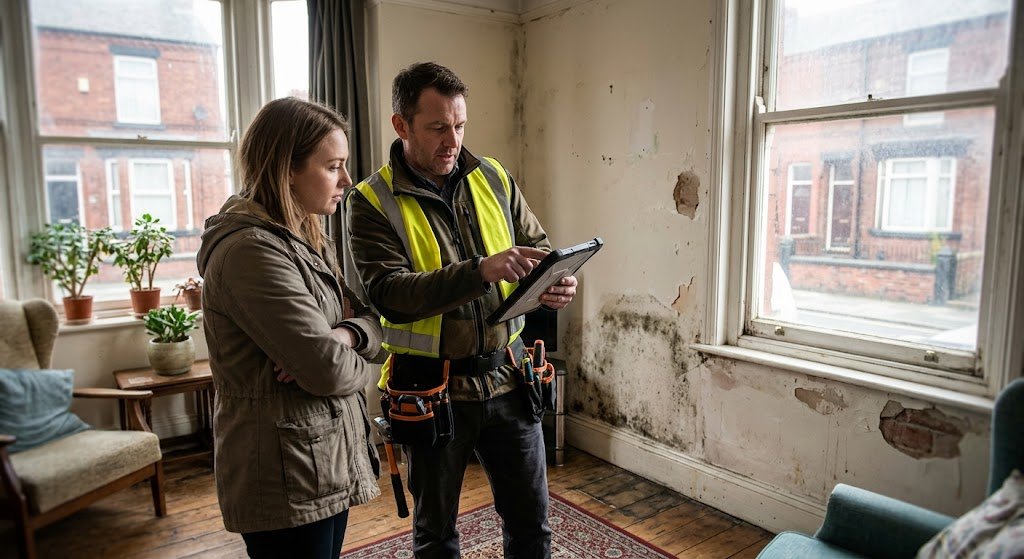
A housing disrepair survey is an independent inspection of a rented property, carried out by a qualified surveyor rather than the landlord, the tenant, or anyone with a stake in the outcome. The surveyor goes through the reported issues one by one, assesses how serious each one actually is, and documents the probable cause along with what needs fixing.
It’s not a checklist tick-box exercise. A decent surveyor will actually explain why the damp is there: is it rising damp from a failed course, or condensation from poor ventilation? Those two things look almost identical to an untrained eye but require completely different fixes. Get that wrong and you’ve wasted months.
Why Impartiality Actually Matters Here
This is the bit people underestimate. If a landlord’s own contractor inspects the property, there’s an obvious incentive problem: nobody wants to write a report that makes their client look negligent. The same goes the other way; a tenant’s mate with a phone camera isn’t going to hold up in a dispute either. An independent survey removes that bias entirely. The findings are what they are, regardless of who commissioned the report.
Suitable for Legal Evidence
Where a disrepair matter ends up in a formal dispute or court claim, the report often needs to meet Part 35 standards, the rules governing expert evidence in civil proceedings. That means the surveyor has a duty to the court first, not to whoever’s paying the invoice. A survey that isn’t prepared to this standard can get thrown out or heavily discounted as evidence, which trust me is not what you want to discover halfway through a claim.
How a Survey Actually Solves the Housing Disrepair Problem
The whole reason disrepair cases drag on for months (sometimes years) is disagreement over facts. The tenant says the mold’s been there since March. The landlord says it only appeared last week and it’s condensation from drying and washing indoors. Without independent evidence, that’s just two people arguing.
A proper survey cuts through that. It gives you:
A clear, dated record of the property’s condition at a specific point in time. Photographic evidence tied to a professional assessment rather than a phone snap with no context. An explanation of severity is this urgent (no heating in January) or something that can reasonably wait six weeks? And a paper trail that solicitors, housing associations, and courts actually respect.
Solicitors handling disrepair claims will almost always ask for this kind of report before they’ll take a case forward, because without it, there’s honestly not much of a case to build.
A Realistic Example
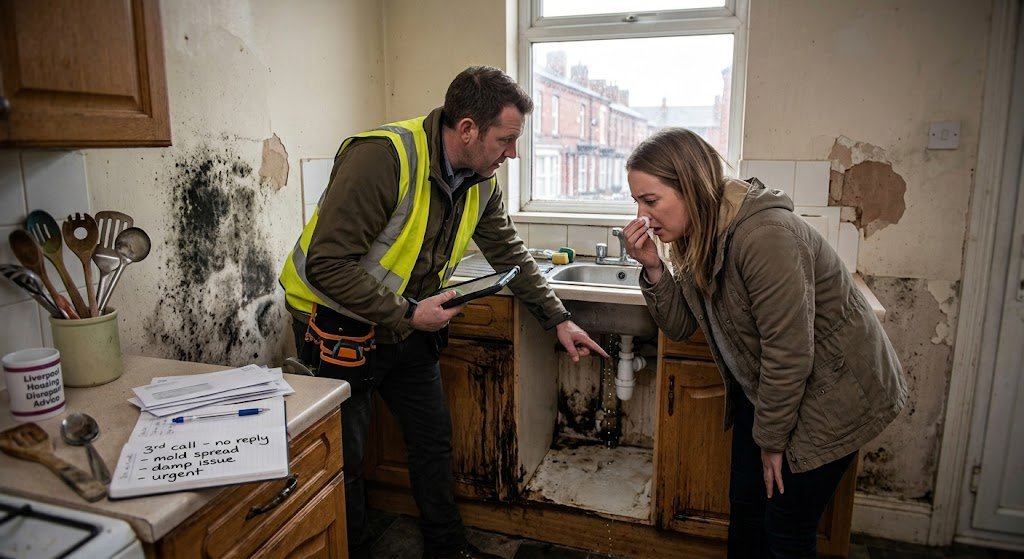
Picture a two-bed flat in Liverpool, tenant’s been there three years, reports damp in the bathroom repeatedly over eighteen months. The landlord sends a handyman who paints over it twice. Doesn’t fix anything, obviously paint doesn’t stop water ingress. By the time an independent surveyor gets involved, there’s visible mold growth, a failed extractor fan, and evidence the damp’s been actively spreading behind the tiles.
The survey report doesn’t just say “there’s damp.” It identifies the extractor fan failure as the root cause, notes the eighteen-month history based on the visible spread pattern, and flags it as a health hazard rather than cosmetic. That report becomes the backbone of the tenant’s claim and, honestly, it’s also useful for the landlord, because now they know exactly what to fix instead of guessing.
Things to Consider Before Booking a Survey
A few things worth weighing up here, because not every situation needs the same approach:
- Timing matters. Urgent hazards like no heating or hot water should be reported immediately. Don’t wait weeks to book a survey if there’s a genuine safety risk.
- Who’s paying isn’t who the report favours. A good surveyor’s findings won’t shift depending on whether the landlord or tenant commissioned it. If a firm’s report always seems to side with whoever’s paying, that’s a red flag.
- Not every disrepair issue needs a formal legal-standard report. Sometimes a straightforward condition assessment is enough for repair planning, without the added cost of Part 35 formatting.
- Documentation before the survey helps. Keep your own photos, dates, and copies of any emails to the landlord; it gives the surveyor useful context and strengthens the eventual report.
- Location and access matter more than people expect. A surveyor who knows the local building stock (Victorian terraces behave very differently to 1960s ex-council flats) will often spot issues faster.
Frequently Asked Questions
What counts as housing disrepair?
When a landlord fails their legal repair duty under the Landlord and Tenant Act 1985, leaving the structure, exterior, or key installations (heating, electrics, plumbing) unsafe or poorly maintained damp, mould, leaks, broken heating, faulty wiring, and pests are the usual culprits.
How much compensation can I get for housing disrepair?
No fixed amount. Courts often base it on a percentage of rent back for the period the property was substandard, adjusted for severity and impact. Minor issues might settle for a few hundred pounds; serious, long-running cases can reach thousands. A surveyor’s report usually sets the scale.
How long does a disrepair claim take?
Uncontested cases can settle in a few months. Contested ones going through court usually take 6–18 months, depending on evidence, whether the landlord disputes fault, and court backlogs.
Can I make a disrepair claim against a housing association?
Yes. Housing associations have the same repair obligations as private landlords. If they ignore reported disrepair, you can escalate to the Housing Ombudsman and pursue compensation the same way you would with a private landlord.
Can I sue my housing association for emotional distress?
Distress and inconvenience payouts are usually awarded alongside a property-related claim, not as a standalone lawsuit. If poor conditions caused a real health effect (like worsened asthma), that needs medical evidence and is treated as part of the wider claim best to check with a solicitor how it applies to your case.
How much compensation can you get for mould?
Depends on severity, how long it was ignored, and whether it caused health problems or damaged belongings. A patch fixed quickly won’t attract much; mould left untreated for months with health impact tends to result in higher awards.
Final Thoughts
Housing disrepair isn’t just a legal phrase, it’s damp walls, cold nights, and landlords who don’t return calls. If you’re dealing with it, the single most useful thing you can do is get proper, independent evidence early, rather than waiting until things escalate into a full-blown dispute.
If you’re in Liverpool or the wider North West and need an impartial housing disrepair survey, that’s exactly the kind of work our RICS-regulated surveyors handle day to day for tenants, landlords, and the solicitors caught in between. Get in touch and we’ll talk through what your situation actually needs, not just sell you the biggest report we can.