When buying a house with a septic tank, check what type of system it is, where it discharges, when it was last emptied and whether it meets the general binding rules. A septic tank must not discharge straight into a stream or ditch. The seller must give you written details of the system, and a drainage specialist can inspect it.
Most homes in Liverpool connect to the public sewer, but move out to rural Wirral, West Lancashire, Cheshire or the edges of Sefton and you may find a house with its own sewage system. Septic tanks work well when they are installed and looked after properly, but they come with legal rules and running costs that mains drainage does not. This guide gives you a clear buyer checklist, explains the rules in plain English and shows what to ask before you commit to buying a house with a septic tank.
In this guide
- What is a septic tank?
- How does a septic tank compare with other systems?
- What are the general binding rules?
- Can a septic tank discharge to a stream or ditch?
- What must the seller tell you?
- What should you check, step by step?
- What documents should you ask for?
- Does a home survey check the septic tank?
- What problems are common with older systems?
- How often does a septic tank need emptying?
- What warning signs can you spot on a viewing?
- What running costs should you plan for?
- What if the system is shared?
- What if the system needs replacing?
- What mistakes do buyers make?
- Septic tanks in Liverpool and the North West
- FAQs
What Is a Septic Tank?
A septic tank is an underground tank that collects waste water from a house that is not connected to the main sewer. Solids settle at the bottom as sludge, while the liquid flows out of the tank and is meant to soak away safely into the ground through a drainage field.
A drainage field, sometimes called an infiltration system, is a network of perforated pipes laid in trenches. It lets the partly treated water trickle through the soil, which continues the treatment naturally. The tank and the drainage field work together, so both matter when you buy.
How Does a Septic Tank Compare With Other Systems?
Not every off mains system is a septic tank. Check which one the house has, because the rules and costs differ.
| System | How it works | Where the water goes | Points for buyers |
|---|---|---|---|
| Septic tank | Settles solids and partly treats waste water | Into the ground through a drainage field | Must not discharge straight to a watercourse |
| Small sewage treatment plant | Treats waste water more fully, usually with a powered pump or aerator | To the ground, or to a watercourse where the rules allow | Needs electricity and regular servicing |
| Cesspit or cesspool | A sealed tank that stores all waste water | Nowhere, it must be emptied by tanker | Frequent emptying can be costly |
| Mains drainage | Connected to the public sewer | To the water company sewer network | No private system to maintain |
What Are the General Binding Rules?
In England, small sewage discharges are controlled by the Environment Agency through a set of general binding rules. If a system meets all the rules that apply to it, the owner does not need a permit. If it does not, the owner either needs a permit or must connect to the public sewer.
According to the gov.uk guidance on small sewage discharges to the ground, the main points include
- the system must use a drainage field that meets the British Standard BS 6297
- sludge must be removed before the tank reaches capacity, at least once a year or as the manufacturer instructs
- sludge must be removed by a registered waste carrier
- wells, boreholes and soakaways installed after December 2007 cannot meet the rules
- discharges over 2 cubic metres a day need to connect to the sewer where reasonable, or have a permit
- new systems need building regulations approval and may need planning permission
Which rules apply depends on when the system was installed or changed, so ask a specialist to confirm the position for the house you are buying.
Can a Septic Tank Discharge to a Stream or Ditch?
No. The gov.uk guidance on small sewage discharges to surface water says you must use a small sewage treatment plant if you are discharging to a watercourse. An existing septic tank that discharges directly to a stream, river or ditch must be dealt with.
The options set out by the guidance are
- connecting to a public foul sewer
- replacing the septic tank with a small sewage treatment plant
- installing a drainage field so the tank discharges to the ground instead
The same guidance says that when a property with this kind of system is sold, the buyer and seller should agree who will replace or upgrade it, and this should be made a condition of the sale. This is one of the most important things to check before you exchange contracts.
What Must the Seller Tell You?
The general binding rules say that when a property with a sewage discharge is sold, the seller must tell the new operator in writing that the discharge is in place. The written notice should include
- a description of the treatment and drainage systems
- the location of the main parts and the discharge point
- details of any changes made to the systems
- how the systems should be maintained, with the maintenance manual if there is one
- maintenance records, if available
If the seller cannot provide this information, treat it as a reason to investigate further rather than a reason to assume all is well.
What Should You Check, Step by Step?
Use this buyer checklist when buying a house with a septic tank.
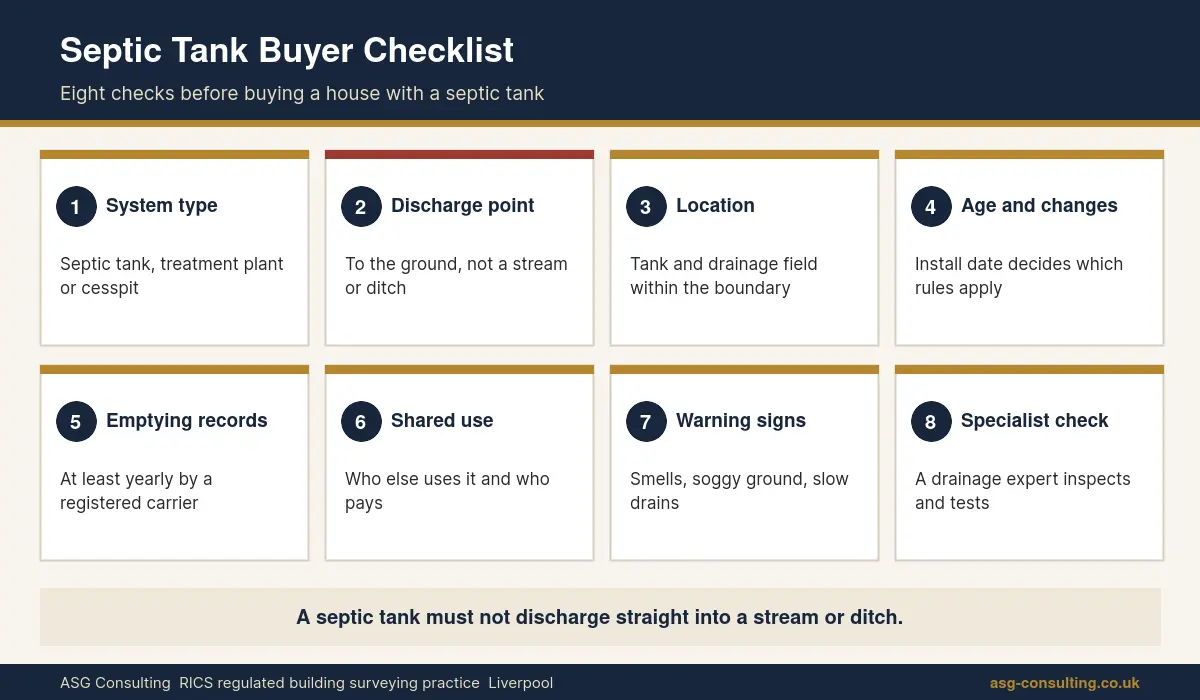
- Confirm the type of system. Septic tank, treatment plant or cesspit.
- Find out where it discharges. To a drainage field in the ground, or to a stream or ditch.
- Locate the tank and drainage field. Ask the seller to show you, and note whether they are within the boundary.
- Ask when it was installed and last changed. This affects which rules apply.
- Check the emptying records. Look for regular emptying by a registered waste carrier.
- Ask whether it is shared. Find out who else uses it and who pays for what.
- Look for warning signs. Smells, soggy ground, lush patches of grass or slow drains.
- Book a specialist inspection. A drainage contractor can inspect the tank and test the drainage field.
- Ask your solicitor to check rights. Including access for emptying and any pipes crossing land owned by others.
What Documents Should You Ask For?
Ask the seller for
- the written notice required under the general binding rules
- installation details and building regulations approval for newer systems
- any permit from the Environment Agency, if one was needed
- emptying and servicing records for the last few years
- a plan showing the tank, drainage field and discharge point
- any agreement covering a shared system
Your solicitor will also ask about drainage in the standard property information forms, so make sure the answers match what you see on site.
Does a Home Survey Check the Septic Tank?
A RICS home survey looks at drainage where it can be seen, such as inspection chamber covers and visible pipes, and the surveyor will note if the property has a private system. However, a surveyor does not open or test a septic tank, drainage field or treatment plant.
If the house has an off mains system, your surveyor will usually recommend a specialist inspection. A RICS Level 2 HomeBuyer Survey suits many conventional homes, and our RICS HomeBuyer Survey in Liverpool page explains what it covers. For older or rural properties, a Level 3 Building Survey gives more detail, as explained on our residential building surveying page. Our guide to a drain survey explains how CCTV inspections of drainage work.
What Problems Are Common With Older Systems?
Older systems can work well for decades, but common problems include
- Discharge to a watercourse. Older tanks were sometimes piped straight to a ditch or stream, which no longer meets the rules.
- Failed drainage fields. Soil can become clogged, leaving waste water pooling on the surface.
- Old soakaways. Some older systems use a simple soakaway rather than a proper drainage field.
- Cracked or leaking tanks. Older brick or concrete tanks can crack and leak.
- Tree roots. Roots can enter pipes and block or damage them.
- Missing records. No emptying history makes it hard to judge how the system has been looked after.
Our guide to trees near a house explains how roots can affect drains and foundations.
How Often Does a Septic Tank Need Emptying?
The general binding rules say sludge must be removed before the tank reaches its maximum capacity, at least once a year or as the manufacturer instructs. The company that empties it must be a registered waste carrier.
When budgeting, allow for regular emptying, occasional servicing and repairs. A treatment plant will also need electricity and routine servicing. Ask the seller who empties the tank, how often and what it costs, so you can plan your running costs.
What Warning Signs Can You Spot on a Viewing?
You do not need specialist equipment to spot some of the common signs of a struggling system. Walk the garden and look around the house for
- unpleasant smells near the tank, drainage field or inside the house
- soggy ground, standing water or unusually lush grass over the drainage field
- sinks, baths and toilets that drain slowly or gurgle
- cracked or broken lids and covers
- overflowing inspection chambers after rain
- a pipe running to a nearby ditch or stream
Any of these signs is a reason to ask for a specialist inspection before you exchange contracts. Visiting after a spell of wet weather can also be revealing, as struggling drainage fields often show problems when the ground is already saturated.
What Running Costs Should You Plan For?
Living with a septic tank means paying for things that mains drainage covers through your water bill. When you work out your budget, allow for
- regular emptying by a registered waste carrier
- servicing, especially for a treatment plant with pumps or aerators
- electricity to run a treatment plant
- occasional repairs to pipes, covers and the drainage field
- eventual replacement of an older system
Ask the seller for recent invoices so you can see real costs for the house you are buying. You may also find that your water bill is different, because some customers without a sewer connection do not pay the usual sewerage charge. Check with the water company for the property.
If a public sewer runs close to the property, connecting to it may be an option in the long term. Ask the local water company, which is United Utilities across most of the North West, whether a connection is possible and what it would involve.
What If the System Is Shared?
Some rural properties and converted farm buildings share a single septic tank or treatment plant. A shared system can work well, but it needs clear arrangements.
Ask your solicitor to check
- who owns the tank and the land it sits on
- rights for pipes to cross neighbouring land
- rights of access to empty and repair the system
- how emptying and repair costs are shared
- who is responsible for meeting the general binding rules
Without a clear agreement, disputes about costs and responsibility are more likely. Our boundary dispute surveyor guide explains how shared boundaries and rights can be investigated.
What If the System Needs Replacing?
If an inspection shows the system is failing or does not meet the rules, there are usually three options. You can repair or upgrade the existing system, replace it with a small sewage treatment plant, or connect to the public sewer if one is close enough.
New systems need building regulations approval and may need planning permission. Get quotes before you exchange contracts, and discuss with your solicitor whether the seller should carry out the work, reduce the price or make the upgrade a condition of the sale, as the gov.uk guidance suggests for systems discharging to a watercourse.
What Mistakes Do Buyers Make With Septic Tanks?
Common mistakes include
- Assuming it is a septic tank. It could be a cesspit or treatment plant with different rules and costs.
- Not checking the discharge point. A tank piped to a ditch needs upgrading.
- Relying on the survey alone. A home survey does not test the system.
- Ignoring shared arrangements. Unclear rights can cause disputes later.
- Forgetting running costs. Emptying, servicing and electricity add up over time.
- Not checking access. The emptying tanker needs to reach the tank.
Septic Tanks in Liverpool and the North West
Within the city of Liverpool, almost all homes are connected to the public sewer. Off mains systems are more likely in rural parts of the wider region, such as villages and farmsteads on the Wirral peninsula, in West Lancashire, across rural Cheshire and on the rural edges of Sefton and St Helens.
Issues to look out for in rural North West properties include
- older septic tanks piped to field ditches or streams
- drainage fields on heavy clay soils that drain slowly
- systems shared between converted barns and farm cottages
- tanks located on land owned by a neighbour or farmer
- drainage fields in areas at risk of flooding
Our guides to flood risk when buying a house and a bungalow survey cover other issues often found with rural homes.
Buying a House With a Septic Tank FAQs
Is it a bad idea to buy a house with a septic tank?
Not necessarily. A well maintained system that meets the rules works well. Check the type, discharge point, records and condition before you buy.
Can a septic tank discharge into a stream?
No. A septic tank must not discharge directly to a watercourse. It must be upgraded, replaced with a treatment plant or connected to the sewer.
Who pays to upgrade a septic tank when buying a house?
Buyer and seller should agree who will replace or upgrade a system that discharges to a watercourse, and make it a condition of the sale.
How often should a septic tank be emptied?
At least once a year, or as the manufacturer instructs, by a registered waste carrier.
Does a homebuyer survey check a septic tank?
No. A surveyor notes visible drainage but does not test the system. A drainage specialist should inspect it.
What paperwork should come with a septic tank?
A written notice from the seller describing the system, its location, changes, maintenance and records, plus any permits or approvals.
Book a Survey With ASG Consulting
ASG Consulting is an RICS regulated building surveying practice in Liverpool. We carry out RICS Level 2 HomeBuyer Surveys and Level 3 Building Surveys on rural and period homes across Liverpool, Merseyside, the Wirral, Cheshire and the wider North West, with reports usually delivered within 3 to 5 working days of the inspection. We give a fixed fee on request, usually confirmed within one working day. To request a quote, call 0151 315 0626 or visit our contact page.
About the Author
Dave MacMillan is the lead surveyor at ASG Consulting, an RICS regulated building surveying practice at 54 St James Street, Liverpool. He has 8 years of experience in building surveying and inspects homes for buyers across Liverpool, Merseyside and the North West.
Last updated 20 November 2026
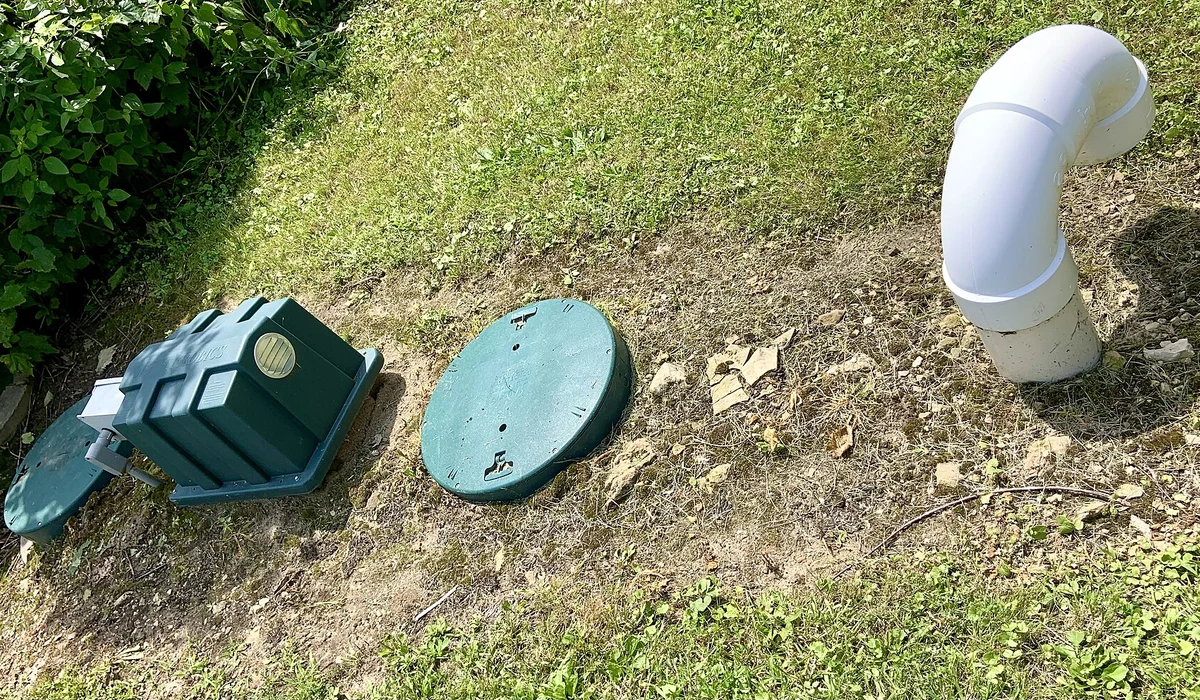
Featured photo of septic tank lids in a garden by Wikideas1 via Wikimedia Commons, public domain CC0, cropped.