Woodworm treatment is one of the most oversold jobs in UK property. Many homeowners and buyers are told they need a whole house spray after a quick look at a few small holes in a floorboard, when the holes are decades old and the beetles left long ago. Before paying for any woodworm treatment, the first step is to identify which beetle made the holes and whether the attack is still active. A good woodworm survey answers both questions and often saves money.
This guide is laid out as a beetle identification field guide. It shows the four wood boring beetles most often found in UK buildings, how to tell active woodworm from historic damage, where infestations hide, how a woodworm survey works and which woodworm treatment options make sense for each case. It is written for homeowners, landlords and buyers in Liverpool, Merseyside and the North West.
In this guide
- What woodworm actually is
- Four beetles to identify
- Active or historic woodworm
- Where woodworm hides in a house
- Why damp matters more than beetles
- What a woodworm survey involves
- Woodworm treatment options
- Woodworm treatment step by step
- Is a chemical spray always needed
- What affects the cost
- Buying a house with woodworm
- Woodworm in Liverpool homes
- FAQs
What Woodworm Actually Is
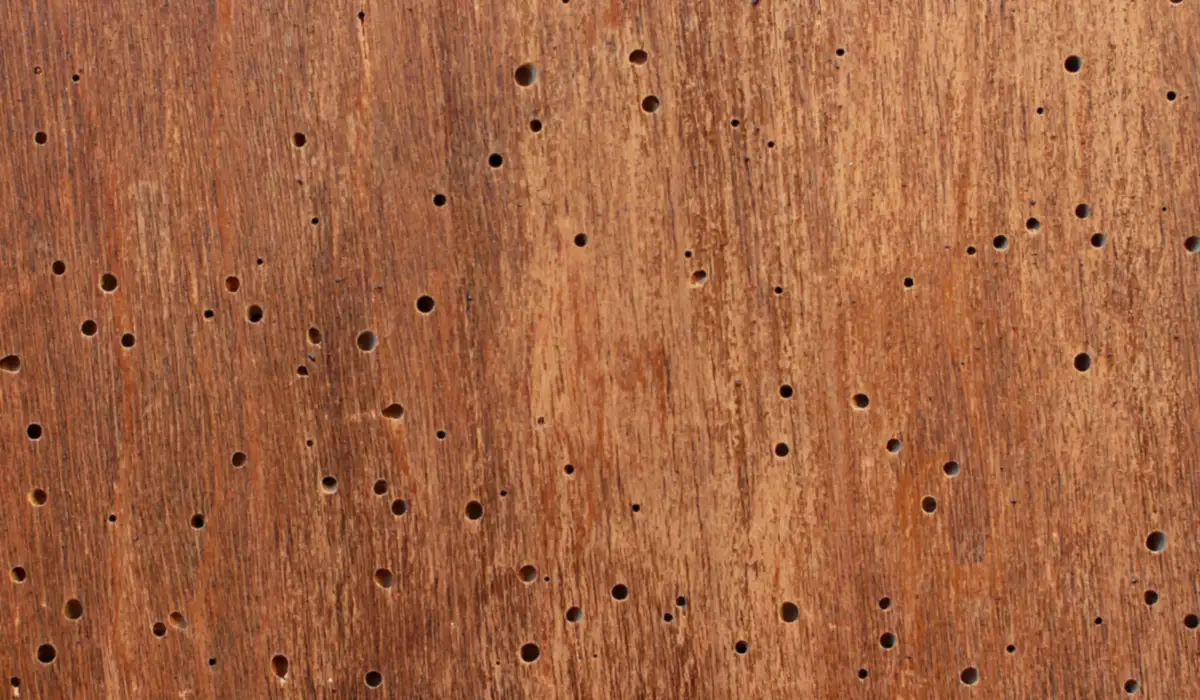
Woodworm is not a single insect. It is the common name for the larvae of several wood boring beetles. An adult beetle lays eggs in cracks, joints or old exit holes in timber. The eggs hatch into small grubs that tunnel through the wood, feeding on it for several years. When the larvae are fully grown they pupate just below the surface, then the adult beetles chew their way out, leaving the small round exit holes most people recognise.
This life cycle explains two important points. First, the holes you see are where beetles left, not where they are feeding now. Second, an attack can carry on unseen inside the timber for years before new holes appear. That is why identification and careful inspection matter far more than simply counting holes. It is also why woodworm treatment should be based on evidence of current activity rather than on old damage alone.
Most wood boring beetles prefer timber that is damp, decayed or high in sapwood. Dry, well ventilated timber in a heated modern home is far less attractive to them. In practice, the moisture content of the wood is often the deciding factor in whether an infestation survives.
Four Beetles to Identify Before Any Woodworm Treatment
The British Pest Control Association guide to insects that destroy wood in buildings describes the main species found in UK properties. The table below summarises the four you are most likely to meet in a house survey.
| Beetle | Exit hole | Frass | Usual timber |
|---|---|---|---|
| Common furniture beetle | 1 to 2 mm, round | Gritty, cream coloured pellets | Softwood and sapwood, often in use for 10 years or more |
| Deathwatch beetle | About 3 mm, round | Bun shaped pellets | Decayed hardwoods, mainly oak, in old buildings |
| Wood boring weevil | Small and ragged | Fine frass | Damp, decayed timber such as skirtings and wall plates |
| Powderpost beetle | About 1.5 mm | Soft, flour like powder | New hardwood with a lot of sapwood |
The chart below shows the same four beetles side by side, with a quick guide to what each one usually means for a property.
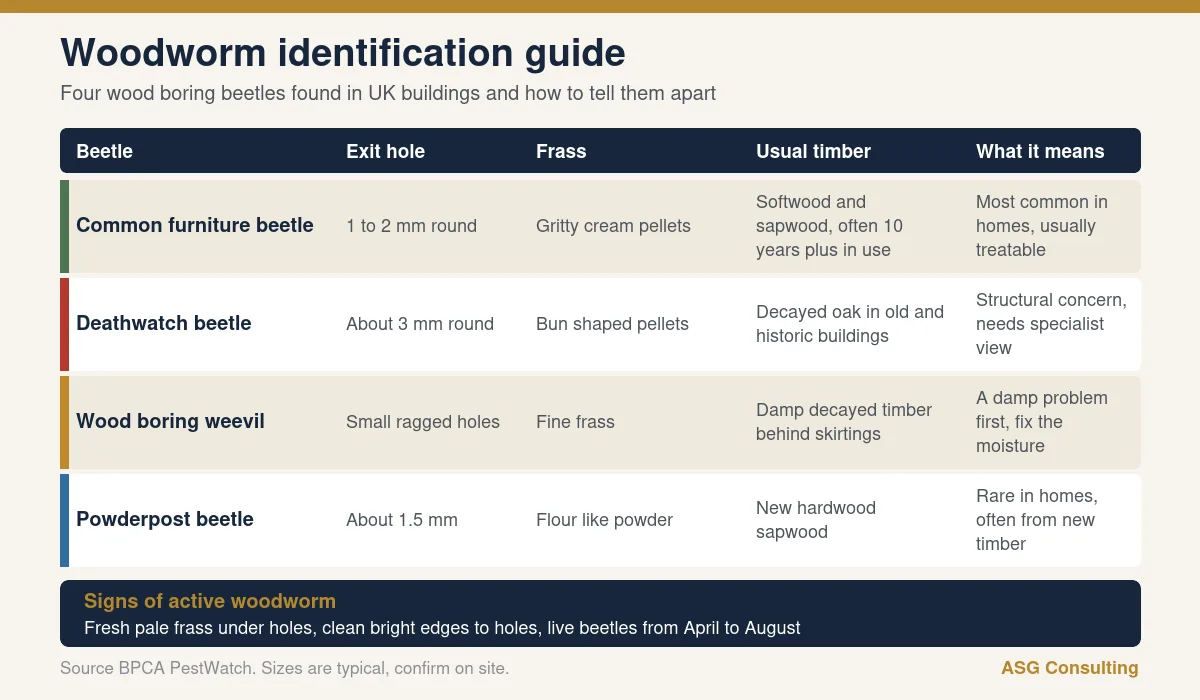
Common furniture beetle
This is the beetle behind most woodworm in UK homes. It attacks softwood floorboards, joists, roof timbers and the sapwood of older furniture. The exit holes are small and round, roughly 1 to 2 mm across, and the frass that falls from them feels gritty when rubbed between the fingers. Infestations are usually slow and are most common in timber that has been in place for many years, especially in damp or poorly ventilated areas such as cellars, under suspended floors and in roof spaces with roof leaks.
Deathwatch beetle
The deathwatch beetle is larger, with exit holes around 3 mm wide. It favours hardwoods, mainly oak, that have already been softened by fungal decay. It is mostly found in historic buildings such as churches, timber framed houses and older listed properties. The frass is made up of distinctive bun shaped pellets. Because it attacks large structural timbers, an active deathwatch infestation needs a specialist assessment and often input from a conservation professional. The BPCA notes that the best time to survey for adult deathwatch activity is between April and June.
Wood boring weevil
Weevils only attack timber that is already damp and decaying. They are often found in skirting boards, the ends of joists built into wet walls and timber wall plates. Their holes are small and ragged rather than neat and round. Finding weevil damage is a strong sign of a moisture problem, so the right response is to find and fix the damp first. Spraying the timber without curing the damp will not solve anything.
Powderpost beetle
Powderpost beetles attack the sapwood of new or fairly new hardwoods, often in timber yards or newly fitted joinery and flooring. The frass is very fine and feels like flour. They are uncommon in established homes and rarely attack softwood, so a powderpost beetle problem is usually traced back to a specific batch of new timber.
A note on house longhorn beetle
The house longhorn beetle causes serious damage to softwood roof timbers, but in the UK it is mainly found in parts of south east England. It is very rarely seen in Merseyside, so we do not include it in the chart above.
Active or Historic Woodworm, How to Tell
The key question in any woodworm survey is whether the infestation is still alive. Many older homes in Liverpool have old flight holes in floorboards and roof timbers that are decades old. If the beetles have died out, there may be no need for woodworm treatment at all, just a check that the timber is still strong enough.
The main signs that woodworm may be active are set out below.
- Fresh, pale frass collecting below holes or on surfaces under affected timber.
- Exit holes with clean, bright edges rather than dark, dirty or painted over edges.
- Live or dead adult beetles near windowsills, especially from April to August.
- New holes appearing in timber that was clear or marked at an earlier visit.
- Timber that feels soft or crumbles when probed with a screwdriver.
Signs that the attack is probably historic include holes that are dark inside, holes filled with old varnish, polish or dust, and a lack of fresh frass even after cleaning. Where it is unclear, a surveyor may suggest cleaning the area, sealing a sample of holes with tape or wax and checking again after the next emergence season. That simple test can save hundreds of pounds on unnecessary woodworm treatment.
Where Woodworm Hides in a House
Woodworm tends to appear in the parts of a house that are damp, dark and rarely disturbed. These are the usual places to check.
- Roof spaces, especially rafters and purlins near leaks or valley gutters.
- Under the stairs and in understairs cupboards.
- Suspended timber ground floors, including joist ends built into external walls.
- Cellars and basements with poor ventilation.
- Skirting boards, architraves and door linings on damp walls.
- Old furniture brought into the house, which can carry an existing infestation.
Many of these areas are hidden. A visual survey may need floorboards lifting, access hatches opening or a careful look in the loft with good lighting. If timber is concealed and cannot be inspected, a good report will say so clearly and explain any further checks needed.
Why Damp Matters More Than Beetles
Most wood boring beetles struggle to survive in dry timber. The common furniture beetle thrives when the moisture content of the wood is relatively high, which is why outbreaks cluster around roof leaks, defective gutters, rising or penetrating damp and poor subfloor ventilation. Weevils need timber that is already wet and rotting.
That means the most effective long term woodworm treatment is often controlling moisture. Repairing the roof, clearing blocked airbricks, fixing leaking pipes and improving ventilation will dry the timber out and make it far less suitable for beetles. In many cases this alone stops a minor attack. Where the timber is also decaying, the problem may be rot rather than insects, so it helps to understand the difference between dry rot and wet rot before deciding on repairs.
High humidity from everyday living can also raise timber moisture, especially in rooms with poor heating and ventilation. Our guide to condensation in a house explains how to bring humidity down.
What a Woodworm Survey Involves
A professional woodworm survey is an inspection of the timbers in a property to find out which insect is present, whether it is active, how much damage it has caused and why the timber is vulnerable. It is often carried out as part of wider damp and timber surveys, because moisture and timber defects usually go together.
A typical woodworm survey covers the following.
- A visual inspection of accessible timbers in the roof, floors, stairs and joinery.
- Identification of the beetle from the size and shape of holes, the frass and the timber type.
- Probing to check whether timber is sound or weakened.
- Moisture readings in timber and adjoining walls.
- A check of the likely causes, such as leaks, ventilation and ground levels.
- A written report with photos, findings and recommendations.
An independent woodworm survey is different from a free inspection offered by a treatment contractor. A contractor may be paid by the work they recommend, while an independent surveyor is paid for advice. That does not mean every contractor overstates a problem, but it is sensible to get an independent view before agreeing to large or expensive treatment.
Woodworm Treatment Options
The right woodworm treatment depends on the beetle, the extent of the damage and whether the attack is active. The main options are listed below, roughly from lightest to most involved.
Monitor and do nothing
Where holes are old and there is no sign of activity, the best advice is often to leave the timber alone, keep it dry and check it again in the next emergence season. This is common with historic common furniture beetle damage in older floorboards.
Moisture control
Drying the timber is the foundation of every good woodworm treatment. It covers roof repairs, gutter and downpipe repairs, clearing airbricks, lowering ground levels and improving heating and ventilation.
Targeted surface treatment
Where activity is confirmed in a limited area, a suitable insecticide can be applied to the affected timbers only, rather than spraying the whole house. Modern products are water based and lower in toxicity than older solvent products, but they should still be applied by a trained operative following the label and safety advice.
Paste and deep treatment
Large structural timbers such as beams and purlins may need a paste or gel that soaks deeper into the wood. This is more common with deathwatch beetle in oak and is usually combined with careful repair of decayed timber.
Repair or replacement of timber
If woodworm has weakened a joist, rafter or floorboard, the damaged section may need to be cut out and replaced or strengthened. Any new timber should be pre treated and kept dry. Where the timber is structural, a structural engineer may need to confirm the repair.
Woodworm Treatment Step by Step
A well run woodworm treatment project usually follows these steps.
- Book an independent woodworm survey to identify the beetle and confirm whether it is active.
- Find and fix the source of moisture, such as roof leaks, plumbing leaks or poor ventilation.
- Decide whether treatment is needed or whether monitoring is enough.
- Clear and clean the affected area so the timbers can be inspected fully.
- Apply targeted treatment only to the affected timbers, following the product guidance.
- Repair or replace any timber that has lost strength.
- Monitor the area through the next emergence season to confirm the attack has stopped.
Keeping records of the woodworm survey, the work carried out and any guarantee is useful when you sell the property later.
Is a Chemical Spray Always Needed?
No. One of the most common myths is that any sign of woodworm means the whole roof or floor must be sprayed. In reality, chemical woodworm treatment is only needed where there is an active infestation that is likely to continue. Spraying timbers where the beetles have long gone adds cost and puts chemicals into the home for no benefit.
There are also cases where chemicals need special care. Bats often roost in roof spaces and are legally protected, so any treatment in a loft with bats must use approved products and follow advice from the relevant nature conservation body. Listed buildings and historic timbers may need a conservation led approach, and our listed building survey guide covers that in more detail.
The better approach is to treat only what needs treating, fix the moisture problem that allowed the beetles to thrive and monitor the result.
What Affects the Cost of Woodworm Treatment
The cost of woodworm treatment varies widely depending on the size and type of job. These are the main factors.
- The species of beetle and whether the attack is active.
- How much timber is affected and how easy it is to reach.
- Whether floorboards, ceilings or insulation must be lifted or removed.
- Whether timber needs replacing or strengthening.
- Any damp repairs needed to stop the problem returning.
- Access in roof spaces and the need for safe working platforms.
An independent woodworm survey usually costs far less than an unnecessary whole house treatment, so it is worth paying for clear advice first. Always ask for a written specification and compare like for like quotes.
Buying a House with Woodworm
Woodworm is often flagged on a home buyer report or building survey, especially in period homes. If your surveyor notes woodworm, do not panic. Ask whether the holes look active or historic, which timbers are affected and whether a specialist woodworm survey is recommended.
Your lender may ask for a specialist report and, if treatment is needed, a guarantee from a reputable firm. You can use the findings to negotiate on price or ask the seller to carry out the work before completion. Our guide on how to renegotiate after a house survey explains how to approach this. For older homes, a full Victorian house survey gives a much clearer picture of roof and floor timbers than a basic valuation.
Woodworm in Liverpool Homes
Liverpool and Merseyside have a large stock of Victorian and Edwardian terraces with suspended timber floors, slate roofs and cellars. These features are where woodworm is most often found, particularly when airbricks are blocked, rainwater goods have failed or cellars are damp.
The mild, wet climate of the North West means timber in poorly maintained buildings can stay damp for long periods, making it more attractive to the common furniture beetle and weevils. On the other hand, many old flight holes in Liverpool floorboards are historic and simply need monitoring. A careful woodworm survey helps owners avoid both outcomes, ignoring a live problem or paying for woodworm treatment that is not needed.
Woodworm Treatment FAQs
Does woodworm treatment really work?
Yes, when it is used on the right timbers for an active infestation and combined with moisture control. It does not help where the beetles have already died out or where the real problem is damp and decay.
Can I treat woodworm myself?
Small areas of furniture or isolated timbers can sometimes be treated with retail products, but structural timbers, roof spaces and larger outbreaks should be assessed by a professional first.
How long does woodworm treatment take?
Applying a targeted treatment often takes a day or less, but the full process of fixing damp, repairing timber and monitoring can take a full emergence season.
Is woodworm dangerous to people?
No. The beetles do not bite or carry disease. The risk is to the strength of timber if a serious infestation is left unchecked.
Will a mortgage lender lend on a house with woodworm?
Many lenders will, but some ask for a woodworm survey and a guarantee for any treatment. Check with your lender if a valuation flags woodworm.
How do I know if woodworm has been treated before?
Ask the seller for paperwork and guarantees. Treated timber may show a faint residue, but only records can confirm what was done.
Should I get a woodworm survey before buying?
If a home buyer report or building survey mentions woodworm, a specialist woodworm survey is a sensible next step before exchanging contracts.
Book a Woodworm Survey in Liverpool
ASG Consulting is regulated by RICS. Our surveyors inspect roof, floor and joinery timbers across Liverpool, Merseyside and the North West, identify any beetle activity and give honest advice on whether woodworm treatment is needed at all. To find out more, visit our residential building surveying page.
About the Author
Harry is a property content writer with 3 years of experience writing about building surveying, commercial property and property compliance in the UK. He writes the guides at ASG Consulting for buyers, tenants and landlords, turning survey practice into clear, practical advice.
Reviewed by Dave MacMillan MRICS, chartered surveyor at ASG Consulting. Dave checks the technical content of our guides against current RICS practice before they are published.
Featured photo of woodworm exit holes in timber by M0tty via Wikimedia Commons, licence CC BY SA 3.0, cropped.