Walls don’t talk. That’s the annoying thing about them. A wall can be quietly falling apart on the inside, damp creeping through the brickwork, timber going soft, a crack widening by a millimetre a month and from where you’re sat on the sofa, it just looks like a wall. Painted, plastered, perfectly normal.
That’s exactly why a House Disrepair Survey exists. It’s the only way to actually know what’s happening behind the plasterboard, rather than guessing based on a faint smell or a stain that “wasn’t there last month.” We carry these out across Liverpool and the wider North West, and honestly, the number of properties where the wall looks fine but isn’t still catches people off guard, us included, sometimes.
Damp is one of the most common disrepair complaints. Our guide to damp and timber surveys explains how the cause is traced, not just the symptoms.
Why Walls Are the Last Place Anyone Thinks to Check
Most people inspect the obvious stuff. The boiler. The roof, if they can be bothered to climb up and look. Maybe the guttering, if it’s visibly sagging. Walls? They get ignored because they’re not supposed to do anything. They just… stand there.
But that’s precisely the problem. A House Survey exists because walls hide defects better than almost any other part of a building. Cavity walls, in particular, are notorious for the gap between the inner and outer skin that can trap moisture for months before it ever shows up as a damp patch indoors. By the time you see it, the issue’s usually been developing for a while.
Tenants especially get caught out here. You rent a flat, everything looks tidy on move-in day, and eighteen months later there’s a musty smell in the bedroom that nobody can quite explain. Sound familiar? That’s often a wall issue, not a “you need to open a window more” issue, whatever the landlord might say.
What a House Disrepair Survey Actually Looks For Inside Your Walls
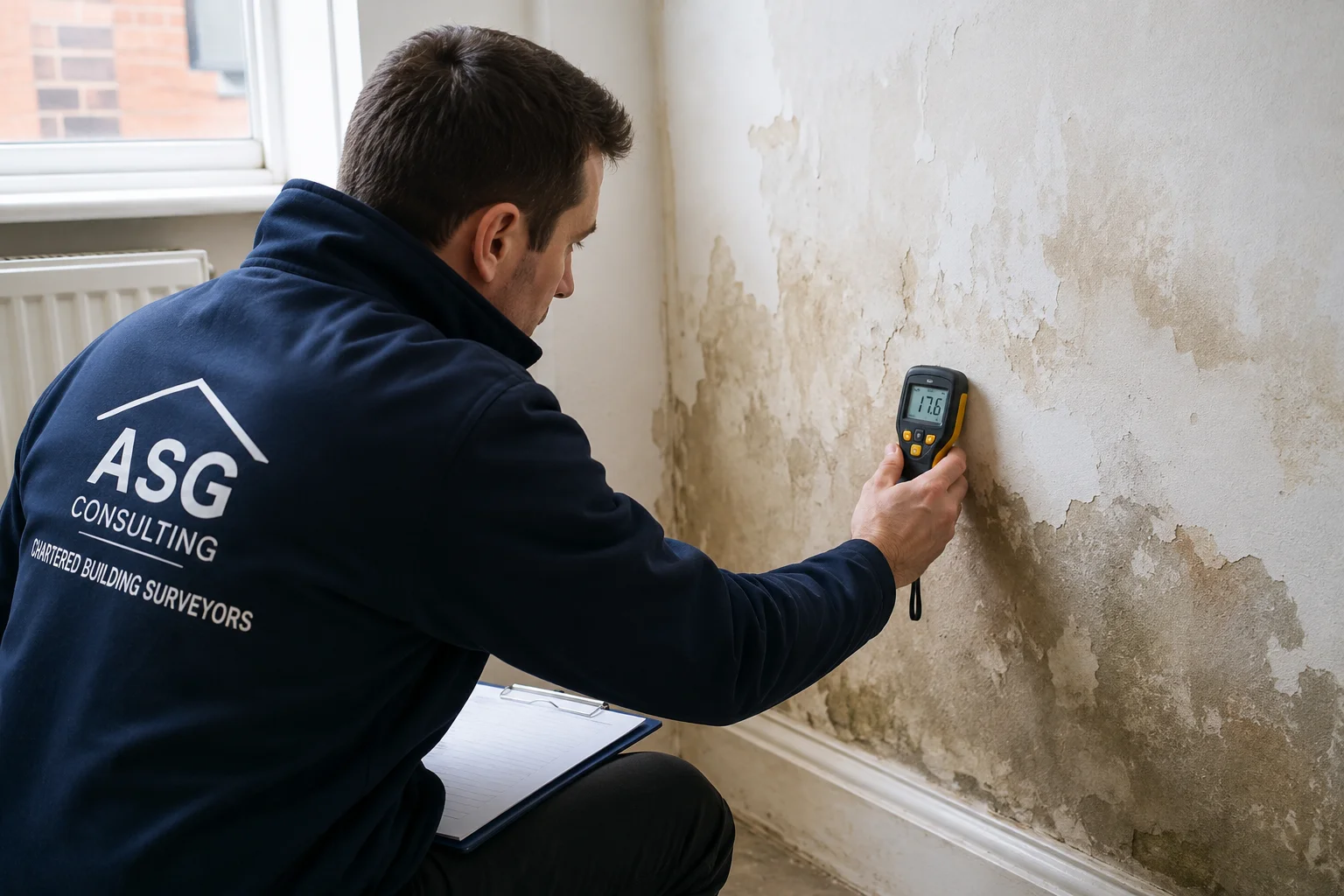
A proper survey doesn’t just glance at a wall and nod. Surveyors use moisture meters, thermal imaging in some cases, and this bit surprises people; they’ll often tap walls to listen for hollow sounds that suggest render or plaster has separated from the brick behind it.
Damp, Mould and Moisture Trapped Behind Plaster
This is the big one. Rising damp, penetrating damp, condensation damp have three different causes, three different fixes, and most people can’t tell them apart just by looking. A House Disrepair Survey identifies which type you’re actually dealing with, because treating condensation like it’s rising damp (or vice versa) wastes money and doesn’t solve anything.
Mould spores don’t need much encouragement once moisture’s present. Give it a few weeks in the right conditions and it’s established itself in the cavity, sometimes well before it’s visible on the surface at all.
Timber Decay and Structural Movement You Can’t See
Older Liverpool terraces and there are a lot of them often have timber lintels or bearers built into the wall structure. Once damp reaches that timber, wet rot or dry rot can set in, and dry rot in particular spreads through masonry in ways that genuinely alarm people once they understand it. It doesn’t stay put. It travels.
Cracking is the other one worth mentioning. Not every crack means subsidence (most don’t, actually), but a House Disrepair Survey can tell the difference between cosmetic settlement cracking and something that needs a structural engineer involved, fast.
How a House Disrepair Survey Uncovers What’s Behind the Paintwork
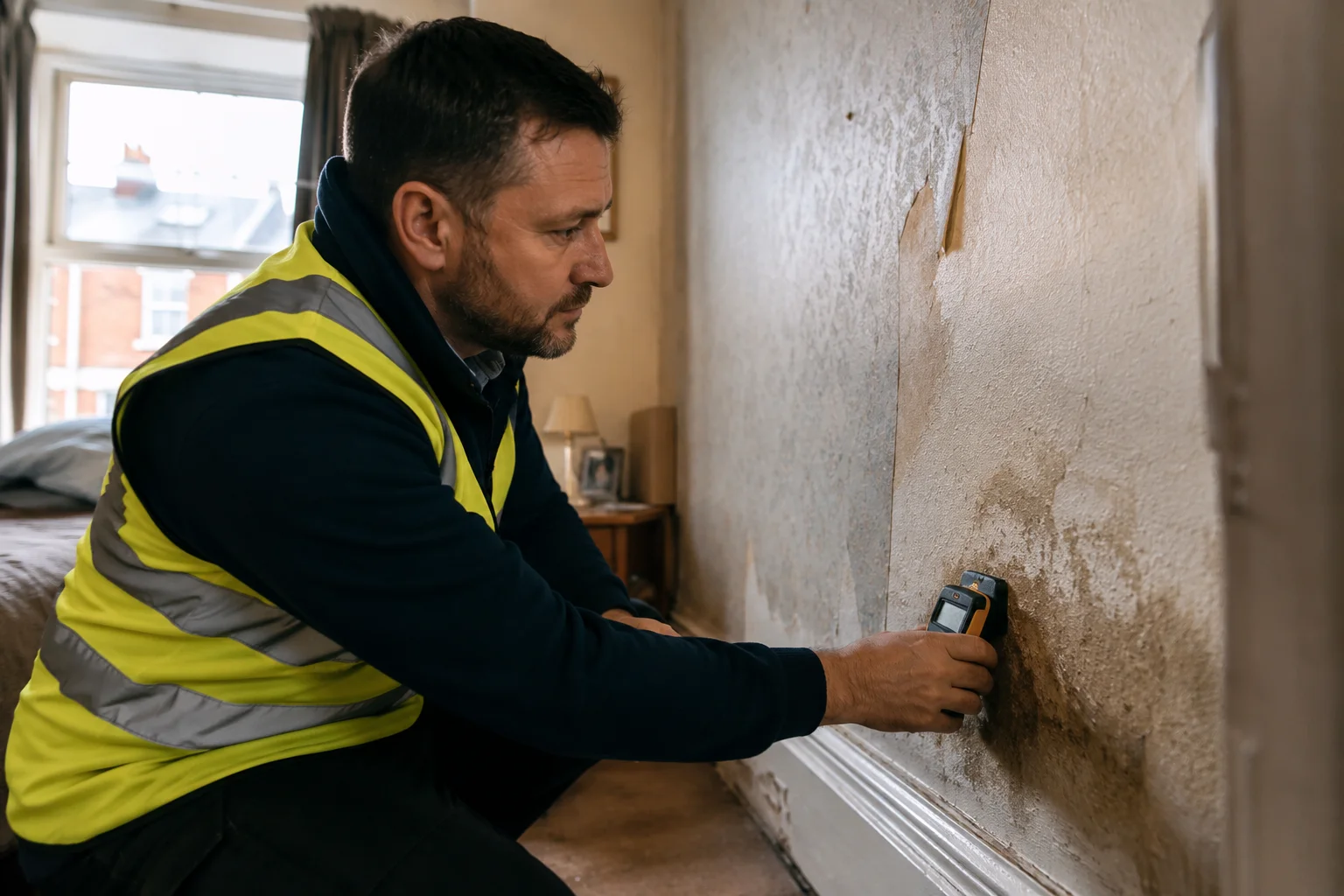
So what does this actually mean in practice? Say you’re a landlord and a tenant flagged a “damp smell” for the third time this year. You could keep sending a decorator round to repaint over it plenty of landlords do, and it never actually works, does it? Or you could commission a survey that identifies the source once and finds it properly.
Here’s roughly how it plays out:
- The surveyor checks external factors first pointing, render, guttering, ground levels against the wall
- Internal moisture readings are taken at multiple heights, because rising damp behaves differently to penetrating damp in terms of where it peaks
- Any suspect areas get opened up (a small inspection hole, not the whole wall) if something doesn’t add up
- Everything’s documented with photos, readings, and a clear explanation not just a number on a page
That last bit matters more than people realise. If a disrepair issue ever needs to go further a formal complaint, a solicitor’s letter, a tribunal or a documented House Disrepair Survey is what actually carries weight. A tenant saying “it smells damp in here” carries none.
A Liverpool Terrace That Looked Fine Until the Survey Said Otherwise
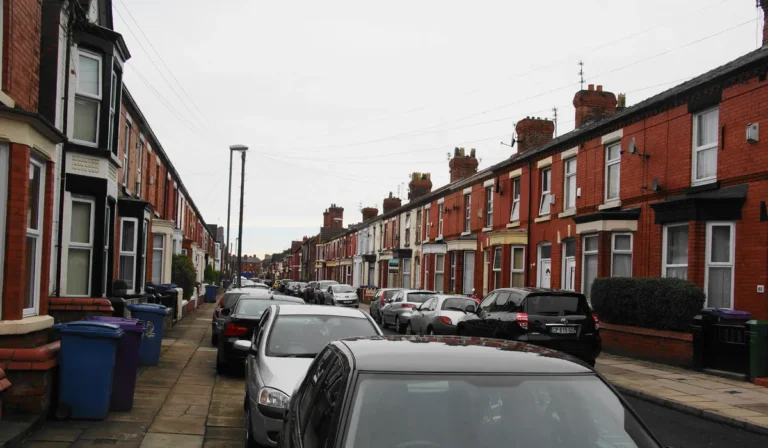
We inspected a mid-terrace property off Smithdown Road a while back. Two-bed, tenanted, nothing dramatic reported just a faint smell in the back bedroom that the tenant described as “a bit musty, especially after rain.” The landlord had genuinely assumed it was condensation from drying washing indoors. Fair guess, given what he could see.
The survey found something different. Moisture readings behind the chimney breast were significantly elevated, and further investigation traced it to a failed flashing where the roof met the chimney stack water had been tracking down inside the wall cavity for what looked like well over a year. The plaster hadn’t even started blistering yet. Mostly, anyway; there was one small patch starting to lift near the skirting, easy to miss if you weren’t looking for it.
Left unaddressed, that’s a wall that eventually needs re-plastering, a chimney stack repair, and potentially timber replacement if the joists nearby had started absorbing moisture too. Caught early, it was a flashing repair and a bit of ventilation work. Same wall. Wildly different bill.
DIY Checks vs a Professional House Disrepair Survey: What’s the Real Difference
People sometimes ask if they can just check this stuff themselves first, and look, you can do a basic visual check, sure. It won’t hurt.
- What you can spot yourself: obvious staining, peeling wallpaper, a musty smell, visible cracks, cold spots you can feel with your hand
- What you’ll almost certainly miss: moisture trapped in a cavity with no visible sign yet, hairline structural cracking versus cosmetic cracking, early-stage timber decay, the actual cause behind a symptom you can see
The honest answer is that DIY checks are fine for deciding whether to book a survey. They’re not a substitute for one. A House Disrepair Survey uses equipment and experience that a torch and a bit of common sense just can’t replicate moisture meters read what your eyes physically cannot.
FAQs
Can a House Disrepair Survey tell if damp is coming from inside the wall or outside?
Yes. Surveyors compare moisture readings and patterns to distinguish penetrating damp (coming in from outside, often via defective render, pointing, or roof detailing) from condensation or plumbing-related moisture originating inside the property.
Will the surveyor need to remove plaster or damage the wall?
Usually not extensively. Most surveys are non-invasive, relying on moisture meters, visual inspection, and sometimes thermal imaging. Small inspection openings are only made where absolutely necessary, and always with the property owner’s knowledge.
How quickly can a House Disrepair Survey be arranged in Liverpool?
It depends on the surveyor’s availability, but most residential inspections in and around Liverpool and Merseyside can be booked within a week or two, sometimes sooner for urgent disrepair cases.
What happens after the survey if serious issues are found?
You’ll receive a written report outlining the defects, likely causes, and recommended next steps. For tenants dealing with an unresponsive landlord, this report often forms the basis of a formal disrepair claim.
Final Thoughts
Walls are good at keeping secrets. That’s sort of their whole design flaw, if you think about it they’re built to be solid and sealed, which also makes them brilliant at hiding exactly the kind of problems you actually need to know about.
If something feels off about a room, a smell, a temperature difference, a patch that keeps reappearing no matter how many times it’s painted over that’s worth listening to. A House Disrepair Survey won’t guess. It’ll actually tell you.
At ASG Consulting, our RICS-regulated surveyors carry out House Disrepair Surveys across Liverpool, Merseyside, the Wirral, Cheshire, and Manchester. If you’d like to understand exactly what’s going on with a housing disrepair issue or you’re dealing with a landlord who won’t act on repairs, get in touch and we’ll talk you through what an inspection would involve.