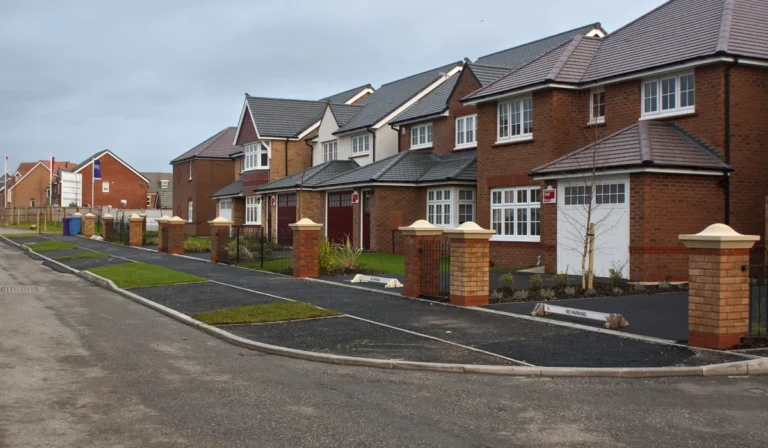

A landlord we spoke to last year owned four terraces off Smithdown Road. Good tenants, rent arriving on time, no complaints in three years. He described the portfolio as ticking over nicely.
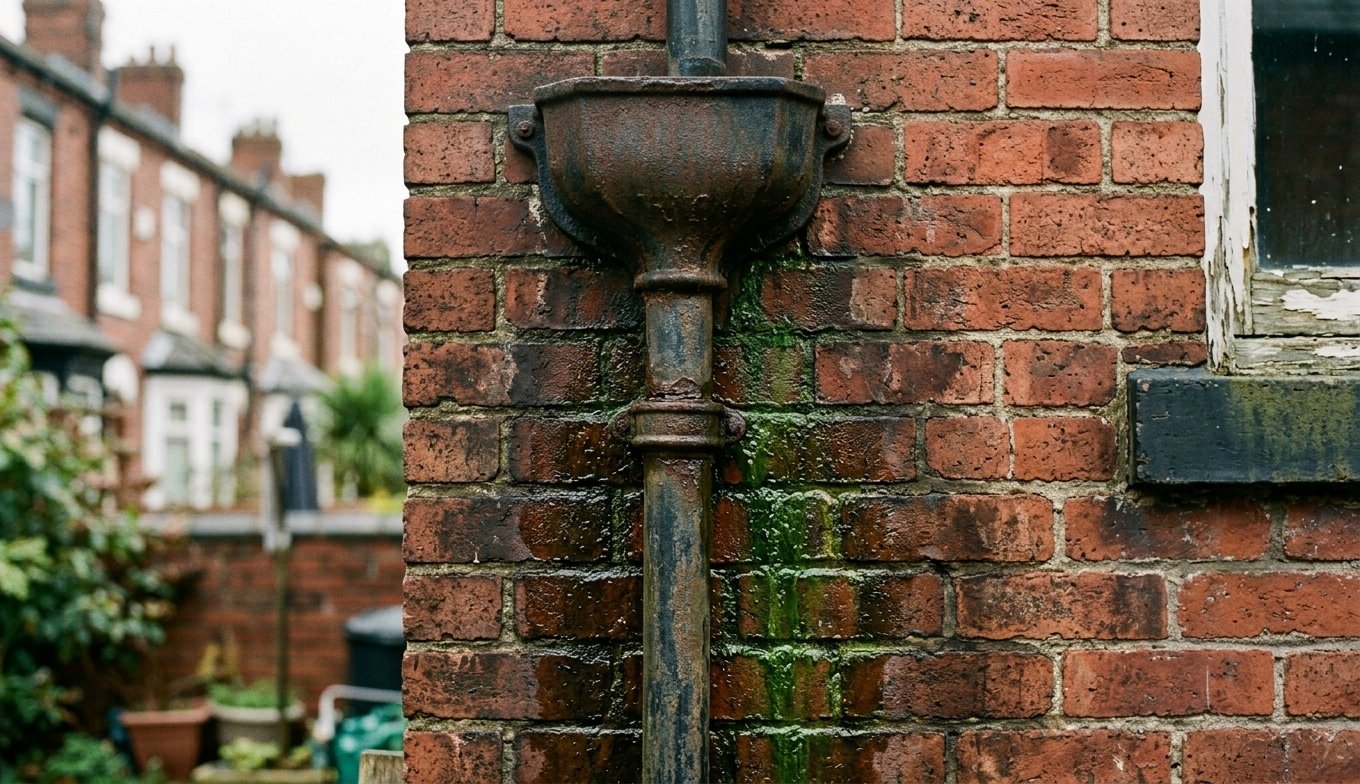
Then a tenant mentioned a damp patch in a back bedroom. By the time anyone looked at it properly, water had been running down a failed rear gutter and into the wall for at least two winters. The plaster had gone. So had part of the wall plate. A job that would have cost very little as a gutter repair had turned into a four figure bill, a fortnight of disruption, and a tenant who no longer trusted him.
None of that is unusual. It is simply what happens when a building is managed reactively instead of proactively, and it is the exact problem property asset management is there to solve.
This guide explains what property asset management really involves for Liverpool landlords and portfolio owners, the seven costs that most often slip past unnoticed, and how planning ahead changes the numbers. It is written by RICS regulated chartered surveyors who inspect these buildings for a living, so the focus is on the building itself rather than rent collection.
If you want the bigger picture beyond costs, our guide to asset management in Liverpool explains how landlords plan maintenance and protect long-term value.
What Is Property Asset Management?
Property asset management means looking after the long term condition, performance and value of a building or portfolio, rather than just handling day to day tenancy admin. It brings condition monitoring, planned maintenance, lifecycle planning, compliance and budgeting together into one strategy for each property.
That definition matters, because two very different services share a similar name.
Property Asset Management vs Property Management
A property management company or property manager looks after the running of a let building. Finding tenants, collecting rent, chasing arrears, arranging inspections, calling out contractors, handling service charges. If you search property management near me or property management companies near me, that is mostly what comes back.
Property asset management sits a level above that. It asks a different question. Not whether the property is running smoothly this month, but what the building will need over the next ten years, what that will cost, and what it is doing to the value of the asset.
In practice, most landlords need both. A property and management company keeps things running. Asset management advisory stops the building quietly eating your returns. Plenty of portfolio owners in Liverpool use a managing agent for the operational side and bring in a chartered surveyor for the asset side.
The Three Main Types of Asset Management in Property
People often ask what the three main types of asset management are. In property, they break down roughly like this.
Operational asset management. The running of the building. Maintenance delivery, contractors, compliance, service charge budgets. This is closest to what a traditional managing agent provides.
Strategic asset management. The building over time. Lifecycle planning, planned maintenance schedules, forecasting major spend, refurbishment decisions, and whether to hold or sell.
Financial or portfolio asset management. The money. Yield, return on capital, portfolio balance, buying and selling. This is the world of portfolio management firms and portfolio advisers. It overlaps with building level work but is not the same thing.
Asset property management, as most Liverpool landlords experience it, lives in the first two. The third only becomes relevant once a portfolio is large enough to be treated as an investment vehicle rather than a set of buildings.
The 5 P’s of Asset Management
The five P’s framework is a useful checklist, and it translates neatly to property.
- What is the asset for. A long term hold, a refurbishment and sale, an income stream, or something you plan to pass on. Everything else follows from this.
- Who is responsible. Landlord, property manager, block manager, surveyor, contractors. Gaps in responsibility are where problems hide.
- How condition gets checked and how work gets triggered. A written schedule beats memory every time.
- What the asset is actually delivering. Yield, void periods, repair spend per unit, how long tenants stay.
- The forward view. What is due, when, and what it will cost.
Most landlords who get caught out are strong on purpose and people, and weak on process and planning. That is exactly where the seven costs below come from.
The 7 Costs Liverpool Landlords Miss
These come up again and again in our inspection reports across Liverpool, Merseyside, Sefton and the Wirral. None of them are unusual. All of them are cheaper when caught early.
1. Gutters, and the Damp That Follows
Gutters, downpipes and hoppers are the single most common cause of damp we find in Liverpool’s Victorian and Edwardian terraces. A blocked hopper on a rear elevation costs almost nothing to clear. Leave it for two or three winters and it soaks the brickwork, ruins the internal plaster, and can eventually reach structural timbers.
The difference between the cheap fix and the expensive one is measured in years of not looking. Regular property maintenance in Liverpool at gutter level is one of the best value jobs a landlord can put in the diary.
2. Roofs Reaching the End of Their Life
A lot of Liverpool housing stock still carries roof coverings fitted decades ago. Concrete interlocking tiles from the 1960s and 1970s have a finite life. They rarely fail dramatically. They lose their surface, slip, and start letting water in around the edges.
Lifecycle planning means knowing a roof has eight years left rather than finding out it has none. That one piece of information decides whether a re-roof is a budgeted item or an emergency loan. High level drone surveying makes this quick and safe to check without scaffolding.
3. Pointing, Render and Sandstone Erosion
Liverpool’s older stock includes plenty of sandstone detailing and a great deal of soft lime mortar that has at some point been repointed in hard cement. Cement traps moisture in the brick or stone instead of letting it breathe, which speeds up decay of the masonry underneath.
The cost people miss is not the repointing. It is replacing the brick or stone once the face has crumbled away because the wrong mortar was used ten years earlier.
4. Compliance and Safety Obligations
Gas safety, electrical installation condition reports, fire safety in shared buildings, legionella risk assessments, and for anyone letting in Liverpool, selective licensing. The cost of staying compliant is predictable. The cost of not being compliant is not.
For block managers and RTM directors the exposure is bigger still, because building and fire safety duties on residential blocks have tightened a great deal and are still moving.
5. Void Periods Caused by Condition
A property that shows badly lets slowly, and lets cheaper. Tired kitchens and bathrooms, visible damp staining, dated heating. Landlords tend to treat voids as a market problem when a good share of it is a condition problem.
Two extra weeks of void on a flat at 750 pounds a month is roughly 350 pounds gone, every time it re-lets. Across a portfolio, over ten years, that is a serious figure that never shows up as a repair invoice.
6. The Emergency Premium on Reactive Repairs
Reactive work costs more than planned work, consistently. You take whoever is free rather than whoever is best value. You pay out of hours rates. You lose the chance to bundle jobs across several properties. And you often pay twice, once for the emergency patch and again for the proper repair.
Landlords who shift from reactive to planned maintenance usually find the same annual budget stretches further, simply because the work was scheduled.
7. Disrepair Claims and Tenant Disputes
This is the one with the sharpest tail. Unresolved damp, mould and repair problems can turn into housing disrepair claims, with legal costs sitting on top of the works that were needed anyway. Liverpool sees a high volume of disrepair activity, and the trigger is nearly always an issue that was reported, recorded, and never properly sorted.
A documented condition record and a planned maintenance programme are the strongest defence a landlord has, because together they show the building was being actively managed.
What Property Asset Management Actually Includes
If you bring in a chartered surveyor for asset management support rather than a lettings agent, here is the realistic scope of work.
- Condition monitoring and building performance assessment, starting with a baseline inspection and followed by regular reinspection.
- Planned preventative maintenance schedules covering cyclical jobs such as external decoration, gutter clearance and boiler servicing.
- Lifecycle and capital planning that forecasts the big items. Roofs, windows, heating systems, rewires. Nothing should arrive as a surprise.
- Repair and upgrade priorities, including honest advice on what can wait and what is not worth doing at all.
- Compliance and safety guidance, keeping your obligations mapped and current.
- Budgeting and cost planning, turning all of the above into figures you can plan around, including sinking fund provision where it applies.
- Value protection. A building whose condition is understood and managed holds its value better than one that gets patched when it breaks.
Who It Is For
Not every landlord needs a formal programme. A single, well maintained flat probably does not. The service earns its keep when one or more of these applies.
- You own more than three or four properties and can no longer keep the detail in your head
- You own older stock, particularly pre-1940 terraces or converted period buildings
- You are holding for the long term rather than trading
- You are a block manager or RTM director responsible for communal areas and shared budgets
- You are a commercial property owner with repairing obligations under a lease
- You live away from the properties, elsewhere in the UK or overseas
- You are a facilities manager responsible for how a building performs rather than who lives in it
Investors searching for an asset management company near me or asset management near me are often looking for the financial services version of the term. If your assets are buildings in the North West, what you actually want is a surveyor led approach with real knowledge of the local stock.
Why Liverpool Changes the Answer
Liverpool’s building stock has quirks that generic national advice does not account for.
There are large numbers of Victorian and Edwardian terraces in Wavertree, Kensington, Toxteth and Anfield, most with cellars, solid walls and original roof structures that have been altered over the years. Cellar damp is close to universal in this stock. It needs to be understood and managed rather than eliminated.
There are 1930s semis across Allerton, West Derby, Childwall and Crosby that are now reaching the point where original wiring, heating and roof coverings all fall due at once. Cavity wall insulation retrofitted into some of these has been installed poorly, causing damp to bridge across.
There is the Georgian Quarter and the city centre conversions, many listed or in conservation areas, where consent requirements shape what work is even allowed and how much it costs.
There are the waterfront and Baltic Triangle apartment blocks, where building safety, cladding and communal plant dominate the asset planning conversation.
And there is coastal exposure across Sefton and the Wirral, which means faster weathering on exposed elevations and shorter cycles on external decoration.
Any approach that ignores all of this is a template. A local surveyor who inspects this stock every week will tell you which defects are urgent and which are simply what a 120 year old Liverpool terrace looks like.
What It Costs, and What It Saves
We will not publish fixed prices here, because the honest answer is that it depends on the size of the portfolio, the age of the buildings and how much detail you need. What we can be clear about is the shape of the economics.
The cost of asset management is a known figure you can budget for. The cost of skipping it is an unknown figure that turns up at the worst possible moment.
Across all seven items above, the pattern is the same. Acting early costs a fraction of acting late, and the gap is usually a multiple rather than a small premium. Clearing a gutter is not comparable to rebuilding a wall. Replacing a roof on schedule is not comparable to replacing one after a ceiling has come down.
There is also the part that never appears on an invoice. Buildings in documented good condition sell more easily, survey more cleanly when a buyer commissions their own inspection, and generate far fewer tenant disputes.
How to Get Started
You do not need a full portfolio programme on day one.
- Get a baseline. A condition survey or schedule of condition across the portfolio, or across the worst performing properties first.
- Separate the urgent from the cyclical. Fix whatever is causing active damage. Schedule the rest.
- Build a five to ten year forecast. Roofs, windows, heating, decoration, rewires. Put dates and rough figures against them.
- Set a maintenance calendar. Gutters twice a year, boiler annually, external inspection annually.
- Record everything. Reports, photographs, invoices, tenant correspondence. This is your evidence base.
- Review it once a year. Buildings change, and so do your obligations.
Frequently Asked Questions
What is property asset management in simple terms?
It is managing a building’s condition, performance and value over the long term through planned maintenance, lifecycle forecasting and budgeting, rather than reacting to problems as they happen.
What is the difference between a property manager and an asset manager?
A property manager handles the day to day running of a let property, such as rent, tenants and repairs. An asset manager focuses on the building’s long term condition, capital planning and value.
What are the 5 P's of asset management?
Purpose, people, process, performance and planning. Applied to property, they cover what the asset is for, who is responsible, how condition is monitored, what returns it delivers and what is planned ahead.
What is the biggest risk of owning a rental property in Liverpool?
Unplanned capital spending. A roof, rewire or structural repair arriving with no warning and no reserve to cover it. Condition monitoring is what turns that risk into a scheduled cost.
Do I need asset management for a single property?
Usually not formally. A condition survey and a simple maintenance calendar will cover most single property landlords. The service becomes valuable across several properties or with older buildings.
Is property asset management the same as block management?
No. Block management deals with communal areas, service charges and leaseholder obligations in shared buildings. Asset management can support block managers with condition data and lifecycle planning, but it is a separate discipline.
How often should a rental property be inspected?
For condition purposes, an external inspection once a year and a fuller review every three to five years is a sensible baseline for most Liverpool stock. Older or exposed properties benefit from more frequent checks.
Can a surveyor help with property maintenance in Liverpool?
Yes. A chartered surveyor can specify what work is needed, put it in order of priority, and tell you whether contractor quotes are reasonable, without having any commercial interest in the works being carried out.
Talk to a Chartered Surveyor About Your Portfolio
ASG Consulting provides RICS regulated property asset management support to landlords, portfolio owners, block managers and commercial property owners across Liverpool, Merseyside, the Wirral, Sefton, Cheshire and the wider North West. We are building surveyors first, which means our advice is about the building itself and not about selling you a management contract.
If you are not sure whether your portfolio needs a full programme or just a decent condition baseline, we will tell you straight.