A RICS homebuyers report is the written result of a RICS Home Survey Level 2, the survey most buyers choose for a conventional house or flat. It arrives as a long document full of condition ratings, technical terms and limitations, often just when you are busiest with the move. Knowing how to read it, and what to do with each finding, turns it from a worrying list of faults into a practical plan for your purchase.
This guide is laid out as a walkthrough for readers. It explains what the homebuyer report covers, decodes the condition ratings, walks through each part of the report in the order you will usually see it, shows which findings need action before exchange and suggests the questions to ask your surveyor. It is written for buyers in Liverpool, Merseyside and the North West.
In this guide
- What a RICS homebuyers report is
- With or without valuation
- Condition ratings explained
- How to read it in the right order
- The report section by section
- What the report does not cover
- Turning findings into actions
- A worked example
- Common reading mistakes
- Common phrases decoded
- Questions to ask your surveyor
- When a Level 3 is better
- Keeping your report
- Reports on Liverpool homes
- FAQs
What a RICS Homebuyers Report Is
The HomeBuyer Report has been part of home buying in England and Wales for many years. Under the current RICS Home Survey Standard, it is known as the RICS Home Survey Level 2. It is available as a survey only or with a market valuation, and it sits between the basic Level 1 condition report and the detailed Level 3 building survey.
A Level 2 survey involves a visual, non invasive inspection of the main building and permanent outbuildings, followed by a report. The surveyor gives condition ratings, explains defects and risks, and points out issues your legal adviser should check. If you chose the version with valuation, the report also includes the market value and a reinstatement cost for insurance. Our guide to the RICS homebuyer survey and valuation explains costs and when to choose it.
Level 2 With or Without Valuation
A RICS homebuyers report comes in two versions. The survey only version reports on condition. The version with valuation adds the surveyor opinion of market value and a reinstatement cost for buildings insurance.
| Point | Survey only | Survey with valuation |
|---|---|---|
| Condition ratings and advice | Yes | Yes |
| Market value opinion | No | Yes |
| Reinstatement cost for insurance | No | Yes |
| Useful for negotiating price | Through repair costs | Through repair costs and value |
If you are worried you may be overpaying, or want an independent view of value alongside the lender valuation, the homebuyer report with valuation is usually worth the extra fee.
RICS Homebuyers Report Condition Ratings Explained
The condition ratings are the heart of the homebuyer report. Each element of the property, such as the roof, walls, windows or kitchen, is given a rating. The infographic below explains what each one means.
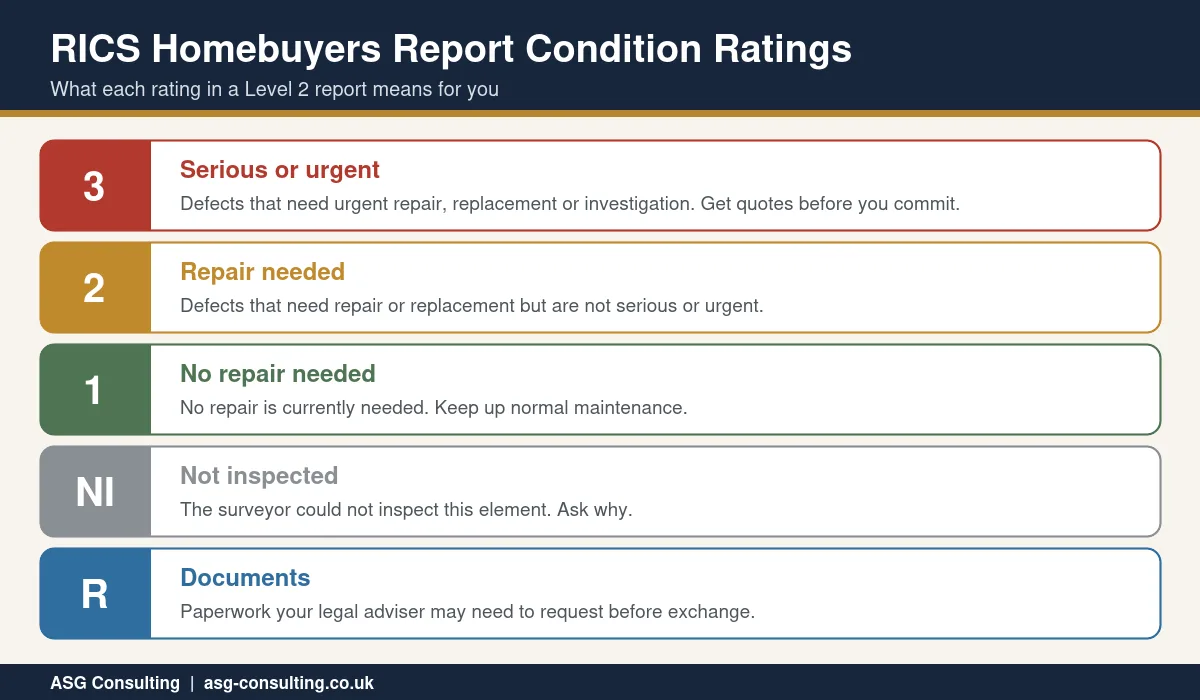
| Rating | Meaning | What to do |
|---|---|---|
| 3 | Serious defects that need urgent repair, replacement or investigation | Get written quotes or specialist advice before you commit |
| 2 | Defects that need repair or replacement but are not serious or urgent | Budget for the work and plan to do it after you move |
| 1 | No repair currently needed | Carry on with normal maintenance |
| NI | Not inspected | Read why, and ask whether further checks are sensible |
| R | Documents you may want to request | Pass to your solicitor before exchange |
These definitions come from the RICS description of the Home Survey Level 2. A rating 3 does not always mean the house is a bad buy. It means the issue needs to be understood and priced before you go ahead.
How to Read It in the Right Order
Reading a RICS homebuyers report from front to back is not always the most useful approach. Try this order instead.
- The summary or overall opinion. Get the big picture first.
- Every element rated 3. These are your priorities.
- Issues for your legal advisers. Forward these to your solicitor straight away.
- The risks section. Note risks to the building, grounds and people.
- Elements rated 2. Build a list of repairs for your first few years.
- The valuation, if included. Check it against the price you agreed.
- The limitations and NI items. Understand what could not be seen.
Highlight anything you do not understand and keep a running list of questions for the surveyor.
The Report Section by Section
Every surveyor uses the RICS format, so most reports follow a similar structure. These are the main parts you will see and what to look for in each.
About the inspection and the report
Sets out the date, weather, whether the property was furnished or occupied, and any general limits on the inspection. Bad weather or a fully furnished home can mean more items are not inspected.
Overall opinion and summary
The surveyor sums up the condition of the property and lists the elements given each rating. This is the quickest way to see the main concerns.
About the property
Describes the type, age, construction, accommodation, energy information and location. Check it matches what you thought you were buying, including any extensions.
Energy information
The surveyor does not prepare an Energy Performance Certificate. Where a current certificate exists, the report states its rating and points out any obvious differences between the certificate and the property, such as missing insulation or a newer boiler. If none is provided, the surveyor may obtain the latest certificate from the central register where practical.
Outside the property
Covers chimneys, roof coverings, rainwater goods, main walls, windows, external doors, conservatories and other joinery. Many rating 2 and 3 items appear here, especially on older homes.
Inside the property
Covers the roof structure, ceilings, walls, floors, fireplaces, built in fittings, woodwork and bathroom fittings. Look for comments about damp, movement and timber defects.
Services
Covers electricity, gas, water, heating, water heating and drainage. Remember these are visual checks only. The surveyor will often recommend specialist tests.
Grounds
Covers garages, permanent outbuildings, boundaries and other areas. Retaining walls, trees and shared areas may be mentioned here.
Issues for your legal advisers
Points your solicitor should check, such as missing approvals for alterations, guarantees for past work, rights of way and boundaries.
Risks
Summarises risks to the building, the grounds and people, and for leasehold homes, general advice and questions to raise.
Valuation, if included
Gives the market value and a reinstatement cost for buildings insurance. For more on rebuild figures, see our guide to a rebuild cost assessment.
What to do now
Explains the next steps, including getting quotes for rating 3 items and further investigations before you commit.
What the Homebuyer Report Does Not Cover
The RICS description of the Level 2 service is clear about the limits. Understanding them avoids false reassurance.
- The surveyor does not lift carpets, floorboards or floor coverings, move heavy furniture or empty cupboards and lofts.
- Roof spaces are inspected only where safe and reasonable, and insulation is not moved.
- Services are checked visually. Electrical and gas safety, heating, plumbing and drainage are not tested.
- No asbestos inspection is carried out, although suspected asbestos is highlighted.
- No contamination enquiries are made.
- For flats, drains, lifts, fire alarms, security systems and external wall systems are excluded.
- The surveyor does not prepare an energy certificate, but reports the rating of a current one where available.
If any of these matter for your purchase, ask the surveyor what further checks they recommend.
Turning Findings into Actions
A RICS homebuyers report is only useful if it leads to clear decisions. Work through each finding and put it into one of these groups.
| Finding | Action before exchange |
|---|---|
| Rating 3 structural concern | Structural engineer inspection and repair quote |
| Rating 3 damp or timber issue | Specialist investigation of the cause and a quote |
| Rating 3 roof or chimney defect | Roofer quote, often with photographs |
| Services not tested | Electrical condition report, gas safety check, drain survey |
| Legal issues listed | Send to solicitor and wait for answers |
| Rating 2 items | Add to your post move budget |
If the costs are significant, use them to renegotiate. Our guide to renegotiating after a survey explains how to present the evidence. If cracking is mentioned, our guide to cracks in walls helps you understand what the surveyor is describing.
A Worked Example
Imagine a RICS homebuyers report on a 1930s semi detached house. The summary lists three rating 3 items, eight rating 2 items and the rest rated 1. Here is how a buyer might handle it.
- Rating 3, bay window movement. The buyer books a structural engineer, who finds old, stable movement and recommends minor repairs. The cost is modest and the buyer proceeds.
- Rating 3, electrical installation. The surveyor notes an old consumer unit. An electrician carries out a condition report and quotes for an upgrade, which the buyer uses in negotiation.
- Rating 3, chimney stack. A roofer quotes to repoint and refix the flashings. The seller agrees a small price reduction.
- Rating 2 items. Gutters, some window seals and kitchen extractor fan go on a list for the first year.
- Legal issues. The rear extension has no completion certificate, so the solicitor asks the seller for approval records.
This example is illustrative only, but it shows how each finding in a homebuyer report leads to a clear next step rather than panic.
Common Mistakes When Reading a Homebuyer Report
Buyers often make the same errors when they first see their report.
- Panicking at every rating 3. Many are fixable. Find out the cost before deciding.
- Ignoring rating 2 items. They add up, and some get worse if left.
- Skipping the legal section. Missing approvals and guarantees can delay or derail a sale.
- Not following up recommendations. If further investigation is advised, the surveyor cannot rule the problem out without it.
- Never calling the surveyor. A short conversation often clears up most worries.
Common Phrases Decoded
Surveyors use careful wording. These are some phrases you are likely to see in a homebuyer report and what they usually mean.
- Further investigation recommended. The surveyor could not reach a confident conclusion and you need a specialist before you commit.
- Beyond its expected life. The item still works but is old and likely to need replacing soon.
- Historic movement. Signs of past movement that appear to have stopped, though monitoring may still be suggested.
- High moisture readings. The meter found damp. The report should say whether the cause is clear.
- Not inspected. The surveyor could not see or reach it, for example because of furniture or unsafe access.
- Your legal adviser should check. A paperwork question for your solicitor, not a building defect.
Questions to Ask Your Surveyor
Most surveyors are happy to talk through their RICS homebuyers report. Prepare a short list before you call.
- Which three issues concern you most, and why?
- Roughly what scale of cost should I expect for the rating 3 items?
- Which specialist reports do you recommend, and in what order?
- Is anything typical for a home of this age and type?
- Would you be comfortable buying this property at this price?
The last question may not get a direct answer, but the conversation that follows is often the most valuable part of the service.
When a Level 3 Is Better
A homebuyer report suits conventional homes in reasonable condition. If your report contains many rating 3 items, lots of further investigation notes or large areas not inspected, the property may have needed a Level 3 building survey instead. Older, altered, listed or non standard homes usually justify the deeper inspection from the start. Our guide to the full home buyers survey explains what Level 3 adds.
Keeping Your Report After You Move
Do not file your RICS homebuyers report away once you have the keys. The rating 2 items and maintenance advice make an excellent starting list for your first few years in the home. Keep it with your guarantees, certificates and any specialist reports, and tick items off as they are done. When you come to sell, a record of the repairs you carried out after reading the homebuyer report can reassure your own buyers.
Homebuyer Reports on Liverpool Homes
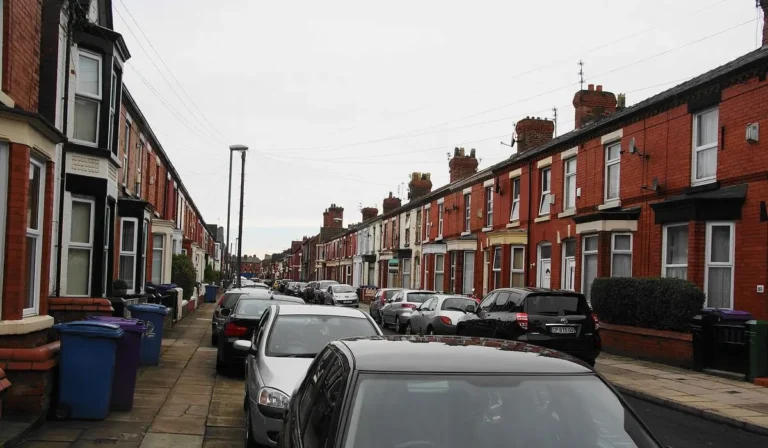
Across Liverpool and Merseyside, the same findings appear in many reports. Victorian and Edwardian terraces often show solid wall damp, chimney and slate roof wear and unapproved rear alterations. Interwar semis commonly have bay window movement and ageing wall ties. Post war estates can include non standard construction that affects mortgages, and coastal homes on the Wirral and in Sefton suffer from wind driven rain.
A local surveyor will put these findings in context, explaining which issues are routine for the street and which need action. That local view makes a RICS homebuyers report far easier to act on.
RICS Homebuyers Report FAQs
How long does it take to get a homebuyer report?
The report usually follows within a few days of the inspection, depending on the surveyor and the complexity of the property.
Is a rating 3 a reason to walk away?
Not necessarily. It means the issue needs urgent attention and should be understood and priced before you commit. Many rating 3 items are fixable at a reasonable cost.
Does the RICS homebuyers report include a valuation?
Only if you chose the Level 2 survey with valuation. The survey only version does not include a market value.
Can I share the report with the seller?
Yes, the report is yours. Many buyers share relevant sections, with repair quotes, when renegotiating the price.
Why are so many items marked not inspected?
Occupied homes, fitted floor coverings, stored belongings and unsafe access all limit what the surveyor can see. The report should explain the reasons.
Is the HomeBuyer Report the same as a Level 2 survey?
Yes. The HomeBuyer Report is the older name for what RICS now calls the Home Survey Level 2.
What if the survey valuation is lower than the price I agreed?
Talk to the surveyor about the evidence behind the figure, then discuss it with your broker and the agent. A lower valuation, together with any repair costs, can support a renegotiation.
How much does a RICS homebuyers report cost?
The HomeOwners Alliance gives indicative Level 2 fees of around 400 to 600 pounds for homes worth 100,000 to 249,999 pounds, rising with value. Always ask for a written quote for the exact property and check whether valuation is included.
Get a RICS Homebuyers Report in Liverpool
ASG Consulting is regulated by RICS. Our surveyors carry out Level 2 and Level 3 surveys across Liverpool, Merseyside and the North West, and we always make time to talk through the findings so you know exactly what to do next. To get a quote, visit our residential building surveying page.
About the Author
Harry is a property content writer with 3 years of experience writing about building surveying, commercial property and property compliance in the UK. He writes the guides at ASG Consulting for buyers, tenants and landlords, turning survey practice into clear, practical advice.
Reviewed by Dave MacMillan MRICS, chartered surveyor at ASG Consulting. Dave checks the technical content of our guides against current RICS practice before they are published.
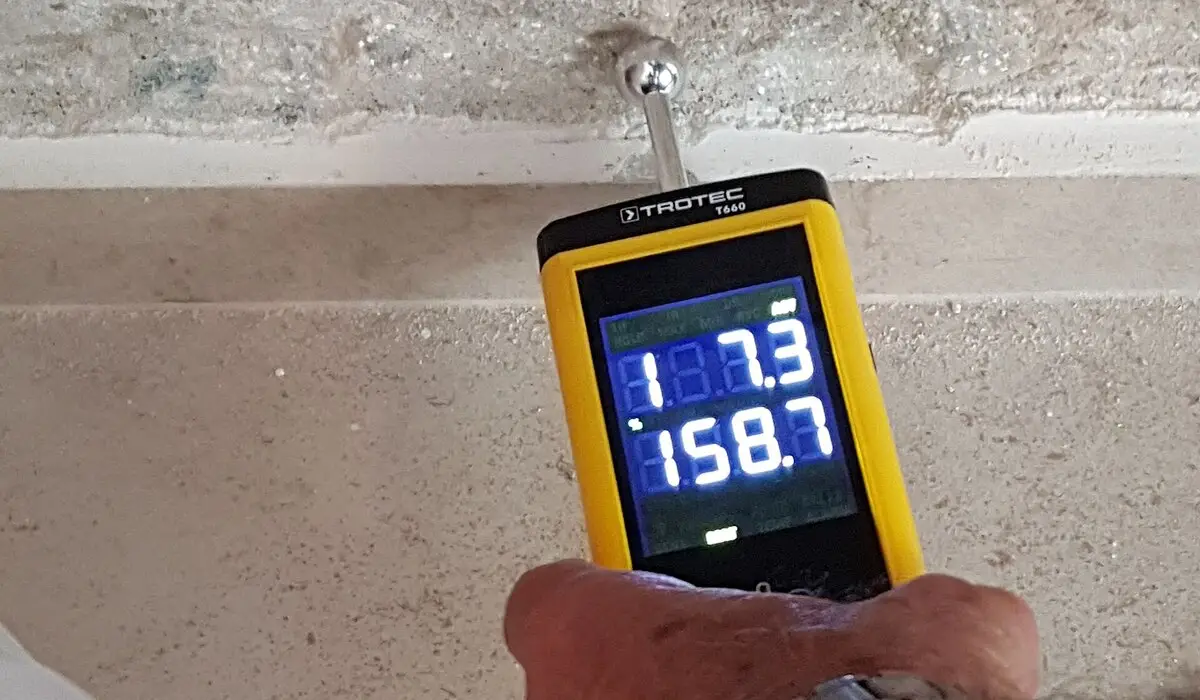
Featured photo of a moisture meter by Etan J. Tal via Wikimedia Commons, licence CC BY SA 4.0, cropped.