Cavity wall insulation problems usually show up as damp patches, mould or cold spots on the inside of outside walls, often months or years after the insulation was installed. Millions of UK homes have had their cavities filled to cut heating bills, and most installations cause no trouble. But when the wrong wall is filled, the work is poorly done or the outside of the house is neglected, the insulation can carry water across the cavity and into the home.
This guide is built as a diagnosis guide. It starts with the symptoms you might notice, links each one to its most likely cause, and then explains how a cavity wall insulation survey finds the real problem, which walls are unsuitable, how guarantees and claims work, what extraction involves and what buyers and sellers need to know. It is written for homeowners, landlords and buyers in Liverpool, Merseyside and the North West.
In this guide
- How cavity wall insulation works
- Symptoms, causes and next steps
- The main causes explained
- Is your wall suitable
- What a cavity wall insulation survey involves
- Misdiagnosis to avoid
- Fixes and when extraction is needed
- A worked example
- Preventing problems
- Guarantees and claims
- Buying or selling a home with cavity fill
- Advice for landlords
- Cavity walls in Liverpool
- FAQs
How Cavity Wall Insulation Works
Most UK homes built from around the 1920s onwards have cavity walls, made of two layers of masonry with a gap between them. The outer leaf keeps out most of the rain, and the cavity stops any water that does get through from reaching the inner leaf. Metal wall ties hold the two leaves together.
Cavity wall insulation fills that gap with mineral wool, polystyrene beads or foam, usually injected through small holes drilled in the mortar joints. It reduces heat loss, but it also changes how the wall handles water. The empty cavity was the barrier that kept rain away from the inside. Once it is filled, the wall relies much more on the outer leaf being in good condition and on the fill itself staying dry.
That is why most cavity wall insulation problems come down to water. If rain is driven into the outer leaf, or the fill is uneven, contaminated or in contact with damp materials, moisture can find a path across the cavity.
Cavity Wall Insulation Problems, Symptoms to Next Steps
The chart below links the most common symptoms to their likely causes and the sensible next step.
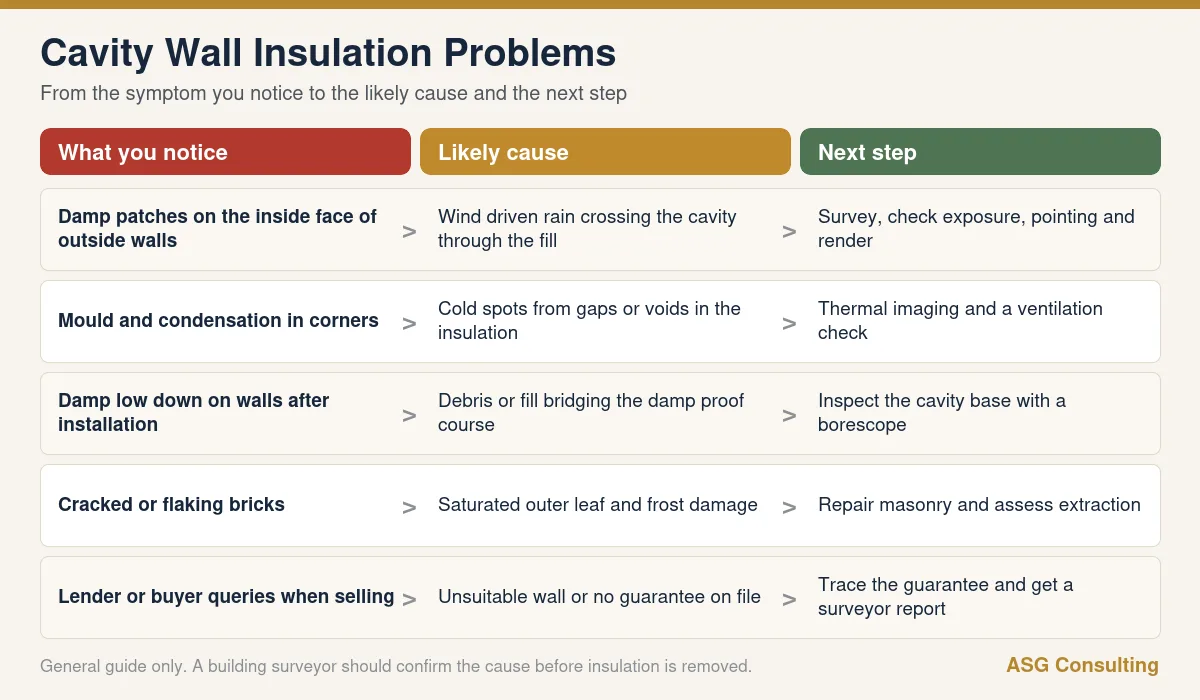
These links are a starting point, not a diagnosis. Damp has many possible causes in any home, so the next step should always be a proper inspection by someone who can rule the other causes in or out.
The Main Causes Explained
Wind driven rain
Walls facing the prevailing wind, especially in coastal or exposed locations, can absorb large amounts of rain. In a filled cavity, that water can track across the insulation to the inner leaf. Exposure is one of the most important factors in whether a wall is suitable for filling, and it is a common thread in cavity wall insulation problems along the North West coast.
Poor condition of the outer leaf
Cracked render, eroded pointing, porous or spalling bricks and leaking gutters all let more water into the outer leaf, and they are behind many cavity wall insulation problems. A wall that was suitable when filled can become a problem if maintenance is neglected. Our guide to brickwork repair explains how to deal with worn masonry.
Gaps and voids in the fill
If the insulation is not injected evenly, gaps can form, creating cold spots on the inside face of the wall where condensation and mould tend to appear. This is one of the most common cavity wall insulation problems found on inspection. Voids are often found around windows, doors, at the top of walls and under floors.
Bridging of the damp proof course
Debris in the base of the cavity, such as mortar droppings from the original build, or fill that extends below the damp proof course, can create a bridge that lets ground moisture rise into the inner wall. This can look very similar to rising damp.
Defective materials or workmanship
Some installations used unsuitable materials, missed areas or were rushed. Beads without bonding agent can settle or escape, and fibre fill can slump over time, leaving the upper wall empty and the lower wall packed.
Unsuitable construction
Some walls should never have been filled. These include timber framed and steel framed homes, some non standard concrete houses, walls with very narrow or irregular cavities and walls with serious defects. Our guide to non standard construction explains why these homes need special care.
Is Your Wall Suitable for Cavity Fill
A cavity wall insulation survey before installation should check that the wall is suitable. If your home is already filled, the same questions help explain why problems may have started.
| Check | Why it matters |
|---|---|
| Exposure to wind driven rain | Highly exposed walls carry a higher risk of water crossing the fill |
| Condition of brickwork, pointing and render | The outer leaf must keep most of the rain out |
| Width and condition of the cavity | Narrow, blocked or irregular cavities do not fill evenly |
| Type of construction | Timber frame, steel frame and some concrete systems are unsuitable |
| Existing damp or defects | These should be fixed before any insulation goes in |
| Wall ties | Corroded ties are a structural issue that must be dealt with first |
If you are unsure whether your walls have been filled, look for a regular pattern of small drilled and filled holes in the mortar joints on the outside walls. A surveyor can confirm it with a borescope.
What a Cavity Wall Insulation Survey Involves
When you suspect cavity wall insulation problems, a building surveyor can carry out an inspection to find the real cause. A typical cavity wall insulation survey includes the following.
- External inspection. Checking brickwork, pointing, render, gutters, downpipes, window cills, ground levels and the damp proof course.
- Internal inspection. Mapping damp, mould and staining, and taking moisture readings in context.
- Borescope inspection. Looking inside the cavity through small holes to see the type and condition of the fill, voids, debris and wall ties.
- Thermal imaging. Where useful, to show cold spots and gaps in the insulation.
- Exposure assessment. Considering the location, orientation and history of the wall.
- Report and advice. Explaining the likely cause, the options for repair and whether extraction is needed.
The aim is to separate cavity wall insulation problems from other causes of damp, such as condensation, plumbing leaks, rising damp or rain penetration through windows. Our damp and timber surveys page explains our wider approach to damp investigation.
Misdiagnosis to Avoid
Cavity wall insulation problems are easy to blame for any damp, and easy to miss when the cause is the insulation. Common errors include the following.
- Treating it as rising damp. Injecting a chemical damp proof course will not fix water crossing the cavity higher up the wall.
- Blaming condensation alone. Cold spots from voids in the fill can make condensation much worse, so the insulation may still be part of the problem.
- Removing insulation unnecessarily. If the real cause is a leaking gutter or failed pointing, fixing that may be enough.
- Ignoring wall ties. Damp cavities can speed up wall tie corrosion. Our guide to wall tie failure explains the signs.
Fixes and When Extraction Is Needed
The right fix for cavity wall insulation problems depends on the cause.
| Cause | Typical remedy |
|---|---|
| Leaking gutters or downpipes | Repair rainwater goods and let the wall dry out |
| Eroded pointing or cracked render | Repoint or repair render to reduce water entry |
| Small voids in the fill | Top up the insulation in the affected area |
| Debris bridging the damp proof course | Remove bricks at the base, clear debris and rebuild |
| Saturated or contaminated fill | Extract the insulation from the affected walls |
| Unsuitable wall or construction | Extract and consider other forms of insulation |
Extraction is a specialist job. Bricks are removed at intervals, the fill is drawn out with industrial vacuum equipment and the cavity is checked before the bricks are replaced. It can be disruptive and is not always the right answer, so Welsh Government guidance on issues arising from cavity wall insulation recommends getting advice from a building surveyor before choosing extraction.
A Worked Example
This example is illustrative, but it reflects a pattern we see often. A 1950s semi on an exposed corner plot in Wallasey had its cavities filled with fibre insulation some years ago. The owners noticed dark patches on the inside of the gable wall after every spell of stormy weather, and mould behind the wardrobe in the bedroom above.
A damp contractor had suggested a chemical damp proof course. The cavity wall insulation survey told a different story. The damp was highest on the wall facing the prevailing wind, well above the damp proof course. The pointing on that elevation was badly eroded, a downpipe was leaking and the borescope showed wet, slumped fill with a void near the top of the wall. The cause was rain crossing the saturated insulation, not rising damp.
The advice was to repair the downpipe, repoint the gable, extract the wet fill from that one elevation and reinsulate once the wall had dried. The other walls, which were sheltered and dry, were left alone. Targeted repairs like this are often far cheaper than treating the whole house, and they deal with the real cause of the cavity wall insulation problems.
Preventing Cavity Wall Insulation Problems
Most cavity wall insulation problems can be prevented or kept small with simple maintenance.
- Clear gutters and check downpipes every year, especially after autumn.
- Repair cracked render and eroded pointing promptly.
- Keep ground levels and paths at least two brick courses below the damp proof course.
- Make sure window cills and door thresholds shed water away from the wall.
- Keep air bricks and vents clear, and ventilate kitchens and bathrooms well.
- Keep your guarantee paperwork somewhere safe and follow any maintenance conditions.
If you are planning new insulation, ask for an independent cavity wall insulation survey first, particularly on an exposed or older property.
Guarantees and Claims
Many cavity wall installations come with a long term guarantee. Insulation installed under government funded schemes since 2013 should come with a 25 year guarantee and maintenance information, according to the Welsh Government guidance. Many guarantees in the UK are held by the Cavity Insulation Guarantee Agency, known as CIGA, and some are insurance backed guarantees from other providers.
If you have cavity wall insulation problems, the usual route is as follows.
- Find the paperwork. Look for the installer details, guarantee number and installation date.
- Contact the installer. They should investigate and put right any defects in their work.
- Contact the guarantee provider. If the installer has ceased trading or does not resolve the issue, contact the guarantee body directly.
- Act promptly. Delays can affect a claim, and guarantees usually require you to keep the walls maintained.
- Get independent evidence. A cavity wall insulation survey report from an independent surveyor helps show the cause and extent of the problem.
Be cautious about cold calls from claims management companies. Check who you are dealing with, do not sign anything on the doorstep and take independent advice.
Buying or Selling a Home With Cavity Fill
If you are buying a home with filled cavity walls, your surveyor will look for signs of cavity wall insulation problems as part of the survey and will usually ask your solicitor to obtain the guarantee and installation details. Some lenders ask for extra information where insulation appears unsuitable or problems are suspected.
If you are selling, gather your guarantee, installation certificate and any reports in advance. Clear paperwork reassures buyers and lenders. If you know there have been problems, it is usually better to investigate and resolve them before you sell than to leave them for a buyer survey to uncover. Our guide to the spray foam insulation survey covers another insulation issue that often affects sales.
Advice for Landlords
For landlords, cavity wall insulation problems can quickly turn into damp and mould complaints. Rules on damp and mould in rented homes are tightening, so it pays to investigate early, fix the cause and keep records of what was done. Our Awaabs Law guide explains the timescales that apply to social landlords and why private landlords are watching closely.
Cavity Walls in Liverpool
Liverpool and the wider Merseyside area have large numbers of interwar and post war homes with cavity walls, many of which were filled during energy efficiency schemes. Homes on exposed sites near the coast, in Crosby, Formby, Wallasey, Hoylake and West Kirby, and on higher ground, face more wind driven rain. Some post war estates also include non standard construction that should not have been filled.
Damp complaints in these homes tend to peak in autumn and winter, after long spells of wind and rain, and to ease again in drier months. That seasonal pattern is itself a useful clue, because condensation problems usually follow the heating season and indoor habits, while rain related damp follows the weather and the direction the wall faces. Keeping a simple diary of when and where damp appears can help your surveyor reach the right answer faster.
A local surveyor who knows these house types and exposure patterns can quickly narrow down the likely cause of cavity wall insulation problems and recommend proportionate repairs.
Cavity Wall Insulation Problems FAQs
Can cavity wall insulation cause damp?
Yes, in some cases. If the wall is exposed to driving rain, the outer leaf is in poor condition or the fill is defective, water can cross the cavity and cause damp inside.
How do I know if my walls have cavity insulation?
Look for regularly spaced drilled and filled holes in the mortar joints. A surveyor can confirm the type and condition of the fill with a borescope.
Does cavity wall insulation always need removing if there is damp?
No. Many problems can be solved by fixing gutters, pointing or render, or topping up voids. Extraction is only needed where the fill is saturated, contaminated or unsuitable.
Who pays to fix cavity wall insulation problems?
If the installation was defective and covered by a valid guarantee, the installer or guarantee provider may cover the work. Otherwise, the owner may have to pay.
What is a cavity wall insulation survey?
An inspection by a surveyor to check whether a wall is suitable for insulation, or to find out whether existing insulation is causing damp. It usually includes a borescope check of the cavity.
Can I get a mortgage on a house with cavity wall insulation?
Usually yes. Problems tend to arise only where the insulation is unsuitable, damaged or causing damp, or where paperwork is missing.
Is foam cavity insulation a problem?
Some foam products used in the past have caused problems, particularly where they have degraded or affected wall ties. A surveyor can advise on the specific material in your walls.
How long does extraction take?
It depends on the size of the house and the type of fill, but extraction from a typical semi often takes a few days.
Book a Cavity Wall Insulation Survey in Liverpool
ASG Consulting is regulated by RICS. Our surveyors investigate cavity wall insulation problems across Liverpool, Merseyside and the North West, using borescope and moisture checks to find the real cause before any work is done. To get a quote, visit our residential building surveying page.
About the Author
Harry is a property content writer with 3 years of experience writing about building surveying, commercial property and property compliance in the UK. He writes the guides at ASG Consulting for buyers, tenants and landlords, turning survey practice into clear, practical advice.
Reviewed by Dave MacMillan MRICS, chartered surveyor at ASG Consulting. Dave checks the technical content of our guides against current RICS practice before they are published.
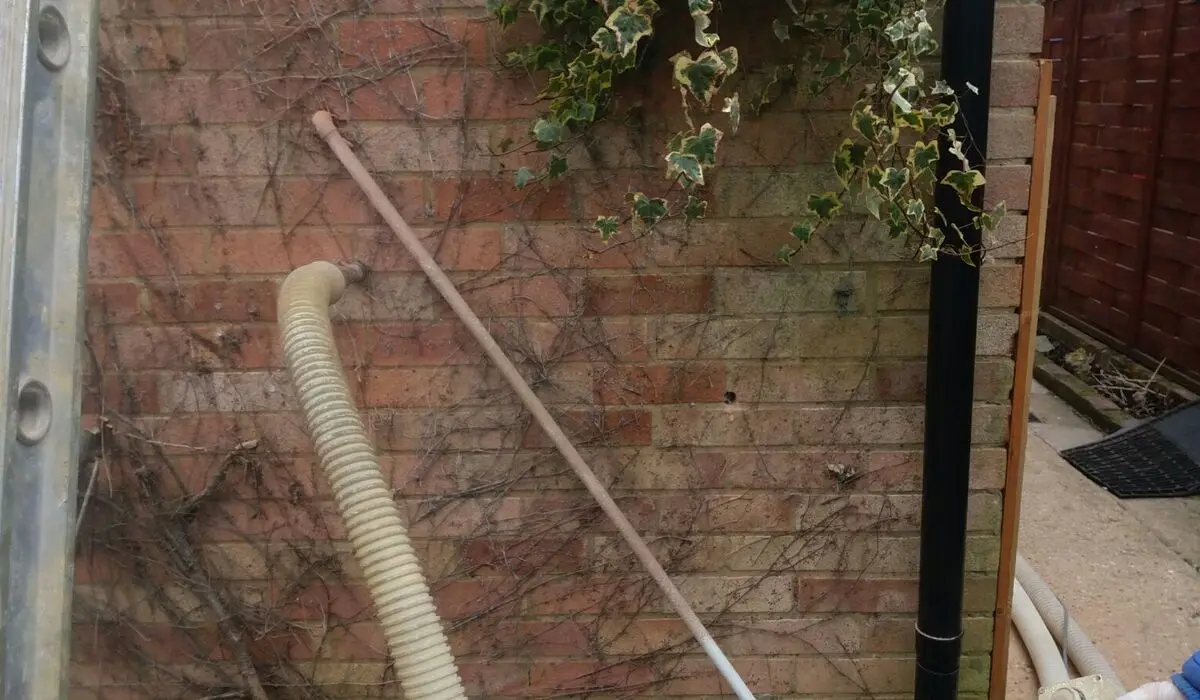
Featured photo of cavity wall insulation being installed by Workworkwembley via Wikimedia Commons, licence CC BY SA 4.0, cropped.