Spray foam in a loft used to be sold as a quick way to cut heating bills. Today it is one of the most common reasons a house sale stalls. Lenders worry that badly fitted foam traps moisture against roof timbers and hides rot, so many will not lend until a specialist has checked the roof. A spray foam insulation survey is how that check is done.
This guide is written as a decision guide. It starts with your situation, whether you are buying, selling, remortgaging, releasing equity or staying put, and shows what a spray foam insulation survey means for you. It then explains what the surveyor actually checks, the difference between open cell and closed cell foam, what lenders want to see, removal costs in 2026 and seven checks to run before you pay anyone. It is written for homeowners and buyers in Liverpool, Merseyside and the North West.
In this guide
- Why spray foam worries lenders
- What a spray foam insulation survey is
- Start with your situation
- Open cell or closed cell foam
- What happens during a spray foam insulation survey
- Seven checks before you pay anyone
- What the report can say
- Removal costs in 2026
- Spray foam scams to avoid
- Advice for buyers
- Spray foam in Liverpool homes
- FAQs
Why Spray Foam Worries Lenders
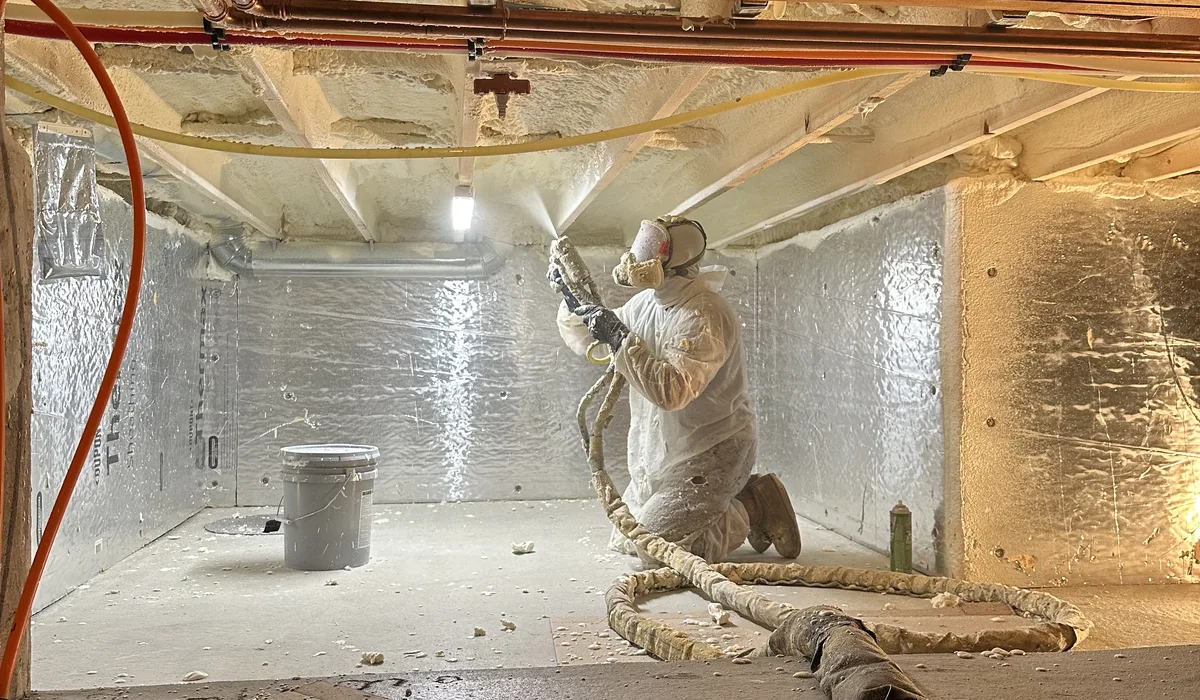
Spray foam is a polyurethane insulation sprayed directly onto the underside of the roof, usually between and over the rafters. When it is the right product, fitted by a trained installer to a roof that suits it, it can work well. The problem is that a large number of installations were not done that way.
The Property Care Association estimates that around 250,000 homes in the UK have spray foam insulation. When foam is applied to an older roof without proper assessment, it can stop the roof from breathing. Condensation then forms where the foam meets the timber, and the timber can rot without anyone seeing it, because the foam covers the very surfaces a surveyor needs to inspect.
Lenders rely on valuers and surveyors to tell them whether the roof is sound. When the timbers cannot be seen, the valuer cannot confirm that, so the case is referred back. A BBC investigation in late 2024 found that several of the largest lenders, including TSB, Skipton Building Society and Principality, would not lend where spray foam was found in the roof space, while others such as Lloyds, Nationwide, Barclays, NatWest and Santander assessed cases individually and took the valuer report into account. Equity release lenders have been the most cautious of all.
What a Spray Foam Insulation Survey Is
A spray foam insulation survey is a specialist inspection of a roof that has been sprayed with foam. Its job is to answer three questions that a standard valuation cannot.
- Has the foam been installed correctly for this type of roof?
- Is there any sign of moisture, condensation or decay in the timbers behind it?
- Can the foam stay, does it need repair, or should it be removed?
In 2023 the Property Care Association worked with mortgage lenders, equity release providers and building experts to create the Sprayed Foam Inspection Protocol, a standard method for assessing spray foam in roofs. In January 2024 it launched a register of trained and audited spray foam surveyors, so homeowners and lenders can be confident about who carried out the spray foam survey. Many lenders now ask for a report that follows this protocol.
The results so far show why lenders ask. When the PCA surveyed its registered surveyors about more than 500 inspections, they had found at least one departure from the protocol in 79 per cent of properties and at least one defect caused by the foam in 35 per cent. In 27 per cent of cases they recommended major work such as removing the foam or re roofing.
Start With Your Situation
What you should do about spray foam depends on why you are dealing with it now. Find your situation below.
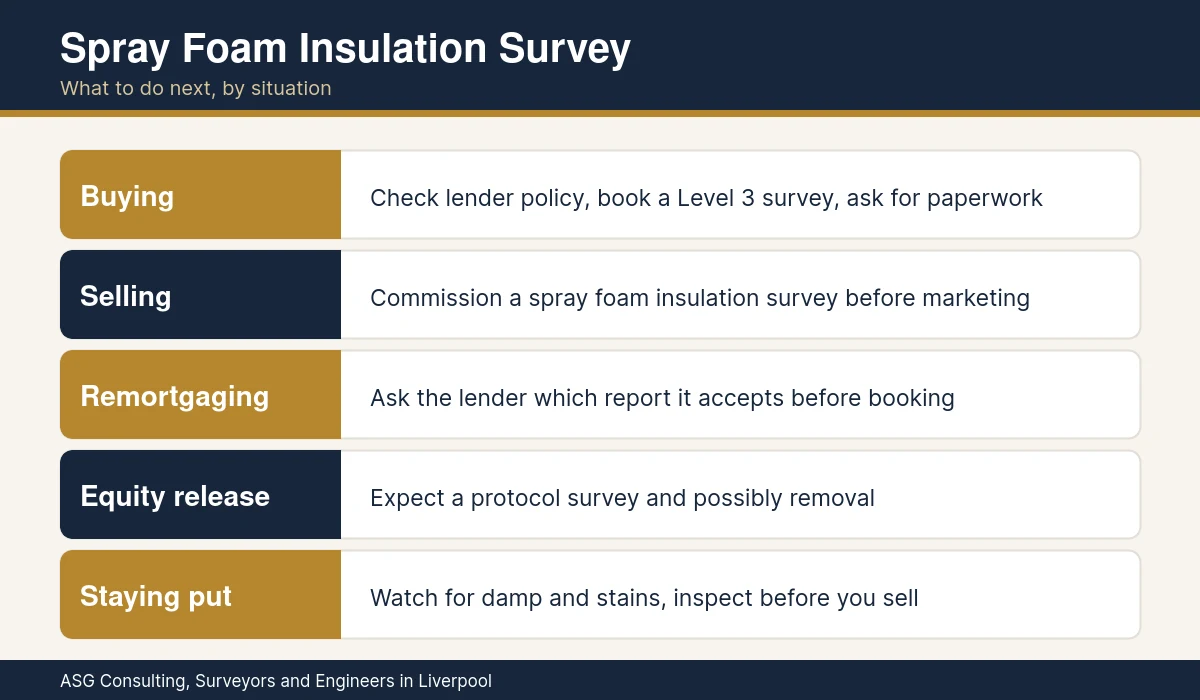
| Your situation | What usually happens | Best next step |
|---|---|---|
| Buying a home with spray foam | Your lender may refuse or ask for a spray foam insulation survey | Ask the seller for paperwork, book a building survey and check your lender policy early |
| Selling a home with spray foam | Buyers may struggle to get a mortgage and pull out late | Commission a spray foam insulation survey before marketing, so you know your position |
| Remortgaging | Your current or new lender may ask for evidence the roof is sound | Ask the lender exactly what report it accepts before you book anything |
| Releasing equity | Equity release lenders are the most likely to refuse | Expect to need a spray foam insulation survey and possibly removal |
| Staying put | No immediate lender issue, but hidden decay can develop | Watch for damp, smells and stains, and plan an inspection before you sell |
The common thread is timing. A spray foam insulation survey done early gives you choices. One done in the middle of a sale, with an exchange date looming, usually leaves you with the most expensive option.
Open Cell or Closed Cell Foam
There are two main types of spray foam, and the type makes a big difference to the risk and to the cost of removal.
| Open cell foam | Closed cell foam | |
|---|---|---|
| Feel | Soft and spongy, compresses under a finger | Hard and rigid, like solid plastic |
| Moisture | Lets some vapour pass through | Blocks vapour almost completely |
| Main risk | Can hold moisture if the roof has no vapour control | Bonds to timber and felt and can trap moisture behind it |
| Removal | Easier, usually comes away in pieces | Harder, often scraped off slowly and can damage felt and timber |
Neither type is automatically a problem. What matters is whether the product suited the roof, whether it was applied to the right depth and in the right places, and whether ventilation and vapour control were considered. That is exactly what a spray foam insulation survey looks at.
What Happens During a Spray Foam Insulation Survey
A spray foam insulation survey that follows the PCA protocol is more invasive than a normal home survey, because the surveyor needs to see what is happening behind the foam. A typical spray foam insulation survey includes
- A document check. The surveyor asks for the installation date, the installer details, any certificates, product data and warranties. Missing paperwork is common and is noted in the report.
- A visual inspection of the roof space. This covers the extent of the foam, its thickness, gaps, cracks and whether it covers the wall plates, the ridge and the eaves.
- Small test openings. The surveyor cuts small samples or inspection holes in the foam at several points to see the timber and the roof covering behind it. These are made good afterwards.
- Moisture readings. Readings are taken from the exposed timbers to check for elevated moisture that could lead to decay.
- An external roof check. Slipped or broken tiles, failed flashings and blocked gutters can make spray foam problems worse, so the outside of the roof is checked as well.
- A written report. The report records the findings with photographs and sets out whether the foam can stay, needs repair, should be removed, or needs further investigation.
Before you book a spray foam insulation survey, ask whether the surveyor is on the PCA register and whether your lender will accept their report. Our guide to damp and timber surveys explains how timber decay is assessed more generally.
Seven Checks Before You Pay Anyone
Spray foam has attracted rogue operators, so take ten minutes to run these checks before you pay for a spray foam insulation survey or for removal.
- Ask your lender what it needs. Some lenders accept a spray foam insulation survey report, some only accept removal with a post removal report, and some will not lend at all. Knowing this first saves money.
- Check the surveyor is on the PCA register. Use the register on the PCA website rather than a logo on a leaflet or a van.
- Keep the spray foam survey and the removal separate. The person who tells you the foam must go should not be the person who profits from removing it.
- Get the paperwork together. Installation certificates, product details, guarantees and any grant paperwork all help the spray foam insulation survey.
- Ask about test openings. A spray foam survey that only looks at the surface of the foam cannot tell you about the timber behind it.
- Get removal quotes in writing. Quotes should cover the roof area, the type of foam, waste disposal, any timber repairs, a post removal report and new insulation.
- Never sign on the doorstep. Genuine surveyors do not cold call, and genuine emergencies are rare. Take time to check.
The PCA publishes a consumer guide to spray foam insulation, written with surveyors, insulation manufacturers and Bangor University, which is a sensible starting point. You can find it on the Property Care Association website.
What a Spray Foam Survey Report Can Say
Most spray foam insulation survey reports land in one of four places.
- The foam can stay. The installation is suitable, the timbers are dry and sound, and no work is needed. Some lenders will accept this, others will not.
- The foam needs repair or improvement. For example, foam needs cutting back from the eaves to restore ventilation, or a small area needs removing where moisture has been found.
- The foam should be removed. The installation is unsuitable or is already causing damage, and full removal with timber repairs is recommended.
- Further investigation is needed. For example, a structural engineer to look at damaged rafters, or a roofer to deal with defects in the covering.
Whatever the outcome, keep the spray foam survey report safe. It will be asked for again when you sell, and a clear record of a sound installation or a properly completed removal makes the next sale much easier.
Spray Foam Removal Costs in 2026
If your spray foam insulation survey recommends removal, the cost depends on the roof area, the type of foam, how firmly it is bonded and how much timber repair is needed. These are typical 2026 figures from published UK cost guides.
| Item | Typical 2026 cost |
|---|---|
| Removal rate | About 40 to 80 pounds per square metre |
| Typical three bed loft, open cell foam | About 1,800 to 3,500 pounds |
| Typical three bed loft, closed cell foam | About 2,500 to 5,000 pounds |
| New loft insulation after removal | About 700 to 1,200 pounds for a typical home |
| Timber repairs and roof works | Extra, depending on what the spray foam survey finds |
The removal rate comes from the Screwfix spray foam removal cost guide for 2026, the loft figures from the BestBuilders 2026 removal cost guide, and the insulation figure from MyJobQuote in July 2026. Closed cell foam usually costs more to remove because it bonds hard to timber and felt. Large roofs, poor access or roofs that need re covering can push the total much higher.
If the foam was installed under a government scheme or by a firm that has ceased trading, take advice before paying for removal yourself, as you may have options for redress.
Spray Foam Scams to Avoid
In July 2026 the Property Care Association warned that people were being targeted by rogue operators claiming to be PCA surveyors, sometimes with fake identification showing the PCA logo, to sell expensive removal that may not be needed. The PCA has stressed that its registered surveyors assess spray foam and do not remove it. In August 2026 it also created a separate membership for specialist removal contractors to help homeowners find firms that meet recognised standards.
Warning signs include cold calls and leaflets, a free survey that always ends in removal, pressure to sign the same day, requests for large cash deposits and refusal to put anything in writing. If in doubt, check the register yourself and get a second opinion from an independent spray foam insulation survey before agreeing to removal.
Advice for Buyers
If the home you are buying has spray foam, the earlier you know the better.
- Ask the agent directly. Sellers are asked about insulation in the property information form, but the answer is not always complete.
- Book a building survey. A Level 3 survey includes an inspection of the roof space and will flag spray foam and any visible signs of moisture. Our guide to the full home buyers survey explains what it covers.
- Talk to your broker. Some lenders are far more flexible than others, and a broker will know which ones are currently lending.
- Ask the seller to deal with it. You can ask the seller to commission a spray foam insulation survey, to remove the foam before completion, or to reduce the price to reflect the cost. Our guide to renegotiating after a survey explains how to approach this.
- Do not rush to exchange. Exchanging before your lender has confirmed it is happy with the roof can leave you without a mortgage and liable for the deposit.
Spray Foam in Liverpool Homes
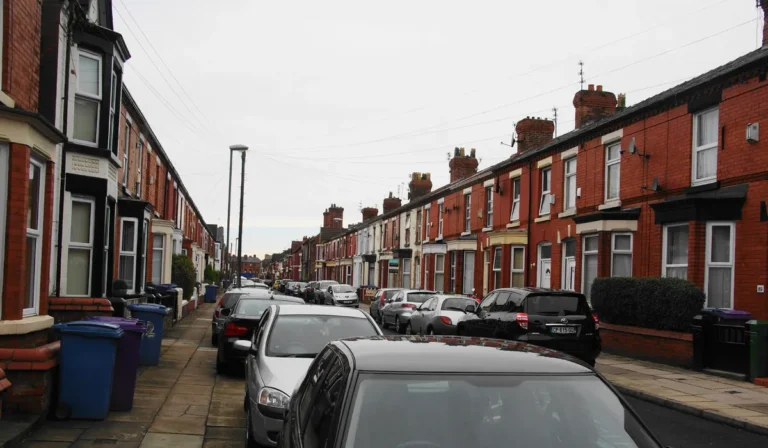
Much of the housing in Liverpool and Merseyside has older pitched roofs. Victorian and Edwardian terraces often have slate roofs laid without felt, and many interwar semis have original timbers and roof coverings. These are exactly the kinds of roofs where spray foam causes the most concern, because they were designed to breathe and their timbers are already decades old.
That does not mean every sprayed roof in the city is failing. It means each one needs looking at properly. Our chartered surveyors inspect roof spaces on every Level 3 survey and will tell you clearly when spray foam is present, what we can see, and when a spray foam insulation survey by a registered assessor is the right next step.
Spray Foam Insulation Survey FAQs
What is a spray foam insulation survey?
A spray foam insulation survey is a specialist inspection of a roof treated with spray foam. The surveyor checks how the foam was installed, makes small test openings to look at the timbers behind it, takes moisture readings and reports on whether the foam can stay, needs repair or should be removed.
Will a lender accept a house with spray foam insulation?
It depends on the lender. Some will not lend where spray foam is present, others assess each case and take the valuer report and any spray foam insulation survey into account. Equity release lenders are usually the most cautious. Check your lender policy before you commit.
How much does spray foam removal cost?
Published 2026 guides put removal at about 40 to 80 pounds per square metre, or roughly 1,800 to 3,500 pounds for open cell foam and 2,500 to 5,000 pounds for closed cell foam in a typical three bed loft. New insulation and any timber repairs are extra.
Who can carry out a spray foam survey?
Many lenders ask for a spray foam insulation survey that follows the Property Care Association Sprayed Foam Inspection Protocol, carried out by a surveyor on the PCA register. Check the register yourself before you book.
Does all spray foam need to be removed?
No. If the foam suits the roof, was installed correctly and the timbers are dry and sound, it may be able to stay. Removal is usually recommended where the installation is unsuitable or has already caused damage, or where a lender will not accept it.
Should I get a building survey if the house has spray foam?
Yes. A Level 3 building survey includes the roof space and gives you a wider picture of the condition of the home. If spray foam is present, the surveyor can advise whether a specialist spray foam insulation survey is needed before you exchange.
Book a Survey With a Chartered Surveyor
ASG Consulting is regulated by RICS. Our chartered surveyors carry out Level 2 and Level 3 home surveys across Liverpool, Merseyside and the North West, inspect the roof space as part of every Level 3 survey and explain clearly what spray foam or any other roof issue means for your purchase. To book, visit our residential building surveying page.
About the Author
Harry is a property content writer with 3 years of experience writing about building surveying, commercial property and property compliance in the UK. He writes the guides at ASG Consulting for buyers, tenants and landlords, turning survey practice into clear, practical advice.
Reviewed by Dave MacMillan MRICS, chartered surveyor at ASG Consulting. Dave checks the technical content of our guides against current RICS practice before they are published.
Featured photo of spray foam insulation being applied by Jeskola26 via Wikimedia Commons, licence CC0, cropped.