Lath and plaster is the traditional way walls and ceilings were finished before plasterboard. Thin timber strips called laths were nailed to joists or studs, then covered with two or three coats of lime plaster. It is common in pre-1930s homes. Sound lath and plaster can last for generations, but cracks, bulges and sagging ceilings need checking.
If you are buying a Victorian or Edwardian house, there is a good chance some of the ceilings and internal walls are finished this way. That is not a problem in itself. Original ceilings add character, cut noise between floors and can usually be repaired. This guide explains how lath and plaster works, the 6 warning signs to look for, when to repair or replace it and what a survey will tell you.
Contents
What Is Lath and Plaster?
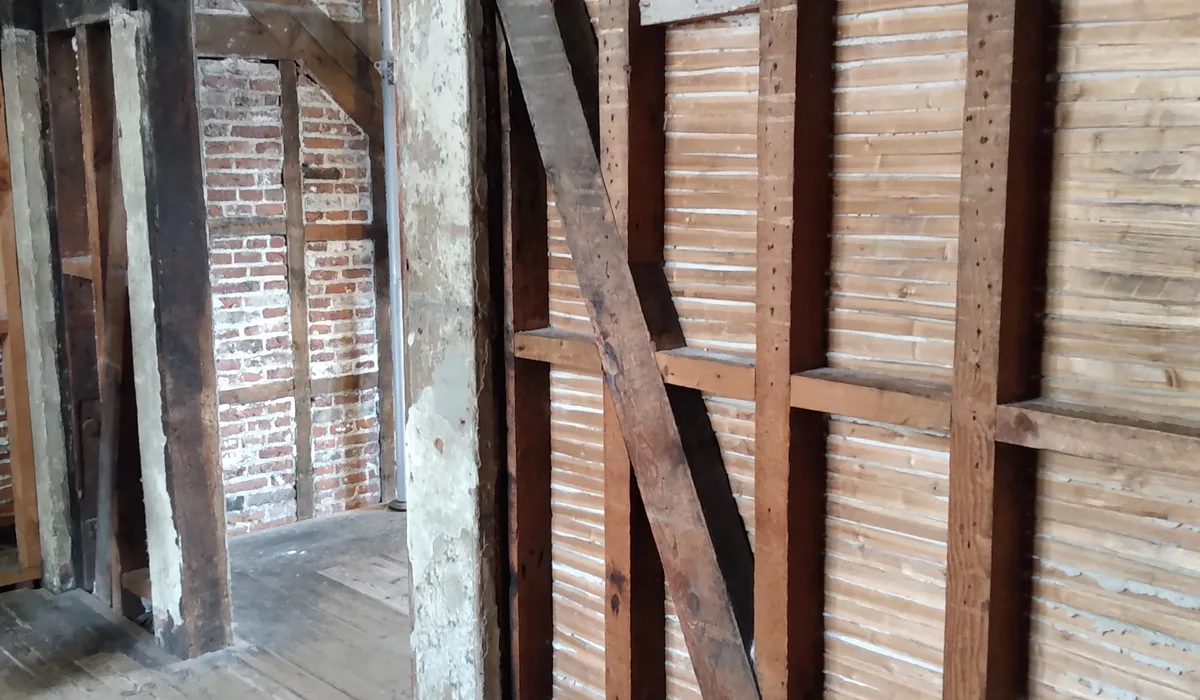
Lath and plaster is a building method, not a single material. Narrow timber laths were nailed across the ceiling joists or wall studs with small gaps between them. Wet lime plaster, often mixed with animal hair for strength, was pushed on so it squeezed through the gaps and curled over the back of the laths.
Those curled lumps of plaster are called nibs or lugs. Once they set, they lock the plaster onto the laths. Two or three coats built up the surface, and a fine finishing coat made it smooth enough to paint.
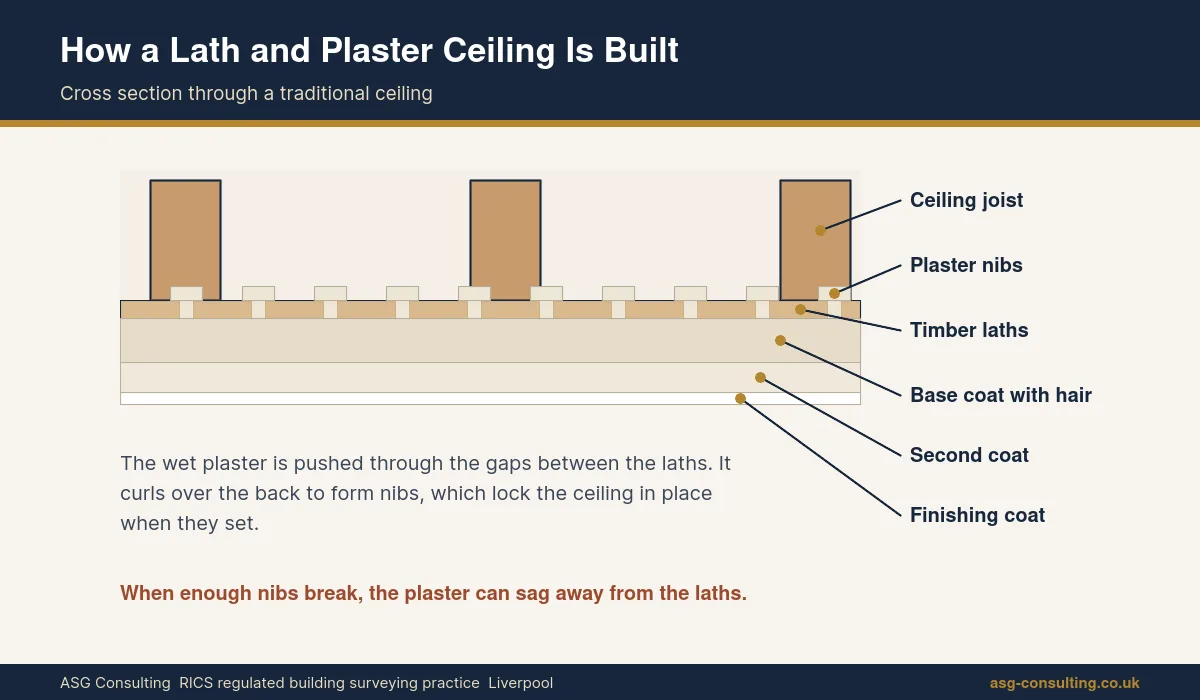
The Building Conservation Directory guide to repairing lime plaster ceilings describes a first coat of lime and sand with animal hair added for strength, a second floating coat and a thin finishing coat on top.
How Can You Tell If a House Has Lath and Plaster?
Age is the first clue. Most houses built before the 1930s were finished this way, and plasterboard took over after that. A few simple checks help on a viewing.
- Knock gently. Sound plaster gives a dull, solid knock. A hollow, drummy sound can mean the plaster has come away from the laths.
- Look at the surface. Old ceilings are rarely dead flat. Gentle waves are normal.
- Check the loft. From above, you may see laths with plaster nibs between them, under the insulation.
- Look at the edges. Ornate cornices and ceiling roses usually sit on original plaster.
What Are the 6 Warning Signs of Failing Lath and Plaster?
Hairline cracks are normal in old plaster. These six signs are worth reporting to a surveyor.
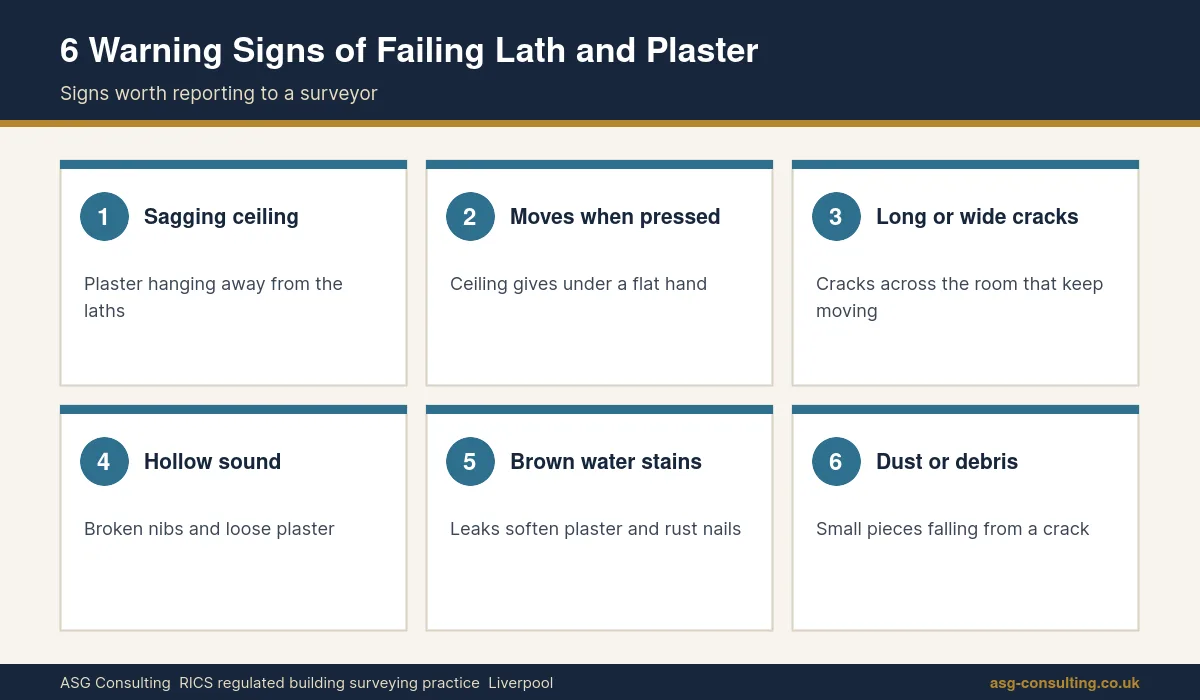
- A sagging or bulging ceiling. The plaster is hanging away from the laths.
- Movement when pressed. The ceiling gives slightly when pushed gently with a flat hand.
- Long or wide cracks. Cracks that run across the room or open and close.
- Hollow sound when tapped. The nibs have broken and the plaster is loose.
- Brown water stains. A leak from a bathroom, tank or roof may have softened the plaster and rusted the nails.
- Dust or debris on the floor. Small pieces falling from a crack are a sign the plaster is breaking up.
Why Do Lath and Plaster Ceilings Fail?
Lime plaster is quite brittle once it has set. Over a century or more, a few common things break the nibs that hold it in place.
- Water. A leaking bath, toilet or roof soaks the plaster and laths and rusts the nails.
- Vibration. Heavy footfall, nearby building work or hammering on the floor above.
- Extra weight. Heavy items stored in the loft directly on the ceiling joists.
- Movement in the structure. Sagging joists, a sagging roof or settlement in the walls.
- Past work. Cables, pipes and downlights cut through laths without support.
- Woodworm or rot. Decay in the laths or the joists above.
Is a Sagging Lath and Plaster Ceiling Dangerous?
It can be. An old plaster ceiling is heavy, and when enough nibs fail, large sections can drop with little warning. A ceiling that bulges, moves when pushed or sheds debris should be treated as a safety issue.
Keep people out of the room below until it has been checked. A plasterer can prop the area temporarily. Then the cause, such as a leak or overloaded loft, needs fixing before any repair.
Should You Repair or Replace Lath and Plaster?
Often the best answer is to repair. Small loose areas can be screwed back to the joists with plaster washers, and missing sections can be patched with lime plaster. This keeps original features and avoids the mess of a full strip out. Conservation plasterers often hang loose areas from the joists with stainless steel washers and straps, which is light and needs little alteration.
Replacement makes more sense when large areas are loose, the laths are rotten or the ceiling has already partly collapsed. Plasterboard is lighter and quicker, but it loses some sound insulation and any original cornice may need careful work.
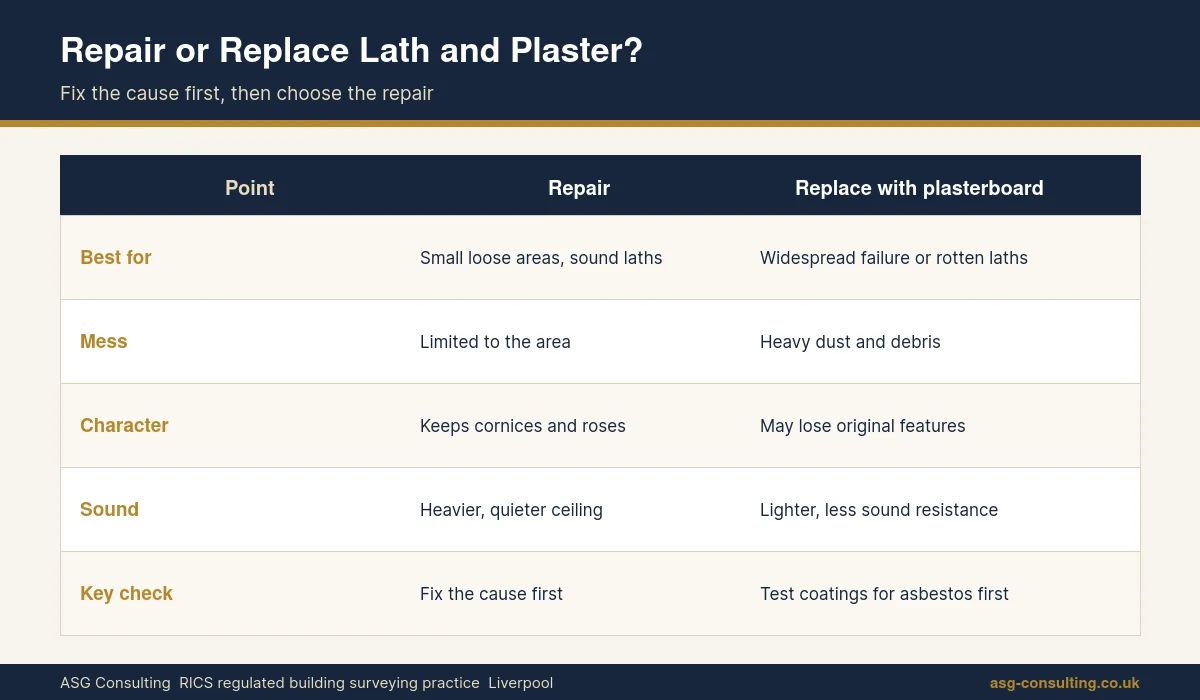
| Point | Repair | Replace with plasterboard |
|---|---|---|
| Best for | Small loose areas, sound laths | Widespread failure or rotten laths |
| Mess | Limited to the area | Heavy dust and debris |
| Character | Keeps cornices and roses | May lose original features |
| Sound | Keeps heavier, quieter ceiling | Lighter, less sound resistance |
| Key check | Fix the cause first | Test coatings for asbestos first |
Overboarding, where plasterboard is fixed over the old ceiling, is a common shortcut. An old lime ceiling is already much heavier than plasterboard, so adding a new layer increases the load on the joists. The joists should be checked and the fixings must be long enough to reach them.
Can Lath and Plaster Hide Asbestos?
Traditional lime lath and plaster is not usually the concern. The bigger risk is in what was put on top. Many old ceilings were covered with textured coatings such as Artex in the later 20th century, and some of those contained asbestos.
The HSE page on where asbestos is found lists textured decorative coatings on walls and ceilings. You cannot tell by looking, so have a textured ceiling tested before sanding, drilling or removing it. The guide to buying a house with asbestos explains what to ask the seller.
Does Lath and Plaster Cause Damp Problems?
Not on its own. Lime plaster is breathable, which means moisture can move in and out of it. Problems start when modern gypsum plaster, cement patches or vinyl paints seal the surface and trap moisture against older walls.
Brown patches on old plaster walls next to external walls, chimneys or windows often point to water getting in from outside. The guide to penetrating damp explains how to trace the source before redecorating.
Lath and Plaster in Liverpool Homes
Liverpool has thousands of homes with original lath and plaster. Victorian terraces in Toxteth, Kensington, Wavertree, Anfield and Walton often have original plaster ceilings throughout, with timber stud partitions between rooms. The large Georgian and early Victorian houses around Rodney Street, Canning Street and the Georgian Quarter often have deep cornices and ceiling roses that are well worth saving.
Many of these homes have had bathrooms moved upstairs, lofts boarded for storage and wiring run through the ceilings over the years. Those changes are behind a lot of the cracked and sagging ceilings found on inspections. The guide to a Victorian house survey covers the other issues that often go with older Liverpool homes.
Does a Home Survey Check Lath and Plaster?
Yes. The surveyor looks at ceilings and walls in each room, notes cracks, bulges, staining and hollow areas, and checks the loft where access is safe. The report rates the condition and says whether a plasterer or further investigation is needed.
A surveyor will not cut into ceilings or lift fixed coverings, so hidden areas may be noted as not inspected. For a typical older house in reasonable condition, the RICS HomeBuyer Survey in Liverpool is often enough. Larger, altered or poorer condition houses usually suit a Level 3 Building Survey.
Lath and Plaster FAQs
How do I know if my ceiling is lath and plaster?
Most pre-1930s houses have it. Look from the loft for timber laths with plaster nibs between them, or knock gently for a solid, dull sound.
Is lath and plaster better than plasterboard?
It is heavier and gives better sound insulation, and it keeps original features. Plasterboard is lighter, cheaper and faster to fit.
Can you screw into lath and plaster?
Yes, but fix into the joists or studs behind for anything heavy. Laths alone will not hold much weight.
Why is my lath and plaster ceiling cracking?
Usually because the plaster nibs have broken through vibration, water, movement or extra weight in the loft above.
Can you plasterboard over lath and plaster?
Yes, but the joists should be checked for the extra weight, and the screws must reach the joists through the old ceiling.
Does lath and plaster contain asbestos?
Not usually. The risk is textured coatings such as Artex applied later, which should be tested before any work.
Talk to a Surveyor at ASG Consulting
ASG Consulting is an RICS regulated building surveying practice based in Liverpool. It carries out RICS Level 2 HomeBuyer Surveys and Level 3 Building Surveys across Liverpool, Merseyside, the Wirral and the wider North West, with reports usually delivered within 3 to 5 working days of the inspection. Fees are fixed and given on request, usually confirmed within one working day. Call 0151 315 0626 to request a quote or to talk through which survey suits the property.
About the Author
Dave MacMillan is the lead surveyor at ASG Consulting, an RICS regulated building surveying practice at 54 St James Street, Liverpool. He has 8 years of experience in building surveying and inspects homes for buyers across Liverpool, Merseyside and the North West.
Last updated 28 November 2026