Buying a house with sash windows is usually a good sign of original character, but check the condition before you commit. Look for rot in the sills and bottom rails, broken cords, rattling, draughts and painted shut sashes. Most traditional sash windows can be repaired and upgraded, though listed buildings and some conservation areas limit replacement.
Sash windows are one of the features that make Georgian, Victorian and Edwardian homes so appealing. They are also one of the most common items in a survey report, because timber windows need regular care and many have been neglected or painted shut over the years. This guide shows you 6 warning signs to look for, explains repair against replacement, and sets out what to check before buying a house with sash windows in Liverpool and the North West.
Contents
What Is a Sash Window?
A sash window has one or more panels, called sashes, that slide up and down within a frame. In a traditional box sash window, each sash is balanced by hidden cast iron or lead weights on cords that run over pulleys inside the frame. Later designs use springs instead of weights.
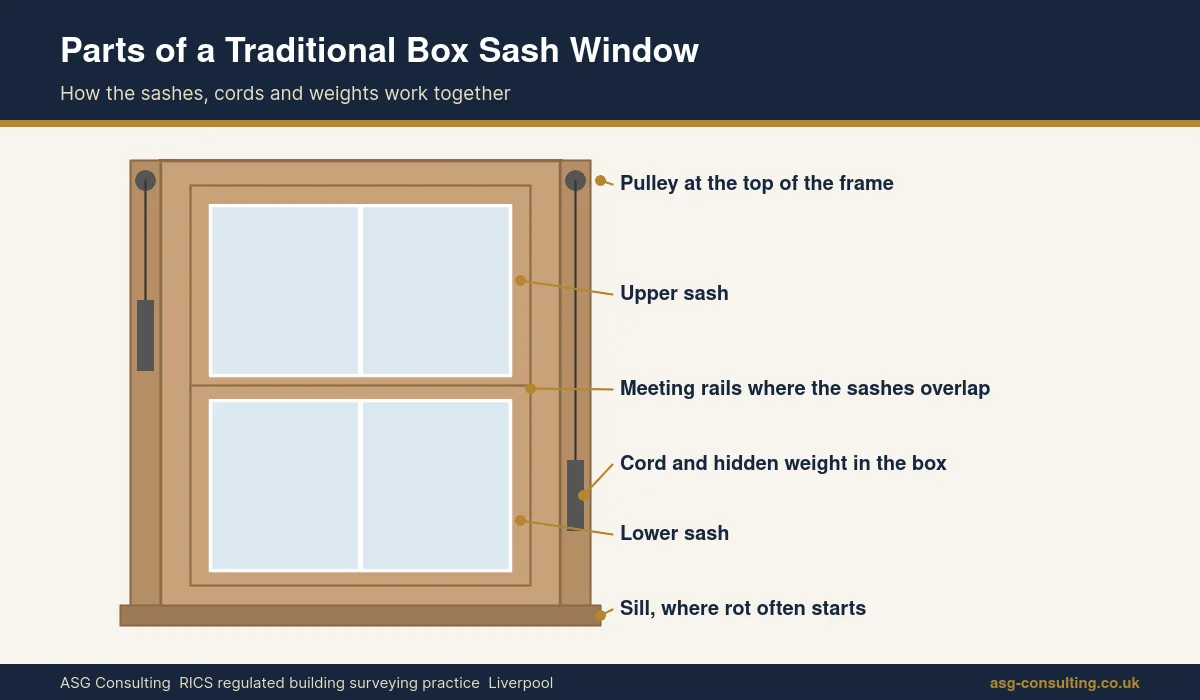
Most sash windows in older UK homes are timber. They were designed to be repaired, with parts that can be replaced individually, which is why many survive after more than a century of use.
What Are the 6 Warning Signs of Sash Window Problems?
Look for these 6 warning signs on a viewing. One or two are normal in an older home, but several together usually mean repair work is needed soon.
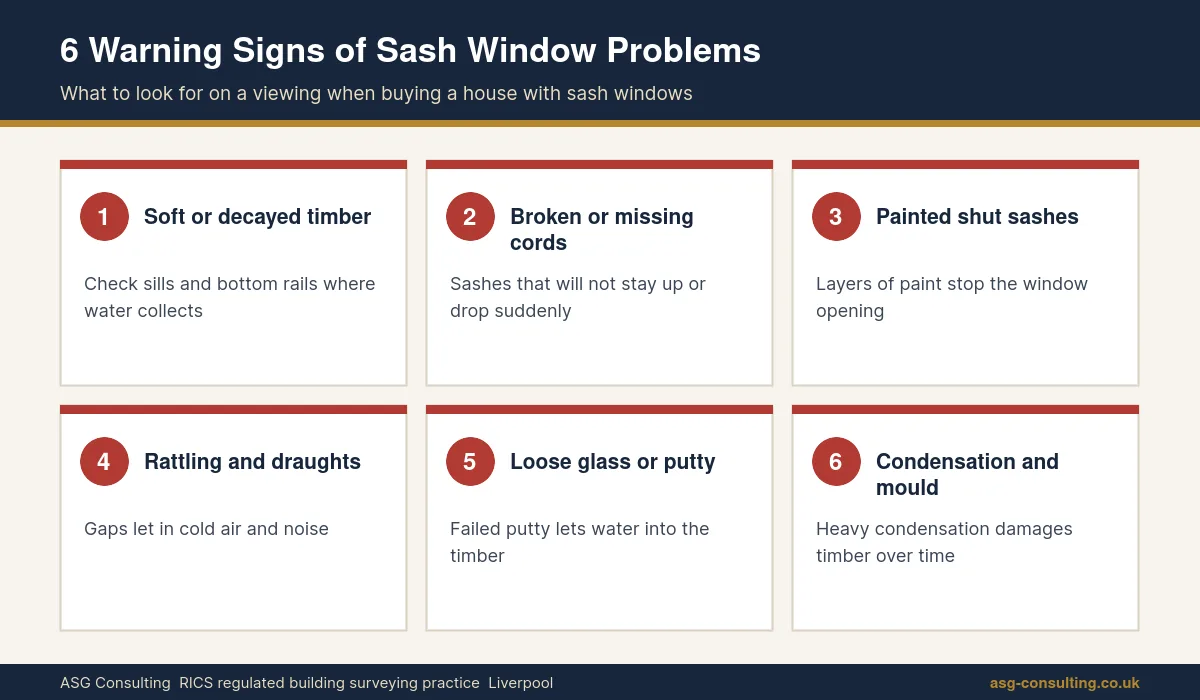
- Soft or decayed timber. Check the sills and bottom rails, where water collects. Paint that is flaking, cracked or bubbling is often a sign of rot underneath.
- Broken or missing cords. A sash that will not stay up, or drops when released, usually has a broken cord.
- Painted shut sashes. Many sashes have been painted over so often that they no longer open, which can affect ventilation and fire escape.
- Rattling and draughts. Gaps between the sash and the frame let in cold air and noise, especially on windy days.
- Cracked or loose glass and putty. Failed putty lets water into the timber and can lead to decay.
- Condensation and mould. Heavy condensation on single glazing can damage timber and decoration over time.
Can Sash Windows Be Repaired?
Usually, yes. Historic England guidance on modifying historic windows says most traditional windows can be repaired, and encourages owners to keep significant historic windows rather than replace them.
Typical repairs include splicing in new timber where rot is limited, replacing cords and pulleys, freeing painted shut sashes, renewing the putty around the glass and fitting new beads. A good joiner can often bring old sashes back into smooth working order for much less disruption than replacement.
Repair, Upgrade or Replace?
The right choice depends on the condition of the windows and the status of the building. This table sets out the usual options.
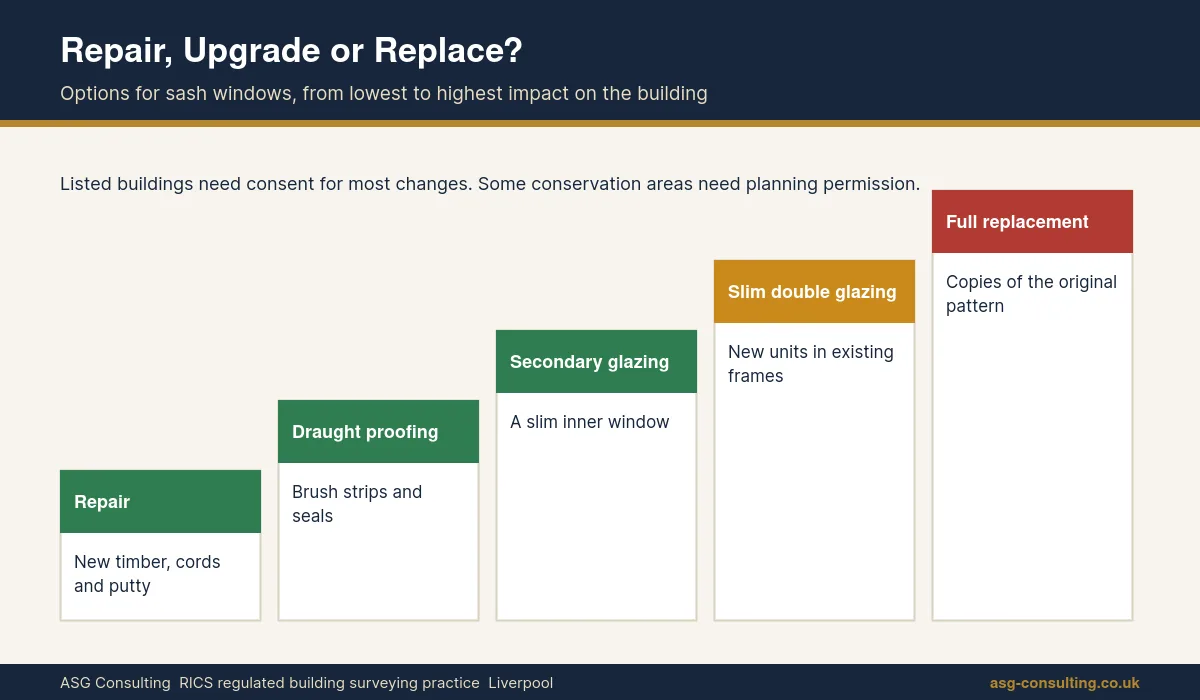
| Option | What it involves | Usually suits |
|---|---|---|
| Repair | New timber where decayed, new cords, freeing sashes, new putty | Windows in fair condition, listed buildings and conservation areas |
| Draught proofing | Brush strips and seals fitted into the frame and sashes | Most sash windows, a simple low cost improvement |
| Secondary glazing | A slim second window fitted on the inside | Homes where noise or heat loss is a concern, including many listed buildings |
| Slim double glazed sashes | New sashes with thin double glazed units in existing frames | Unlisted homes, or listed homes where consent is granted |
| Full replacement | New windows to match the original pattern | Windows beyond repair, subject to any consent needed |
Historic England describes draught proofing as giving the biggest energy saving and conservation benefits at the lowest cost. It also says secondary glazing can be an efficient way to reduce heat loss and noise.
Do You Need Permission to Replace Sash Windows?
It depends on the building. The Planning Portal guidance on doors and windows says replacement windows of a similar appearance usually do not need planning permission, but there are important exceptions.
- Listed buildings. Listed building consent is needed for significant works, which usually includes replacing or altering windows.
- Conservation areas. Some councils use Article 4 directions, which remove permitted development rights and can mean planning permission is needed to change windows.
- Flats. Leaseholders may need permission from the freeholder or management company.
Replacement windows also need to meet Building Regulations. If windows have been replaced in the past, ask for a FENSA or similar certificate, as explained in the guide to a house with no FENSA certificate.
What If the Sash Windows Have Been Replaced With uPVC?
Many older homes have had original sashes replaced with uPVC windows. These can look quite different from the originals, with thicker frames and different opening styles. In a conservation area, this may affect the character of the street and, where an Article 4 direction applies, may have needed permission.
On a viewing, compare the windows with neighbouring houses. If the front windows have been changed recently, ask when, by whom and whether any consent was needed. The guide to buying a house in a conservation area explains how these controls work.
What Does a Surveyor Check on Sash Windows?
A surveyor looks at the windows from inside and out, as far as is safe and practical. The checks usually include
- the condition of the sills, frames and bottom rails
- whether a sample of sashes open and close
- signs of rot, damp or failed paint and putty
- the condition of window heads and lintels above
- evidence of past repairs or replacements
- safety issues, such as low glazing or windows that cannot be opened for escape
For a period home with original windows, a Level 3 Building Survey gives the most detailed comment, as described on the residential building surveying page.
Are Sash Windows Energy Efficient?
Single glazed sash windows lose more heat than modern double glazing, but much of that loss comes from draughts rather than the glass itself. Draught proofing, heavy curtains, shutters and secondary glazing can make a large difference while keeping the original windows.
If you are planning energy improvements, look at the whole house rather than the windows alone. Roof and floor insulation, heating controls and draught proofing elsewhere may give better value.
Sash Windows in Liverpool Homes
Liverpool has a large stock of homes with original or replica sash windows. The Georgian Quarter around Rodney Street, Canning Street and Falkner Square has some of the finest examples, many in listed buildings. Victorian villas around Sefton Park and Princes Park, and terraces in Toxteth, Wavertree, Kensington and Everton, often have large timber sashes on the front elevation.
Coastal areas such as Crosby, Waterloo, New Brighton and Hoylake face strong wind and salt air, which can speed up paint failure and timber decay on exposed elevations. Some streets in Liverpool and across Merseyside are in conservation areas, where changes to windows may be controlled. Check with the council before you plan any replacement. The guide to a Victorian house survey covers other features to check in homes from that period.
Should Sash Windows Affect Your Offer?
Windows in poor condition can be a significant cost, especially where there are many of them or where specialist joinery is needed for a listed building. If the survey finds widespread decay, ask a specialist joiner for a quote before you exchange and use it in any negotiation.
Well maintained original sashes, on the other hand, are part of what makes a period home valuable. Many buyers are happy to pay for character, provided the windows work and have been looked after.
Buying a House With Sash Windows FAQs
Are sash windows a problem when buying a house?
Not usually. Check for rot, broken cords and draughts, and budget for repairs if several windows need work.
Can old sash windows be repaired?
Yes. Historic England says most traditional windows can be repaired, often by splicing in new timber and replacing cords.
Do I need permission to replace sash windows?
Listed buildings need consent, and some conservation areas require planning permission through Article 4 directions.
Can sash windows be double glazed?
Often, yes. Slim double glazed units can be fitted in many unlisted homes. Listed buildings need consent first.
How can I make sash windows warmer?
Draught proofing, secondary glazing, shutters and heavy curtains can reduce heat loss and noise.
Does a house survey check sash windows?
Yes. A surveyor checks the visible condition and opens a sample of windows where safe to do so.
Talk to a Surveyor at ASG Consulting
ASG Consulting is an RICS regulated building surveying practice based in Liverpool. It carries out RICS Level 2 HomeBuyer Surveys and Level 3 Building Surveys across Liverpool, Merseyside, the Wirral and the wider North West, with reports usually delivered within 3 to 5 working days of the inspection. Fees are fixed and given on request, usually confirmed within one working day. Call 0151 315 0626 to request a quote or to talk through which survey suits the property.
About the Author
Dave MacMillan is the lead surveyor at ASG Consulting, an RICS regulated building surveying practice at 54 St James Street, Liverpool. He has 8 years of experience in building surveying and inspects homes for buyers across Liverpool, Merseyside and the North West.
Last updated 25 November 2026