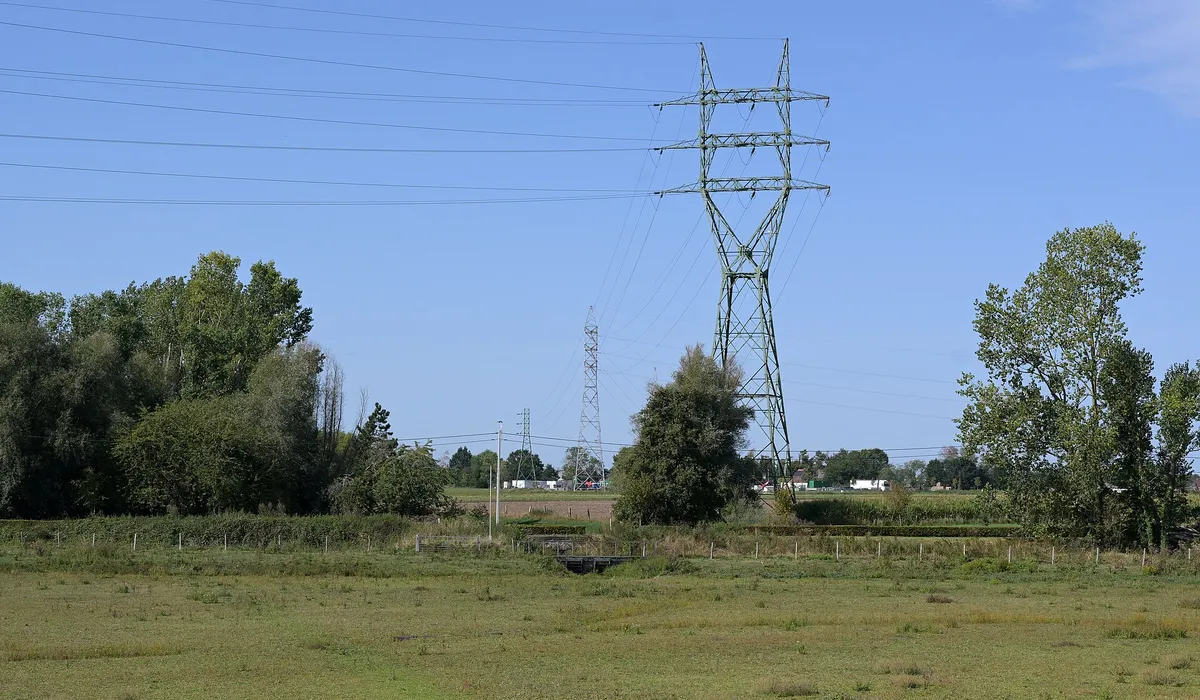
Buying a house near pylons is legal and common, and there is no UK rule setting a minimum safe distance. The main checks are the line voltage, how close the wires run to the house and garden, any wayleave or easement in the deeds, noise in damp weather and how lenders and future buyers may view the location.
Pylons often put buyers off, which can mean better value for those who are comfortable with them. Others worry about health, resale or what they can build in the garden. This guide sets out what the official advice says, gives you 7 safe checks to run before you commit, and explains how a survey fits in when buying a house near pylons in Liverpool or elsewhere in the North West.
Contents
What Does the Official Health Advice Say?
The UK Health Security Agency guidance on electric and magnetic fields says exposures in homes are usually much lower than the international guideline levels. It describes any health risk from living near power lines as small, and does not recommend a minimum distance between homes and power lines.
Electric fields are screened very effectively by walls and roofs, so they generally do not reach indoors. Magnetic fields are not easily shielded, which is why homes very close to large lines tend to have higher than average readings. Research has suggested a possible weak statistical link with childhood leukaemia, but no cause has been established. If this is a concern for your family, the practical step is distance, especially for bedrooms.
How Close Is Too Close to a Pylon?
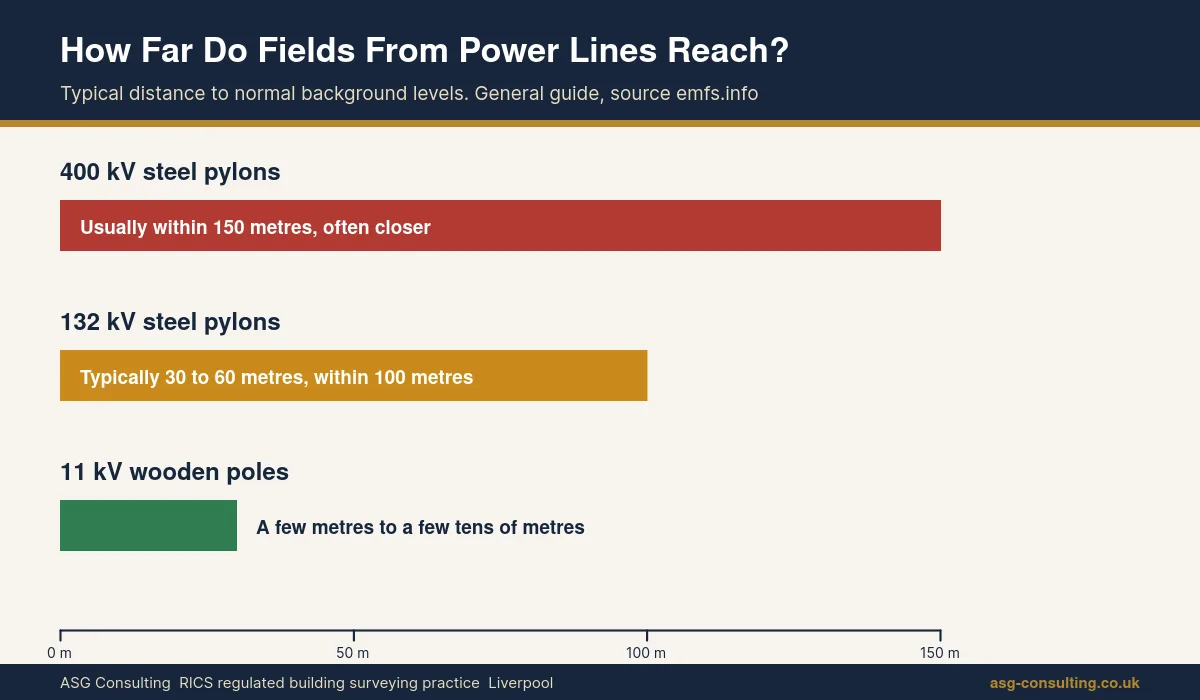
There is no legal limit on how close a home can be to an overhead line. What matters is the type of line. Magnetic fields fall away quickly with distance, and industry guidance on living near an overhead line gives typical distances at which fields fall to normal background levels.
| Type of line | What it looks like | Typical distance to background field levels |
|---|---|---|
| 400 kV transmission line | Large steel pylons, the tallest lines in the country | Usually within 150 metres, often closer |
| 132 kV line | Smaller steel pylons | Usually within 100 metres, typically 30 to 60 metres |
| 11 kV local line | Wooden poles | A few metres to a few tens of metres |
These are general figures only. Fields also depend on the current flowing in the line at the time, which changes through the day and year.
What Are the 7 Safe Checks When Buying a House Near Pylons?
Work through these 7 safe checks before you exchange contracts. They cover the location, the legal position and the practical side of living near a line.
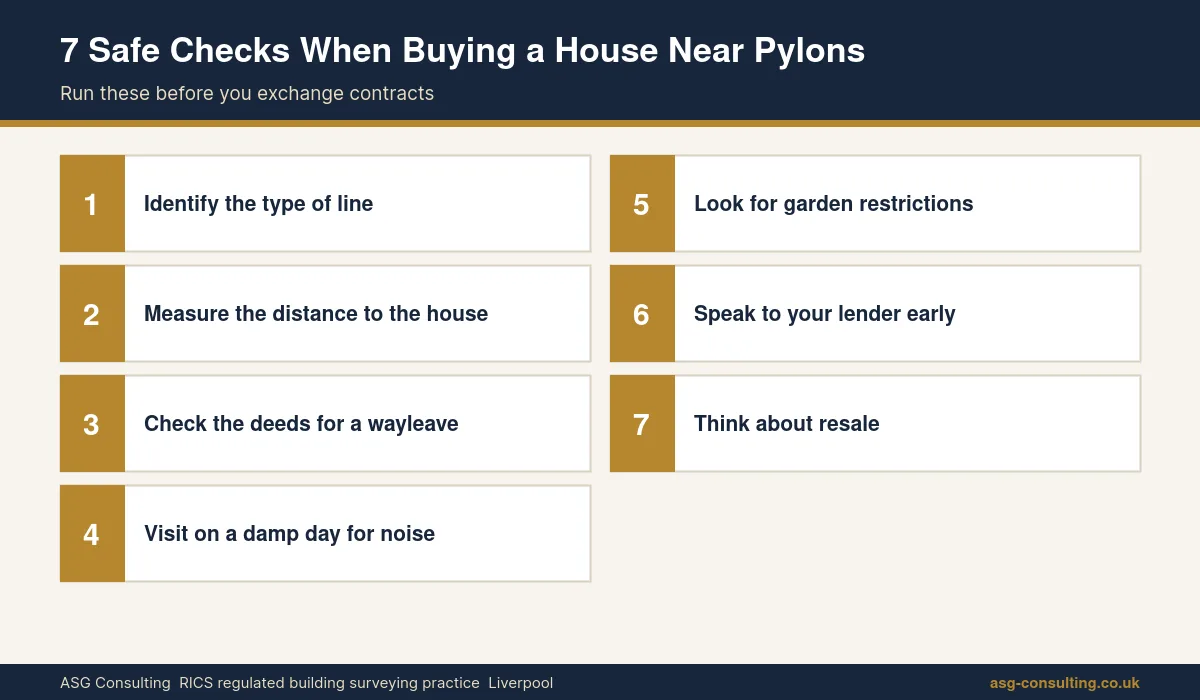
- Identify the line. Note whether it is a large steel pylon line, a smaller pylon line or wooden poles, and which way it runs across the land.
- Measure the distance. Use an online map to measure from the nearest wire to the house, the garden and the bedrooms.
- Check the deeds. Ask your solicitor whether there is a wayleave or easement over the property, and what it allows.
- Visit in damp weather. Overhead lines can crackle or hum in rain, fog or mist, so listen on a wet day if you can.
- Look at the garden. Note any restrictions on tall trees, outbuildings or extensions under or near the wires.
- Speak to your lender early. Most lenders will lend, but some may take the location into account in the valuation.
- Think about resale. Some buyers avoid pylons, so the property may take longer to sell in future.
What Is a Wayleave or Easement?
Network operators need permission to keep lines and equipment on private land. This is usually either a wayleave or an easement, and the difference matters when you are buying.
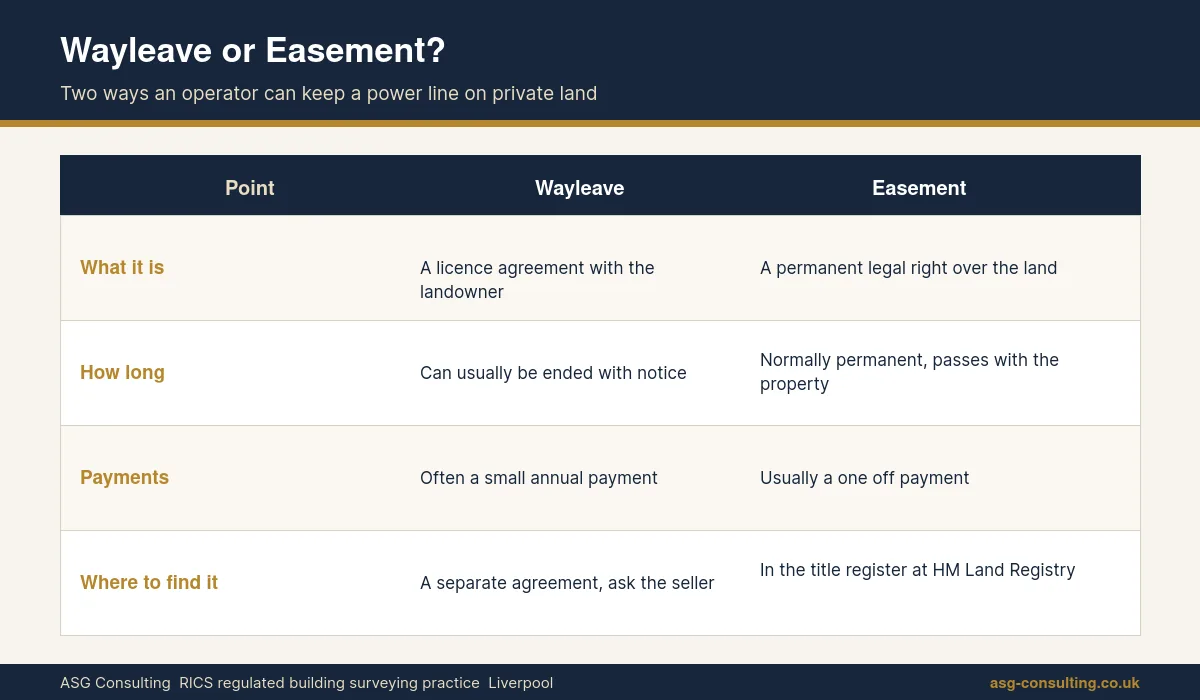
| Point | Wayleave | Easement |
|---|---|---|
| What it is | A licence agreement between the operator and the landowner | A permanent legal right registered against the land |
| How long it lasts | Can usually be ended with notice, although the operator may then seek other rights | Normally permanent and passes with the property |
| Payments | Often a small annual payment to the landowner | Usually a one off payment when it was granted |
| Where you find it | In a separate agreement, which your solicitor should ask for | In the title register at HM Land Registry |
Both usually give the operator rights of access for maintenance, and may restrict building or planting near the line.
Will a Pylon Affect Your Mortgage or Insurance?
The same industry guidance says there is no UK policy against mortgages on homes near overhead lines. In practice, the valuer will consider the location and any effect on value, and a small number of lenders may be more cautious if a line passes directly over the house or garden.
Home insurance is not usually affected by a nearby line. Tell your insurer about anything unusual, such as equipment on your land, and keep any wayleave paperwork with your property documents.
Does a Pylon Affect House Value?
Often, yes. Homes very close to large pylons commonly sell for less than similar homes nearby, because some buyers will not consider them. The effect tends to be smaller for wooden pole lines and for homes where the line is further away or screened by trees.
For buyers, that discount can be a benefit, as long as you are comfortable with the location and accept that selling could take longer. Ask the agent how long similar homes on the street took to sell, and compare prices with nearby streets away from the line.
What About Noise From Overhead Lines?
High voltage lines can make a crackling or buzzing sound, especially in damp weather when moisture on the wires increases a small electrical discharge. Some people barely notice it, while others find it intrusive at night.
Visit on a wet or misty day if you can, and stand in the garden and the rear bedrooms. Ask neighbours how often they hear the line and whether it bothers them.
Can You Build an Extension Near a Pylon?
Sometimes, but check early. A wayleave or easement may restrict building or tall planting near the line, and the operator will need to be consulted about safe clearances for anything built close to the wires. Scaffolding, cranes and tall ladders near overhead lines carry a serious risk of electric shock, so builders must plan work carefully.
If you are buying with a plan to extend or build a garden room, ask the operator for advice before you exchange, and check whether any planning conditions or deeds restrictions apply.
What About Substations?
Small local substations, often inside a brick building or green metal enclosure, are common in residential streets. Fields from these usually fall to background levels within a few metres of the enclosure. Larger substations can produce some noise, such as a low hum from transformers, which is worth checking on a viewing.
Pylons and Power Lines Around Liverpool and Merseyside
High voltage lines cross parts of the Liverpool city region, mainly around the edges of the built up area and through more open land towards Knowsley, Halton, St Helens and Warrington. Smaller wooden pole lines are more common in rural parts of the Wirral, Sefton and West Lancashire.
Some housing estates built from the 1960s onwards sit close to these routes, with lines running across playing fields or along the backs of gardens. Many inner city terraces in areas such as Anfield, Walton and Wavertree are well away from large lines, but may be near small local substations. When you are viewing, look up and around, and check an online map for lines that are not obvious from the street.
Does a Home Survey Check Pylons?
A building surveyor does not measure electric or magnetic fields. A survey reports on the condition of the property and will note visible features nearby, such as overhead lines, substations or equipment on the land, and may flag them for your solicitor or valuer.
For a conventional home in reasonable condition, a RICS HomeBuyer Survey in Liverpool is often suitable. For older or altered homes, the Level 3 Building Survey covered on the residential building surveying page gives more detail. It is also worth understanding the difference between a mortgage valuation and a survey, as the lender valuation is not a check on condition.
Is Buying Near Pylons Similar to Buying Near a Railway?
In some ways, yes. Both can lower prices, both raise questions about noise and resale, and both depend heavily on how close the home is and how you personally feel about it. The guide to buying a house near a railway line uses a similar approach of visiting at different times and checking the deeds.
Buying a House Near Pylons FAQs
Is it safe to live near pylons?
UK health advice says home exposures are usually well below guideline levels and any risk is small. There is no recommended minimum distance.
How far should a house be from a pylon?
There is no legal minimum. Fields from large 400 kV lines usually fall to background levels within 150 metres, often closer.
Can I get a mortgage on a house near pylons?
Usually, yes. There is no UK policy against lending near overhead lines, although the valuer will consider any effect on value.
Do pylons make a noise?
High voltage lines can crackle or buzz, especially in damp weather. Visit on a wet day to judge it.
What is a wayleave on a house?
A wayleave is an agreement allowing an operator to keep a line or equipment on the land, often with a small annual payment.
Does a survey check power lines?
A surveyor notes visible lines and equipment near the property but does not measure electric or magnetic fields.
Talk to a Surveyor at ASG Consulting
ASG Consulting is an RICS regulated building surveying practice based in Liverpool. It carries out RICS Level 2 HomeBuyer Surveys and Level 3 Building Surveys across Liverpool, Merseyside, the Wirral and the wider North West, with reports usually delivered within 3 to 5 working days of the inspection. Fees are fixed and given on request, usually confirmed within one working day. Call 0151 315 0626 to request a quote or to talk through which survey suits the property.
About the Author
Dave MacMillan is the lead surveyor at ASG Consulting, an RICS regulated building surveying practice at 54 St James Street, Liverpool. He has 8 years of experience in building surveying and inspects homes for buyers across Liverpool, Merseyside and the North West.
Last updated 25 November 2026