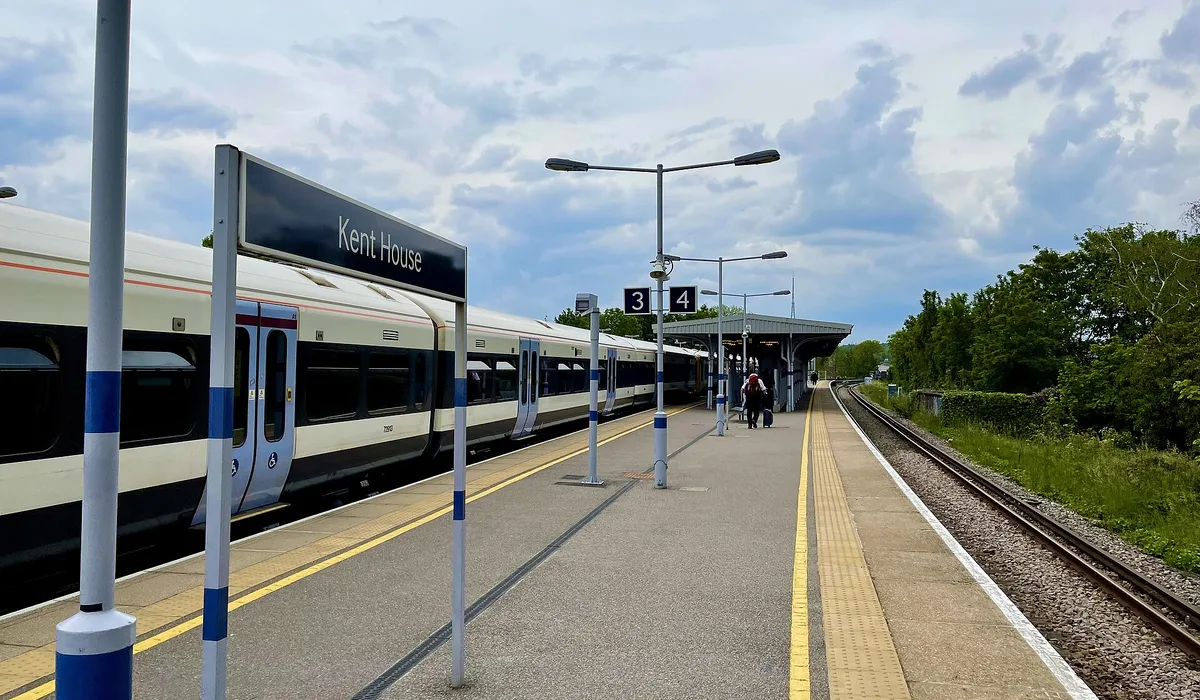
Buying a house near a railway line can mean a lower price and good transport links, but check noise, vibration, boundary responsibilities and any restrictions in the deeds first. Visit at different times, including early morning and late evening. Network Rail says train vibration is unlikely to damage nearby buildings, but a survey should still check for cracking.
Railway lines run through many of the most popular neighbourhoods in Liverpool and the North West, and a home backing onto the tracks often comes with a lower price tag. For some buyers that is a great trade off. For others, the noise of a freight train at five in the morning would be unbearable. This guide sets out the honest pros and cons, gives you a four visit plan for testing a property, and explains what to check in the deeds and on the building itself before buying a house near a railway line.
Is Buying Near a Railway Line a Good Idea?
It depends on the line, the house and you. A quiet branch line with a few passenger trains an hour is very different from a main line carrying freight through the night. Some people stop noticing trains within weeks, while others never get used to them.
This comparison sets out the main points on each side.
| Potential benefits | Potential drawbacks |
|---|---|
| Often a lower purchase price than similar homes nearby | Noise from trains, horns and maintenance work |
| Close to a station and quick commuting | Vibration that can be felt in some homes |
| No neighbours directly behind the garden | Restrictions on building work near the boundary |
| Railway land can feel green and open | Vegetation management and occasional access for works |
| Less competition from other buyers | May take longer to sell in future |
Who Owns the Railway Next to the House?
In most cases the railway is owned by Network Rail, which explains in its guidance on buying property next to the railway that it owns most of the railway lines in Britain. Some lines belong to other organisations, so check HM Land Registry records if you are unsure.
Network Rail also points out that there is no official railway search. Your solicitor should still carry out the usual conveyancing searches and check the title deeds for any rights or restrictions linked to the railway.
How Should You Test the Noise and Vibration?
One daytime viewing will not tell you what it is like to live there. Use this four visit plan before you make or confirm an offer.
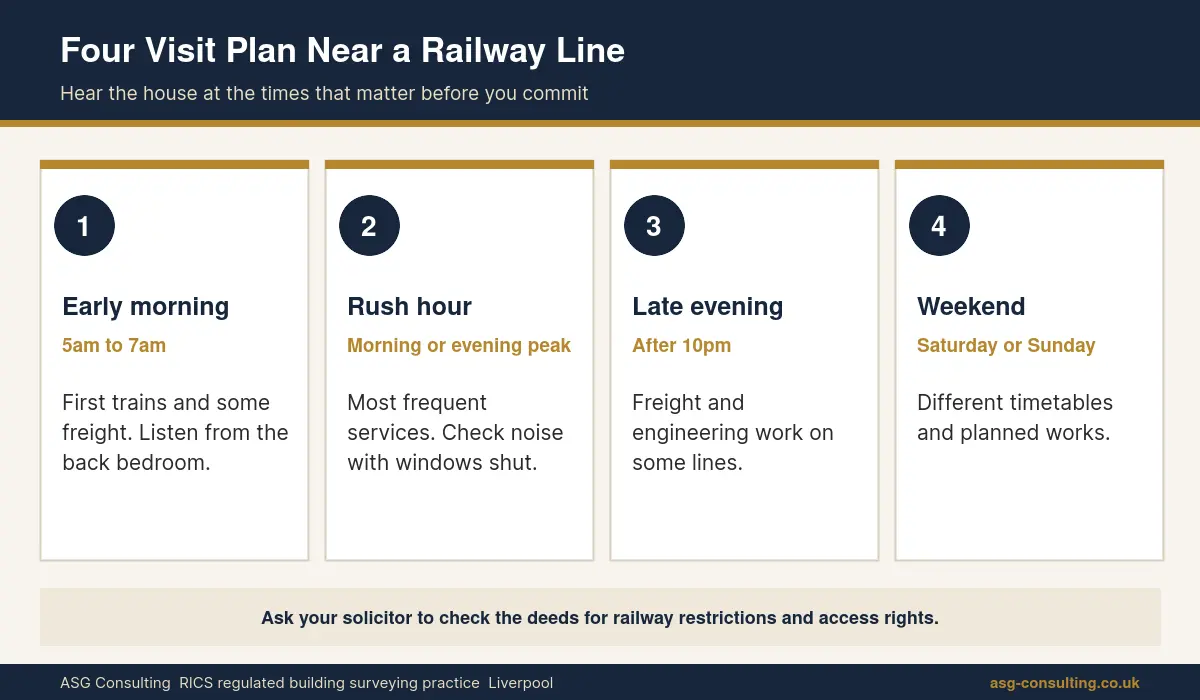
- Early morning. Visit between about 5am and 7am, when the first passenger trains and some freight services run. Listen from the bedroom at the back of the house.
- Rush hour. Visit during the morning or evening peak, when services are most frequent. Notice how often trains pass and how loud they are inside with the windows shut.
- Late evening. Visit after 10pm. Freight trains and engineering work often run at night on some lines.
- Weekend. Visit on a Saturday or Sunday, when timetables and engineering work can be different.
On each visit, stand in the garden and in the rooms nearest the line. Feel for vibration through the floor, listen for rattling windows and notice whether conversation is interrupted. Check the train timetable for the line and ask the seller and neighbours how often trains run at night.
Does Train Vibration Damage Houses?
Network Rail says on its page about noise and vibration that it is unlikely the condition of the tracks would cause vibrations that damage nearby buildings. If you believe train vibration is causing structural damage, it recommends getting a report from an independent surveyor first.
In practice, cracks in houses near railways are usually caused by the same things as cracks anywhere else, such as settlement, shrinkage, trees, drainage problems or older building methods. A survey will note any cracking and, where needed, recommend further investigation. The guide to cracks in walls explains how surveyors judge which cracks matter.
What Should You Check in the Deeds?
Network Rail notes that building restrictions near the railway are mostly set out in the title deeds, usually for safety reasons such as buried cables and electrified lines. Ask your solicitor to check
- any restrictions on building close to the railway boundary
- rights of access for the railway owner to carry out repairs or prevent accidents
- who is responsible for the boundary fence or wall
- any covenants about drainage, trees or structures near the line
- whether any part of the garden sits on an embankment or cutting
Network Rail also says homeowners have no legal right of access onto the railway. If you need to work on your side of the boundary, such as repairing a wall or extending the house, you may need its consent to enter railway land. Build that into any plans for extensions or garden work.
Who Maintains the Boundary Fence?
Responsibility for boundary walls and fences between homes and the railway can be unclear. Network Rail says it can sometimes be difficult to determine who is responsible and suggests contacting it first to clarify ownership.
On a viewing, look at the condition of the boundary. Leaning walls, gaps in fencing and damaged posts are worth noting, especially if children or pets will use the garden. The guide for a boundary dispute surveyor explains how unclear boundaries can be investigated.
What About Trees, Embankments and Drainage?
Railway land is often lined with trees and shrubs. These can provide privacy, but they can also cast shade, drop leaves and affect the ground near the house. Network Rail manages vegetation on its land, which can mean periods of cutting back or clearance.
If the house sits at the top or bottom of an embankment or cutting, look for signs of ground movement, such as leaning fences, cracked garden walls or uneven paths. Check where rainwater goes, as surface water can run off railway land onto lower gardens. A survey will comment on the visible condition of the house and nearby ground, and can recommend further checks if there are concerns.
What About Level Crossings and Train Horns?
Homes near a level crossing hear more than passing trains. Network Rail explains that vehicles crossing cause most of the noise at level crossings, along with the safety alarms, and that this noise can rarely be removed completely.
Train horns are a safety feature used to warn people on or near the tracks. Network Rail says that, apart from emergencies, drivers are told not to use horns at whistle boards between midnight and 6am. If the house is close to a whistle board or a foot crossing, expect horns during the day and evening.
How Does Engineering Work Affect Neighbours?
Railways need regular maintenance and upgrades, and some of that work happens at night or at weekends when fewer trains run. Neighbours may hear machinery, see floodlights or notice vehicles using access points near their homes.
Network Rail says it may need to enter land when repairs are required or to prevent an accident, and that it will always try to give advance notice, although short notice access can happen for serious safety issues. Check the deeds for any access rights over the garden, and look for gates or access points close to the house.
What About Electrified Lines?
Many lines in the Liverpool city region are electrified, either with a third rail beside the track or with overhead wires. Network Rail points to the dangers of buried cables, electrified tracks and high voltage overhead cables as one reason for building restrictions near the railway.
For families, the main point is safety. Make sure the boundary is secure, never let children or pets onto railway land and never attempt repairs from the railway side without permission. If the garden is next to an electrified line, take extra care with tall ladders, trees and any work near the boundary.
Will It Affect Your Mortgage or Insurance?
Being near a railway does not usually stop a lender from offering a mortgage, but the valuer will take the location into account when deciding what the property is worth. If the house is very close to the line, on a steep embankment or showing signs of movement, the valuer may ask for further reports.
Tell your insurer about any unusual features, such as a garden that runs down to a railway cutting. Keep copies of any surveys and correspondence about the boundary, as these can help if you ever need to make a claim.
What About Privacy and Light?
Passengers on passing trains may be able to see into gardens and rear windows, especially where the line runs on an embankment above the houses. On the other hand, a home with the railway behind it often has no neighbours directly overlooking it from the back.
Look at which rooms face the line and how much light reaches the garden, particularly if there are tall trees on railway land. Simple measures such as planting, screening or blinds can help, but check the deeds and any boundary rules before putting up new fences or structures. Remember that trees on railway land can be cut back or removed during vegetation work, so privacy that depends on them may change over time.
Will It Be Harder to Sell Later?
Possibly. Some buyers will be put off by the railway, which can mean a smaller pool of interested buyers when you come to sell. That is often reflected in a lower purchase price now, which may balance out over time.
Things that help a future sale include good sound insulation, well maintained boundaries, quality double or secondary glazing on rooms facing the line and a garden layout that makes the most of the space. Keep any correspondence with the railway owner, such as consent for works, with your property documents.
Can You Reduce Train Noise in the House?
Yes, to a degree. Measures that can help include
- acoustic or secondary glazing on windows facing the line
- heavy curtains and soft furnishings in rooms at the back
- choosing bedrooms at the front, away from the railway
- solid garden walls or dense planting, where permitted
- sealing gaps around windows, doors and vents
Some measures, such as new windows or walls, may need permission, particularly in conservation areas or near the railway boundary. Check before you start work.
Which Liverpool Areas Sit Close to Railway Lines?
The Liverpool city region has a dense rail network. The Merseyrail Northern and Wirral lines run through residential areas from Southport and Ormskirk down to Hunts Cross, and across the Wirral to West Kirby, New Brighton, Chester and Ellesmere Port. The Liverpool to Manchester line passes through Edge Hill, Wavertree, Broad Green and Roby, and other lines serve Kirkby and the routes towards Wigan and Warrington. Freight also runs to and from the Port of Liverpool in the north of the city.
Many Victorian and Edwardian terraces in areas such as Kirkdale, Walton, Bootle, Wavertree and Edge Hill back directly onto railway cuttings or embankments. Some of these homes have the original railway boundary walls behind their yards. When buying one of these houses, look closely at the condition of the rear boundary, any cracking in rear walls and extensions, and where water drains from the railway side.
Interwar and post war semis near stations in areas such as Crosby, Maghull, Hunts Cross and the Wirral suburbs often enjoy good commuting links with only occasional passenger trains. The type of line makes a big difference, so check the timetable and freight use for the specific stretch of track.
Which Survey Suits a House Near a Railway?
For a conventional house in reasonable condition, a RICS Level 2 HomeBuyer Survey is often suitable, as described on the RICS HomeBuyer Survey in Liverpool page. For an older terrace, a house on an embankment or a home with visible cracking, a Level 3 Building Survey gives more detailed advice on the structure, as set out on the residential building surveying page.
Tell the surveyor about the railway when you book, so they can pay particular attention to the rear elevation, the boundary, the garden levels and any signs of movement. Mention any concerns you noticed on your visits too, such as rattling windows or cracks in a rear extension, so they can be looked at closely.
Final Checks Before You Exchange Contracts
Before you commit, make sure you have
- visited at least once early in the morning and once late in the evening
- checked the timetable and whether freight trains use the line
- asked your solicitor to review the deeds for railway restrictions and access rights
- looked at the condition of the rear boundary and any embankment
- had a survey that pays attention to the rear of the house and the garden
- thought honestly about how you will feel about the trains in a few years
If everything checks out, a home near a railway can be a sensible purchase that offers more space or a better location for the money. Many people who live beside the tracks say they stop noticing the trains after a few weeks, while enjoying the convenience of a nearby station and a garden with no houses directly behind it.
Buying a House Near a Railway Line FAQs
Is it a bad idea to buy a house near a railway line?
Not necessarily. It can offer good value and transport links. Visit at different times to judge the noise and check the deeds and boundary.
Do trains cause vibration damage to houses?
Network Rail says it is unlikely that track condition would cause vibration that damages nearby buildings. Cracks usually have other causes.
Who owns the fence between my garden and the railway?
It varies. Responsibility can be unclear, so check the deeds and contact Network Rail if you need to clarify ownership.
Is there a railway search when buying a house?
Network Rail says there is no official railway search, but your solicitor should still carry out the usual searches and check the deeds.
Can I build an extension near a railway line?
Possibly, but check the deeds for restrictions and ask Network Rail for consent if you need access to railway land.
Are houses near railways cheaper?
They are often priced lower than similar homes nearby, but they may also take longer to sell in future.
Talk to a Surveyor at ASG Consulting
ASG Consulting is an RICS regulated building surveying practice based in Liverpool. It carries out RICS Level 2 HomeBuyer Surveys and Level 3 Building Surveys across Liverpool, Merseyside, the Wirral and the wider North West, with reports usually delivered within 3 to 5 working days of the inspection. Fees are fixed and given on request, usually confirmed within one working day. Call 0151 315 0626 to request a quote or to talk through which survey suits the property.
About the Author
Dave MacMillan is the lead surveyor at ASG Consulting, an RICS regulated building surveying practice at 54 St James Street, Liverpool. He has 8 years of experience in building surveying and inspects homes for buyers across Liverpool, Merseyside and the North West.
Last updated 23 November 2026