A rebuild cost assessment is a professional estimate of how much it would cost to rebuild a property from scratch if it were completely destroyed. It is the figure your buildings insurance should be based on, and it is often very different from what the property would sell for. Getting it wrong is common, and the consequences only show up when you make a claim.
This guide works through the numbers. It explains how rebuild cost differs from market value, what goes into the figure, how the average clause can cut a claim when a home is underinsured, how often the figure should be checked, and who needs a professional assessment rather than an online calculator. It is written for homeowners, landlords, freeholders and block managers in Liverpool, Merseyside and the North West.
In this guide
- What a rebuild cost assessment is
- Rebuild cost versus market value
- What the figure includes
- The average clause explained
- How common underinsurance is
- How often to review it
- Signs your figure is wrong
- Who needs a professional assessment
- How the assessment is carried out
- Online calculators versus a surveyor
- What a good report contains
- Commercial and mixed use buildings
- Blocks of flats and leaseholders
- Liverpool and Merseyside properties
- FAQs
What a Rebuild Cost Assessment Is
A rebuild cost assessment, also called a reinstatement cost assessment, estimates the full cost of rebuilding a property to the same size and standard after a total loss, such as a major fire. It is carried out by a surveyor who measures the building, notes how it is constructed and what it is built from, and then applies current building cost data to work out the figure.
The result becomes the sum insured on a buildings insurance policy. Insurers rely on you to give them the right figure, so if it is too low, you carry the risk. If it is too high, you pay more in premiums than you need to.
The assessment covers the structure and permanent fixtures of the building, not its contents or the land it sits on. Contents need their own valuation for a separate policy.
Rebuild Cost Versus Market Value
One of the most common mistakes is to insure a property for its market value or purchase price. The two figures measure completely different things.
| Point | Market value | Rebuild cost |
|---|---|---|
| What it measures | The price a buyer would pay | The cost to rebuild the building |
| Includes the land | Yes | No |
| Driven by | Location, demand and the housing market | Size, construction, materials and labour costs |
| Used for | Buying, selling and mortgages | Setting the buildings insurance sum insured |
| Changes with | House prices | Building cost inflation and regulations |
In expensive areas, rebuild cost is often lower than market value because so much of the price is in the land. In parts of the North West, where property prices are more modest, rebuild cost can be close to or even higher than market value, especially for older or larger homes. Our guide to house valuation explains how market value is worked out.
What the Figure Includes
A good rebuild cost assessment does not just multiply floor area by a standard rate. It should allow for everything needed to put the building back as it was, to current standards.
- Demolition and site clearance, including removing debris and making the site safe.
- Rebuilding the structure with the same size, layout and quality of materials.
- Compliance with current Building Regulations, which can add cost compared with the original build.
- Professional fees for architects, engineers, surveyors and planning.
- Outbuildings and site works, such as garages, boundary walls, drives and drainage.
- Special features, such as period details, stone dressings or bespoke joinery.
- VAT where it would apply to the work.
Older, listed and non standard buildings are where simple estimates go most wrong. Traditional materials, specialist trades and conservation requirements can push the figure well above a standard rate. Our guides to listed building surveys and non standard construction explain why these properties need extra care.
The Average Clause Explained
Most buildings insurance policies contain an average clause, sometimes called the condition of average. If a property is insured for less than its true rebuild cost, the insurer can reduce any claim in the same proportion as the shortfall. It applies to partial claims too, not just a total loss.
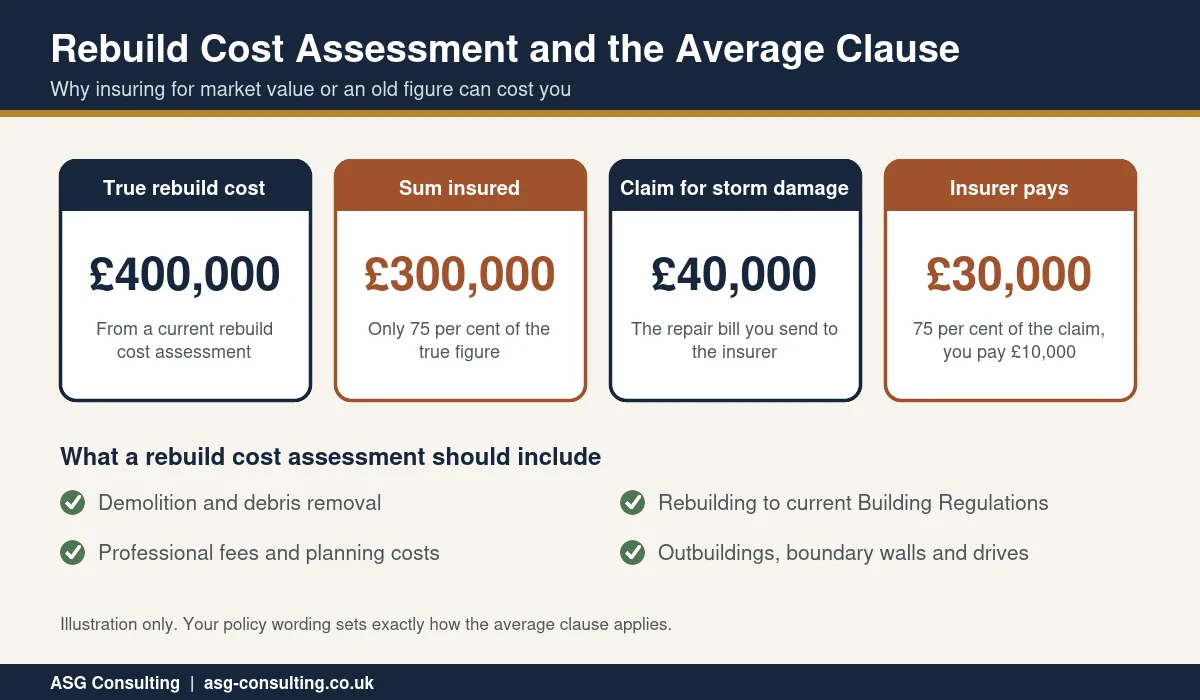
Here is how it works in practice. Say a house would cost 400,000 pounds to rebuild, but it is insured for 300,000 pounds. That is 75 per cent of the true figure. A storm causes 40,000 pounds of damage. Under the average clause, the insurer may only pay 75 per cent of the claim, which is 30,000 pounds, leaving the owner to find the other 10,000 pounds.
For a total loss, the most you can recover is the sum insured, however much the rebuild really costs. Policy wording varies, and some home insurance policies handle underinsurance differently, so always read the terms. The safest approach is to make sure the sum insured is based on an up to date rebuild cost assessment.
How Common Underinsurance Is
Underinsurance is widespread. Research published in September 2026 by RebuildCostASSESSMENT.com, based on 46,917 assessments across the UK, found that 67 per cent of properties were underinsured, 25 per cent were overinsured and only 8 per cent were insured accurately. Underinsurance has fallen since 2022, when it affected 83 per cent of properties, but it is still the norm rather than the exception.
The same research found that listed properties were among the worst affected, with 79 per cent underinsured. Building costs also keep rising. BCIS reported that the ABI and BCIS House Rebuilding Cost Index rose 3.9 per cent in the year to July 2026, which means a figure that was right a few years ago may now be well short.
How Often to Review It
A rebuild figure goes out of date as building costs, regulations and the property itself change. Common best practice is as follows.
- A full assessment at least every three years, with a surveyor visiting the property.
- An interim review every year, often a desktop check or index linking based on building cost data.
- A new assessment after major works, such as an extension, loft conversion, re roofing or cladding replacement.
- More frequent reviews when construction costs are rising quickly or regulations change.
If you have never had a reinstatement cost assessment, or you are still using the figure from when you bought the property, it is worth getting a new one now rather than waiting for renewal.
Signs Your Rebuild Figure Is Wrong
Many owners have no idea where their sum insured came from. These are common warning signs that it is time for a new rebuild cost assessment.
- The figure was copied from the purchase price or a mortgage valuation.
- It has not been reviewed for more than three years.
- The insurer has simply index linked it every year without anyone visiting the property.
- You have extended the house, converted the loft or added a garage since it was set.
- The property is listed, in a conservation area or built in a non standard way.
- The figure looks low compared with the floor area and current building costs.
If any of these apply, a rebuild cost assessment is a small cost compared with the risk of an under settled claim. For blocks and portfolios, the same checks apply to every building on the schedule.
Who Needs a Professional Assessment
Many owners of standard modern houses can use an online calculator as a starting point. A professional rebuild cost assessment is strongly recommended for the following.
- Blocks of flats, where freeholders and management companies insure on behalf of leaseholders.
- Listed and period buildings, which need traditional materials and specialist trades.
- Non standard construction, such as concrete, steel or timber framed homes.
- Large or unusual houses, including those with basements, extensions or high specification finishes.
- Commercial and mixed use buildings, including shops with flats above.
- Landlords with portfolios, where a small error repeated across many properties adds up.
For landlords and owners managing several buildings, rebuild figures should sit alongside condition and maintenance data as part of wider asset management.
How the Assessment Is Carried Out
A typical reinstatement cost assessment follows these steps.
- Information gathering. The surveyor collects plans, previous assessments, lease terms and details of any recent works.
- Site inspection. The building is measured and its construction, materials, specification and services are recorded, along with outbuildings and external works.
- Costing. Current building cost data is applied to each element, with allowances for regional prices, access and special features.
- Additions. Demolition, professional fees, regulatory requirements and VAT are added where they apply.
- Report. A written report sets out the recommended sum insured, the assumptions used and when the figure should next be reviewed.
Give the rebuild cost assessment report to your broker or insurer and keep it with your property records. If you are a freeholder or managing agent, you may also need to share it with leaseholders.
Online Calculators Versus a Surveyor
Online rebuild calculators are quick and free, and they can give a reasonable estimate for a standard house. They rely on you entering the right floor area, building type and age, and they assume typical construction and finishes.
They are much less reliable for anything unusual. A calculator cannot see a stone bay window, a basement, a sloping site, poor access for machinery or a listed interior. In those cases, a professional rebuild cost assessment by a surveyor is the only way to get a figure you can rely on. Getting the floor area wrong alone can change the answer by tens of thousands of pounds.
What a Good Report Contains
A rebuild cost assessment report should be clear enough for you, your broker and your insurer to understand how the figure was reached. Look for the following.
- The address, date of inspection and the name and qualifications of the surveyor.
- Gross internal floor areas for each building, with a note of how they were measured.
- A description of the construction, materials, specification and any special features.
- The recommended sum insured, with allowances for demolition, fees and VAT shown separately.
- Any assumptions, such as access, listed status or the treatment of outbuildings.
- A recommended date for the next review.
If a report gives a single figure with no explanation, ask how it was calculated. A transparent reinstatement cost assessment is easier to defend if an insurer questions the sum insured after a claim.
Commercial and Mixed Use Buildings
Shops with flats above, offices, pubs, care homes and industrial units all need a rebuild cost assessment just as much as homes do, and often more. They tend to have more complex construction, higher specification services and fit out, and stricter regulations when rebuilt. The same 2026 research found that pubs and hotels, health centres, offices and care homes were among the most underinsured building types.
For commercial property, the assessment may also need to consider loss of rent and the time it would take to rebuild, which affects business interruption cover. Leases often set out who must insure and to what value, so the reinstatement cost assessment should be read alongside the lease.
Blocks of Flats and Leaseholders
In a block of flats, the buildings insurance is usually arranged by the freeholder, a residents management company or a right to manage company, and the cost is passed to leaseholders through the service charge. Most leases require the building to be insured for its full reinstatement value.
If the sum insured is too low and the average clause is applied after a claim, the shortfall may end up falling on leaseholders through extra service charges, or lead to disputes and tribunal claims. Directors of management companies have a duty to act in the interests of leaseholders, so keeping the reinstatement cost assessment up to date is part of good governance. Let leaseholders know when a new assessment is being carried out and share the result. Our guide to property management in Liverpool covers other responsibilities for block owners.
Rebuild Cost Assessment in Liverpool and Merseyside
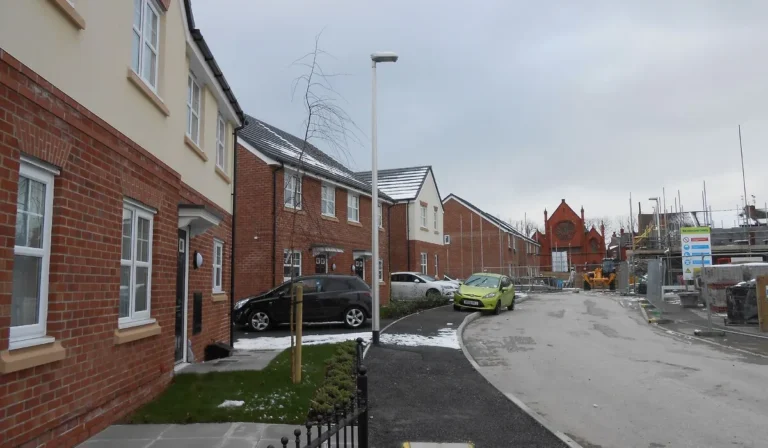
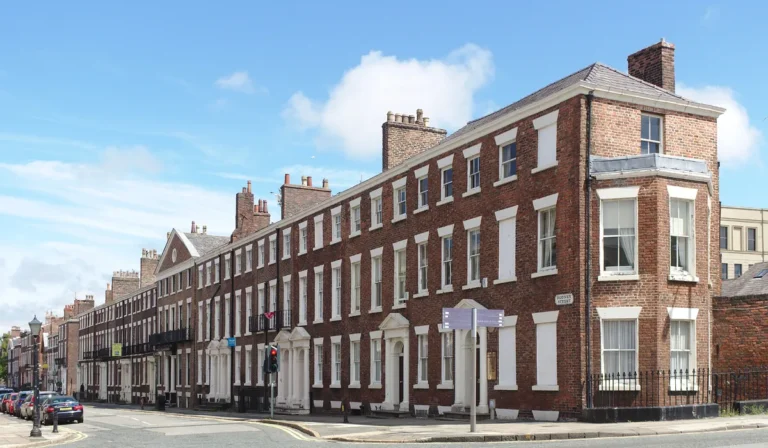
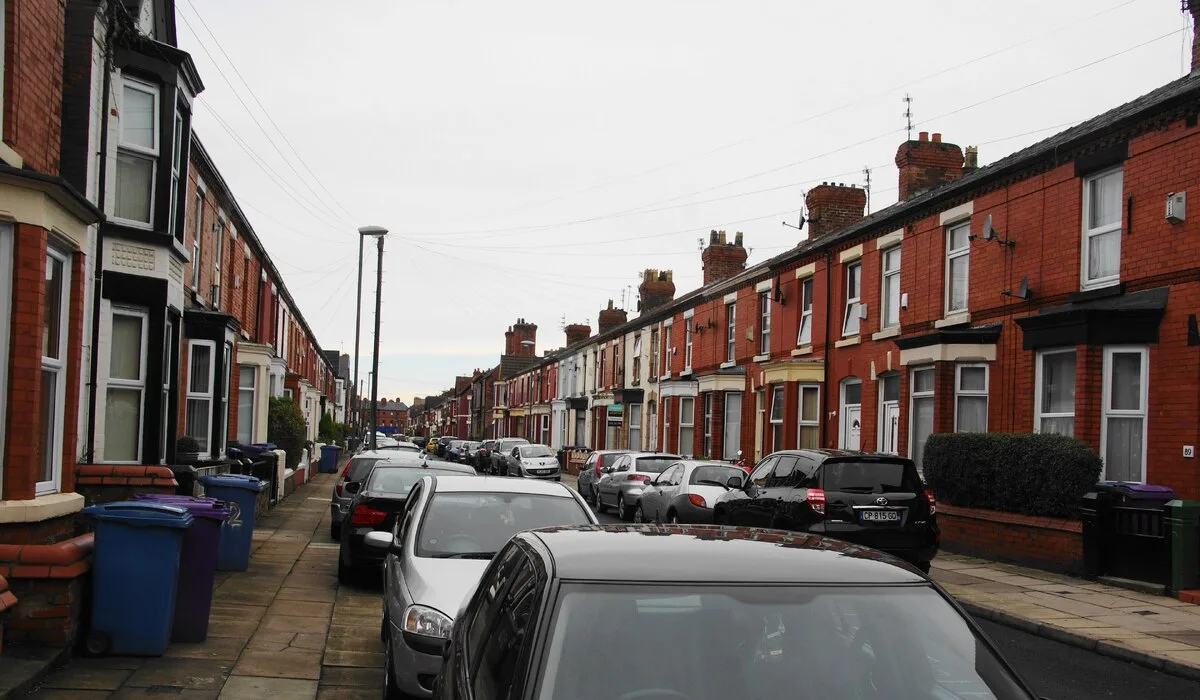
Liverpool has a wide mix of property types, and that makes accurate rebuild figures especially important. Victorian and Edwardian terraces with decorative brickwork, Georgian townhouses in listed areas, interwar semis, post war system built homes, converted warehouses and modern apartment blocks all cost very different amounts to rebuild per square metre.
Because property prices across much of Merseyside are lower than in the South East, owners are sometimes surprised to find that the rebuild figure is close to, or higher than, what the home would sell for. That is not a mistake. It reflects the real cost of labour, materials and fees to put the building back. A local surveyor who understands these building types can make sure the figure reflects how the property is really built.
Rebuild Cost Assessment FAQs
Is rebuild cost the same as the price I paid?
No. The purchase price reflects market value, including the land. Rebuild cost is the cost of reconstructing the building only, and the two can be very different.
How often should I get a rebuild cost assessment?
Common best practice is a full assessment at least every three years, with a yearly review in between, and a new assessment after major works.
What happens if I am overinsured?
You will usually pay a higher premium than you need to, and you will not receive more than the actual cost of the loss. An accurate figure avoids both over and under insurance.
Does the average clause apply to small claims?
It can. Many policies apply the average clause to any claim when a property is underinsured, not only to a total loss. Check your policy wording.
Is a reinstatement cost assessment the same as a rebuild cost assessment?
Yes. The two terms are used for the same thing, a professional estimate of the cost to rebuild a property for insurance purposes.
Do I need one for a listed building?
It is strongly recommended. Listed buildings often need traditional materials and specialist trades, and research shows they are among the most commonly underinsured properties.
Who carries out a rebuild cost assessment?
A rebuild cost assessment is normally carried out by a chartered building surveyor or quantity surveyor. Choose a firm regulated by RICS with experience of your type of property, especially for flats, listed buildings or commercial premises.
How long does a rebuild cost assessment take?
The site visit for a typical house often takes an hour or two, and longer for blocks of flats or commercial buildings. The written rebuild cost assessment report usually follows within a few working days.
Can an insurer refuse a claim because of underinsurance?
Insurers more commonly reduce the payout in proportion to the shortfall rather than refuse the whole claim, but the effect can still be severe. Telling your insurer an accurate figure from the start is the best protection.
Rebuild Cost Advice in Liverpool
ASG Consulting is regulated by RICS. Our surveyors advise homeowners, landlords, freeholders and block managers across Liverpool, Merseyside and the North West on property condition, maintenance and the figures that sit behind good insurance decisions. To discuss a rebuild cost assessment for your property, visit our asset management page.
About the Author
Harry is a property content writer with 3 years of experience writing about building surveying, commercial property and property compliance in the UK. He writes the guides at ASG Consulting for buyers, tenants and landlords, turning survey practice into clear, practical advice.
Reviewed by Dave MacMillan MRICS, chartered surveyor at ASG Consulting. Dave checks the technical content of our guides against current RICS practice before they are published.
Featured photo of terraced houses in Wavertree by Bill Boaden via Wikimedia Commons, licence CC BY SA 2.0, cropped.