If you have ever stood in your kitchen wondering what your house is actually worth right now, you are asking a question that changes almost every month. Property values move with interest rates, buyer demand, and how many similar homes are on the market in your street at the same time. Once you understand how valuations actually work, the number stops feeling like a mystery and starts feeling like something you can reasonably work out yourself.
This guide covers how to find out what your home is worth, what a valuation typically costs, whether prices are actually falling this year, and what tends to knock value off a property without anyone noticing until it is too late.
What Does A House Valuation Actually Involve
A valuation is simply an informed estimate of what a property would sell for if it went on the open market today. That word today matters. A figure from eighteen months ago is not much use if mortgage rates or buyer confidence have shifted since then, which they usually have.
Valuations get used for far more than just selling up. Lenders need one before releasing mortgage funds. Solicitors need one for probate, divorce settlements, or shared ownership staircasing. Some homeowners simply want a realistic number before deciding whether an extension or renovation is worth the cost.
The Main Ways To Get A Valuation
Online tools give you an instant number based on postcode data, past sales, and general market trends. They are free and fast, but they cannot see inside your home, so they miss details that genuinely change a sale price, such as a converted loft or a kitchen extension.
Estate agents will usually value a property for free because they hope to win your business if you decide to sell. They walk through the home, note the condition, and compare it with similar properties sold nearby. This tends to be more accurate than an online tool, though it is worth getting more than one opinion since agents can occasionally pitch high to win your instruction.
RICS chartered surveyors provide the most rigorous and legally defensible valuation, required for a Help to Buy valuation when you repay an equity loan, probate, matrimonial settlements, and certain mortgage applications. If you are unsure whether you need a full survey or just a valuation figure, our residential building surveying guide breaks down what each report covers and when you actually need one.
What Affects How Much Your Home Is Worth
A handful of factors do most of the heavy lifting when someone works out a valuation. Location sits at the top, and not in a vague sense. The specific street, nearby transport links, school catchments, and even which side of a postcode boundary a house falls on can shift a figure noticeably.
Size and layout matter too, though not always in the way people assume. Two houses with identical square footage can be valued differently if one has an awkward flow, such as a bedroom only reachable through another bedroom. Condition plays a bigger role than most homeowners expect. A dated kitchen will not sink a valuation on its own, but damp, subsidence, roof problems, or old electrics will, and they tend to knock off far more value than the actual repair cost would suggest.
Comparable sales, often called comps, form the backbone of most professional valuations. A proper valuer looks at what similar properties nearby have actually sold for recently, not what they were listed for, since asking prices and final sale prices frequently differ. Market conditions round things out too, since mortgage rates, buyer demand, and competing stock all shape what a realistic figure looks like right now.
Are House Prices Falling In 2026
This is a confusing one to search right now, since different indexes tell slightly different stories. Nationwide and Land Registry data have shown prices holding broadly flat through the middle of 2026, Halifax has recorded softer annual growth than expected, and Rightmove’s asking price index has shown a noticeable pullback, with several forecasters revising full year predictions downward as mortgage rates stayed higher for longer than expected.
The honest answer is that the UK is not seeing a crash, but growth has clearly slowed, and some forecasters now expect a small overall fall for the year rather than the rise most predicted back in January. Regional differences matter too. London and the South East have generally seen softer figures, while parts of the North, Scotland, and Northern Ireland have held up better. So the picture genuinely depends on where you are, which is why a national headline rarely tells you much about your own street. For a wider look at how these shifts have played out this year, this property market note is worth a read alongside the figures above.
How Do I Find Out The Valuation Of My Home
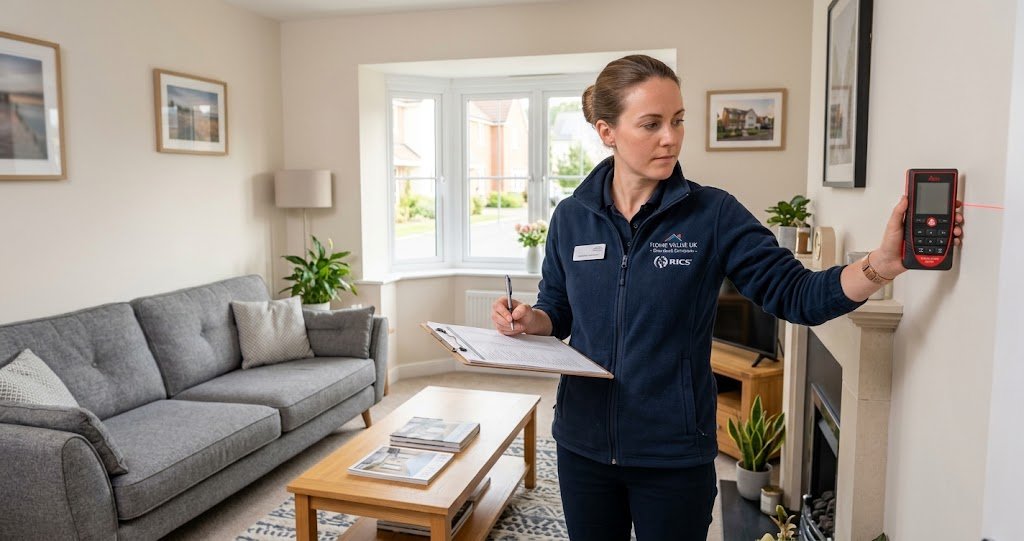
Start with a free online estimate to get a rough figure, then follow it up with an in person opinion if you are seriously considering selling, remortgaging, or need a number for legal reasons. A local estate agent visit will usually be free and gives you a more grounded figure based on actual local knowledge rather than an algorithm. If the valuation needs to hold up for probate, a mortgage lender, or a legal process, you will need a RICS qualified surveyor rather than an estate agent’s opinion, since only a formal report carries the weight those situations require.
What Is The Typical Cost Of A House Valuation In The UK
An estate agent valuation is usually free, since it is offered as part of trying to win your business if you sell through them. A basic mortgage valuation, arranged by your lender, typically costs somewhere between one hundred and fifty pounds and three hundred and fifty pounds depending on the property’s value, though this cost is sometimes absorbed into your mortgage arrangement fee.
A full RICS valuation report, the kind needed for probate, Help to Buy, or matrimonial cases, generally runs from around three hundred and fifty pounds up to eight hundred pounds for a standard residential property, with higher value or more complex homes sitting toward the top of that range or beyond. Prices vary by region too, with London and the South East typically commanding a premium over the North West and other regions. It is always worth getting a fixed quote in writing before booking, since the final figure depends heavily on your property’s value and the purpose of the report.
How Do I Work Out The Value Of My Property
The most reliable approach anyone, including professional valuers, actually uses is comparing your home against similar properties that have sold nearby in the last three to six months. Look specifically at sold prices rather than asking prices, since the gap between what a seller wanted and what a buyer actually paid can be significant, especially in a slower market like parts of 2026 have been.
Adjust that comparable figure up or down based on genuine differences, such as an extra bedroom, a larger garden, off street parking, or a recently renovated kitchen. If your property has something a comparable home lacks, or vice versa, that difference should move your estimate accordingly rather than assuming every three bed semi on your street is worth exactly the same.
How Do I Calculate The Value Of A Property
For a more structured calculation, some valuers use a price per square foot approach. Take the average sale price per square foot of similar recently sold homes in your immediate area, then multiply it by your property’s total square footage. This works reasonably well for fairly standard properties but breaks down for unusual layouts, period features, or homes with significant extensions, which is exactly why a purely mathematical approach should always be checked against an actual local comparison rather than relied on alone.
What Devalues A House The Most
Structural problems top the list by a wide margin. Subsidence, significant roof defects, damp that has been left untreated, or movement in the walls can knock tens of thousands off a valuation, partly because of the repair cost and partly because buyers and lenders become nervous about anything structural. Our recent piece on the hidden costs of skipping a survey covers exactly how these issues get missed by buyers who rely on a mortgage valuation alone rather than a proper inspection.
Beyond structural issues, a poor energy efficiency rating, outdated electrics, an awkward or illogical layout, being situated on a busy road, and visible clutter or poor presentation during a viewing all chip away at value. None of these are usually dealbreakers on their own, but stacked together they add up quickly, and they are almost always cheaper to address before a valuation than after a buyer’s survey flags them.
Getting A Number You Can Actually Trust
If you only need a rough idea, a free online tool or an estate agent’s opinion will usually do the job. If the figure needs to stand up to a lender, a solicitor, or a court, you need a properly qualified RICS valuation rather than an estimate. Understanding which category your situation falls into before you start calling people will save you time and, in some cases, quite a lot of money. If you are unsure whether your property has anything a valuer or lender might flag, it is worth speaking to a chartered surveyor before you commit to a sale or a remortgage, rather than finding out after an offer has already been made.
Frequently Asked Questions
How do I find out the valuation of my home?
Get a free online estimate first, then follow up with an estate agent’s in person opinion or, if you need something legally recognised, a RICS chartered surveyor’s report.
What is the typical cost of a house valuation in the UK?
Estate agent valuations are usually free. Mortgage valuations typically cost between one hundred and fifty and three hundred and fifty pounds. A full RICS valuation report generally runs from around three hundred and fifty to eight hundred pounds depending on the property and its location.
Are house prices falling in 2026?
Not dramatically, but growth has slowed noticeably, with some indexes showing small monthly falls and forecasters trimming their annual predictions. The picture varies significantly by region, with the South East softer than the North of England and Scotland.
How do I work out the value of my property?
Compare your home against similar properties that have actually sold nearby in the last few months, then adjust for genuine differences such as extra bedrooms, extensions, or condition.
How do I calculate the value of a property?
A common method is multiplying the average local price per square foot by your property’s total square footage, then cross checking that figure against actual comparable sales in your area.
What devalues a house the most?
Structural issues such as subsidence, roof problems, and untreated damp cause the biggest drops in value, followed by poor energy efficiency, outdated electrics, and an awkward layout.
Final Conclusion
Working out what your house is worth does not need to feel like guesswork. Start with a free online estimate for a rough idea, bring in an estate agent if you are thinking about selling, and only pay for a full RICS valuation when the situation genuinely calls for one, such as probate, a legal dispute, or a mortgage that requires it. Keep an eye on the type of report you actually need before you book anything, since paying for a formal valuation you did not need is one of the easiest ways to waste money in this process.
The 2026 market has been a good reminder that national headlines rarely tell the full story. Growth has slowed rather than collapsed, and your own street can behave very differently from the averages reported in the news. If you are unsure where your property stands, the safest move is always to speak to someone who can look at the actual building rather than rely on a postcode average alone. Getting that number right from the start puts you in a far stronger position, whether you are selling, remortgaging, or simply keeping track of what you own.