A Level 3 survey (formerly called a Building Survey) is the most detailed RICS home survey available. A chartered surveyor inspects every accessible part of the property and reports on its construction, condition, and any defects, including likely causes and repair priorities. It’s typically recommended for older, altered, or unusual homes, which describes a lot of Liverpool and Merseyside’s Victorian and Edwardian housing stock.
If you’ve had an offer accepted on a Victorian terrace in Walton or a period townhouse in the Georgian Quarter, someone has probably already told you to get a proper survey done. What they usually mean is a Level 3. It’s the survey buyers reach for when a property is old enough, or unusual enough, that a lighter report might miss something expensive.
This guide walks through what a Level 3 survey actually is, what it covers, what it leaves out, how it compares to a Level 2, and what it tends to cost in Liverpool and Merseyside, so you can decide whether you need one before you’re standing in a solicitor’s office asking what condition rating 3 means.
What Is a Level 3 Survey, Exactly?
A Level 3 survey is a full building condition report, carried out under the RICS Home Survey Standard by a RICS-qualified chartered surveyor. It’s the modern name for what used to be called a Building Survey or, informally, a full structural survey, though that last term is a bit misleading, and we’ll come back to why.
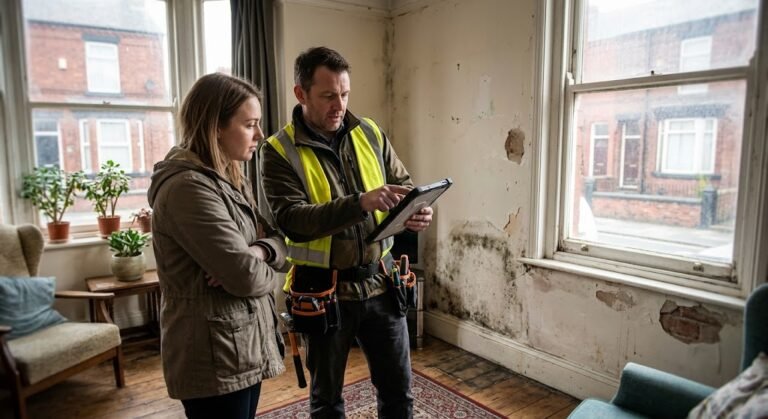
The surveyor visits the property, inspects every part they can reasonably access, inside and out, from the roof space to the cellar, and writes up a detailed report on how the building was constructed, what condition it’s in, and what, if anything, needs fixing. Every element gets a condition rating from 1 to 3, where 3 means a defect needs urgent attention or further investigation.
Unlike a mortgage valuation (which only checks that the property is worth what you’re paying, largely for the lender’s benefit), a Level 3 is written for you, the buyer. It’s opinion and analysis, not just a checklist. A decent surveyor will tell you not just that there’s a crack in the chimney breast, but what’s likely causing it and what it might cost to fix.
What Does a Level 3 Survey Cover?
Short answer: pretty much everything the surveyor can see or reach without pulling up carpets or taking down walls. It’s a visual inspection, not an invasive one, but it’s thorough.
Structure, roof and foundations
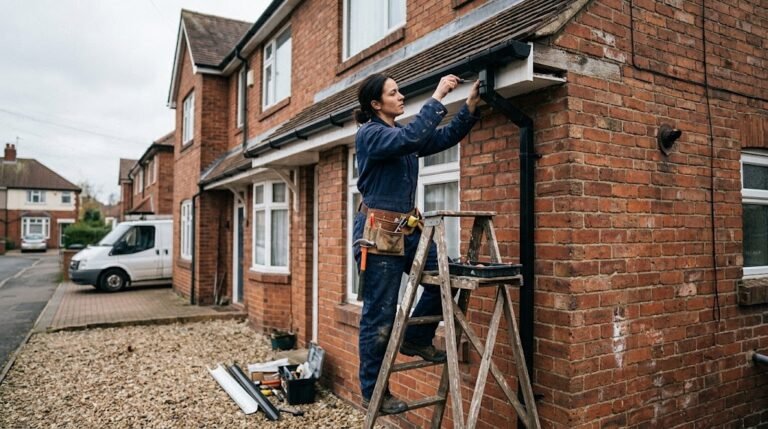
The surveyor checks the roof covering, structure, chimneys and guttering; external walls for cracking, bulging or signs of movement; and, where accessible, foundations and ground-floor construction for evidence of settlement or heave. On a Victorian terrace, this is where a lot of the useful detail lives. Liverpool’s older housing sits on a mix of ground conditions, including glacial till in places, and shallow historic footings are more prone to movement than modern foundations.
Damp, timber and internal condition
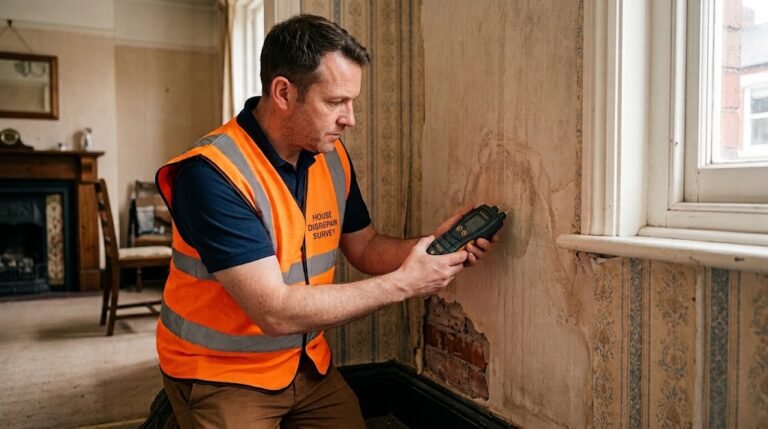
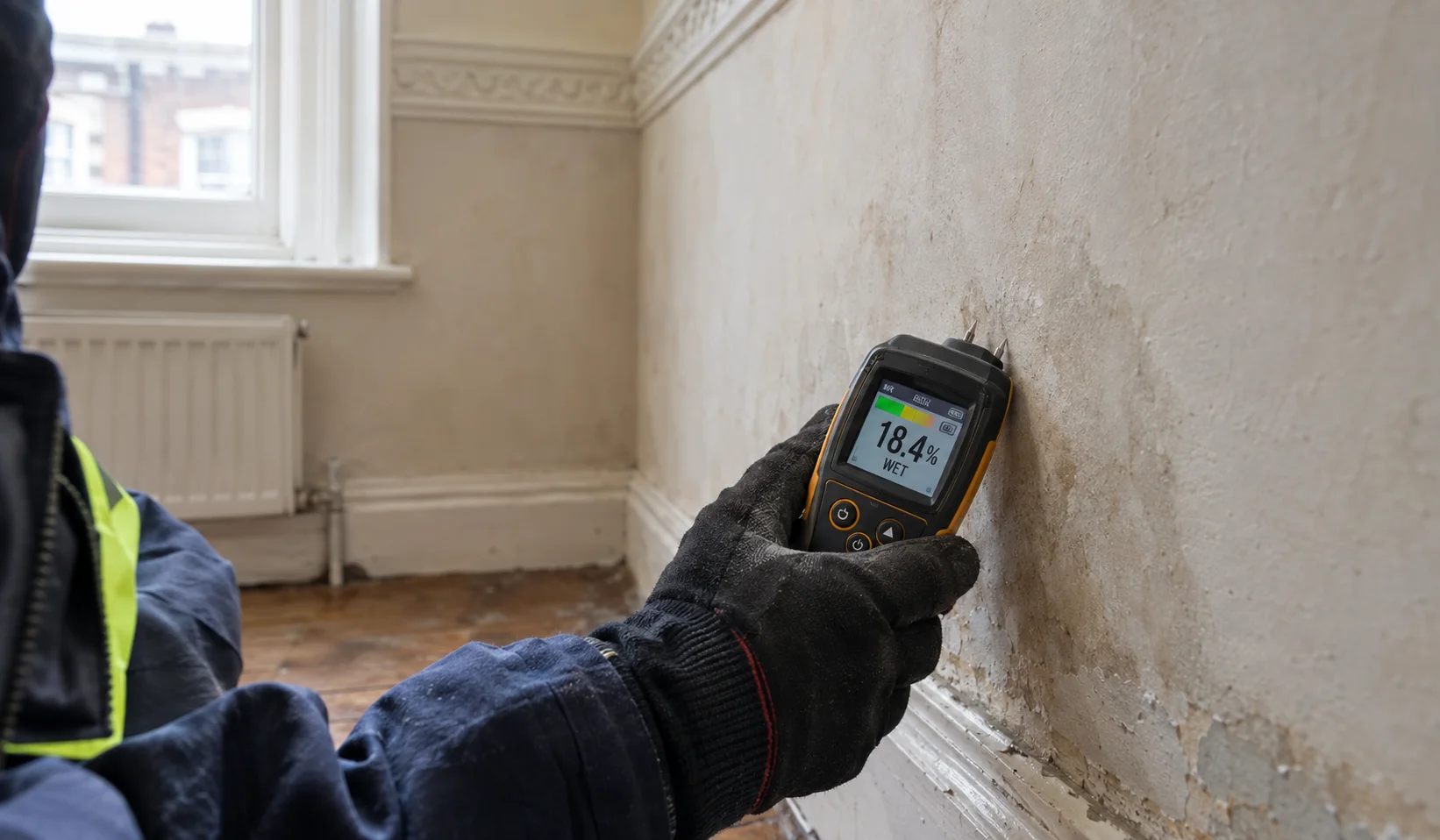
Inside, the surveyor works through every accessible room, checking floors, ceilings and walls for cracking or unevenness, and using a moisture meter to test for rising or penetrating damp. Timber, floorboards, staircases, roof timbers, and window joinery get checked for rot and woodworm. This matters a lot on pre-1919 properties, where lime mortar and older timber treatments behave differently from modern materials, and where a well-meaning previous repointing job in hard cement can trap damp and cause more harm than good.
Services, electrics, gas, plumbing, heating
The surveyor gives a visual overview of electrics, gas, plumbing and heating, noting the apparent age of the consumer unit, boiler, and pipework, and flagging anything that looks outdated or unsafe. They will not test any of it. That’s a deliberate limit of the survey, not an oversight, and it’s worth understanding why.
Is a Level 3 Survey a Structural Survey?
Not quite, even though people use the terms interchangeably. A Level 3 is delivered by a chartered surveyor under the RICS Home Survey Standard and covers the whole building in general terms. A structural survey, or structural engineer’s report, strictly speaking, means an inspection by a chartered structural engineer, focused specifically on structural elements, usually commissioned as a follow-up once a Level 3 (or a worried seller) flags a specific structural concern.
In practice, most buyers who say they want a full structural survey actually mean a Level 3, and a good surveyor will tell you which one you need rather than just booking whichever you asked for by name.
Does a Level 3 Survey Include Electrical? Does It Check for Subsidence?
Two of the most common questions, and they deserve straight answers.
Does a Level 3 survey include electrical testing? No. The surveyor will visually assess the electrical installation, the apparent age and condition of the consumer unit and visible wiring, and flag concerns, but they are not a qualified electrician and won’t test circuits. If anything looks dated or risky, the report will usually recommend a separate Electrical Installation Condition Report (EICR) from a registered electrician.
Does a Level 3 survey check for subsidence? It checks for visible signs of it: cracking, distortion, bulging walls, uneven floors, doors and windows that no longer sit square. It cannot confirm subsidence with certainty or predict whether it will continue, because that needs specialist monitoring (crack gauges, structural engineer assessment) over time. What it will do is flag when those signs are present and recommend further investigation before you proceed.
| What’s covered | What’s not covered (needs a specialist) |
|---|---|
| Visible signs of structural movement, cracking, subsidence | Confirmed diagnosis or long-term monitoring of subsidence |
| Visible condition of wiring, consumer unit, sockets | Full electrical testing / EICR |
| Visible condition of boiler and heating system | Gas Safe check, boiler service |
| Visible damp, using a moisture meter | Full damp-proofing survey/remedial specification |
| Roof, chimney, guttering (visible parts) | Anything hidden under fitted floors, carpets, or behind cladding |
Level 2 vs Level 3 Survey: Which Do You Need?
This is where most buyers actually get stuck, not on what each survey covers, but on which one fits their specific property.
| What Do You Need? | Level 2 (Homebuyer Report) | Level 3 (Building Survey) |
|---|---|---|
| Best suited to | Conventional homes, post-1950s, in reasonable condition | Older, altered, unusual, listed, or larger properties, or any home in questionable condition |
| Report style | Condition ratings with a shorter narrative | Full narrative explaining causes, implications and repair options |
| Typical detail on defects | Flags issues, doesn’t always explain cause | Explains likely cause, urgency and repair approach |
| Optional valuation | Often available as an add-on | Usually available as an add-on |
| Typical Merseyside cost (2026, indicative) | Roughly £400–£700 | Roughly £600–£1,200+ |
As a rule of thumb: if you’re buying a conventional, reasonably modern semi in good visible condition, a Level 2 or Level 3 survey is a fair question to put to your surveyor directly, and a Level 2 is often enough. If the property is Victorian or Edwardian, has been extended, is listed, or anything already looks off during viewings- sloping floors, hairline cracks above windows, patchy repointing- a Level 3 earns its higher cost. Given how much of Liverpool and Merseyside’s housing stock sits in that second category, it’s a very common recommendation locally.
How Much Is a Level 3 Survey in Liverpool and Merseyside?
Quick answer: A Level 3 survey in the Liverpool and Merseyside area typically costs somewhere between £600 and £1,200+ as of late 2026, depending on the property’s size, age and condition, broadly in line with North West pricing, which tends to run lower than London and the South East.
| Property type | Typical Level 3 price range* |
|---|---|
| Flat or small terrace | £600–£800 |
| Average 2–3 bed semi/terrace | £700–£1,000 |
| Larger detached / 4+ bed | £900–£1,300 |
| Period, listed or unusual construction | £1,000–£1,500+ |
*Indicative ranges based on national 2026 survey pricing data; always confirm the current fee directly with your surveyor, as it depends on the specific property.
What actually moves the price: floor area, number of storeys, age and construction type, and whether the surveyor needs to spend longer working out how an older or altered property was put together. A straightforward post-war semi will always come in cheaper to survey than a rambling Victorian terrace with a converted cellar and a Victorian-era rear extension.
How Long Does a Level 3 Survey Take?
The on-site inspection usually takes anywhere from two hours to a full day, depending on the property’s size and complexity, with the written report typically following within about a week.
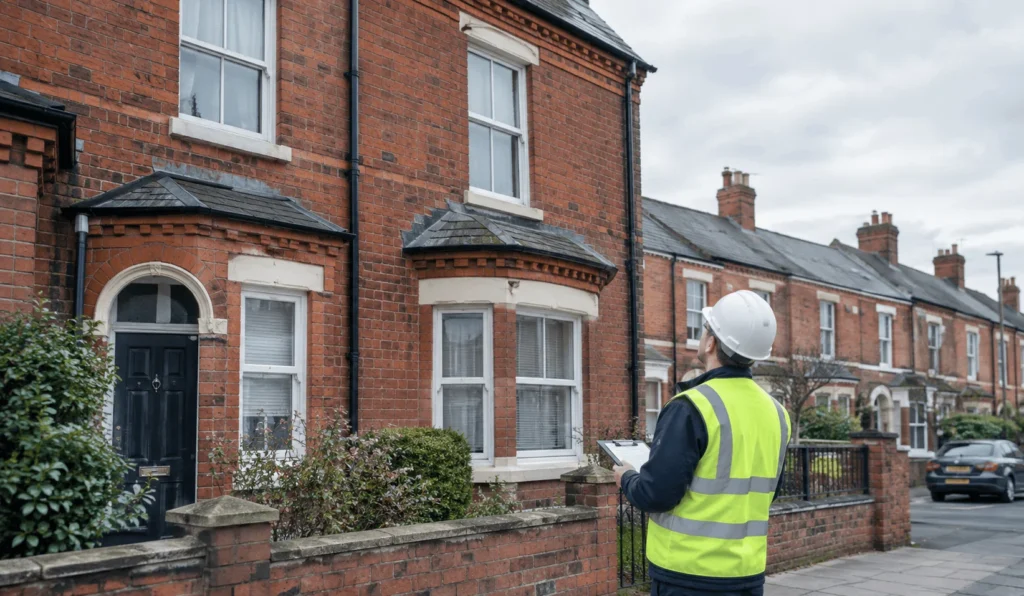
For a standard three-bed terrace, expect the surveyor on site for roughly half a day. Larger, older or more complicated properties, multiple extensions, a cellar, a converted loft, can take longer, sometimes a full day. Afterwards, the surveyor writes up their findings from site notes and photographs; most firms turn the report around within three to seven working days, though this varies, so it’s worth asking your surveyor for their current timescale when you book, especially if you’re working to a tight exchange date.
What Happens If Your Level 3 Survey Finds Problems?
This is the part nobody explains well enough, and it’s often the bit that causes the most anxiety. A 25-to-30-page report full of amber and red ratings can look alarming even when the underlying issues are manageable.
A few things are worth knowing from experience:
- Red doesn’t always mean walk away:
It means it needs attention, which could be a £200 repair or a £15,000 one. The narrative section of the report, not just the traffic-light summary, is where the real detail lives. - You usually have three options once you’ve read the report:
Renegotiate the price to reflect the cost of repairs, ask the seller to fix specific issues before completion, or in rarer cases, withdraw entirely. - Renegotiation is common and normal:
If the survey flags something significant- roof timber decay, active damp, signs of movement- it’s entirely reasonable to go back to the seller’s agent with a revised offer, ideally backed by a rough repair estimate from the report or a specialist quote. - Specialist follow-ups are routine, not a red flag in themselves:
A Level 3 recommending a structural engineer, an EICR, or a damp specialist doesn’t mean the property is a disaster; it means the surveyor is being appropriately cautious about something outside their remit to fully diagnose.
Getting a Level 3 Survey in Liverpool and Merseyside
Liverpool and Merseyside’s mix of Victorian bylaw terraces, Georgian townhouses, and inter-war and post-war housing means a genuinely local surveyor matters, someone who’s used to lime mortar, cellars, and the particular way older brick behaves on the area’s ground conditions, not just a national panel firm working from a template.
ASG Consulting carries out RICS home surveys across Liverpool and the wider Merseyside and North West area, including Level 2 and Level 3 surveys for first-time buyers navigating older properties for the first time. If you’re not sure which level fits your property, that’s a normal question to ask before you book, not after.
Frequently Asked Questions
Is a Level 3 survey worth it?
For older, altered, listed, or unusual properties, yes, the extra detail and explanation of causes routinely pays for itself if it catches a significant defect before you commit. For a straightforward modern home in good condition, a Level 2 may be sufficient, and a good surveyor will say so.
What happens if a Level 3 survey finds problems?
You’ll get a detailed explanation of each issue, its likely cause, and urgency. From there, you can renegotiate the price, ask the seller to carry out repairs before completion, or, for serious issues, reconsider the purchase.
Can I negotiate after a Level 3 survey?
Yes, this is common practice. Buyers regularly use significant findings, damp, roof defects, and signs of movement to renegotiate price or request repairs, usually via their estate agent or solicitor.
Do I need a Level 3 survey on a new build?
Not usually. New builds come with warranties (such as NHBC) and are less likely to have hidden structural issues, so a Level 2 or a snagging inspection is often more appropriate than a full Level 3.
What’s the difference between a Level 3 survey and a structural engineer’s report?
A Level 3 is a general building condition survey by a chartered surveyor. A structural engineer’s report is narrower and more technical, focused specifically on structural elements, and is usually commissioned as a follow-up if the Level 3 raises a structural concern.
Does a Level 3 survey check the roof space?
Yes, where it’s safely accessible. The surveyor inspects visible roof timbers, insulation and signs of water ingress from the loft hatch, though they won’t move insulation or stored items to inspect further.
The Bottom Line
A Level 3 survey won’t guarantee a problem-free purchase; no survey can, but it gives you the clearest possible picture of what you’re actually buying before you’re legally committed. For much of Liverpool and Merseyside’s older housing stock, that level of detail is often the difference between a manageable renovation and an expensive surprise.
If you’re weighing up whether your property needs a Level 2 or a Level 3, ASG Consulting can talk you through it before you book, based on the specific property rather than a generic rule of thumb.
This article is general information for buyers in England and Wales and isn’t legal or financial advice. Always confirm current pricing, timescales, and the right survey level for your specific property with a RICS-qualified surveyor, and consult a solicitor or conveyancer on any legal implications a survey raises.