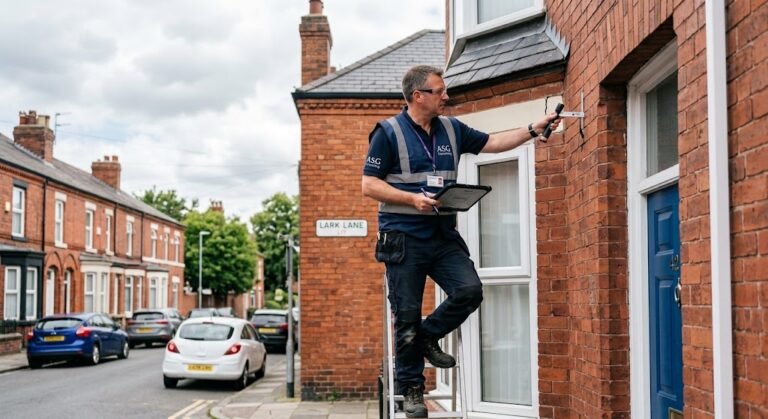

Walk into any building in Britain, a Victorian terrace in Liverpool, a glass-fronted office in Manchester, or a new-build flat in Leeds and you’re standing inside the work of a building services engineering, whether you realise it or not. The warmth that greets you in winter, the water that runs hot within seconds, the lights that switch on without a thought, the air that stays breathable in a packed meeting room none of it happens by accident. Someone designed it, calculated it, and made sure it would keep working long after the architects had moved on to their next project.
I’ve spent the better part of my career explaining this profession to people who assume it’s just plumbing and wiring. It isn’t. And if you’re a homeowner planning a renovation, a landlord upgrading a property, or simply someone curious about what keeps modern buildings alive, this guide will give you a genuinely useful, no-nonsense understanding of building services engineering structural engineer services what it actually involves, why it matters more than most people realise, and how to know when you need one on your side.
What Is Building Services Engineering, Really?
At its core, building services engineering is the discipline responsible for the systems that make a building liveable and functional: heating, ventilation and air conditioning HVAC, electrical power and lighting, water supply and drainage, fire protection, and increasingly, renewable energy and smart building technology.
Think of a building as a body. The architect designs the skeleton and skin, the shape, the walls, the aesthetics. The structural engineer makes sure the bones can bear the load. But the building services engineering designs the organs: the heart that pumps warmth through pipework, the lungs that circulate fresh air, the nervous system of electrical circuits that powers everything from a kettle to a server room.
Without this layer of engineering building services, even the most beautifully designed structure is just an empty shell. It’s the invisible infrastructure that turns a construction project into a home, an office, a hospital, or a school.
Why This Profession Matters More Than People Think
Here’s something that surprised me early in my career: most building failures people complain about damp, condensation, freezing radiators, sky-high energy bills, stuffy rooms trace back to poor building services design, not poor construction. A structurally sound building with badly designed heating and ventilation is still a miserable place to live or work.
In the UK specifically, this matters enormously. Our older housing stock, much of it built long before modern insulation standards existed, is notoriously difficult to heat efficiently. Add in the push toward net-zero carbon targets and the phasing out of gas boilers, and building services engineering are now central to one of the biggest infrastructure challenges the country faces: retrofitting millions of homes to be warmer, greener, and cheaper to run.
This is also where the profession intersects with structural work. A structural engineer for homes will assess whether a wall can be knocked through or an extension can bear additional load but it’s the services engineer who then works out how heating, drainage, and electrics are rerouted around that new structure. On larger jobs, a good structural engineering company and a services engineering team work hand in hand from the earliest design stage, not as an afterthought.
The Core Systems a Building Services Engineer Designs
Heating, Ventilation and Air Conditioning HVAC This covers everything from a domestic boiler and radiator layout to full air-handling systems in commercial buildings. Getting it right means balancing comfort, energy efficiency, and running costs, and you end up with rooms that are either freezing or unbearably stuffy.
Electrical Systems Power distribution, lighting design, emergency lighting, and increasingly, EV charging infrastructure and solar PV integration. Electrical design has to anticipate not just today’s needs but a building’s needs a decade from now.
Public Health Engineering An un-glamorous name for genuinely vital work: hot and cold water supply, drainage, and sanitation. Poorly designed drainage is one of the most common and most expensive defects found during a structural engineer house survey.
Fire Safety Systems Sprinklers, fire alarms, smoke ventilation and compartmentation strategy. Since the Grenfell Tower tragedy, fire engineering has rightly become one of the most scrutinised areas of UK building design, with far stricter oversight under the Building Safety Act 2022.
Sustainability and Renewables Heat pumps, mechanical ventilation with heat recovery MVHR, solar thermal, and building management systems BMS that automate and optimise energy use in real time.
When Should You Actually Bring One In?
Not every job needs a specialist. But there are moments where skipping proper building services engineering advice costs far more than it saves:
- Extending or converting a property, new plumbing, heating, and electrical runs need to be planned around the building’s structure, not bolted on afterwards.
- Installing a heat pump or renewable system sizing this incorrectly is one of the most common and costly mistakes homeowners make.
- Commercial fit-outs ventilation, fire safety, and electrical load calculations are usually a legal requirement, not a nice-to-have.
- Persistent damp, condensation, or high energy bills are often: a services design issue rather than a structural one.
- New-build developments services need coordinating with structural design from day one to avoid clashes and costly redesigns mid-build.
Building Services Engineering vs Structural Engineering Don’t Confuse the Two

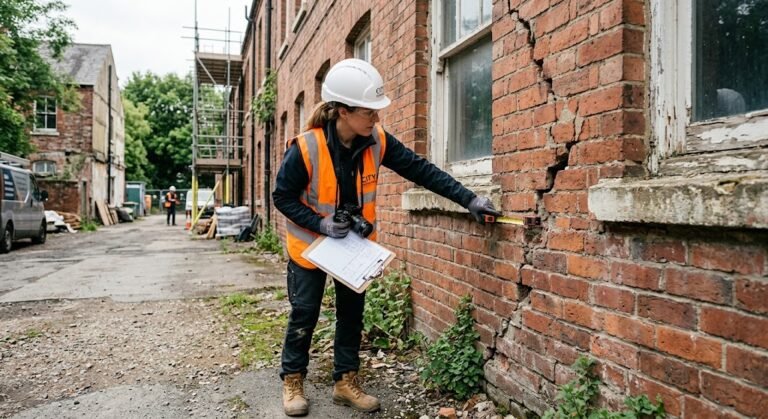
This trips people up constantly, so it’s worth being direct about it. A structural engineer is concerned with whether a building stands up foundations, load-bearing walls, beams, and brickwork repair after subsidence or damage. A building services engineering is concerned with whether a building works heating, power, water, air, and safety systems.
If you’re searching for a structural engineer near me because of cracks in a wall or you’re worried about a chimney breast removal, that’s a structural matter. If you’re trying to work out why your new extension never quite feels warm, that’s a service issue. The two professions overlap constantly on real projects, and the best outcomes happen when they’re brought in together rather than as separate afterthoughts but they solve fundamentally different problems, and it’s worth knowing which one you actually need before you start calling anyone.
Choosing the Right Engineer for Your Project
Look for chartered status CEng or IEng accreditation through CIBSE Chartered Institution of Building Services Engineers is the UK benchmark for competence in this field, in the same way structural engineer services are usually vetted through IStruct-E membership. Ask for examples of similar projects, check they carry professional indemnity insurance, and be wary of anyone offering a full design without ever visiting the site. Good engineering is never rushed, and a properly qualified engineer will always want to understand the building and how you actually live or work in it before drawing anything up.
Final Thought
Building services engineering rarely gets the credit it deserves, mostly because when it’s done well, you never notice it at all. You just feel warm, breathe easily, and never think twice about where the hot water comes from. That invisibility is, in a strange way, the mark of genuinely excellent design and it’s exactly why getting the right expert involved early on makes such a lasting difference to how a building actually feels to live and work in.
FAQs
What’s the difference between building services engineering and structural engineering?
Structural engineering focuses on a building’s physical strength and stability foundations, walls, and load-bearing elements. Building services engineering focuses on the systems that make it functional, such as heating, electrics, water, and ventilation.
Do I need a building services engineering for a small home renovation?
For minor works, often not. But for extensions, loft conversions, heat pump installations, or anything altering the layout of heating, plumbing, or electrics, professional input avoids costly mistakes later.
How much does building services engineering typically cost in the UK?
Costs vary widely depending on project scale, but most engineers charge either a fixed project fee or a percentage of construction cost, usually between 3–8% for detailed design and coordination work.
Can one engineer handle both structural and services design?
Occasionally, on very small projects, but generally these are separate specialisms. Most reputable projects use a structural engineering company alongside a dedicated services engineer to ensure both disciplines are properly coordinated.
Why has building services engineering become more important recently?
The UK’s net-zero targets, rising energy costs, and updated Building Regulations particularly Part L have pushed heating efficiency, ventilation, and renewable integration to the forefront of construction in all core building services disciplines.