Buying a house with storage heaters is fine if you understand how they work and what they cost to run. Check the age and type of heaters, the electricity meter and tariff, the hot water system and the EPC rating. Older storage heaters can be expensive and hard to control, so budget for upgrades if needed.
Storage heaters are common in flats, bungalows and homes without a mains gas supply. Some buyers are put off by them, while others find them simple and reliable. This guide explains in clear terms how they work, gives you 6 easy checks to make on a viewing, and sets out your options for upgrading when buying a house with storage heaters in Liverpool and the North West.
Contents
What Is a Storage Heater?
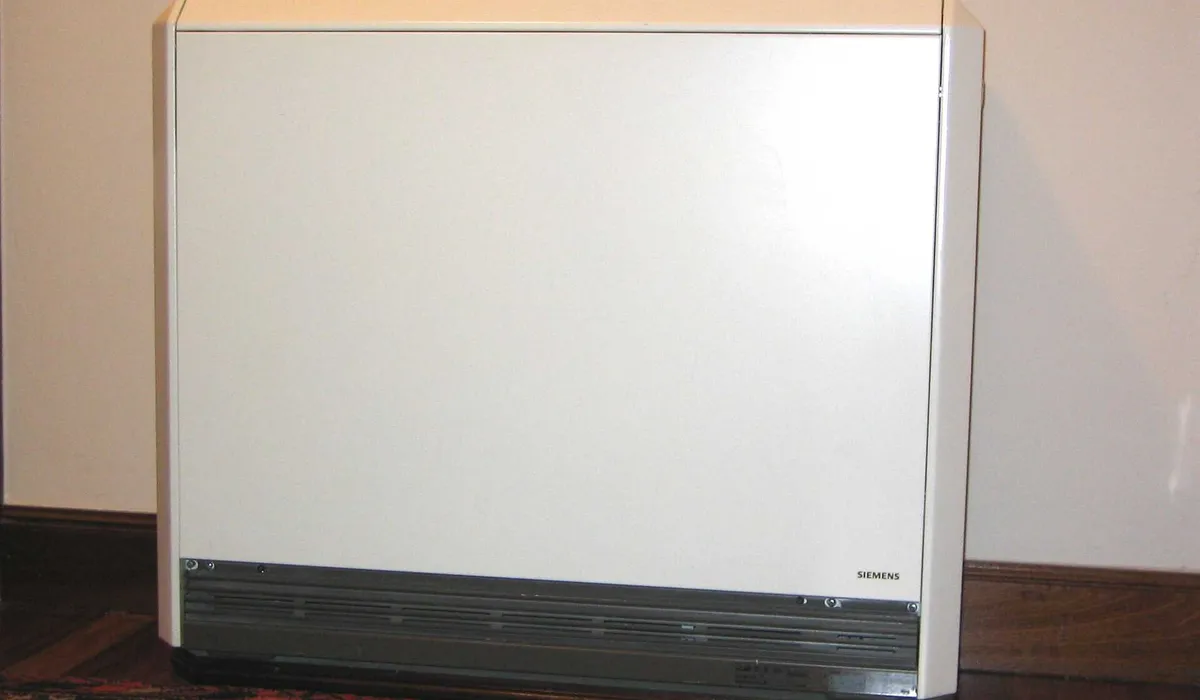
A storage heater is an electric heater that stores heat at night and releases it during the day. Inside, it has heavy bricks that warm up while electricity is cheaper. The heat then comes out slowly through the next day.
Citizens Advice explains in its guide to using storage heaters efficiently that they use cheaper electricity during off peak times to store heat. On an Economy 7 tariff, that cheaper rate usually covers 7 hours at night.
How Does a Storage Heater Work Through the Day?
Most storage heaters have two controls. The input dial sets how much heat is stored overnight. The output dial sets how quickly that heat is let out during the day.
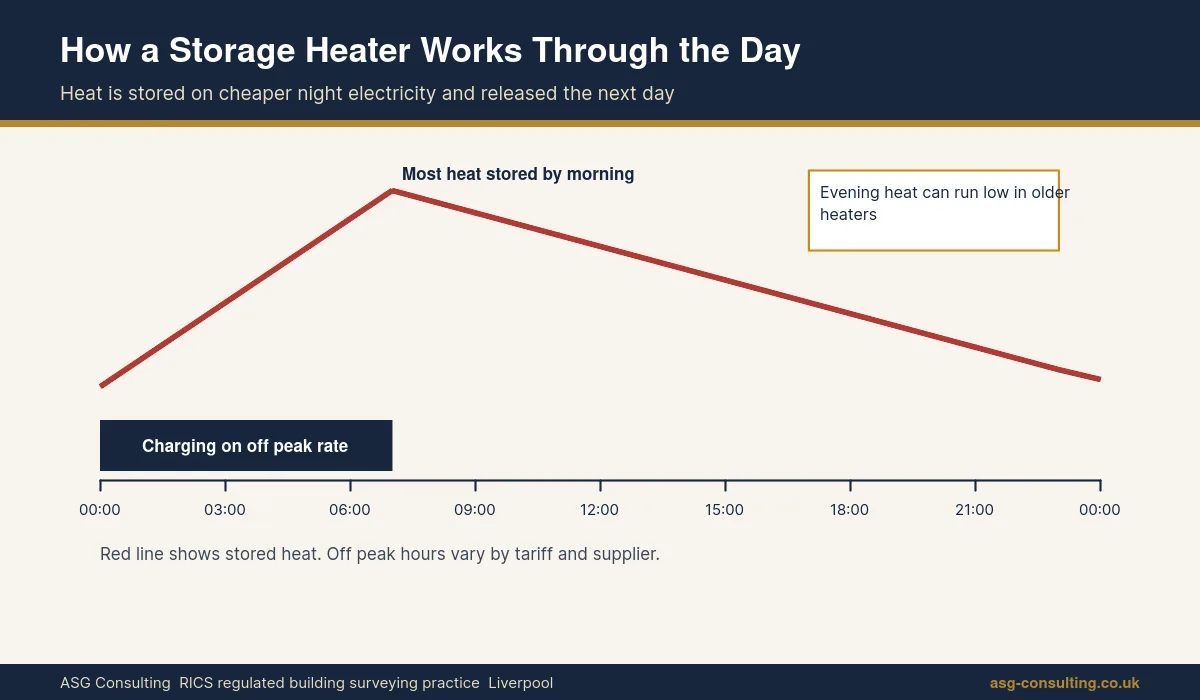
| Time | What happens |
|---|---|
| Night | The heater charges using cheaper off peak electricity |
| Morning | Stored heat is at its highest and the room warms quickly |
| Afternoon | Heat continues to release, more slowly |
| Evening | Older heaters may run low, just when people are home |
That evening shortfall is the main complaint about older models. People often fill the gap with a boost button or a plug in heater, which uses full price electricity and pushes up bills.
What Are the 6 Easy Checks When Buying a House With Storage Heaters?
These 6 easy checks take a few minutes on a viewing and tell you a lot about running costs and future work.
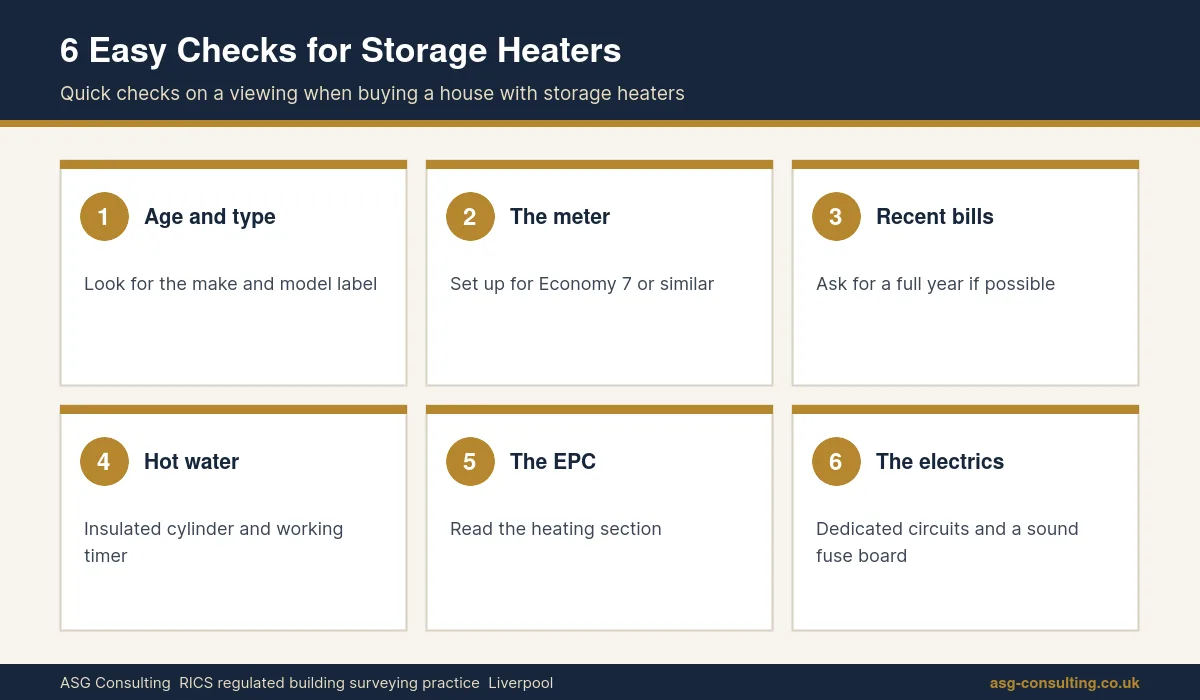
- Check the age and type of heaters. Look for a make and model on a label. Older manual heaters with simple dials are usually less efficient than newer models with thermostats and timers.
- Check the meter. Storage heaters need a meter or smart meter set up for a time of use tariff, such as Economy 7. Ask the seller which tariff they are on.
- Ask for recent bills. Real bills give a better idea of costs than any estimate. Ask for a full year if possible.
- Check the hot water. Many of these homes heat water with an immersion heater in a cylinder. Check the cylinder is insulated and the timer works.
- Look at the EPC. Electric storage heating often lowers the energy rating. Read the heating section and the recommendations.
- Check the electrics. Storage heaters need their own circuits. Old or tired wiring may need attention before any upgrade.
Are Storage Heaters Expensive to Run?
They can be. The Energy Saving Trust guidance on electric heating says electricity is around four times more expensive than gas per unit. They reduce costs by using cheaper night rates, but they still tend to cost more to run than a modern gas boiler.
Running costs depend heavily on the home. A small, well insulated flat may be cheap to heat this way. A large, draughty house with old heaters may be much more expensive. Insulation, the age of the heaters and how they are used all make a big difference.
How Do Storage Heaters Affect the EPC?
Homes heated by electric storage heaters often score lower on the Energy Performance Certificate than similar homes with gas central heating. That matters for running costs and, if you plan to let the property, for meeting minimum energy standards.
The guide to the EPC rating when buying a house explains how to read the heating section and recommendations. A low rating does not mean you should avoid the home, but you should factor in the cost of improvements.
What Are Your Options for Upgrading?
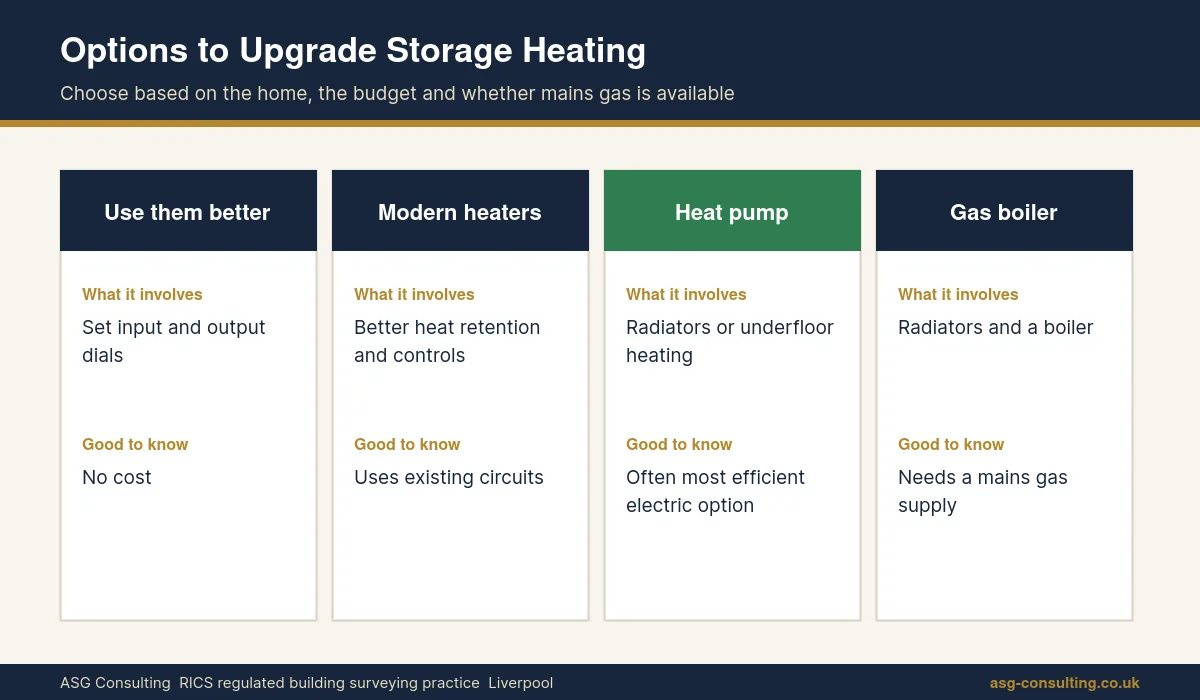
If the heaters are old or the house feels cold, there are several ways to improve things. The right choice depends on the home, your budget and whether a gas supply is available.
| Option | What it involves | Points to consider |
|---|---|---|
| Use existing heaters better | Set input and output dials to suit the weather and your routine | No cost, but limited by the heaters themselves |
| Modern storage heaters | Newer models with better heat retention, thermostats and timers | Usually uses the existing circuits, so less disruption |
| Heat pump | An air source heat pump with radiators or underfloor heating | Higher upfront cost, but often the most efficient electric option |
| Gas central heating | A boiler with radiators, where mains gas is available | Needs a gas connection, pipework and a flue |
Improving insulation and draught proofing first usually makes any heating system work better. If you are considering a low carbon option, the guide to buying a house with a heat pump explains what makes a home suitable.
What About the Electrics?
Storage heaters draw a lot of power and need dedicated circuits from the consumer unit, often controlled separately for off peak use. Look at the fuse board on a viewing. A very old consumer unit, rewireable fuses or signs of DIY work suggest the electrics need checking.
The guide to buying a house with old wiring explains what to look for. If you plan to change the heating, ask an electrician to test the installation first, as upgrades may need new circuits.
How Do You Use Storage Heaters Well?
Many people find storage heaters expensive simply because the settings are wrong. A few simple habits help.
- Turn the output dial to its lowest setting before bed, so heat is not wasted overnight.
- Set the input dial higher in winter and lower in spring and autumn.
- Check the weather forecast and adjust the input dial the night before.
- Avoid the boost button where possible, as it uses full price electricity.
- Keep curtains and furniture away from the front of the heater.
Ask the seller to show you how the heaters are set. A short demonstration can save a lot of trial and error in the first winter.
Storage Heaters in Liverpool Homes
Storage heaters are common in city centre apartments, especially in blocks built from the late 1990s onwards around the Baltic Triangle, the Commercial District and the waterfront. Many of these buildings were designed with electric heating rather than gas. Converted flats in older buildings and some ex council blocks across Merseyside also use storage heaters.
In flats, check whether the building rules allow changes to the heating, such as fitting a heat pump on a balcony or an outside wall. The lease or management company may restrict what you can do. Bungalows and homes in rural parts of the Wirral and West Lancashire without mains gas may also rely on storage heaters or other electric heating.
Does a Home Survey Check Storage Heaters?
A building surveyor looks at the heating system visually, notes the type and approximate age of the heaters, and comments on the hot water cylinder and the visible electrics. The heaters are not tested, and the surveyor will recommend a specialist check where needed.
For a conventional flat or house in reasonable condition, a RICS HomeBuyer Survey in Liverpool is often suitable. Mention the heating when you book, so the surveyor can pay attention to the electrics and the cylinder.
Should Storage Heaters Affect Your Offer?
Sometimes. If the heaters are very old, the home is poorly insulated or the bills are high, get a quote for upgrading before you exchange. Share it with the agent if you want to negotiate.
If the heaters are modern, the home is well insulated and the running costs look reasonable, there may be no need to change anything. Many people live comfortably with storage heaters for years.
Buying a House With Storage Heaters FAQs
Is it bad to buy a house with storage heaters?
Not necessarily. Check the age of the heaters, the bills and the insulation, and budget for upgrades if needed.
Are storage heaters expensive to run?
They often cost more to run than gas central heating, but using cheaper night rates and good settings helps keep costs down.
Do storage heaters need a special meter?
Yes. They work best with a meter set up for a time of use tariff, such as Economy 7.
Can I replace storage heaters with a heat pump?
Often, yes, but it depends on the home, the insulation and, in flats, the building rules.
Do storage heaters lower the EPC rating?
Electric storage heating often gives a lower rating than gas central heating in a similar home.
Does a survey test storage heaters?
No. A surveyor notes the type and condition, and recommends a specialist check where needed.
Talk to a Surveyor at ASG Consulting
ASG Consulting is an RICS regulated building surveying practice based in Liverpool. It carries out RICS Level 2 HomeBuyer Surveys and Level 3 Building Surveys across Liverpool, Merseyside, the Wirral and the wider North West, with reports usually delivered within 3 to 5 working days of the inspection. Fees are fixed and given on request, usually confirmed within one working day. Call 0151 315 0626 to request a quote or to talk through which survey suits the property.
About the Author
Dave MacMillan is the lead surveyor at ASG Consulting, an RICS regulated building surveying practice at 54 St James Street, Liverpool. He has 8 years of experience in building surveying and inspects homes for buyers across Liverpool, Merseyside and the North West.
Last updated 26 November 2026