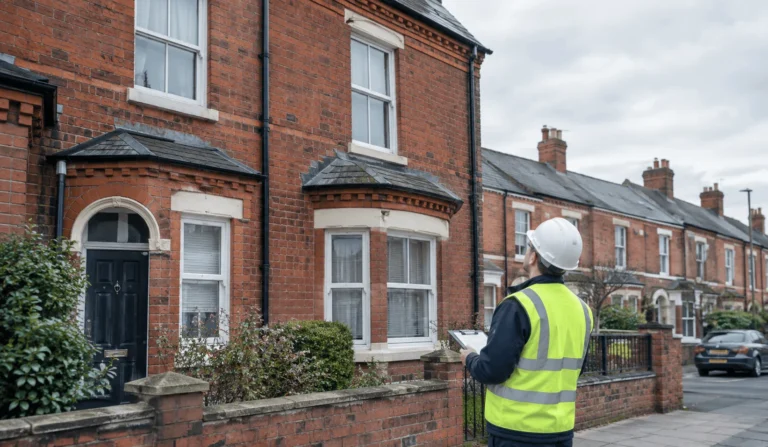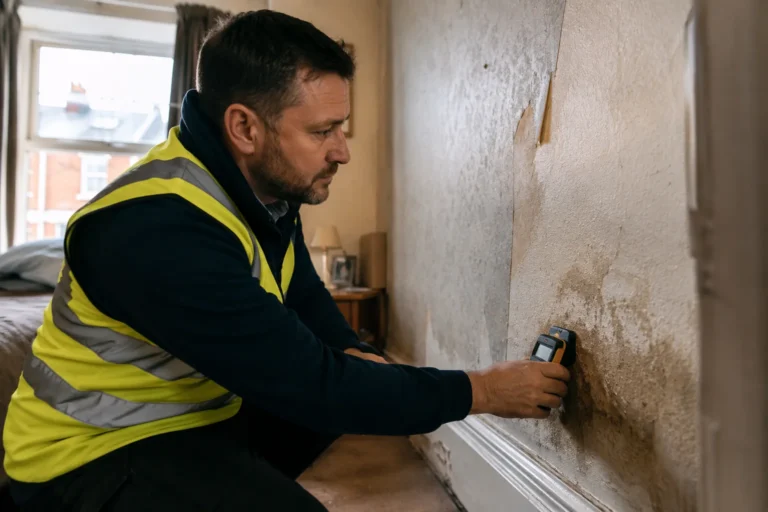
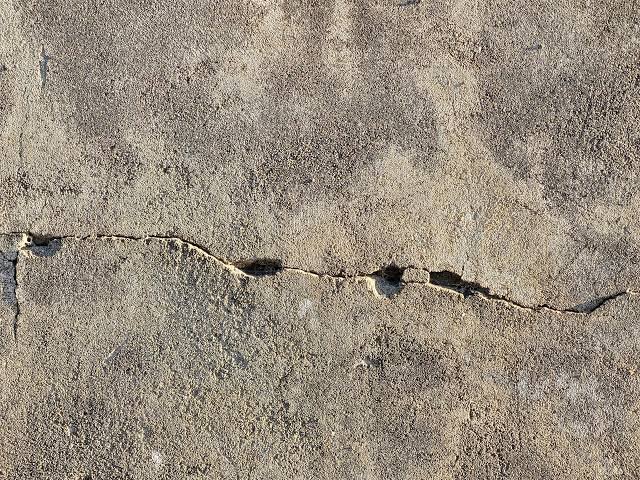
A subsidence survey is an inspection by a structural engineer or chartered surveyor to find out whether cracks and movement in a building are caused by the ground beneath it sinking, and if so, why. If you have spotted a new crack, a door that has started to stick or a gap opening around a window, a subsidence survey tells you whether it is a cosmetic problem or something that needs your insurer, monitoring and repairs.
This guide explains the signs of subsidence, how to judge which cracks matter, what causes ground movement in Liverpool and Merseyside, what happens during a subsidence survey, what it costs in 2026 and how insurance claims work. It is written for homeowners, buyers, landlords and owners of small commercial buildings across the North West.
In this guide:
- What is a subsidence survey?
- Subsidence, heave and settlement
- Signs of subsidence to look for
- Cracks in walls: when to worry
- What causes subsidence?
- Subsidence risk in Liverpool and Merseyside
- What happens during a subsidence survey
- How much does a subsidence survey cost?
- Subsidence and home insurance
- FAQs
What Is a Subsidence Survey?
A subsidence survey is a focused structural investigation of movement in a building. Unlike a general home survey, which looks at the whole property, a subsidence survey concentrates on the cracks, distortion and ground conditions that suggest the foundations are moving.
The engineer records where the cracks are, how wide they are and which direction they run, then works out the most likely cause. That might be shrinking clay, a leaking drain, a nearby tree, old mine workings or simply normal settlement of a new extension. The report explains whether the movement is current or historic, how serious it is and what should happen next.
A subsidence survey is usually carried out by a structural engineer, ideally a chartered member of the Institution of Structural Engineers or the Institution of Civil Engineers, or by a chartered building surveyor with structural experience.
Subsidence, Heave and Settlement: What Is the Difference?
These three terms are often mixed up, but they mean different things, and the difference affects whether insurance pays out.
- Subsidence is when the ground beneath a building sinks and pulls the foundations down with it, according to the Association of British Insurers.
- Heave is upward movement of the ground as the soil expands, for example when clay swells after a large tree is removed.
- Settlement is downward movement caused by the weight of a new building compressing the soil, usually within ten years of construction. It is normally not covered by home insurance.
- Landslip is sideways movement of the ground, usually on sloping sites.
A subsidence survey identifies which of these is happening, which is why it matters before you make a claim or agree a price on a house.
Signs of Subsidence to Look For
The Association of British Insurers lists these as the main signs of subsidence:
- new cracks or existing cracks getting wider, especially near doors and windows
- cracks wider than 3mm, roughly the thickness of a 10p coin
- diagonal cracks that are wider at the top than at the bottom
- cracks that can be seen both inside and outside the property
- doors and windows that start to stick for no obvious reason
- wallpaper that ripples or tears where it meets the ceiling, when damp is not the cause
Other warning signs include cracks below the damp proof course and cracks that open in dry summer months and close again in winter. Source: Association of British Insurers.
Not every crack means subsidence. Fine cracks in new plaster, cracks where an extension meets the original house, and cracks caused by thermal movement are common and often harmless. A subsidence survey separates these from real structural movement.
Cracks in Walls: When to Worry
Engineers in the UK classify crack damage using BRE Digest 251, which groups cracks by width into six categories. It is a useful way to judge whether you need a subsidence survey:
| Category | Typical crack width | Description | What to do |
|---|---|---|---|
| 0 | Under 0.1mm | Negligible, hairline cracks | Redecorate as normal |
| 1 | Up to 1mm | Very slight, fine cracks | Fill and redecorate, keep an eye on them |
| 2 | Up to 5mm | Slight, cracks easily filled | Monitor, get advice if they grow |
| 3 | 5mm to 15mm | Moderate, doors and windows may stick | Book a subsidence survey |
| 4 | 15mm to 25mm | Severe, walls may lean or bulge | Book a subsidence survey and tell your insurer |
| 5 | Over 25mm | Very severe, structure may be unstable | Get urgent structural advice |
BRE groups categories 0 to 2 as aesthetic damage, 3 and 4 as damage affecting how the building works, and 5 as a stability risk. Width is not the whole story, though. A 2mm crack that keeps growing can be more worrying than a 6mm crack that has not moved in decades, which is why a subsidence survey often includes monitoring over time.
How to Keep a Simple Record of a Crack
Before a subsidence survey, a simple record of how a crack has behaved is very useful to the engineer. You can start one yourself today:
- Mark the ends of the crack lightly in pencil and write the date beside each mark.
- Photograph it with a ruler or tape measure held next to the crack, so the width can be compared later.
- Measure the width at its widest point, using a simple crack width gauge if you have one.
- Repeat every few weeks from the same position, and note the weather, because clay soils move most in long dry spells.
- Note other changes, such as doors that start to stick or new cracks in nearby rooms.
Do not fill or paint over the crack before the engineer has seen it. A record covering a few months of measurements helps the engineer decide whether movement is active and whether longer monitoring is needed as part of the subsidence survey.
What Causes Subsidence?
The Association of British Insurers lists the most common causes of subsidence in the UK:
- Clay soils that shrink in long dry spells and swell again when they get wet.
- Trees and shrubs that draw water out of clay soil near foundations. A large deciduous tree can take around 50,000 litres of water a year, and its effect can reach 6m deep in a drought, according to RICS.
- Leaking drains that wash away or soften the soil, especially sandy or gravelly ground.
- Old mine workings and quarry fill that collapse or compact over time.
The British Geological Survey describes shrink and swell of clay as one of the most damaging geohazards in Britain, costing the UK economy around £3 billion over a decade. Source: British Geological Survey.
Subsidence Risk in Liverpool and Merseyside
Ground conditions across Merseyside vary a lot over short distances, which is why a local subsidence survey is worth more than a generic online checker. According to the British Geological Survey memoir for the Liverpool district:
- Liverpool and the Wirral sit mainly on Sherwood Sandstone, a strong bedrock.
- Inland, that sandstone is covered by glacial till, a clay rich soil that can be up to 20m thick.
- River and coastal deposits in low lying areas can contain compressible peat.
- Slopes steeper than 10 degrees on glacial till are prone to landslips.
- The Wirral Coalfield around Neston was mined from 1765 to 1928, and shallow workings there can still pose a risk.
- Rising groundwater in parts of Liverpool, as industrial water abstraction has fallen, can affect basements and underground structures.
Further east, St Helens sits on the Lancashire Coalfield, where deep mining continued until the early 1990s. If you think mining may be the cause, the Coal Authority handles mining subsidence claims under the Coal Mining Subsidence Act 1991. Source: GOV.UK land stability guidance.
Much of the housing stock adds to the picture. Victorian terraces on shallow brick footings, 1930s semi detached houses with bay windows, and extensions built on different foundations from the main house all react differently to ground movement.
What Happens During a Subsidence Survey
A subsidence survey usually follows these stages, though not every property needs all of them:
- Desk study: the engineer checks geology maps, mining records, the age of the building and any history of claims or repairs.
- Visual inspection: every crack is mapped inside and outside, with its width, length and direction recorded, along with doors and windows that stick and floors that slope.
- Crack monitoring: gauges or studs are fixed across key cracks and read over several weeks or months to show whether movement is active.
- Level monitoring: where needed, levels are taken on the walls over time. Insurers sometimes run this for around 12 months to see seasonal movement.
- Drain survey: a CCTV camera checks drains near the damaged area for leaks or breaks.
- Trial pits and soil tests: small holes are dug beside the foundations to see how deep and wide they are, what soil they sit on and whether tree roots are present.
- Tree assessment: nearby trees and shrubs are identified, and roots found in trial pits can be matched to them.
- Report: the engineer explains the cause, whether movement is current or historic, the damage category and the recommended repairs.
A simple subsidence survey on a house with old, stable cracks can be completed in a single visit. Where movement looks active, monitoring can last a few months and sometimes a full year or longer.
Subsidence Survey vs Home Survey
A RICS Level 2 or Level 3 home survey looks at the condition of the whole property. It may flag cracking and recommend further investigation, but it does not diagnose the cause. A full home buyers survey gives the most detail on structural condition, while a subsidence survey by a structural engineer is the next step when cracks need explaining.
If your surveyor recommends a structural engineer, get that report before you exchange contracts. It is far easier to renegotiate or walk away at that stage than after you own the property. Our guide on how to check a structural engineer explains which qualifications to look for.
How Much Does a Subsidence Survey Cost?
The cost of a subsidence survey depends on the size of the building, how many cracks there are and whether monitoring, drain surveys or trial pits are needed. These are published UK figures for 2026:
| Item | Typical cost | Source |
|---|---|---|
| Structural engineer inspection | £175 to £350 | MyBuilder, August 2026 |
| Specific defect report, such as subsidence | £600 to £1,000 | MyBuilder, August 2026 |
| Structural engineer report | £500 to £2,000 | Federation of Master Builders, July 2026 |
| Underpinning, where needed | £20,000 to £100,000 or more | Federation of Master Builders, July 2026 |
MyBuilder notes that prices in London and the South East are typically 20 to 40 per cent higher, so fees in the North West tend to sit towards the lower end of these ranges. Monitoring, drain CCTV and trial pits are usually quoted as extras once the engineer knows what is needed.
Subsidence and Home Insurance
Most buildings insurance policies cover subsidence. If you suspect subsidence, the Association of British Insurers advises contacting your insurer as soon as possible. The insurer will usually appoint a loss adjuster and a structural engineer to investigate.
Points to know before you claim:
- Most policies carry a subsidence excess of around £1,000, which can be higher if you have claimed before.
- Garden walls, patios and driveways are usually excluded unless the house itself is also damaged.
- Subsidence claims often take a long time. Aviva says most take one to two years from start to finish.
- If repairs are carried out under the direction of your insurer, they will usually keep covering the property for subsidence.
Subsidence is not rare. The Association of British Insurers reported £153 million paid out to almost 9,000 households for subsidence in the first half of 2025, an average of £17,264 per claim.
When to Get an Independent Subsidence Survey
Your insurer will arrange its own investigation if you claim, but there are times when commissioning your own subsidence survey makes sense:
- Before you buy: when a home survey flags cracking and you need to know the cause and repair cost before exchange.
- Before you claim: to understand whether the cracks are likely to be subsidence at all, so you do not record an unnecessary claim.
- If your claim is declined: an independent report can support a challenge or a complaint to the Financial Ombudsman Service.
- Before you sell: the TA6 property information form, 6th edition, in use since 30 March 2026, asks whether the property has been difficult to insure and about current insurance claims. Clear evidence of the cause and any repairs helps buyers and their lenders.
Can Subsidence Be Fixed?
Yes, and often without underpinning. Once the cause is found, the usual fix is to deal with it directly, for example by repairing a leaking drain or managing a tree, then waiting for the ground to stabilise before repairing the cracks. Crack stitching, repointing and redecoration often complete the repair.
Underpinning, which deepens or strengthens the foundations, is generally reserved for cases where the cause cannot be removed or movement continues after it has been dealt with. A good subsidence survey should tell you which approach your building needs. Where the damage points to wider structural problems, our building pathology and defect analysis service looks at how the whole structure is behaving.
Subsidence Survey FAQs
How do I know if cracks are subsidence?
Cracks wider than 3mm, diagonal cracks that are wider at the top, cracks visible inside and outside, and doors or windows that start to stick are the classic signs. Only a subsidence survey can confirm the cause, because settlement, thermal movement and shrinking plaster can look similar.
Will a Level 2 survey pick up subsidence?
A Level 2 survey may note cracking and recommend further investigation, but it will not diagnose the cause. A Level 3 survey gives more detail on structure, and a structural engineer carries out the actual subsidence investigation.
Should I call my insurer or a structural engineer first?
If you are confident the damage is recent and significant, contact your insurer first, because they will usually want to appoint their own engineer. If you are unsure whether the cracks are serious, an independent inspection can help you decide before you report a claim.
Can I sell a house with subsidence?
Yes. Many houses with historic, repaired subsidence sell normally. Buyers and lenders will want the engineer reports, any certificate of structural adequacy issued after repairs and confirmation that insurance is still available.
How long does a subsidence survey take?
The site inspection usually takes a few hours. If monitoring is needed to prove whether movement is active, the full investigation can take several months, and sometimes a year or more.
Get a Subsidence Survey in Liverpool and Merseyside
ASG Consulting is regulated by RICS and our structural engineers investigate cracking and ground movement in houses and commercial buildings across Liverpool, Merseyside and the North West. We explain the cause in plain English, tell you whether the movement is active and set out the repairs your building actually needs. To book an inspection, visit our structural engineering page.
About the Author
Harry is a property content writer with 3 years of experience writing about building surveying, commercial property and property compliance in the UK. He writes the guides at ASG Consulting for buyers, tenants and landlords, turning survey practice into clear, practical advice.