When buying a house with a wood burner, ask for the HETAS certificate of compliance or building control sign off, the appliance manual, the latest chimney sweep record and service history. Check whether the house is in a smoke control area, as all of Liverpool is, and whether the stove is a Defra exempt appliance.
Wood burning stoves are a popular feature in homes across Liverpool and the North West, from Victorian terraces with restored fireplaces to country cottages on the Wirral and in Cheshire. They look great in a listing photo, but a stove is also a heating appliance with building regulations, chimney and air quality rules attached. This guide is built around a simple paperwork and safety checklist, so you know exactly what to ask for and what to look at before buying a house with a wood burner.
In this guide
- Why does a wood burner need checking when you buy?
- What paperwork should come with a wood burner?
- Did the stove need building regulations approval?
- What if there is no certificate?
- What is a smoke control area?
- What can you burn in a smoke control area?
- What safety checks should you make?
- Do you need a carbon monoxide alarm?
- How often should the chimney be swept?
- What does a home survey look at?
- What should you ask the seller?
- What fuel rules apply to wood?
- Can you fit a new stove after you move in?
- What if you are buying to let?
- What mistakes do buyers make?
- Wood burners in Liverpool homes
- FAQs
Why Does a Wood Burner Need Checking When You Buy?
A wood burner is a heating appliance that burns solid fuel and sends hot gases up a chimney or flue. If it was installed badly, or the chimney is in poor condition, it can create risks from fire and carbon monoxide.
There are also legal and practical points. Most installations need to meet building regulations, and HETAS notes that records of the installation are needed for household insurance and for future sales. If the house is in a smoke control area, there are also rules on what you can burn. Checking these things before you buy avoids surprises after you move in.
What Paperwork Should Come With a Wood Burner?
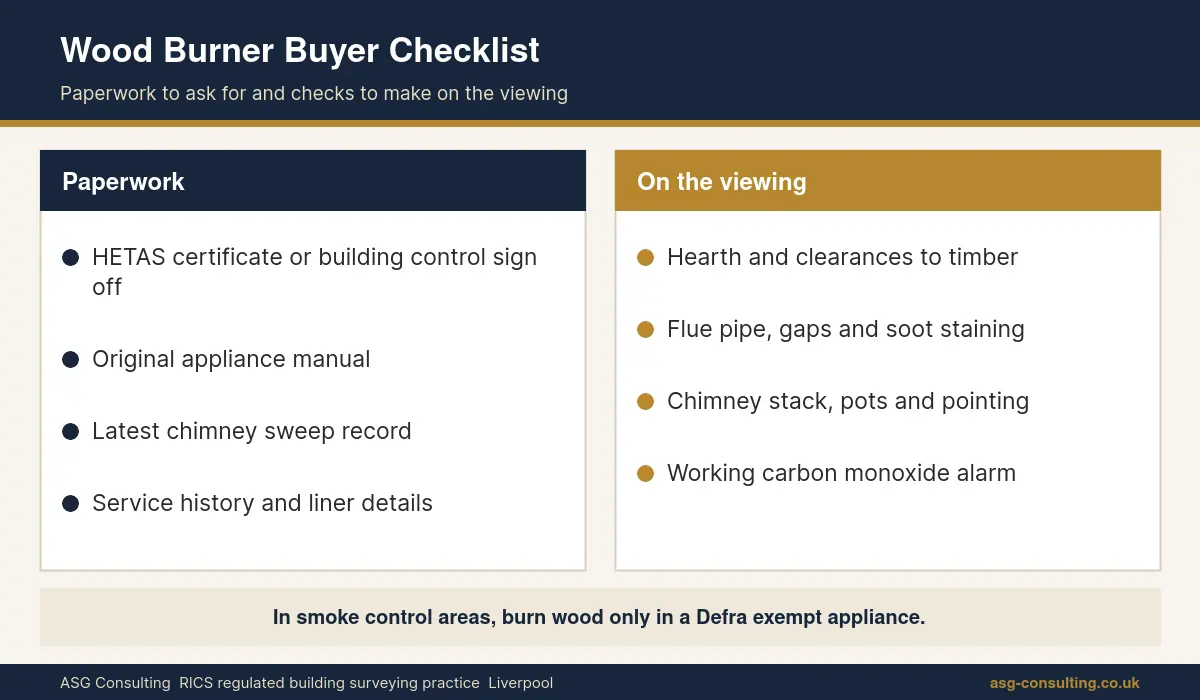
Use this paperwork checklist when buying a house with a wood burner. HETAS advises buyers to ask for these records when purchasing a property with a solid fuel heating system.
| Document | Why it matters |
|---|---|
| HETAS certificate of compliance or building control completion certificate | Shows the installation was signed off under building regulations |
| Original appliance instructions manual | Explains how to use and maintain the stove and which fuels it is designed for |
| Latest chimney sweeping record | Shows when the chimney was last swept and any issues found |
| Servicing record | Shows when the stove was last serviced |
| Details of the flue or chimney liner | Helps confirm the flue suits the appliance |
| Evidence the stove is a Defra exempt appliance | Needed if you want to burn wood in a smoke control area |
HETAS explains in its guidance for people moving home with a solid fuel appliance that these records can also be needed to validate home insurance.
Did the Stove Need Building Regulations Approval?
In most cases, yes. HETAS explains on its regulations page that most solid fuel installation work is notifiable to the local authority. There are two common routes.
- A HETAS registered installer. The installer can self certify the work, and the homeowner receives a HETAS certificate of compliance. The work is notified to the local authority without a separate building notice.
- Building control. Where the installer is not registered, the owner should apply to the local authority building control team, which inspects and signs off the work.
Either way, there should be a record that the installation was approved. Your solicitor will usually ask the seller for it during conveyancing.
What If There Is No Certificate?
Missing paperwork does not always mean the stove is unsafe, but it does mean more checks. HETAS says replacement copies of its certificates can be ordered through its online search for a fee, using the property postcode, so ask the seller to try that first.
If no certificate can be found, options include
- asking the local authority whether the work was notified
- arranging an inspection by a HETAS registered engineer before exchange
- asking the seller to obtain retrospective approval, where available
- indemnity insurance, which your solicitor can advise on, although it does not make an installation safe
- not using the stove until it has been checked
Safety should come first. An insurance policy covers certain legal risks, but only a proper inspection tells you whether the stove and flue are safe to use.
What Is a Smoke Control Area?
A smoke control area is an area where councils restrict smoke from chimneys to improve air quality. The gov.uk guidance on smoke control area rules explains that you can only burn authorised fuels in a smoke control area, unless you use a Defra exempt appliance.
Liverpool City Council says the whole city is already covered by smoke control orders. In 2025 it consulted on replacing around forty older orders with a single smoke control area covering the whole city, explaining that the change would not alter the rules for residents. You can read the details in the council smoke control consultation. Wirral Council says most of Wirral is also covered by smoke control areas.
What Can You Burn in a Smoke Control Area?
The rules depend on the appliance and the fuel. This table summarises the gov.uk guidance.
| Situation | What the rules say |
|---|---|
| Defra exempt appliance | Can burn the fuels the manufacturer specifies, which may include wood |
| Non exempt stove | Must only burn authorised smokeless fuels |
| Open fire | Authorised smokeless fuels only, with wood limited to small amounts for lighting |
| Smoke from a chimney | Can lead to a penalty of up to 300 pounds in England |
| Buying unauthorised fuel for a non exempt appliance | Can lead to a fine of up to 1,000 pounds |
Defra keeps lists of exempt appliances and authorised fuels on its smoke control website. Check the make and model of the stove against the exempt appliance list before you assume you can burn logs.
What Safety Checks Should You Make?
On a viewing, look at
- The hearth. It should be solid, non combustible and large enough for the stove.
- Clearances. Look for combustible materials, such as timber beams or shelving, too close to the stove or flue pipe.
- The flue pipe and register plate. Check for gaps, rust or damage where the pipe enters the chimney.
- Staining. Look for soot or tar staining on the chimney breast or ceilings above, which can suggest leaks.
- Ventilation. Some stoves need a permanent air vent in the room.
- The chimney stack. From outside, check for leaning stacks, missing pointing or damaged pots and cowls.
- A carbon monoxide alarm. Check one is fitted in the room and working.
If you spot any of these issues, ask for a HETAS registered engineer to inspect the installation before you commit.
Do You Need a Carbon Monoxide Alarm?
Carbon monoxide is a poisonous gas with no colour or smell, and solid fuel appliances can produce it if they are not working properly. Building regulations guidance requires a carbon monoxide alarm to be fitted when a new solid fuel appliance is installed, and in England landlords must fit one in any room used as living accommodation that contains a fixed combustion appliance, other than a gas cooker.
Even where it is not a legal requirement, a working carbon monoxide alarm in the room with the stove is a sensible safety measure. Test it when you move in and replace it in line with the manufacturer instructions.
How Often Should the Chimney Be Swept?
HETAS recommends sweeping at least twice a year when burning wood and at least once a year when burning smokeless fuels. The best times are just before the heating season starts and after a long period when the stove has not been used.
When you buy, ask for the latest sweeping record. If the chimney has not been swept recently, or you are not sure, arrange a sweep and safety check before you light the stove for the first time.
What Does a Home Survey Look At?
A RICS home survey includes a visual inspection of visible chimneys, flues and fireplaces. The surveyor will look at the chimney stack, flashings and pots from ground level or using binoculars, check visible parts of the flue and hearth inside, and note signs of staining, damp or poor installation.
A surveyor does not carry out a smoke test, inspect the full length of the flue or test the appliance. If there are concerns, the report will recommend further checks by a HETAS registered engineer or chimney sweep. A RICS Level 2 HomeBuyer Survey suits many conventional homes, and our RICS HomeBuyer Survey in Liverpool page explains what it covers. For older or altered homes, a Level 3 Building Survey gives more detail, as explained on our residential building surveying page. For tall stacks that are hard to see from the ground, our high level drone surveying service can give a closer view, subject to access and permissions.
What Should You Ask the Seller?
Ask these questions early and share the answers with your solicitor and surveyor.
- When was the stove installed, and by whom?
- Is there a HETAS certificate or building control completion certificate?
- When was the chimney last swept and the stove last serviced?
- Is the chimney lined, and when was the liner fitted?
- Is the stove a Defra exempt appliance, and what fuel do you burn?
- Have there been any problems with smoke, smells or draughts?
- Is a carbon monoxide alarm fitted, and does it work?
Our house viewing checklist covers other things to ask on a viewing.
What Fuel Rules Apply to Wood?
Burning wet wood creates more smoke and can coat the flue with tar, which raises the risk of chimney fires. Since May 2021, wood sold in England in small quantities has had to meet a moisture limit of 20 percent or less, and is usually labelled Ready to Burn.
If you plan to buy logs or season your own, store them under cover with good air flow until they are dry. Always follow the stove manufacturer instructions on fuel, and remember that in a smoke control area wood can only be burned in a Defra exempt appliance. Never burn treated or painted timber, household rubbish or other materials that the manufacturer does not approve.
Can You Fit a New Stove After You Move In?
Yes, but plan it properly. A new installation will need to meet building regulations, so use a HETAS registered installer or apply to building control. The installer should check the chimney, fit a suitable liner if needed, provide the right hearth and ventilation and fit a carbon monoxide alarm.
In Liverpool and other smoke control areas, choose a Defra exempt appliance if you want to burn wood. In conservation areas, new flues or changes to chimney stacks may also need permission, so check with the council before work starts.
What If You Are Buying to Let?
If you plan to rent the property out, you will need to meet the rules for landlords, including fitting a carbon monoxide alarm in any room with a fixed combustion appliance such as a wood burner. You should also keep the chimney swept, keep records and make sure tenants know how to use the stove and what fuel to burn in a smoke control area.
Some landlords decide to remove or disconnect stoves in rented homes to reduce risk and maintenance. Whatever you decide, keep the paperwork in order. Our HMO survey guide covers other checks for shared rented homes.
What Mistakes Do Buyers Make With Wood Burners?
Common mistakes include
- Assuming you can burn logs. In a smoke control area, wood can only be burned in an exempt appliance.
- Not asking for the certificate. Missing paperwork can affect insurance and a future sale.
- Lighting it straight away. Get the chimney swept and checked first.
- Ignoring the chimney stack. A leaning or poorly pointed stack can let in water and affect the flue.
- Forgetting the carbon monoxide alarm. It is a simple and important safety measure.
Wood Burners in Liverpool Homes
Many Victorian and Edwardian terraces in areas such as Wavertree, Kensington, Anfield and Toxteth were built with fireplaces in most rooms, and some owners have since fitted stoves into those original chimneys. Older chimneys were often not designed for modern stoves, so a suitable liner is often needed. In converted flats, chimneys may be shared between several homes, which makes it important to know who is responsible for each flue.
Issues to look out for in Liverpool homes include
- stoves fitted into old unlined chimneys
- missing certificates for stoves installed by previous owners
- chimney stacks shared between terraced houses with poor pointing or damaged pots
- chimney breasts removed elsewhere in the stack, affecting support
- stoves that are not exempt appliances, in a city covered by smoke control orders
Our guides to chimney breast removal, slate roof problems and a Victorian house survey cover related issues, and our guide to buying a house in a conservation area explains extra rules that may affect flues and stacks.
Buying a House With a Wood Burner FAQs
What paperwork do I need when buying a house with a wood burner?
Ask for the HETAS certificate or building control sign off, the appliance manual, the latest sweep record and the service history.
Can I use a wood burner in Liverpool?
Yes, but Liverpool is covered by smoke control orders, so you can only burn wood in a Defra exempt appliance. Otherwise use authorised smokeless fuel.
What if the wood burner has no HETAS certificate?
Ask the seller to order a replacement copy or check with building control. If none exists, get a HETAS registered engineer to inspect it.
Does a homebuyer survey check a wood burner?
A survey visually checks the chimney, flue and hearth where visible, but does not test the stove. Specialist checks may be recommended.
How often should a chimney with a wood burner be swept?
HETAS recommends at least twice a year when burning wood and at least once a year when burning smokeless fuels.
Do I need a carbon monoxide alarm with a wood burner?
One is required when a new solid fuel appliance is installed and in rented homes. It is a sensible safety measure in every home with a stove.
Book a Survey With ASG Consulting
ASG Consulting is an RICS regulated building surveying practice in Liverpool. We carry out RICS Level 2 HomeBuyer Surveys and Level 3 Building Surveys on period and older homes across Liverpool, Merseyside, the Wirral and the wider North West, with reports usually delivered within 3 to 5 working days of the inspection. We give a fixed fee on request, usually confirmed within one working day. To request a quote, call 0151 315 0626 or visit our contact page.
About the Author
Dave MacMillan is the lead surveyor at ASG Consulting, an RICS regulated building surveying practice at 54 St James Street, Liverpool. He has 8 years of experience in building surveying and inspects homes for buyers across Liverpool, Merseyside and the North West.
Last updated 20 November 2026
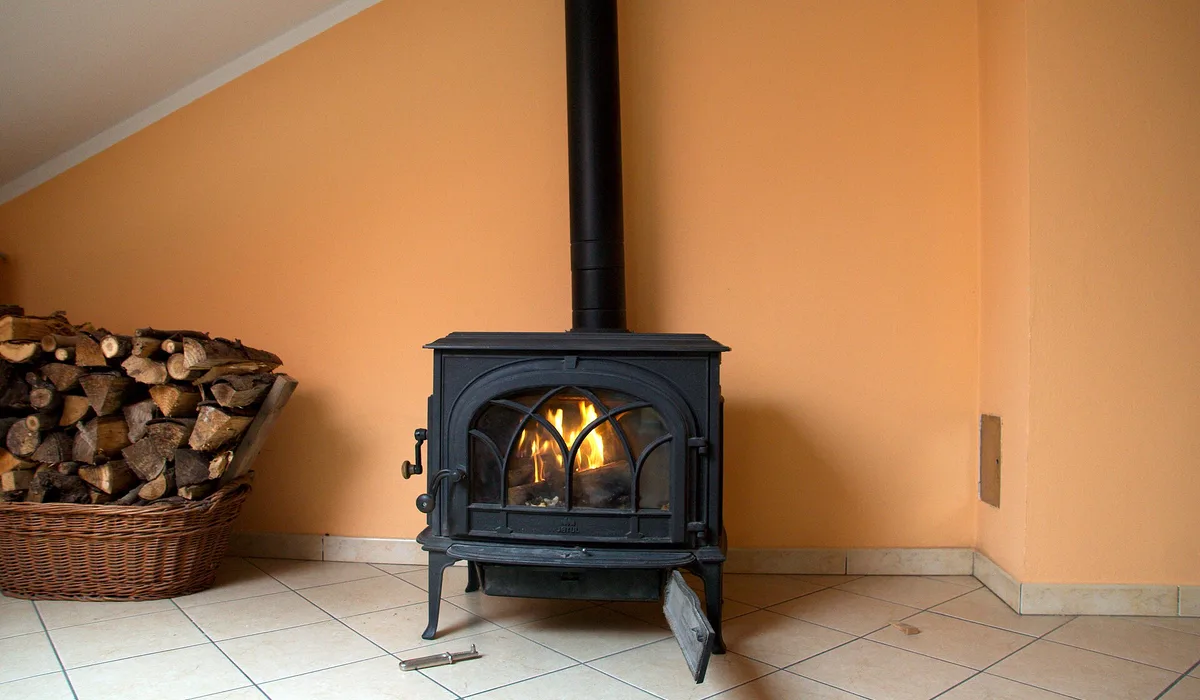
Featured photo of a wood burning stove by Andy Rogers via Wikimedia Commons, licence CC BY SA 2.0, cropped.