
You let out a terrace in Wavertree, or the flat you lived in before you moved in with your partner, and 2026 has brought more rules than any year in the last decade. Good property management Liverpool landlords can rely on now covers far more than rent collection. It means legal compliance, licensing, energy upgrades and, above all, the physical condition of the building.
This guide explains what property management in Liverpool covers today, which rules changed this year, what it really costs, and why a dated record of your property condition has become your strongest protection. It is written by building surveyors, so it spends more time on roofs, damp and evidence than a typical letting agent page.
What Property Management in Liverpool Covers Today
Property management is the day-to-day running of a rented home on behalf of its owner, from finding and keeping a tenant to keeping the building safe, legal and in good repair. For most Liverpool landlords, it now splits into three jobs, which are tenancy administration, legal compliance and care of the building itself.
Rental property management used to be judged on how fast an agent filled a void. Since the Renters Rights Act took effect, it is judged on how well the landlord can prove the home is safe, licensed and properly maintained.
What Does a Property Manager Do
A property manager acts as the link between you, your tenant and the trades who keep the home running. On a full management service, the typical duties include the following.
- Marketing the home at a published asking rent and carrying out right to rent and affordability checks.
- Preparing the written tenancy terms and protecting the deposit in a government-approved scheme within 30 days.
- Collecting rent and handling arrears in line with the new possession rules.
- Booking the annual gas safety check, the electrical report and alarm tests.
- Arranging repairs and keeping a log of every report and response.
- Inspecting the property, often every three to six months.
- Managing the check-out and any deposit deductions.
Good property management services also keep the paperwork in one place, because almost every new rule in 2026 asks landlords to prove something rather than simply do it.
Where a Letting Agent Stops and a Surveyor Starts
A letting agent manages the tenancy. A chartered surveyor assesses the building. The two overlap less than most landlords think.
An agent will notice a damp patch and send a contractor. A surveyor will tell you whether that patch is condensation, a leaking gutter, a failed render or a bridged damp-proof course, which matters because each one has a different fix and a very different cost. If you only ever treat the symptom, the same complaint comes back every winter and, under the new rules, every repeat complaint becomes evidence against you.
That is why a sensible approach to property management Liverpool owners can use splits the work, with an agent for the tenancy and a RICS surveyor for condition surveys, maintenance planning and evidence.
Property Management UK Rules That Changed in 2026
Property management UK rules changed more in 2026 than in any year since 1988. On 1 May 2026, phase one of the Renters Rights Act came into force across England. Section 21 no-fault evictions ended, and every assured tenancy became periodic, with no fixed end date.
Here is what it means for the property management Liverpool landlords deal with every day.
| Rule | What changed | Date |
|---|---|---|
| Section 21 | Abolished. Possession now needs a legal ground under Section 8 | 1 May 2026 |
| Tenancy type | All assured tenancies are periodic. Tenants can leave with two months’ notice | 1 May 2026 |
| Rent increases | Once a year only, using a section 13 notice with at least two months’ notice | 1 May 2026 |
| Rent in advance | No more than one month once the agreement is signed | 1 May 2026 |
| Rental bidding | Offers above the advertised rent banned | 1 May 2026 |
| Landlord database | Registration opens. North West landlords must register by 14 August 2027 | 15 December 2026 |
| EPC minimum | Rentals must reach EPC C or register an exemption | 1 October 2030 |
The Landlord Database and Ombudsman
Every private landlord in England must register on the new Register your rental property service. The fee is 65 pounds per property per year. Regulations reach the North West on 15 May 2027, and you then have three months to register, according to the NRLA summary of the 2026 regulations.
Two details catch people out. Agents cannot register on your behalf, so even a fully managed landlord has to do this personally. The entry also asks for your gas safety record, electrical report and EPC dates, and must be updated within 28 days whenever they change. A landlord without an active entry cannot get a possession order, except in antisocial behaviour cases.
A new Private Rented Sector Landlord Ombudsman will follow, with membership expected to become compulsory around 2028.
Standards Still to Come
Two condition rules are on the way but not yet in force for private rentals as of October 2026. The Decent Homes Standard is reported to apply to privately rented homes from 2035. Awaabs Law, which sets fixed deadlines for investigating and fixing hazards such as damp and mould, already applies to social housing but has no confirmed start date for private landlords.
Neither delay gives you breathing room. You already have to keep the structure, exterior, heating and water in repair under Section 11 of the Landlord and Tenant Act 1985, and keep the home fit for human habitation under the 2018 Act.
Selective Licensing Liverpool After March 2027
Licensing is the biggest local factor in property management Liverpool landlords face, and the rules are about to change. If your rental sits in one of the 16 licensed wards, you need a licence for an ordinary single let, not just for a shared house. Liverpool has run selective licensing since 2015, and the current scheme started in April 2022 and covers around 80 percent of privately rented homes in the city. It ends in March 2027.
The council has been busy under this scheme. Since April 2022, it has received more than 56,000 applications, granted over 48,000 licences, carried out more than 19,000 inspections, found over 3,500 housing hazards and issued more than 1,100 enforcement notices.
A consultation on the next scheme, covering 2027 to 2032, closed on 5 October 2026. It offered three options.
- A citywide scheme covering all 64 wards.
- A scheme for 29 wards with the highest levels of deprivation.
- A scheme for 26 wards with more private renting and evidence of poorer conditions.
The proposed full licence fee is 995 pounds per property, split into a 240-pound application fee and a 755-pound second payment, with discounts for a good EPC, landlord association membership and several flats in one building. No decision had been made when we published this guide, so treat every figure as a proposal.
You can check if your postcode is covered on the Liverpool City Council selective licensing page. Any house shared by five or more people from two or more households also needs a mandatory HMO licence anywhere in the city.
Why Liverpool Terraces Need Condition-Led Management
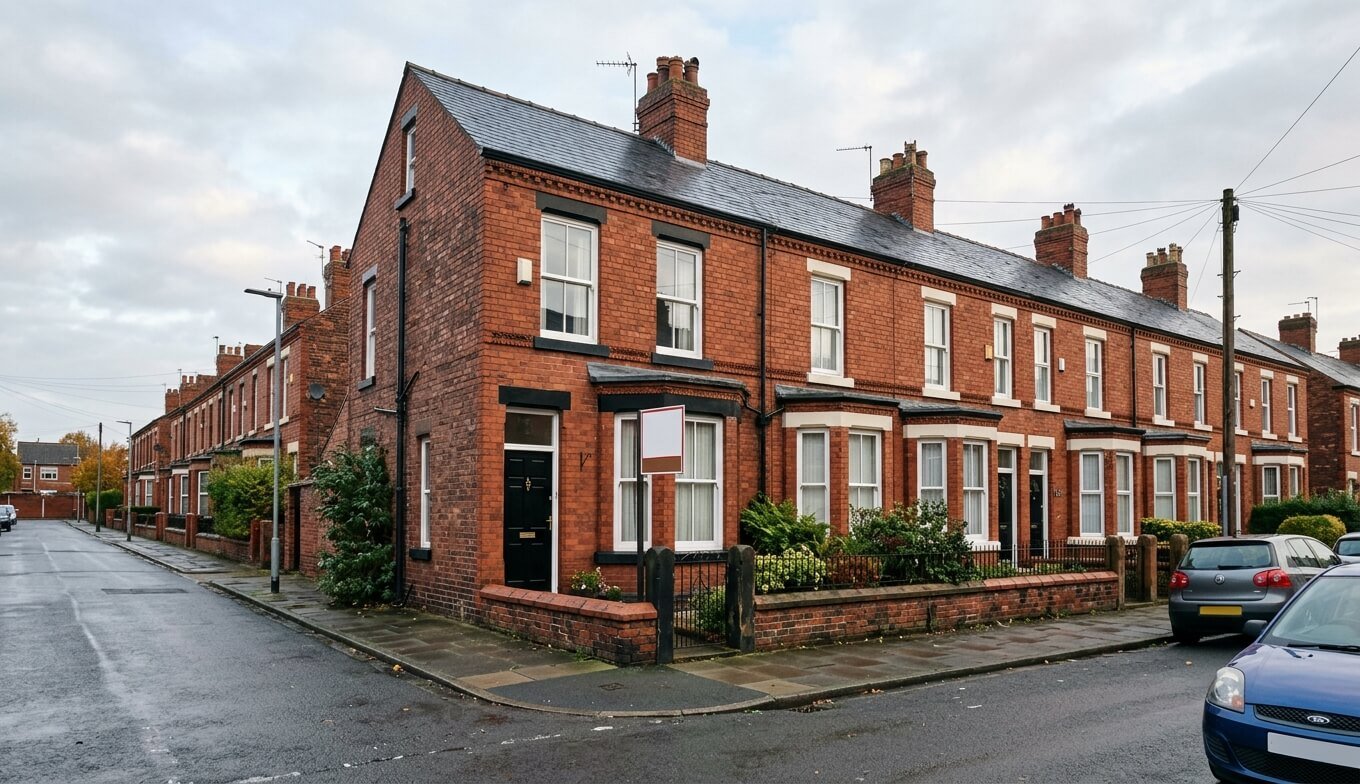
Much of the private rented housing in inner Liverpool sits in older terraced streets. Large parts of Anfield, Kensington, Walton, Wavertree and the streets around Smithdown Road are lined with brick terraces built before 1919, with solid walls, slate roofs, timber floors and long rear outriggers.
These houses are sound when they are looked after. They fail in predictable ways when they are not, so any plan for property management Liverpool landlords make has to start from the building itself.
- Slipped or cracked slates and tired roof valleys let water into ceilings.
- Chimney stacks lose their pointing and flashings, then leak or lean.
- Cast iron gutters and downpipes crack or block and soak the brickwork behind them.
- Raised paths and yards bridge the damp-proof course and push moisture into ground floor walls.
- Blocked air bricks starve suspended timber floors of ventilation, which leads to rot.
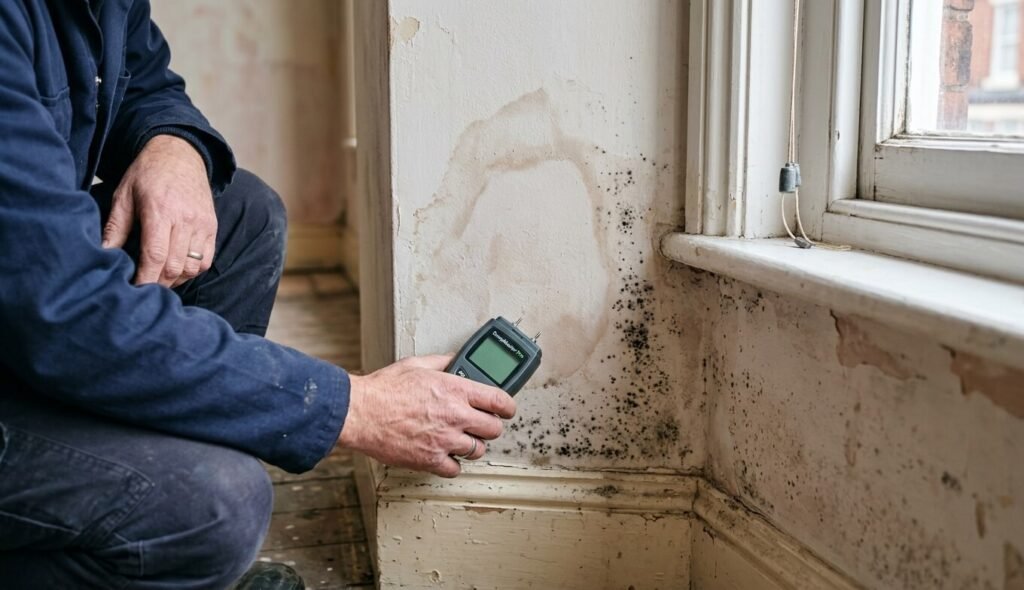
- Solid walls with poor heating and ventilation suffer condensation and black mould.
Each of these starts small and cheap. Left alone through two Merseyside winters, a slipped slate becomes a stained ceiling, then a mould complaint, then a disrepair claim. In our experience, the landlords who end up in disputes are rarely the ones who ignored a tenant. They are the ones who fixed the visible symptom and never found the cause.
Property Maintenance Liverpool Landlords Should Plan Ahead
Planned maintenance means deciding what each part of the building needs over the next five to ten years and budgeting for it, instead of waiting for it to break. For property maintenance Liverpool landlords can control, the starting point is a fixed calendar of legal checks plus a simple list of building elements and their remaining life.
| Task | How often | Why it matters |
|---|---|---|
| Gas safety check by a Gas Safe engineer | Every 12 months | Legal duty, copy to the tenant, needed for the database |
| Electrical Installation Condition Report | At least every 5 years | Legal duty for private rentals, needed for the database |
| Smoke and carbon monoxide alarm test | Start of every tenancy | Alarm on every storey, carbon monoxide alarm near fixed combustion appliances |
| Gutter and roof check | Every autumn | Stops the most common source of penetrating damp |
| Property inspection | Every three to six months | Catches leaks and condensation early and builds your evidence |
| Condition survey and maintenance plan | Every three to five years | Sets repair priorities and budgets for older homes |
| EPC review | Before 2030 | Rentals must reach EPC C by 1 October 2030 |
The EPC deadline deserves its own budget line. The government has capped the spend at 10,000 pounds per property, or 10 percent of value for homes worth under 100,000 pounds, and qualifying work carried out since October 2025 counts towards the cap. On an older terrace, a survey that ranks loft insulation, heating controls, window repairs and wall treatments by cost and benefit can save you from spending money in the wrong order. Our asset management service builds exactly this kind of long-term plan for landlords and portfolio owners.
Damp, Mould and What Awaabs Law Will Mean
When Awaabs Law reaches private rentals, landlords are expected to face fixed deadlines to investigate and fix hazards such as damp and mould. You do not need to wait for the date to prepare.
Log every damp report the day it arrives. Get the cause diagnosed, not just the mould wiped. Keep the diagnosis, the photos and the invoice together. If a tenant later claims disrepair, that record shows a landlord who acted. If you need an independent view, a housing disrepair survey identifies the cause and the remedy in a report that stands up to scrutiny.
Check In Evidence Now That Section 21 Has Gone
With no-fault eviction gone, the condition of the home at the start of a tenancy matters more than ever. If a tenant damages the property, you now need to prove it under a Section 8 ground, and deposit disputes are decided by comparing the check-in record with the check-out record.
An inventory lists the contents and their condition. A schedule of condition goes further and records the fabric of the building, room by room, with dated photographs of walls, ceilings, floors, windows and any existing cracks or stains. It is the document that settles arguments about whether a crack was there before, whether a stain is new, or whether wear is fair wear and tear.
For an older Liverpool house, where hairline cracks and old water marks are normal, that detail protects both sides. A schedule of condition prepared by a surveyor before a new tenancy costs far less than one lost deposit dispute.
Property Management Liverpool Costs in 2026
Full property management Liverpool agents typically cost 8 to 14 percent of the monthly rent including VAT, according to fee examples published by August 2026, with extra charges for finding a tenant, inventories and renewals. That is lower in pounds than in most big cities because Liverpool rents are lower, but it takes a larger share of the income.
| Cost | Typical amount as of October 2026 | Notes |
|---|---|---|
| Full management fee | 8 to 14 percent of monthly rent including VAT | Ask whether inspections and renewals are included |
| Tenant find or setup fee | Around 295 to 480 pounds | One-off, per new tenancy |
| Selective licence | Proposed 995 pounds for a full five-year licence | Discounts proposed, not yet decided |
| Landlord database | 65 pounds per property per year | Paid by the landlord directly |
| EPC upgrade cap | Up to 10,000 pounds per property | Lower cap for homes worth under 100,000 pounds |
Property management fees in the UK are tax-deductible against rental income, as are licence fees and most repair costs. Check the treatment of any improvement work with your accountant, because upgrades and repairs are taxed differently.
Remember that tenants cannot be charged for most of these services. The Tenant Fees Act 2019 bans most fees to tenants in England, so the landlord carries them.
Self Manage, Hire an Agent or Mix Both
There is no single right model of property management Liverpool landlords should copy. The best choice depends on how close you live, how many homes you own and how old they are.
- Self-management suits one modern flat near where you live, if you are organised and willing to keep up with the law.
- Full management suits landlords who live away from Merseyside or own several homes, and want one point of contact for tenants.
- A mixed model suits many owners of older terraces. An agent or app handles rent and tenancy paperwork, and a surveyor handles condition, maintenance planning and evidence.
Property management for landlords works best when everyone knows who owns which task. Write it down. The most common gap we see is the electrical report or the gas check falling between landlord and agent because each thought the other had booked it.
A Short Word for Accidental Landlords
If you became a landlord because you could not sell, or because you moved in with a partner, you carry exactly the same legal duties as a professional investor. Before the first tenant moves in, get the gas, electrical, and EPC certificates in place, check the licensing map, and have the building looked at with fresh eyes. A home that suited you for years can hide problems you stopped noticing, and a residential building survey will show what needs doing before a tenant reports it.
How ASG Consulting Supports Property Management in Liverpool
ASG Consulting is a RICS-regulated building surveying practice based on St James Street in Liverpool, working with landlords, portfolio owners and block managers across Merseyside and the North West. We do not collect rent or find tenants. We look after the part of property management Liverpool landlords most often overlook, keeping the building sound and your evidence complete.
That includes condition surveys, schedules of condition before a new tenancy, planned maintenance and lifecycle budgets, damp and disrepair diagnosis, and EPC upgrade planning for older homes. Many of our clients pair us with their letting agent so tenancy work and building work each sit with a specialist.
If you own a rental in Liverpool and are not sure where it stands, call us on 0151 315 0626 or send an enquiry through the contact page for a straight answer on what your property needs.
FAQs
What does a property manager do for a landlord?
A property manager finds and checks tenants, prepares the tenancy terms, protects the deposit, collects rent, arranges repairs and books the legal safety checks. Most also inspect the home every few months and handle the check-out. In Liverpool, a good manager should also track your selective licence and help you prepare for the landlord database, although you must register yourself.
How much does property management cost in Liverpool?
Property management Liverpool fees for a full service typically run 8 to 14 percent of the monthly rent including VAT as of 2026, plus a one-off fee of roughly 295 to 480 pounds to find a tenant. Inventories, renewals and contractor charges may be extra. Ask every agent for a full written fee schedule before you sign, and check whether inspections are included.
Do I need a landlord licence in Liverpool?
If your rental is in one of the 16 wards in the current selective licensing scheme, you need a licence even for a single family let. The scheme ends in March 2027, and the council has consulted on a replacement that could cover all 64 wards. Houses shared by five or more people from different households need an HMO licence anywhere in the city.
Is a letting agent the same as a property manager?
Not always. A letting agent only finds and checks a tenant and then hands the tenancy to you. A property manager runs the tenancy from start to finish, including rent, repairs and inspections. Many Liverpool agents offer both, so confirm in writing which service you are buying and which tasks stay with you.
Can my letting agent register my property on the landlord database?
No. Under the Private Rented Sector Database Regulations 2026, the landlord must register personally, although an agent can help gather the information. Registration opens on 15 December 2026, costs 65 pounds per property each year, and North West landlords must be registered by 14 August 2027. An active entry is needed before a court will grant most possession orders.
How often should a rental property in Liverpool be inspected?
Many managers inspect every three to six months, with extra visits after any leak or damp report. Older terraces benefit from an autumn check of gutters, roof and chimney before the wet months. A full condition survey every three to five years keeps your maintenance plan and budget accurate.
Final Thoughts on Property Management Liverpool
Property management Liverpool landlords need in 2026 is less about chasing rent and more about proof. Proof that the home is licensed, registered, safe and kept in repair, and proof of its condition on the day each tenancy began.
Start with three actions this month. Check your postcode on the licensing map, put your gas, electrical and EPC dates in one calendar ahead of the database, and get the condition of the building recorded by someone qualified to read it. If you want help with the building side, ASG Consulting can survey your rental and give you a clear plan.
This guide is general information as of October 2026 and is not legal, tax or financial advice. Rules and proposed fees may change, so check the current position with Liverpool City Council, a solicitor or your accountant before acting.