
A commercial property survey tells you what condition a building is in, what it will cost to put right, and what legal or compliance risks come with it, before you buy, lease or sell. The right survey can change the price you pay, the lease you sign and the repair bill you inherit.
This guide explains the main types of commercial survey, what a commercial property surveyor inspects, what the report looks like, typical fees and timescales, and who normally pays. It is written for buyers, investors, tenants and landlords of offices, shops, warehouses and mixed use buildings across Liverpool, Merseyside and the North West.
In this guide:
- What is a commercial property survey?
- Types of commercial property survey
- Buying vs leasing: which survey, and when
- What a commercial property surveyor inspects
- Compliance checks that can change the deal
- What the commercial property survey report looks like
- How much does a commercial property survey cost?
- How long does a commercial building survey take?
- Who pays for a commercial property survey?
- FAQs
What Is a Commercial Property Survey?
A commercial property survey is an inspection of a business building by a qualified surveyor, followed by a written report on its condition, defects, likely repair costs and compliance risks. It covers the structure, roof, walls, floors, building services and the site around the building.
It is not the same as a home survey. Commercial buildings are larger, use different construction such as steel frames, profiled metal roofs and curtain walling, carry heavier legal duties, and are usually bought or let on terms that pass repair liability to the occupier.
A good commercial property survey is written around the deal you are doing, not a fixed template. The surveyor should ask what you plan to do with the building, how long you expect to hold it, and what your lease or purchase terms say about repairs.
Types of Commercial Property Survey
The survey you need depends on whether you are buying, leasing, selling or managing the building. These are the main types used in England and Wales.
| Survey type | When it is used | Who usually instructs it | What it protects against |
|---|---|---|---|
| Pre acquisition survey, also called technical due diligence | Before exchanging contracts on a freehold or long lease | Buyer or investor | Paying too much for a building with hidden defects or compliance costs |
| Pre lease survey | Before agreeing heads of terms on a new lease | Incoming tenant | Taking on repair liability for defects that existed before you moved in |
| Schedule of condition | At the start of a lease, attached to the lease | Tenant, sometimes the landlord | Dilapidations claims for disrepair you did not cause |
| Building condition survey | During ownership, for budgeting | Owner or managing agent | Unplanned repair bills, and it forms the basis of a planned maintenance plan |
| Dilapidations survey | During or at the end of a lease | Landlord to make a claim, or tenant to defend one | Disputed repair costs when the lease ends |
| Vendor survey | Before marketing a building for sale | Seller | Price reductions late in the sale when the surveyor for the buyer finds defects |
| Measured survey | For lease plans, refurbishment or planning | Owner, tenant or designer | Wrong floor areas, rents or design drawings |
Many instructions combine two of these. A tenant taking a ten year full repairing lease, for example, will often commission a pre lease survey and then a schedule of condition from the same inspection.
Buying vs Leasing: Which Commercial Property Survey, and When
If you are buying
Instruct a pre acquisition commercial property survey once your offer is agreed and before exchange. Findings feed into price negotiation, a retention, or a requirement for the seller to complete works. Tell the surveyor what you plan to do with the building, whether that is holding, letting, refurbishing or converting it, because that changes what matters.
If you are leasing
Instruct the survey before you agree heads of terms. Under a full repairing and insuring lease, known as an FRI lease, a tenant can be liable to put the building into repair, even for defects that were there on day one. A pre lease survey shows you those defects while you can still negotiate. The usual options are:
- the landlord repairs before the lease starts
- the repair covenant is limited by a photographic schedule of condition attached to the lease
- you take on the repairs in exchange for a rent free period
If you are selling
A vendor survey lets you deal with defects or price them in before the surveyor for the buyer uses them to renegotiate. It also gives buyers confidence and can shorten the time between agreeing a sale and exchange.
What a Commercial Property Surveyor Inspects
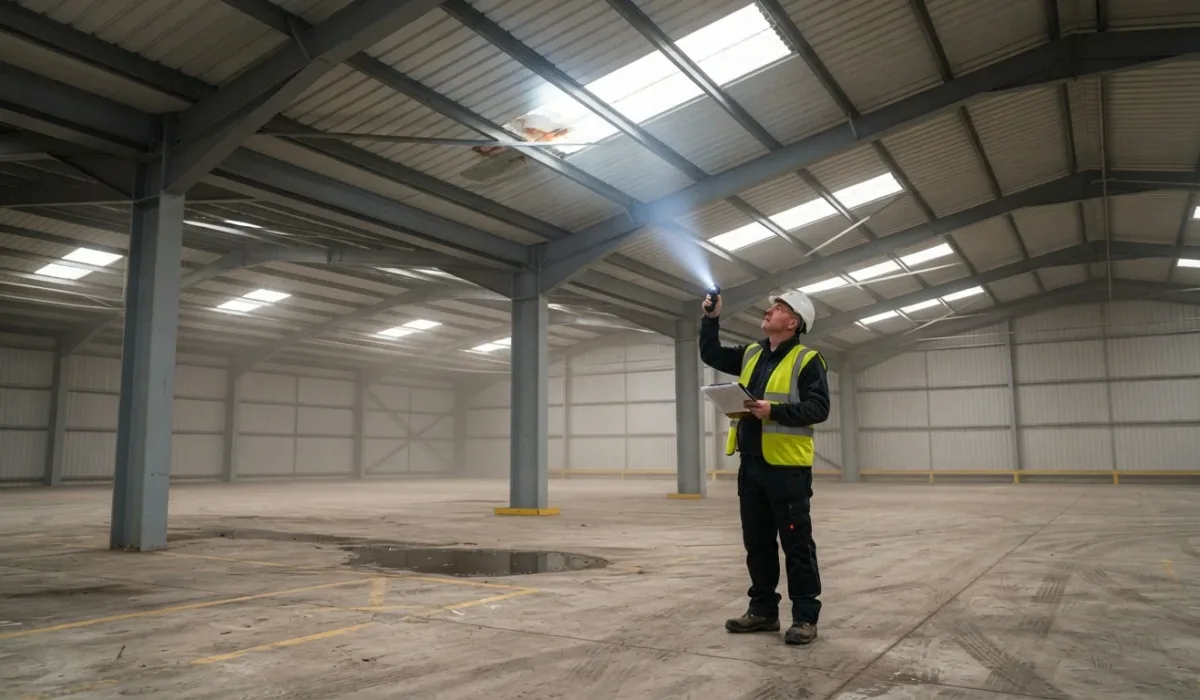
A commercial building survey is a visual inspection of every accessible part of the building, carried out methodically, element by element, without opening up the structure.
- Structure: frame, foundations and any signs of movement, load bearing walls, floors and beams.
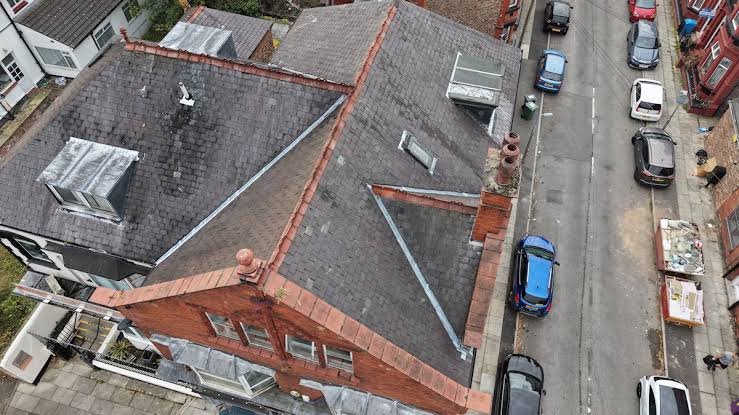
- Roof: coverings, flashings, gutters, rooflights and drainage. Many industrial roofs are fragile and need a safe access method, such as a drone roof inspection.
- External envelope: brickwork, cladding, curtain walling, windows, doors and loading bays.
- Internal finishes: ceilings, partitions, floors and fire doors.
- Building services: a visual check of heating, ventilation, air conditioning, electrics, lifts and sprinklers, with specialist testing recommended where needed.
- External areas: car parks, boundaries, drainage and outbuildings.
- Legal and statutory items: listed status, planning and Building Regulations sign offs, and the compliance checks below.
Where a crack, stain or bulge needs more than a visual opinion, the surveyor will recommend defect diagnosis or a structural engineer.
Common defects a commercial property survey finds
Every building is different, but some problems come up again and again in commercial property surveys of offices, shops and industrial units:
- Roof leaks: corrosion at the cut edges of metal roof sheets, failed fixings, cracked rooflights and blocked gutters.
- Water damage: stains and rot where gutters or valley gutters overflow into the building.
- Cracked or loose brickwork: often linked to rusting steel embedded in walls or to old movement.
- Failed seals: worn sealants around windows, cladding panels and curtain walling that let water in.
- Ageing services: heating, air conditioning and electrical systems near the end of their working life.
- Damaged floors: cracked or uneven concrete slabs in warehouses that carry heavy loads.
Compliance Checks That Can Change the Deal
These are the issues most likely to add cost after you complete. A good report flags each one clearly.
Energy performance and MEES
Since 1 April 2023, a privately rented commercial property in England and Wales must have an EPC rating of at least E to continue being let, unless a valid exemption is registered. The rule has applied to new lettings since 1 April 2018. In June 2026 the government proposed raising the minimum to EPC B from 2031 for rented buildings over 1,000 square metres, where it is cost effective. This still needs secondary legislation. If you are buying to let, the survey should flag the EPC rating and the likely cost of upgrades. Source: GOV.UK landlord guidance.
Asbestos
Regulation 4 of the Control of Asbestos Regulations 2012 places a duty to manage asbestos in non domestic premises on anyone with a maintenance or repair obligation for them. Under a lease, that duty is often shared between landlord and tenant. Buildings constructed or refurbished before 2000 may contain asbestos. The survey should confirm whether an asbestos register and management plan exist. Source: HSE guidance on managing asbestos.
Fire safety
The surveyor checks fire doors, escape routes, compartmentation where visible, and whether a current fire risk assessment is in place.
Accessibility
Under the Equality Act 2010, businesses serving the public must make reasonable adjustments for disabled people. The survey notes steps, door widths, toilets and lifts that could need work.
Deleterious materials
The surveyor looks for materials known to fail or cause risk, such as reinforced autoclaved aerated concrete, known as RAAC, in roof and floor planks, and high alumina cement.
What the Commercial Property Survey Report Looks Like
A commercial property survey report should let a decision maker understand the risks in five minutes, with the detail behind it. The RICS professional standard Technical due diligence of commercial property took effect on 1 April 2020 and was reissued as a professional standard in April 2023. It sets out how this work should be done, including a traffic light risk rating so clients can see what needs action first.
A typical report includes:
- Executive summary: the key risks, with red, amber and green ratings.
- Property details: age, construction, size, tenure, and the limits of the inspection.
- Condition by element: roof, structure, envelope, services and externals, with photos.
- Statutory and legal issues: MEES, asbestos, fire safety, accessibility, planning and Building Regulations.
- Cost budgets: repair costs split into immediate items, items due within 1 to 5 years, and longer term items.
- Recommendations: further investigations and points for your solicitor.
How Much Does a Commercial Property Survey Cost?
Commercial property survey fees are quoted case by case, because they depend on the building and the scope. The main factors are:
- floor area and number of floors or units
- age, construction and condition
- building use, since an office is simpler than a cold store or hotel
- access, including roof access and occupied areas
- report depth and turnaround time
- extras such as drainage CCTV, mechanical and electrical testing, asbestos surveys or a drone roof inspection
As a guide, fees published by UK commercial surveyors in 2025 and 2026 range from around £500 to £1,500 for a pre lease survey or schedule of condition on a small unit, and from £3,000 to £10,000 or more for full technical due diligence on a large or complex building. Fees are normally quoted plus VAT. For London prices, see our London commercial survey fees guide.
Set against what the survey can save, the fee is small. One missed roof replacement on a warehouse can cost more than the survey many times over.
How Long Does a Commercial Building Survey Take?
The site inspection for a small shop or office usually takes a few hours, while large industrial buildings or buildings with several tenants can take a day or more. The written report typically follows within about a week of the inspection. If you are working to an exchange date or lease deadline, tell the surveyor at the outset so the inspection can be booked and the report prioritised.
How to prepare for the inspection
You can speed up the inspection and get a more useful report by sending the surveyor what you already hold before the visit:
- the draft lease or sale particulars
- floor plans and any previous survey reports
- the asbestos register and fire risk assessment
- the current EPC certificate
- service and maintenance records for heating, lifts and fire systems
- contact details for access, including keys, alarm codes and roof access
Who Pays for a Commercial Property Survey?
The person who instructs the survey normally pays for it, because the report is written for them.
- Buyers pay for their pre acquisition survey.
- Tenants usually pay for a pre lease survey and schedule of condition.
- Landlords usually pay for a dilapidations schedule at lease end. Some leases let the landlord recover those fees from the tenant, so check your lease.
- Sellers pay for a vendor survey, and may share it with buyers.
Commercial Property Survey vs Valuation
A survey tells you about the condition of the building and its risks. A valuation tells you what it is worth. Lenders instruct a valuation to protect their loan. It is not a condition report and does not tell you what needs fixing. If you are borrowing, you will usually need both: the valuation for the lender and your own commercial property survey.
What a Commercial Property Survey Cannot Tell You
A standard commercial survey is visual. The surveyor will not lift fitted floor coverings, open up walls or test services. Areas that are locked, occupied or unsafe to reach may be excluded. A good report lists these limits clearly and recommends further investigation where they matter, for example a drainage CCTV survey or a report from a structural engineer.
What to Do After Your Commercial Property Survey
The report is only useful if you act on it. Once you have it:
- Read the executive summary first and list every red rated item.
- Ask the surveyor to explain anything you do not understand, and to confirm which costs are firm and which are estimates.
- Share the findings with your solicitor so legal points can be raised with the seller or landlord.
- Commission specialist reports where the surveyor recommends them, before you commit.
- Negotiate: a lower price, a retention, works by the seller or landlord, a rent free period, or a schedule of condition attached to the lease.
Choosing a Commercial Property Surveyor
Anyone in the UK can call themselves a building surveyor, so check before you instruct.
- RICS regulation: look for a firm regulated by RICS and a chartered surveyor, shown by the letters MRICS or FRICS.
- Professional indemnity insurance: ask for confirmation of cover.
- Commercial experience: ask for examples of similar buildings and deals.
- Local knowledge: a surveyor who knows the warehouses, Victorian commercial terraces and post war offices of Liverpool will spot common local defects faster.
- Scope in writing: agree exactly what is and is not included before the inspection.
Commercial Property Survey FAQs
Do I need a survey to buy a commercial property?
There is no legal requirement, but buying without one means the buyer takes the building as it stands, with any defects. Most lenders and investors expect a pre acquisition survey.
What is the difference between a commercial building survey and a schedule of condition?
A building survey assesses condition and advises on risk and cost. A schedule of condition is a factual, photographic record of the building at a set date, usually attached to a lease to limit the repair liability of the tenant.
Can a survey help reduce my dilapidations bill?
Yes. A schedule of condition agreed at the start of the lease is the strongest evidence against claims for disrepair that existed before you moved in. Section 18 of the Landlord and Tenant Act 1927 also limits damages for breach of a repairing covenant to the loss in value of the interest held by the landlord.
Is a commercial survey the same as a structural survey?
No. A commercial building survey covers the whole building, including the structure. A report from a structural engineer looks only at structural elements and is usually commissioned when the survey finds movement or cracking.
Is a commercial property survey worth it for a small unit?
Usually, yes. Small shops and industrial units are often let on full repairing leases, so the tenant can face the full cost of roof, wall or drainage repairs. A short commercial property survey or schedule of condition costs far less than one of those repairs.
Get a Commercial Property Survey in Liverpool and the North West
The surveyors at ASG Consulting are regulated by RICS and carry out every type of commercial property survey, including pre acquisition surveys, pre lease surveys, schedules of condition and dilapidations advice on offices, retail, industrial and mixed use buildings across Liverpool, Merseyside and the North West. Tell us about the building and your deadline and we will confirm the scope and a fixed fee. Visit our commercial building surveying page to request a quote.