
A patch of damp that keeps coming back. A boiler that’s failed twice this winter. A landlord who reads your messages and says nothing. If any of that sounds familiar, you’re not imagining a problem and you don’t have to just live with it.
A house disrepair survey gives you something a phone call or a strongly worded email never will: independent, written evidence of exactly what’s wrong, why it matters, and what it will take to put it right. A house disrepair survey Merseyside homeowners and tenants can rely on turns a frustrating stand-off into a documented, evidence-backed case.
For tenants, homeowners, landlords and housing associations across Merseyside, this kind of survey is often the turning point in a disrepair dispute the moment a vague complaint becomes a documented case a landlord, insurer or solicitor has to take seriously.
House Disrepair Survey Merseyside: What It Actually Involves
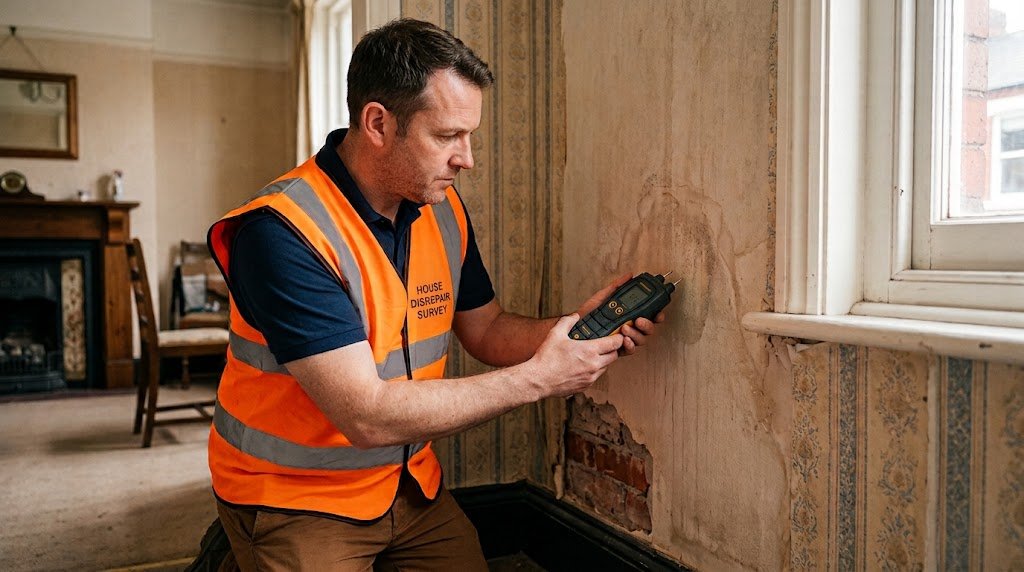
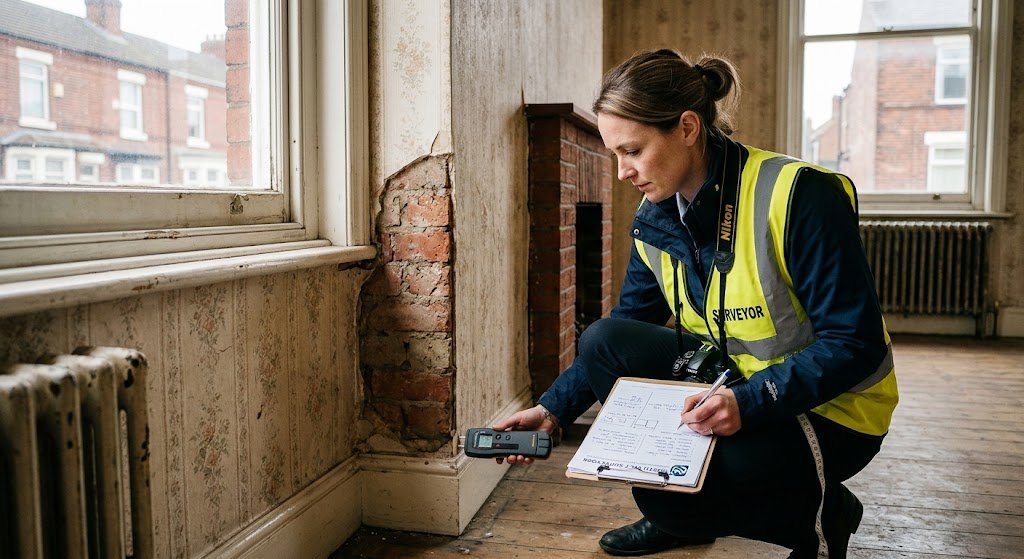
A house disrepair survey is a hands-on, independent inspection that a qualified surveyor carries out to pin down exactly what’s wrong with a property and, just as importantly, why it’s happening. It isn’t a quick once-over or a generic condition report. Every inspection is built to produce something that holds up under scrutiny, whether that’s a landlord who needs convincing, a housing association reviewing a complaint, or a solicitor preparing a formal claim. The surveyor works room by room, checking for damp, structural movement, roofing faults, failing windows and doors, unsafe heating or electrics, and timber decay, backing up each finding with photographs and moisture readings where they’re needed. The result is a report that doesn’t just list problems; it explains their cause, how serious they are, and how urgently they need fixing, measured against the Housing Health and Safety Rating System (HHSRS) that local authorities use to judge hazards in the home.
A thorough survey typically covers:
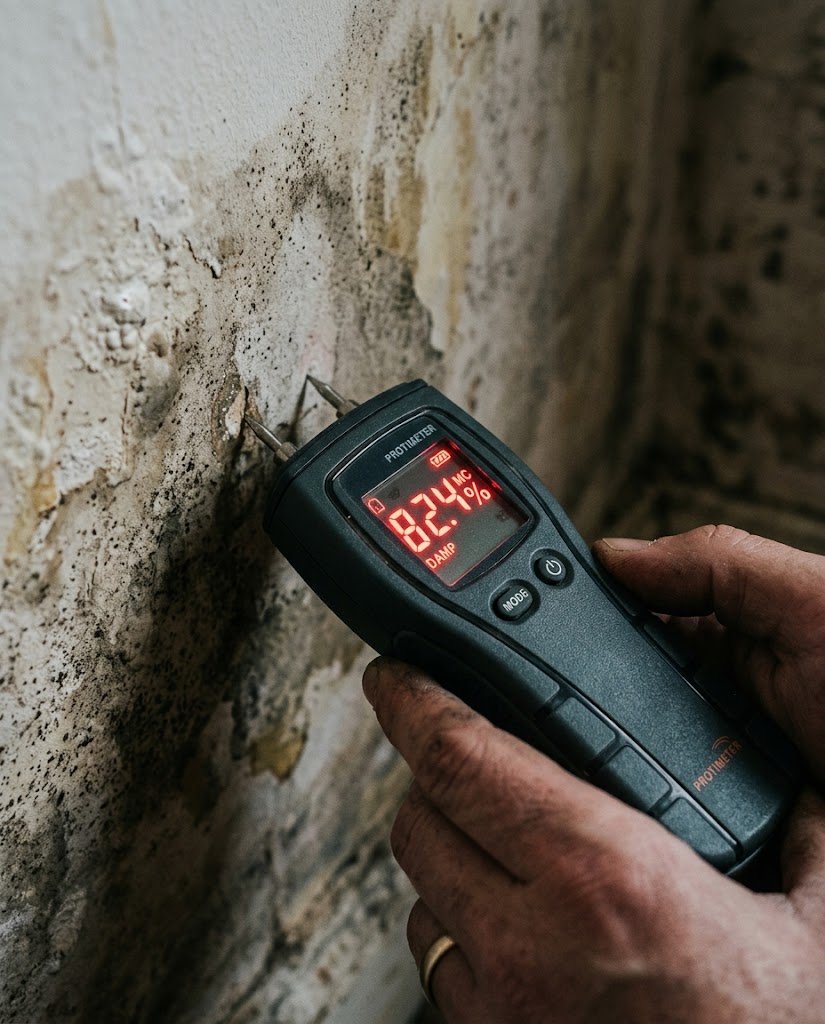
- Damp and mould source, extent, and whether it stems from condensation, penetrating damp, or rising damp
- Structural movement cracking, settlement, or issues with load-bearing elements
- Roof and rainwater goods slipped tiles, blocked gutters, water ingress
- Windows and doors draughts, rot, failed seals
- Heating, electrics and ventilation anything creating a health and safety hazard
- Timber condition rot, woodworm, or structural timber decay
The surveyor records each defect with photographs, moisture readings where relevant, and a professional opinion on cause, severity and urgency.
Findings are referenced against the Housing Health and Safety Rating System (HHSRS), the framework local authorities use to assess hazards in residential property.
Why Merseyside Properties Are Particularly Prone to Disrepair
Merseyside’s housing stock has a character that makes disrepair a recurring issue rather than a rare one. Large numbers of Victorian and Edwardian terraces, solid-wall construction with no cavity, and a significant proportion of ex-council and converted properties mean that damp, poor ventilation and ageing services are common rather than exceptional.
Add the North West’s wetter-than-average climate, and small maintenance issues: a cracked pointing joint, a blocked airbrick turn into persistent damp problems faster than they would in newer, cavity-wall housing elsewhere. It’s exactly this kind of building stock that makes a house disrepair survey Merseyside landlords and tenants can trust so valuable.
That local context matters when a survey is written. A surveyor who regularly works on Liverpool terraces or Wirral semis understands the difference between a defect that’s cosmetic and one that’s a genuine hazard in that type of construction and writes a report that reflects it.
Your Legal Position: What the Law Actually Requires
Housing disrepair isn’t just a maintenance frustration it’s a legal obligation on the landlord’s side, and recent legislation has sharpened that considerably.
- Landlord and Tenant Act 1985, Section 11 places a statutory duty on most private landlords to keep the structure, exterior, and key installations (heating, water, sanitation) in repair.
- Homes (Fitness for Human Habitation) Act 2018 gives tenants a direct right to take action if a property is unfit to live in, rather than relying solely on the local council to intervene.
- Awaab’s Law, introduced under the Social Housing (Regulation) Act 2023, sets fixed legal timescales for social landlords to investigate and fix hazards. Its first phase, covering damp and mould and emergency hazards, came into force on 27 October 2025. A second phase extending it to a wider set of HHSRS hazards is due to take effect from 30 November 2026. It currently applies to social housing, though reforms moving through Parliament are expected to extend similar protections to the private rented sector at a later stage.
A properly evidenced house disrepair survey is what turns these legal rights from theory into something enforceable. It’s the document that shows a landlord, or their insurer, exactly what they’re obligated to fix.
Signs You Should Book a Survey
You don’t need to wait for a crisis. Consider a survey if you’re seeing:
- Damp patches, mould growth, or a persistent musty smell
- Cracking that’s new or has visibly widened
- Repeated repair requests that go unanswered or are only patched, not fixed
- Health complaints coughs, respiratory issues that seem linked to the property’s condition
- You’re preparing to raise a formal disrepair claim or need evidence before mediation
What Happens During the Survey
- Initial instruction and access arrangement the surveyor confirms scope and arranges a convenient inspection time.
- On-site inspection a methodical walk-through of the property, room by room, including roof space and any accessible external areas. Moisture meters, thermal imaging or borescopes are used where needed to confirm what’s happening behind a wall or under flooring, rather than guessing from surface symptoms.
- Photographic evidence of every defect is photographed and referenced to its location.
- Written report findings are set out defect by defect, with likely cause, severity rating, and recommended remedial action, referenced against HHSRS categories where relevant.
- Follow-up support: a good surveyor will talk you through the findings in plain language, not just hand over a document full of jargon.
Most residential disrepair surveys take a few hours on site, with the written report typically following within a week.
What a Survey Costs and Why It’s Worth It
Costs vary with property size and the extent of the issues being investigated, but a house disrepair survey Merseyside households pay for is a modest outlay set against what’s at stake: your health, your tenancy security, or a landlord’s repair bill running into thousands if problems like timber decay or structural damp are left unaddressed.
For anyone pursuing a formal disrepair claim, the survey report is often the single most persuasive piece of evidence a solicitor will ask for.
A Case in Point
We were recently asked to inspect a mid-terrace property off Smithdown Road where the tenant had reported a damp patch to their landlord three times over eight months, each time receiving a coat of paint rather than a repair.
Our inspection traced the cause to a failed damp-proof course and a blocked external drainage channel neither of which paint was ever going to fix. The written report gave the tenant’s solicitor the technical basis to press for proper remedial works, rather than another temporary fix.
Frequently Asked Questions
Do I need my landlord’s permission for a disrepair survey?
As a tenant, you have a right to arrange an independent inspection of the property you occupy, though you’ll typically need to give reasonable notice and the landlord may want to be informed. A qualified surveyor will advise on the right approach for your specific tenancy.
Will a disrepair survey hold up in a legal claim?
Yes that’s precisely what it’s designed for. A report from a RICS-regulated surveyor, referencing recognised standards like HHSRS, carries the independence and technical weight that courts, landlords and insurers expect to see.
How is this different from a homebuyer survey?
A homebuyer survey assesses a property you’re considering purchasing, for your own decision-making. A disrepair survey investigates specific, existing problems in a property you already occupy, with the aim of getting them fixed or building an evidence base for a claim.
Can landlords request a disrepair survey too?
Absolutely. Landlords and housing associations commission these surveys to get an objective, third-party assessment before agreeing works, settling a dispute, or responding to a tenant’s complaint.
About the Author
This guide was prepared by the building surveying team at ASG Consulting, a RICS-regulated building surveying and construction consultancy based in Liverpool, working across Merseyside, the Wirral, Cheshire and Greater Manchester.
Our surveyors provide impartial, evidence-led disrepair reporting for tenants, landlords, solicitors and housing providers. If you need a house disrepair survey Merseyside professionals can stand behind, our team also covers residential and commercial building surveys, structural engineering, and dilapidations advice.