
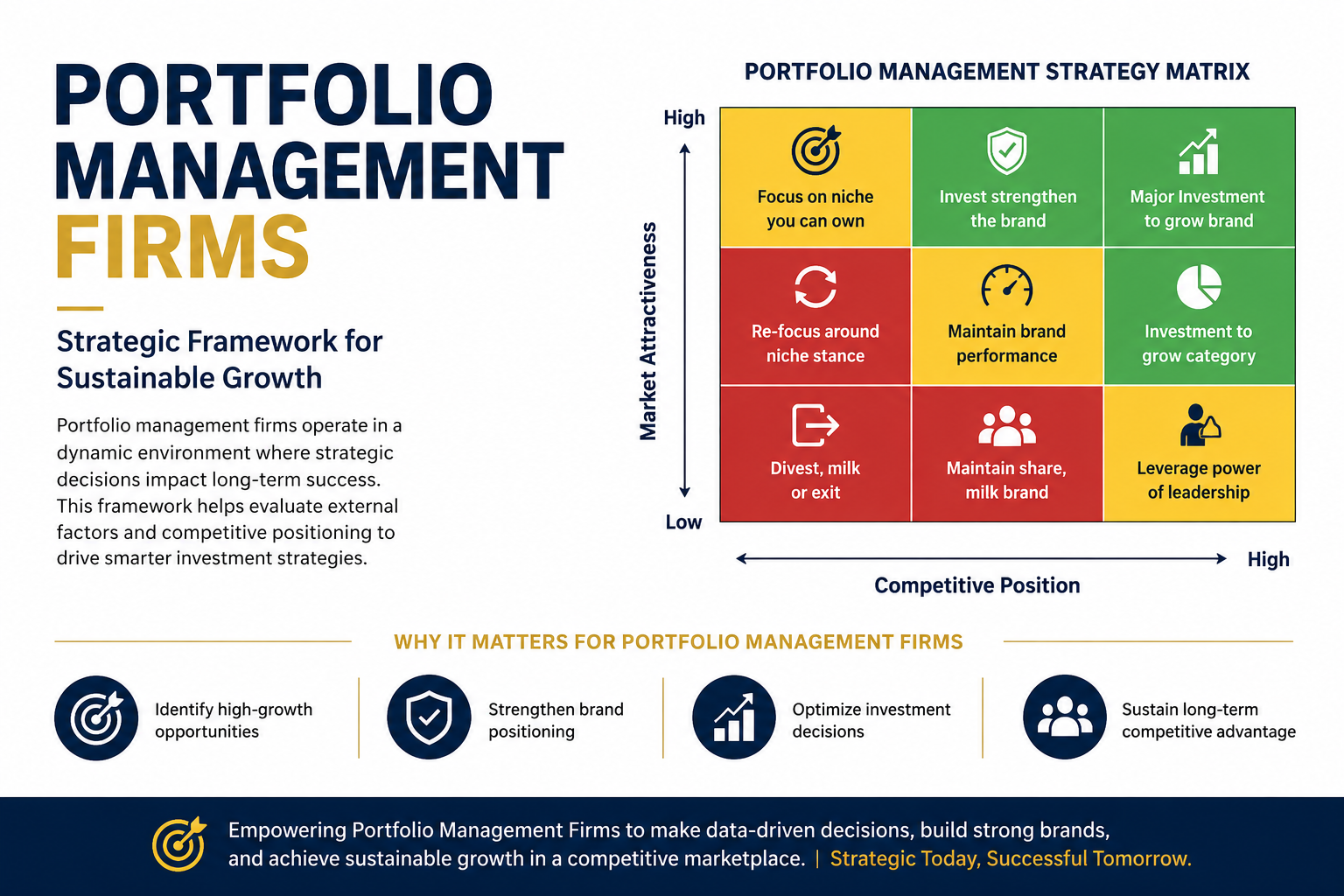
Most people don’t actually decide to look for help managing their money on a calm, rational Tuesday. It usually happens after something rattles them: a market drop that wiped out more than expected, a friend’s offhand comment about their guy doing something clever with their retirement accounts, or the quiet realization that a scattered mix of old 401(k)s and a brokerage account isn’t actually a strategy; it’s just accumulation. For many investors, finding the right Portfolio Management Firms can be the first step toward turning those scattered accounts into a clear, structured financial strategy. A trusted Portfolio Management Firm can help bring organization, discipline, and a long-term perspective to investment decisions when emotions might otherwise take over.
I’ve spent a little over a decade around the advisory side of finance, first inside a compliance department reviewing how firms actually treated client money versus what their marketing claimed, later working directly with clients trying to make sense of their own scattered accounts. And the single clearest pattern I’ve seen is this: the people who build lasting wealth aren’t necessarily the ones who pick the best investments. They’re the ones who found a Portfolio Management Firms that kept them from making costly emotional decisions during the years everyone else panicked. A good Portfolio Management Firms can provide structure, disciplined investment decisions, and a long-term strategy designed around the client’s financial goals.
That’s really the heart of what this article covers: what portfolio management firms actually do, how to tell a genuinely protective advisor from one just collecting a fee, and why protection often matters more than chasing returns.
The Actual Job of a Portfolio Management Firm
There’s a common misconception that portfolio management firms exist mainly to pick winning stocks. In reality, that’s a fairly small piece of the job. The real work of an advisor’s portfolio strategy involves diversified asset allocation across equities, bonds, real estate, and alternative assets, ongoing rebalancing as markets shift, tax-efficient positioning, and continuous adjustment as a client’s income, goals, or family circumstances change over time.
Top portfolio management firms think in decades, not quarters. The goal isn’t to win every year; it’s to build something durable enough to survive the years that don’t go well, because every long-term portfolio eventually has a few.
Broadly, firms in this space fall into a few categories: traditional wealth portfolio management firms serving high-net-worth clients, algorithm-driven robo-advisor platforms with light human oversight, and boutique advisory firms offering a closer, more personal relationship. None of these is inherently superior; the right choice genuinely depends on how complicated your financial situation actually is.
Why Protecting Wealth Deserves More Attention Than It Gets
Here’s something worth saying plainly: most investors don’t lose meaningful money because of a single bad pick. They lose it through panic-selling during a downturn, chasing whatever performed well last year, or simply lacking a structured plan robust enough to survive a rough twelve months without triggering a rash decision.
Genuinely good portfolio advisers exist largely to be the steady voice in the room when your own instincts are pushing you toward exactly the wrong move. This isn’t a minor service. Behavioral finance research has a specific term for this tendency: loss aversion, and it remains one of the most consistently documented reasons individual investors underperform the very markets their money is invested in. Working with a trusted Portfolio Management Firms can provide the structure, discipline, and professional perspective needed to navigate these emotionally challenging periods. A strong Portfolio Management Firms can help investors stay focused on their long-term objectives rather than reacting to short-term market movements.
This is what protecting wealth genuinely means in practice. It isn’t about avoiding all risk; risk is fundamentally how wealth grows in the first place. It’s about having a structure and a relationship strong enough to stop you from sabotaging your own long-term plan during the short, emotionally loaded moments that feel unbearable in the moment.
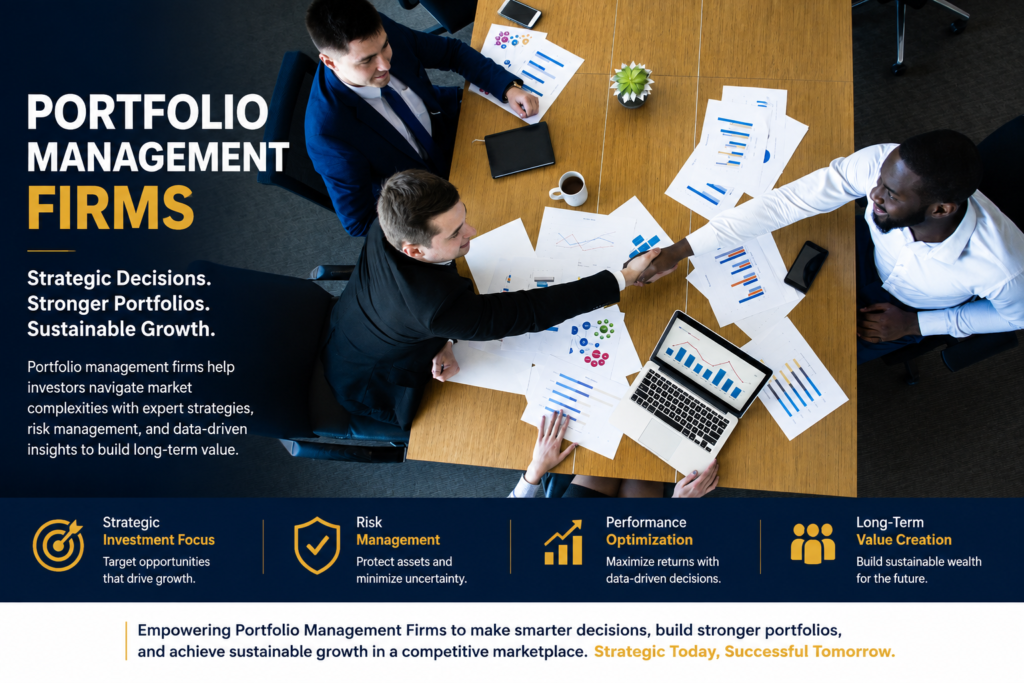
How to Genuinely Evaluate a Firm
If you’re comparing portfolio management firms, resist the temptation to judge based purely on past performance charts; these are almost always cherry-picked to look impressive on a marketing page. Here’s what actually matters instead.
Fiduciary status, confirmed directly. Ask whether they’re a fiduciary at all times, for every recommendation, not just occasionally. A true fiduciary is legally bound to act in your best interest, rather than recommending whatever happens to be merely suitable while paying them a higher commission.
Transparent fee structure. Fee-only advisors, charging a flat rate or a percentage of assets under management, generally carry fewer conflicts of interest than commission-based advisors. Get the exact breakdown in writing before signing anything.
Realistic communication expectations. How often will you actually speak with an actual person? Quarterly check-ins, annual reviews only, or something in between? This detail matters more than most people expect, especially during genuinely volatile years.
Verified credentials. Look for CFP (Certified Financial Planner) or CFA (Chartered Financial Analyst) designations, both requiring rigorous exams and continued ethics obligations.
A clean regulatory record. Every registered investment advisor in the U.S. has a public record accessible through FINRA’s BrokerCheck tool. It takes a few minutes to check, and it can prevent a genuinely expensive mistake.
Robo-Advisors and Human Advisors Aren’t Really Competing
There’s an ongoing, reasonable industry debate here worth being honest about, rather than pretending one option is obviously correct for everyone.
Robo-advisors genuinely excel at low-cost, tax-efficient, algorithm-driven management for straightforward situations: someone in their 30s saving toward a single retirement goal, without complex tax circumstances, and a reasonably high risk tolerance. Fees stay low, the barrier to entry is minimal, and for a large share of investors, that’s genuinely sufficient.
Where human portfolio advisers earn their higher fees is in genuine complexity: business owners navigating equity compensation, families managing inheritance or estate planning, anyone whose tax situation extends well beyond simple W-2 income, or people honest enough to admit they’ll need a real human presence to talk them off the ledge during the next serious downturn.
Increasingly, the strongest option blends both: human advisors supported by sophisticated property portfolio management software and financial planning platforms capable of modeling scenarios, stress-testing retirement timelines, and flagging rebalancing opportunities far faster than manual spreadsheet work ever could.
Warning Signs Worth Taking Seriously
A handful of patterns are worth walking away from immediately, regardless of how polished the initial pitch sounds. Be genuinely cautious of anyone promising guaranteed returns; no legitimate advisor can promise market performance, full stop. Be wary of high-pressure tactics pushing same-day signatures. And pay close attention if a firm is evasive or vague about their exact fee structure when asked directly.
Legitimate top portfolio management firms are, almost without exception, entirely comfortable answering hard questions clearly and immediately. Hesitation or deflection is a signal worth taking seriously.
Final Thoughts
Choosing among portfolio management firms was never really about finding the one with the most impressive five-year performance chart; markets rotate constantly, and past performance genuinely doesn’t guarantee anything about the future, as every legal disclosure will remind you. It’s about finding a fiduciary advisor, or firm, whose process you can genuinely explain to someone else in a single sentence, whose fees don’t require a magnifying glass to understand, and whose presence in your financial life actually reduces stress rather than adding to it.
Wealth built without genuine protection stays fragile indefinitely. The right advisor doesn’t simply chase growth; they build the structure that lets growth actually survive long enough to matter.
FAQs
What’s the real difference between a portfolio adviser and a financial planner?
A portfolio adviser typically focuses specifically on investment management, asset allocation, rebalancing, and ongoing performance. A financial planner usually takes a wider view, covering retirement planning, taxes, insurance, and estate considerations alongside pure investment management. Many modern firms offer both under one roof.
How much do the best portfolio management firms generally cost?
Fee-only advisors commonly charge somewhere between 0.5% and 1.5% of assets under management annually, though this varies by firm size and service complexity. Robo-advisors typically charge significantly less, sometimes under 0.25%, in exchange for less personalized guidance.
Is paying for a human advisor actually worth it over a robo-advisor?
It depends heavily on complexity. Simple, single-goal investors often do perfectly well with lower-cost robo-advisors. Anyone dealing with business ownership, significant assets, complex tax situations, or a documented history of emotional decision-making during downturns typically benefits meaningfully from human guidance.
How can I verify a portfolio management firms is actually legitimate?
In the U.S., FINRA’s BrokerCheck tool lets you verify an advisor’s registration, credentials, and any disciplinary history. It’s free, publicly accessible, and takes only a few minutes.
What does fiduciary actually mean in practice, and why does it matter this much?
A fiduciary is legally required to act in your best financial interest at all times, rather than simply recommending whatever happens to be suitable. Not every financial professional operates under this standard, which makes it genuinely worth confirming directly before working with anyone.
About the Author
This article was written by a financial services contributor with over 12 years of experience across investment advisory compliance and direct client advising in the United States. Sources referenced include public guidance from the U.S. Securities and Exchange Commission (SEC) and FINRA, the primary regulatory bodies overseeing investment advisors and broker-dealers in the U.S.