Buying a house with an old boiler is common and rarely a reason to walk away, but check its age, service history and paperwork before you exchange. Ask for the commissioning and Building Regulations certificates, watch for warning signs such as yellow flames or soot, and plan for replacement if the boiler is near the end of its working life.
The boiler is one of the most expensive parts of a house to replace, yet it often gets less attention on a viewing than the kitchen or the garden. An old boiler that looks tired may still have years of reliable use left, while a newer one with no service history can cause problems in the first winter. This guide explains how to judge the age and condition of a boiler, which documents to ask for and how to plan your next steps when buying a house with an old boiler.
Contents
How Old Is Too Old for a Boiler?
There is no fixed age when a boiler must be replaced. Many gas boilers are often quoted as lasting around 10 to 15 years with regular servicing, but some run well for longer and some fail sooner. Use boiler age as a guide alongside condition and service history.
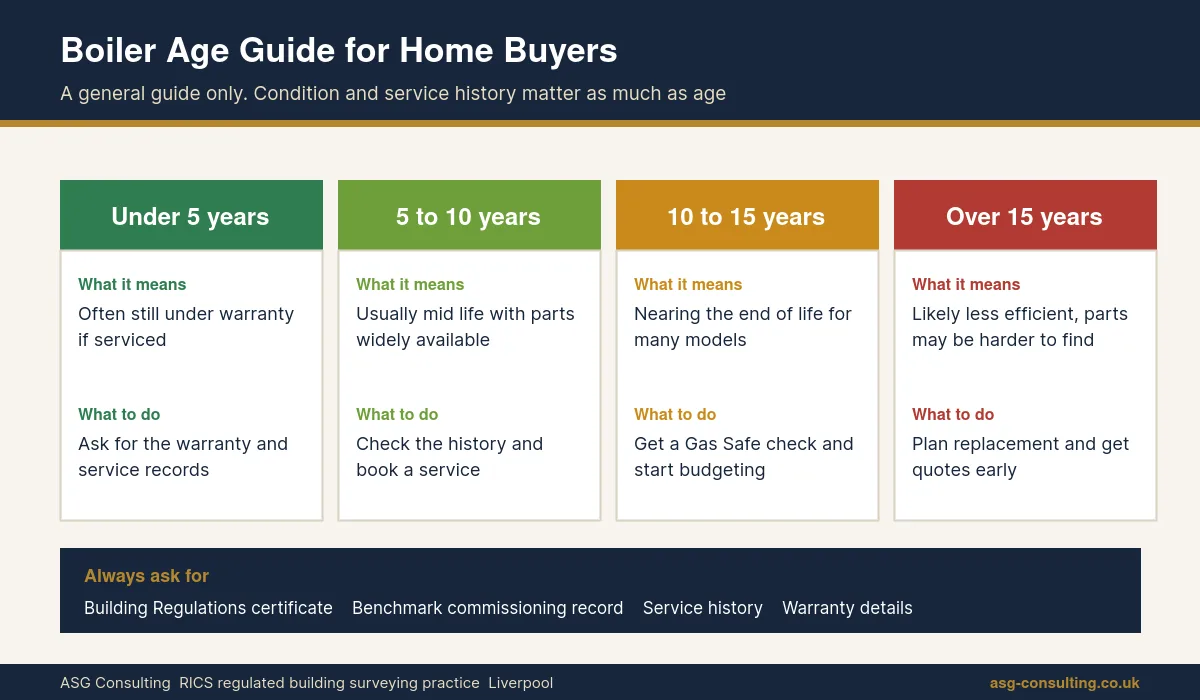
| Boiler age | What it usually means | What to do |
|---|---|---|
| Under 5 years | Likely still under a manufacturer warranty if serviced | Ask for the warranty and service records |
| 5 to 10 years | Usually mid life, with parts widely available | Check the service history and arrange a service after moving in |
| 10 to 15 years | Approaching the typical end of life for many models | Get a Gas Safe engineer to check it and start budgeting |
| Over 15 years | Likely less efficient, and parts may be harder to find | Plan for replacement and get quotes before you exchange |
How Can You Tell How Old a Boiler Is?
Sellers do not always know when the old boiler was fitted, so use more than one source.
- Ask the seller. The property information form usually covers heating, and the seller may remember when it was installed.
- Look for the commissioning certificate. This is often a Benchmark checklist in the back of the boiler manual and records the installation date.
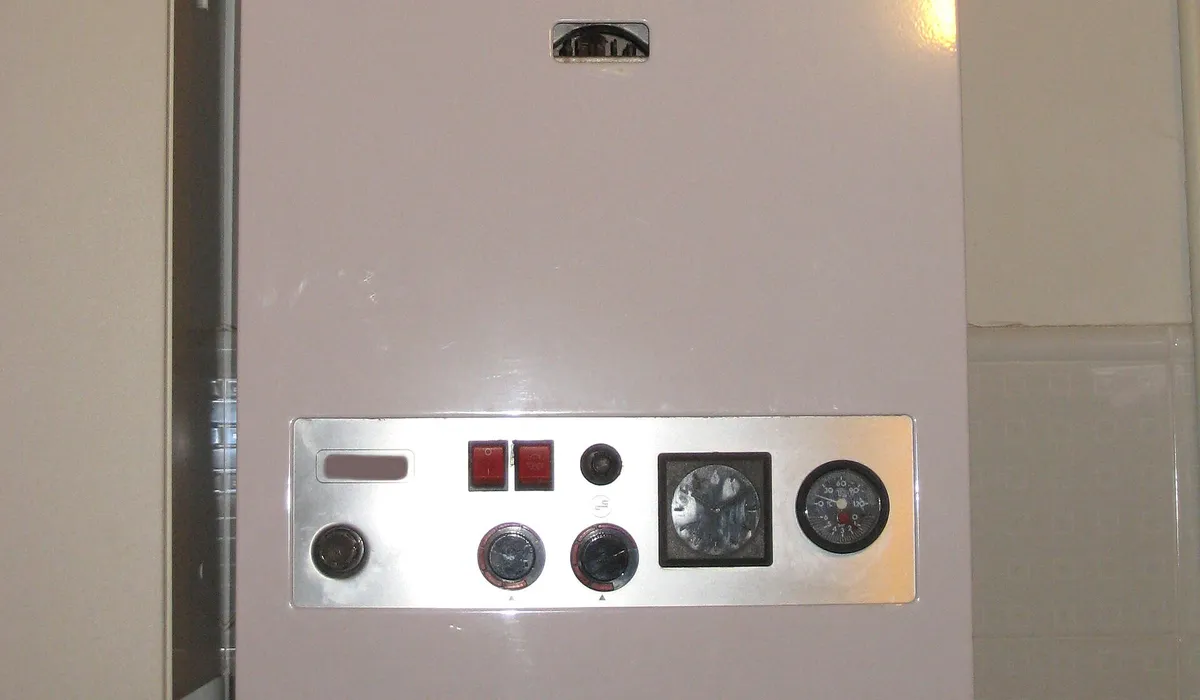
- Check the data plate. The make, model and serial number are usually on a label under or inside the casing. An engineer can often date a boiler from these.
- Look at the service book. The first service entry gives a good clue to the installation date.
- Check the style. Large floor standing boilers, back boilers behind fireplaces and boilers with pilot lights are usually older designs.
Which Documents Should the Seller Provide?
Ask your solicitor to request the following.
- Building Regulations completion certificate. The Planning Portal guidance on boilers and heating explains that a new boiler needs Building Regulations approval, usually handled by a registered installer, after which the local authority issues a completion certificate.
- Commissioning certificate. Usually the Benchmark checklist, completed by the installer.
- Service records. Ideally a service every year.
- Warranty details. Some manufacturer warranties can be transferred to a new owner, so check the terms.
- Gas safety record. If the property has been let, the landlord must have had an annual gas safety check carried out.
If there is no completion certificate, your solicitor may suggest asking Gas Safe Register for a copy or arranging indemnity insurance.
What 7 Safety Checks Should You Make on an Old Boiler?
You do not need to be an engineer to notice obvious problems. The HSE guidance on gas safety at home lists signs that an appliance may not be burning gas properly, including yellow or orange flames instead of blue, soot or staining around the appliance, pilot lights that keep going out and more condensation than usual on windows.
Then work through these 7 safety checks on the old boiler during the viewing.
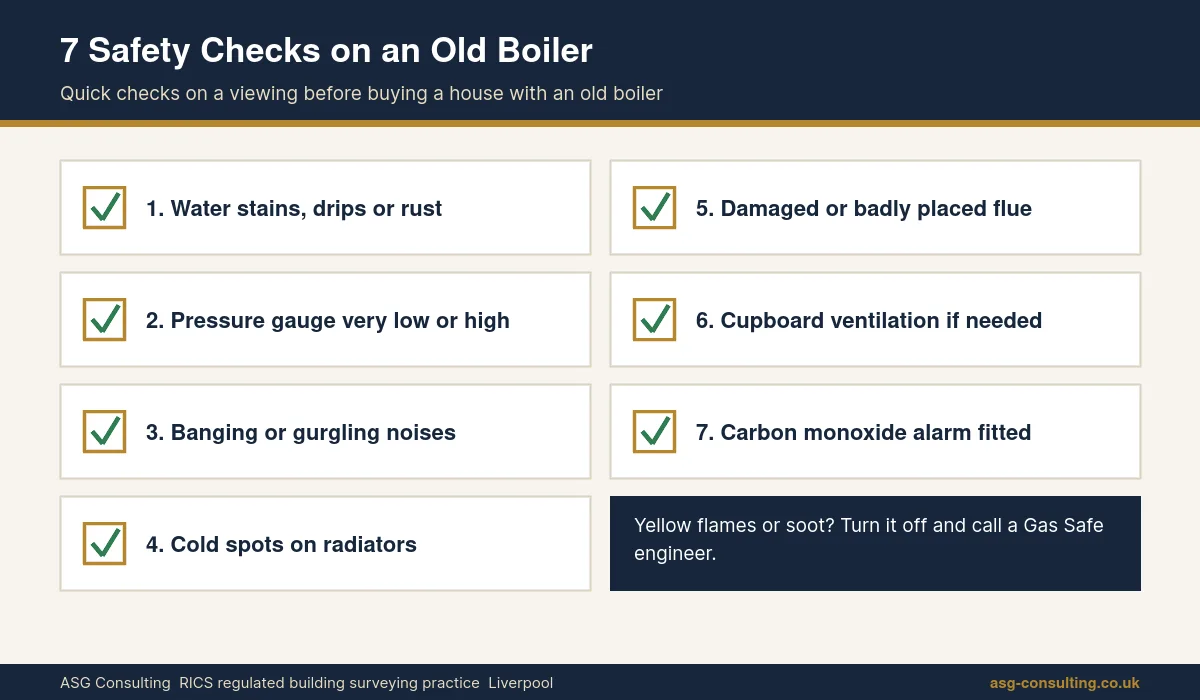
- water stains, drips or rust on or below the boiler
- a pressure gauge reading very low or very high
- banging, gurgling or whistling when the heating runs
- radiators that are cold at the top or slow to warm up
- a flue that looks damaged, poorly sealed or close to an opening window
- a boiler in a cupboard with no ventilation where the design needs it
- no carbon monoxide alarm in the room
If you notice any of these, ask the seller about recent repairs and get a Gas Safe engineer to inspect before you exchange.
Does a Home Survey Test the Boiler?
No. A building surveyor looks at the visible parts of the heating system, notes the type and apparent age of the boiler, checks the flue position from the outside and comments on anything that looks unsafe or poorly installed. The heating is not tested.
A RICS HomeBuyer Survey in Liverpool will flag where a specialist test is recommended. If the old boiler has no paperwork or looks worn, arrange a check by a Gas Safe registered engineer, who can test the appliance, the flue and the controls.
Should You Replace It Straight Away or Wait?
An old boiler that is working well, has been serviced and passes a safety check does not need replacing just because of its age. Weigh up these points.
- Has the old boiler been serviced regularly, and are parts still available?
- Are you planning a kitchen refit or renovation that would make replacement easier?
- Would a more efficient boiler noticeably reduce running costs for your household?
- Do you want to move to a different system, such as a heat pump, in the next few years?
- Could you cope if it failed in the middle of winter?
Many buyers choose to service the old boiler straight after moving in, then plan replacement for the following spring or summer, when engineers are less busy.
What Are the Options When You Replace a Boiler?
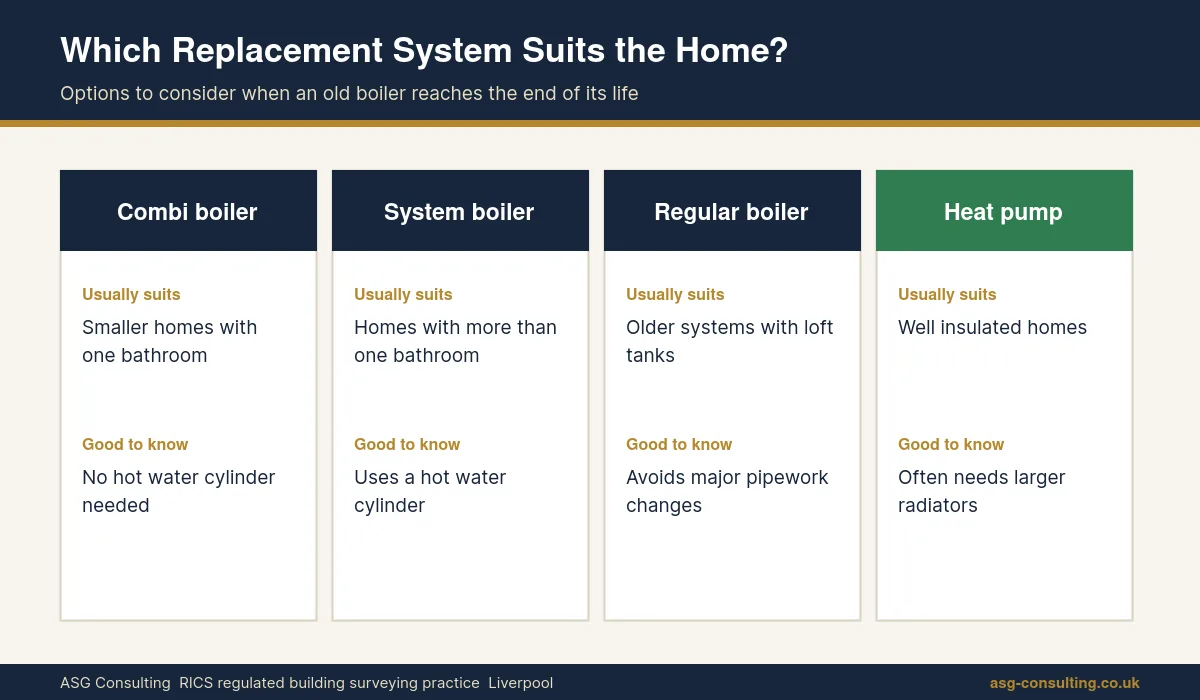
The Planning Portal guidance says replacement gas boilers must meet a minimum efficiency of 86 percent and will probably need to be a condensing type. The main options are
| System | Usually suits |
|---|---|
| Combi boiler | Smaller homes with one bathroom, no hot water cylinder needed |
| System boiler | Homes with more than one bathroom, with a hot water cylinder |
| Regular boiler | Older systems with tanks in the loft, where changing pipework would be disruptive |
| Heat pump | Well insulated homes, often with larger radiators or underfloor heating |
If you are considering a low carbon option, the guide to buying a house with a heat pump explains what makes a home suitable. The heating system also affects the energy rating, as set out in the guide to the EPC rating when buying a house.
Older Heating Systems in Liverpool Homes
Many Victorian terraces in areas such as Anfield, Walton, Kensington and Wavertree had central heating added decades after they were built. It is still possible to find back boilers behind gas fires in old fireplaces, large floor standing boilers in kitchens or cellars and tanks in the loft feeding older regular systems.
Interwar semis in Allerton, Childwall, Crosby and the Wirral often had their heating upgraded in stages, so the boiler may be newer than the pipework and radiators. In converted flats, flues sometimes pass through neighbouring walls or open onto shared yards, which should be checked by an engineer. Where the heating is old, the electrics often are too, so the guide to buying a house with old wiring is worth reading alongside this one.
Can You Negotiate on Price Because of an Old Boiler?
Sometimes. If the old boiler is clearly near the end of its life, has failed a safety check or has no paperwork, get a written quote for replacement and share it with the agent. Sellers often expect some negotiation when a major item needs work soon. If the boiler is old but working well and has been serviced, a price reduction is less likely, as buyers of older homes usually expect some updating.
Buying a House With an Old Boiler FAQs
Is it a problem to buy a house with an old boiler?
Not usually. Check its condition, service history and paperwork, and budget for replacement if it is near the end of its life.
How long does a boiler last?
Many gas boilers are often quoted as lasting around 10 to 15 years with regular servicing, though this varies by model and use.
Does a house survey check the boiler?
A surveyor checks the visible parts and flue, but does not test the boiler. A Gas Safe registered engineer can test it.
What certificates should come with a boiler?
Ask for the Building Regulations completion certificate, the commissioning certificate, service records and any warranty details.
Do homeowners need a gas safety certificate?
Homeowners are not legally required to have one, but HSE advises servicing gas appliances at least once a year. Landlords must have an annual check.
Should I replace an old back boiler?
Back boilers are now rare and usually decades old, so get a Gas Safe engineer to check it and plan for replacement.
Talk to a Surveyor at ASG Consulting
ASG Consulting is an RICS regulated building surveying practice based in Liverpool. It carries out RICS Level 2 HomeBuyer Surveys and Level 3 Building Surveys across Liverpool, Merseyside, the Wirral and the wider North West, with reports usually delivered within 3 to 5 working days of the inspection. Fees are fixed and given on request, usually confirmed within one working day. Call 0151 315 0626 to request a quote or to talk through which survey suits the property.
About the Author
Dave MacMillan is the lead surveyor at ASG Consulting, an RICS regulated building surveying practice at 54 St James Street, Liverpool. He has 8 years of experience in building surveying and inspects homes for buyers across Liverpool, Merseyside and the North West.
Last updated 24 November 2026